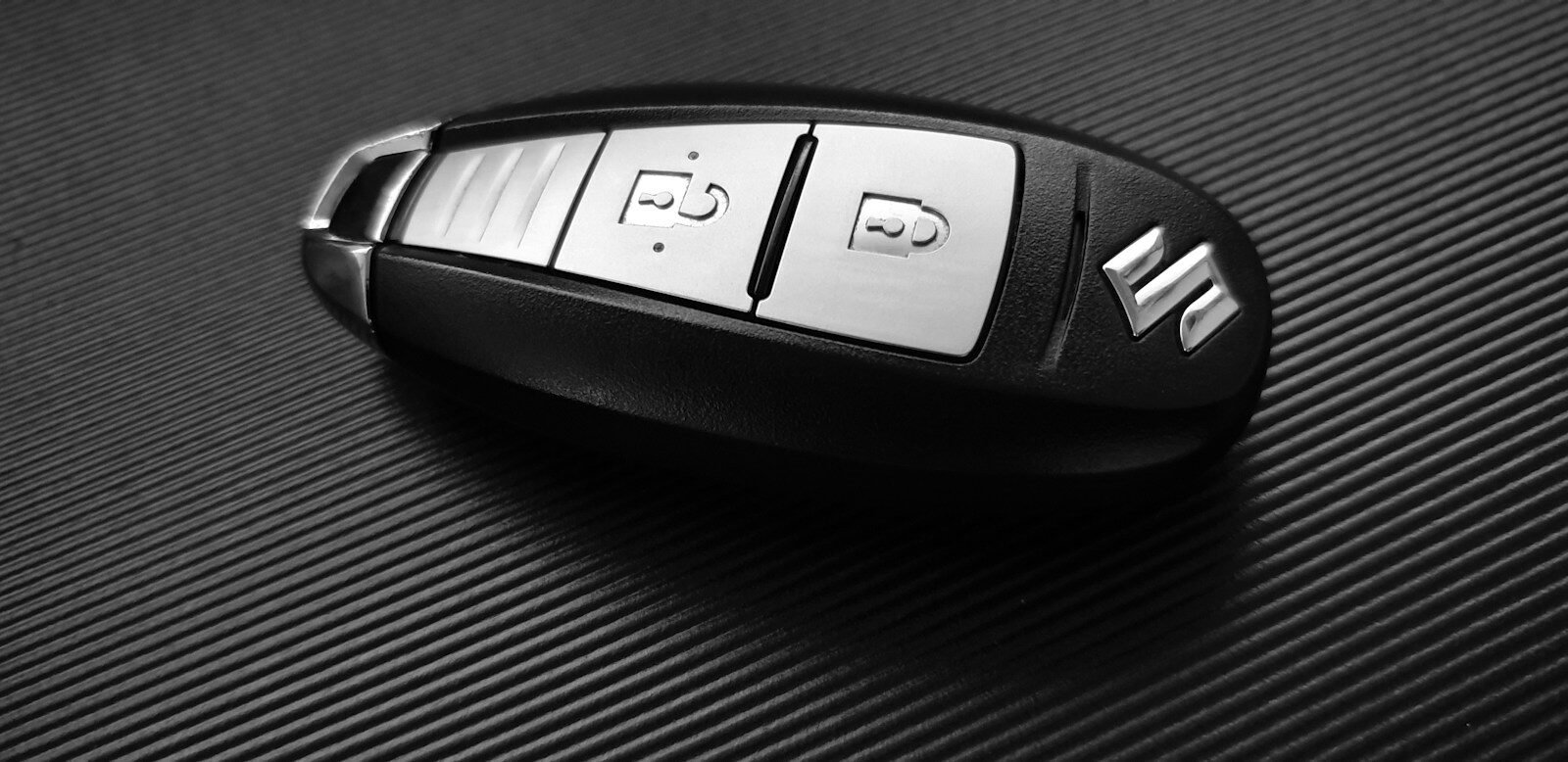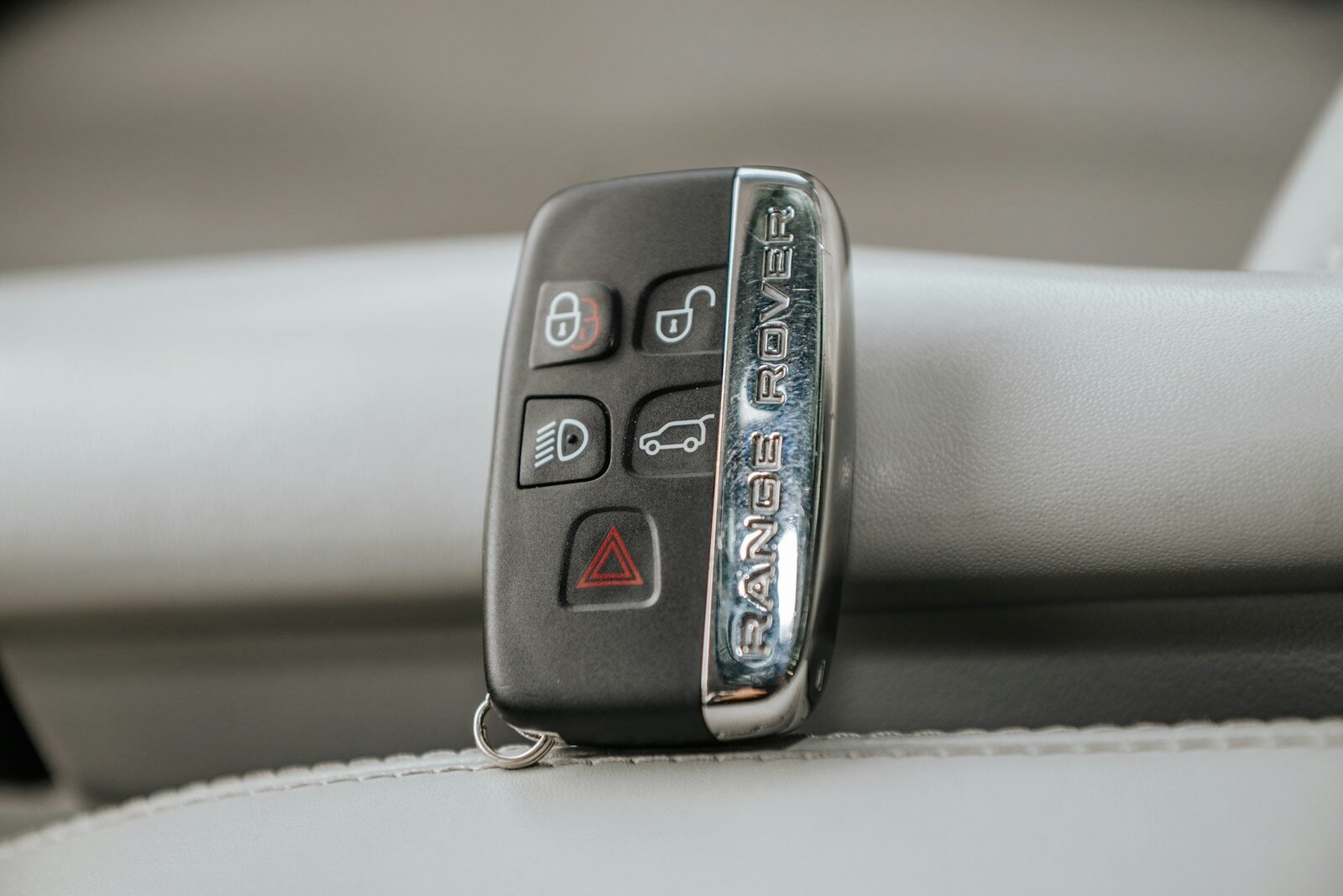
A modern door panel holds more switches than almost any other surface in the cabin. Window lift, central locking, mirror adjustment, seat memory and tailgate release all sit within reach of one hand, and most of them get pressed without a glance. As interiors move toward flush surfaces and shared displays, the mechanical layer under those buttons still decides whether a control feels trustworthy. That is why the automotive metal dome applications used on door panels get chosen early, often before the trim is finalised, and why changing one later means new tooling.
A metal dome suits a door control when the function is a discrete press the driver has to confirm by feel, when the switch sits in a thin sealed stack on the door trim, when the dome only closes a low-level signal for a body or door module, and when the expected life stays inside normal dome ratings. It stops being suitable when the button must switch motor current directly, travel a long distance, read as one continuous surface, or stay silent.
The conditions below follow the order a door module actually gets designed, from the function list to tooling release.
What a door control actually is, from a switch designer’s view
A door control is not one button. It’s a cluster of unrelated functions sharing one panel, and each of those functions has its own press frequency, force target and life expectation. A single dome specification almost never covers the whole cluster.
Door panels are unusual in automotive HMI because the hand arrives without the eyes. A driver reaching for the window switch at night finds it by position and by the shape of the cap, not by looking. That fact rules out plenty of switch technologies before any electrical requirement comes up, and it explains why door controls kept physical keys while centre stacks moved to glass.
The functions grouped on a door panel
| Function | Press frequency | What the press has to deliver | Dome fit |
|---|---|---|---|
| Window lift | High, several times per trip | Firm, repeatable snap in both directions | Strong |
| Central lock and unlock | High | Clear two-state confirmation, usually with an LED | Strong |
| Mirror adjustment | Medium | Directional press on small caps | Good, with a dome array |
| Seat memory | Low | Deliberate press that resists accidental contact | Good, at higher force |
| Tailgate or trunk release | Low | One intentional press, no double trigger | Good, check module logic |
The spread matters. A driver’s window switch may see more presses in a month than a seat memory key sees in the life of the car, yet both share one panel and connector. Splitting the dome specification by function is normal practice. One dome across the panel usually ends with a vague window key, or a memory key that trips when a bag brushes it.
Where the dome sits in the stack
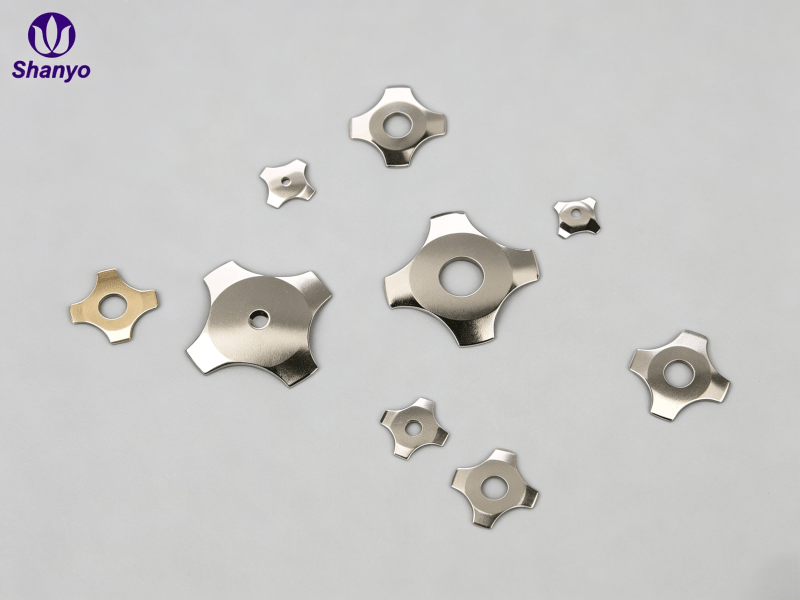
A door switch assembly is a stack, not a component. From the outside in: graphic overlay or moulded keycap, spacer and adhesive, the dome itself (often called a snap dome), the circuit (FPC, PCB or printed membrane), and a backing plate for the press to react against. The metal dome structure supplies the snap and the contact closure. It supplies nothing else, and treating it as if it did is where first prototypes go wrong.
The conditions that make a metal dome the right choice
Five conditions decide it: the press must be confirmed by touch, the panel must stay thin, the switch has to be sealed as an assembly, the dome only handles a signal for a controller, and the annual volume has to justify stamped tooling. When all five hold, a metal dome switch is usually the cheapest route to crisp tactile feedback. When two or more fail, another switch technology wins.
Door panels keep landing on domes because all five usually hold at once.
Blind operation and confirmation feel
A dome collapses at a defined force and returns with a distinct release. That tactile feedback tells the driver the command registered, which is the point of a physical key in a moving vehicle. A rubber keypad gives a soft, progressive press with a weaker snap. A capacitive pad gives nothing unless a haptic actuator is added, and that feel is synthesised rather than mechanical.
Thin panel and sealed overlay
Door trim pockets are shallow. Domes add little height to the stack, so a switch can sit under a thin polyester or polycarbonate overlay without a deep housing behind it. That is how a door panel gets flush keys with printed icons instead of protruding switch bodies.
Signal-level switching read by a module
The dome closes a pad pair on the circuit, and a door or body controller reads that closure. An automotive metal dome is a signal device. Contact resistance, plating and contamination matter far more than current handling, because the signal is small and any drift shows up as a missed press or a double press.
Volume, tooling and cost per piece
Dome stamping tooling is paid once and spread across volume, which suits programmes building tens of thousands of door modules. A dome array on a PET carrier is placed as one part rather than a row of switches, which cuts placement steps and inspection points. On low volume, or a panel with many variants, that equation flips and discrete switches win.
Which door functions suit a metal dome
Window lift, central locking, mirror adjustment, seat memory and tailgate release all suit a metal dome, because each one is a discrete press with a clear end state. The differences lie in force, cap size and life target, not in whether a dome belongs there.
Window lift is the hardest case and the one that proves the technology. It gets pressed constantly, often with a gloved hand, and has to feel identical on the twentieth thousandth press as on the second. Domed contacts hold that feel because the snap comes from geometry, not a wearing elastomer.
Central locking is where feedback carries a safety signal. The driver wants to know the doors locked without checking the pin. A crisp press plus an LED does that; a soft touch surface leaves doubt.
Mirror adjustment and seat memory live in small caps with tight spacing, which is where a dome array earns its place. One carrier holds several domes at fixed spacing, so caps stay aligned to the contacts through thermal cycling instead of drifting with individual adhesive dots.
Tailgate release is a low frequency function, but it usually runs through module logic that rejects a second press inside a short window. Dome bounce has to be checked against that logic rather than assumed away.
When a metal dome is the wrong answer
A metal dome fails as a design choice when the button must carry motor or actuator current, when the press needs long travel or a rotary action, when the panel has to read as one continuous surface, or when the cabin demands near-silent operation. In those cases the dome either can’t do the electrical job or fights the interior design.
Direct switching of window motors and lock actuators
A window motor draws amps. A dome contact is built for milliamps. Any design that routes motor current through the dome ends with pitted contacts, welded contacts, or resistance that climbs until the module misreads the key. The dome belongs on the input side, feeding a module or relay that does the switching. When a project asks for a dome that handles the load, the requirement is wrong, not the dome.
Long travel, rotary and force-sensing controls
Mirror joysticks, rotary dimmers and anti-pinch sensing all need information a dome cannot give. A tactile dome switch reports one thing: pressed or not pressed. Rotary needs position, anti-pinch needs a force profile, and a long-travel key needs millimetres a dome’s short stroke cannot supply.
Flush capacitive surfaces and quiet cabins
If the trim is one moulded surface with backlit icons and no openings, a dome needs a flexible overlay above it or a cap through the surface, and both change the design. In vehicles sold on interior silence, the click becomes a complaint. That’s a product decision, and it belongs before the dome is specified.
How door panel conditions change the specification
A door panel is one of the harsher places in the cabin for a switch. It takes door slam shock, road vibration, sun load through the glass, cleaning agents and the moisture that comes with wet hands and open windows. Each of those pushes a different part of the dome specification.
Actuation force and false actuation
Vibration and a slammed door can trip a light dome. Guidance for door and other vibration-exposed locations is generally 250 gf or higher, with the 100 to 180 gf band reserved for small interior keys. The number on the datasheet isn’t the number the driver feels, though. Keycap leverage, spacer cut-outs and overlay stiffness all change perceived force, so the target has to be confirmed on a real cap.
Sealing is a stack decision, not a dome decision
Stainless steel doesn’t absorb water. The assembly around it does the sealing. Overlay material, adhesive, gasket design and housing decide whether a door switch reaches IP67, the usual minimum wherever liquid contact is possible. Sealing changes feel too. An overlay that traps air makes the key stiff or slow to return, so a vent path through the adhesive belongs in the design, not in a fix added later.
Life, plating and contact stability
Dome datasheets commonly quote ratings from a few hundred thousand to several million cycles, and a door panel needs both ends. A window key wants the high end; a seat memory key never approaches it. Plating follows the same logic. Silver contacts work for higher-current paths but tarnish in humid, sulfur-bearing air, and the resistance rise that follows kills a low-level signal. Gold-plated contacts are the usual answer for module inputs.
Test standards to write into the drawing
Testing follows the mounting location, and ISO 16750 is the reference set most programmes use. Part 3 covers mechanical loads: vibration, shock and drop. Part 4 covers climatic loads, with interior electronics commonly specified from -40 °C to +85 °C. Part 5 covers chemical loads, which on a door panel means sunscreen, cleaners and spilled drinks rather than fuel. Writing the part numbers into the drawing tells a supplier which tests to run before the first sample is signed off.
What to check before tooling is released
Before stamping tooling is cut, four things should be settled: a feel sample built on the real keycap, a shock and vibration plan matched to the door mounting location, a contact resistance limit measured after environmental exposure, and a supplier file that supports PPAP. Skip any of them and the first production lot becomes the test.
The feel sample is the step teams compress, and the one that catches the most problems. Force measured on a bare dome tells you little about a key under a thin overlay with a moulded cap on top.
On the supplier side, a manufacturer accredited to IATF 16949 should be able to hand over PFMEA, control plans, a capability study on force and dimensional reports without being pushed. Shanyo holds IATF 16949 certification, and the Valeo metal dome case study shows what that handover looks like in practice, from the first RFQ through the supplier pre-audit.
Programmes that treat dome selection as a purchasing line item revisit it during validation, when a key that felt fine on the bench reads double presses in a cold cabin or drifts out of contact resistance after humidity cycling. Specification work is cheaper before tooling than after.

FAQ
Can a metal dome switch control a power window motor directly?
No. A dome closes a low-level signal that a module or relay interprets. Motor current is switched downstream, by the module output stage, not by the dome contact.
Do door control domes need gold plating?
Not always, but often. Door module inputs are low-current signals, and silver tarnishes in humid air, which raises contact resistance. Gold plating keeps the contact stable over the life of the vehicle.
How many press cycles should a door control dome be rated for?
Match the rating to the function. A window key needs a rating at the top of the normal dome range, while a seat memory key can sit far lower. Ask for the test condition behind any cycle figure, since a rating without force and travel data is hard to compare.