
We press buttons all day long. It’s something you don’t really think about until one of them stops working, or worse, feels “mushy.” That crisp, reassuring click is the only way our electronics talk back to us, confirming that, yes, the command was received. While there are plenty of ways to make a switch, one specific component seems to be taking over the tightest, most critical spaces in our gadgets: the round metal dome.
It’s not just an accident of design. While the classic four-legged “cross” dome has been around forever, the round shape brings something to the table that modern electronics desperately need. It’s about efficiency. It’s about fitting a reliable mechanical reaction into a space that is barely big enough to see.
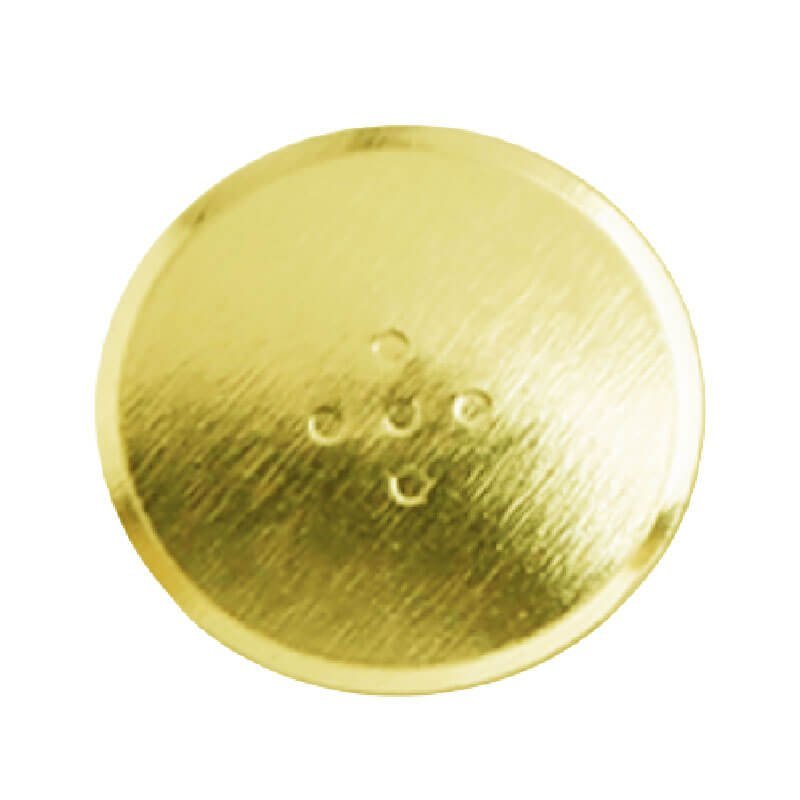
The Structural Simplicity of the Round Metal Dome
There is a certain elegance to a circle. In engineering, corners are often where the trouble starts—stress concentrations, snag points, places where things can bend the wrong way. A round metal dome avoids all that drama. Because it is a continuous loop of stainless steel, the stress of being pushed down is distributed pretty evenly around the rim.
When you compare it to a four-leg dome, the difference in handling is obvious. Four-leg domes can get their feet tangled in the assembly equipment (a nightmare for production lines), or the feet can catch on the solder mask of the circuit board if things aren’t perfectly aligned. The round dome just sits there. It doesn’t care about rotation. You can spin it 30 degrees or 90 degrees, and it still works exactly the same. That kind of forgiveness in assembly is worth its weight in gold when you are building thousands of units a day.
Solving Space Constraints with Round Metal Dome Geometry
Gadgets are shrinking. That is just the reality. We want more battery, more screen, and more sensors, which means the physical buttons get pushed to the very edges of the device.
This is where the round metal dome really shines. Since it doesn’t have legs sticking out, its footprint is exactly its diameter. No more, no less. This allows PCB designers to run traces (the wires printed on the board) much closer to the switch itself. In a dense layout, like the inside of a hearing aid or a car key fob, saving a millimeter of space is a huge victory.
The Density Advantage
Consider a remote control with fifty buttons. If you use square or cross-shaped domes, you have to account for the clearance of every single leg. If you use round domes, you can pack them in tighter arrays. It essentially allows for a higher density of controls without increasing the overall size of the keypad. It’s efficient.
Sealing Capabilities of a Round Metal Dome
There is another reason this shape dominates, and it has nothing to do with electronics and everything to do with dirt.
Because the edge of a round metal dome is a complete circle, it acts like a seal. When you tape it down with an overlay, it creates a little sealed pocket on the circuit board. Dust, lint, and moisture have a hard time getting in. Compare that to a four-leg dome: the gaps between the legs are basically open doors for contaminants. If a piece of grit gets under the dome, the switch stops working.
This natural sealing ability makes the round shape the default choice for anything that might get splashed or used with dirty hands. It’s not waterproof on its own—you still need proper housing—but it’s a much better starting point than an open shape.
Comparing Tactile Dome Shapes
| Feature | Round Metal Dome | Four-Leg (Cross) Dome | Triangular Dome |
|---|---|---|---|
| Footprint | Minimal (Diameter only) | Larger (Includes leg span) | Medium |
| Tactile Feel | Sharp, short travel | Soft, longer travel | High force, crisp |
| Sealing | Excellent (Continuous rim) | Poor (Gaps between legs) | Moderate |
| Trace Routing | Difficult under dome | Easy (Under legs) | Moderate |
| Assembly | Easy (No orientation needed) | Harder (Legs can tangle) | Medium |
The Venting Challenge in Round Metal Dome Integration
Of course, nothing is free. The same trait that makes the round metal dome great at sealing—that continuous rim—also creates a problem: air pressure.
When you press the button, the air underneath has to go somewhere. If the seal is too good, the air gets trapped and acts like a spring. The button feels mushy. It’s like trying to push a plunger down on a sealed floor. To fix this, designers have to get clever with “venting.” They cut tiny channels in the spacer layer or the PCB to let the air breathe.
It’s a funny contradiction. You want the dome to seal out water, but you need it to breathe air. Finding that balance is usually the hardest part of the design process. If you get it wrong, the switch works electrically, but it feels terrible to the user. And in the end, the “feel” is what sells the product.
- Common Pitfall: Using a spacer layer that is too thin, choking off the air channel when the device is assembled tight.
Resource
- Haptic Technology – Wikipedia: Understanding the tactile feedback loops that these switches facilitate.
- Stainless Steel Properties: The physics of the material 304 or 316 stainless steel explains the “spring” memory.
FAQ
Do round metal domes last as long as other shapes?
Generally yes. A well-manufactured round metal dome made from quality stainless steel can easily last over a million cycles. The failure point is usually not the metal itself cracking, but rather contamination or the adhesive failing.
Can I repair a device that uses these domes?
It’s difficult. These domes are usually held on by a “dome array” or a sticky layer of tape. If you peel it up to fix it, you often damage the adhesive or the dome alignment. It’s usually better to replace the whole keypad assembly.
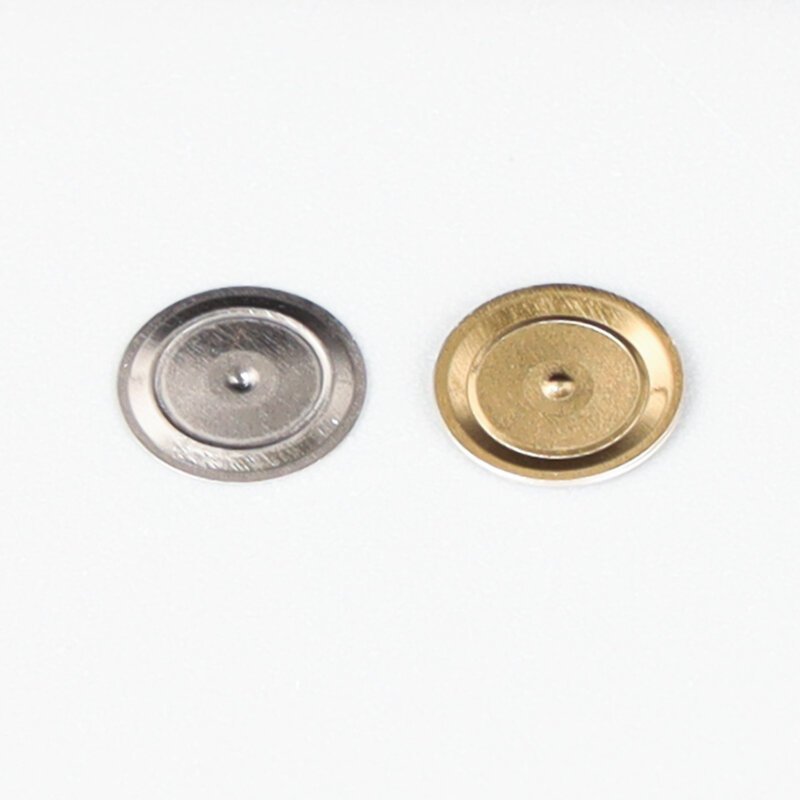
Why do some round domes have a dimple in the center?
That little dimple is crucial. It concentrates the force from your finger right into the center of the dome. Without it, if you pressed slightly off-center, the dome might tilt instead of snapping. The dimple ensures a consistent click every time.