
When a Snap Dome Fails to Return
That satisfying click followed by instant return—it’s what makes snap dome switches feel responsive and reliable. So when a dome stays down after pressing, something has clearly gone wrong. This frustrating problem shows up in everything from TV remotes to industrial control panels, leaving users with mushy, unresponsive buttons.
Understanding why this happens requires looking at how these components actually work. A snap dome is essentially a pre-stressed metal shell. Press it, the dome collapses with a tactile click, then the stored energy snaps it back up when pressure releases. Simple physics, really. But several factors can interrupt this mechanism and leave the dome stuck in its collapsed state.
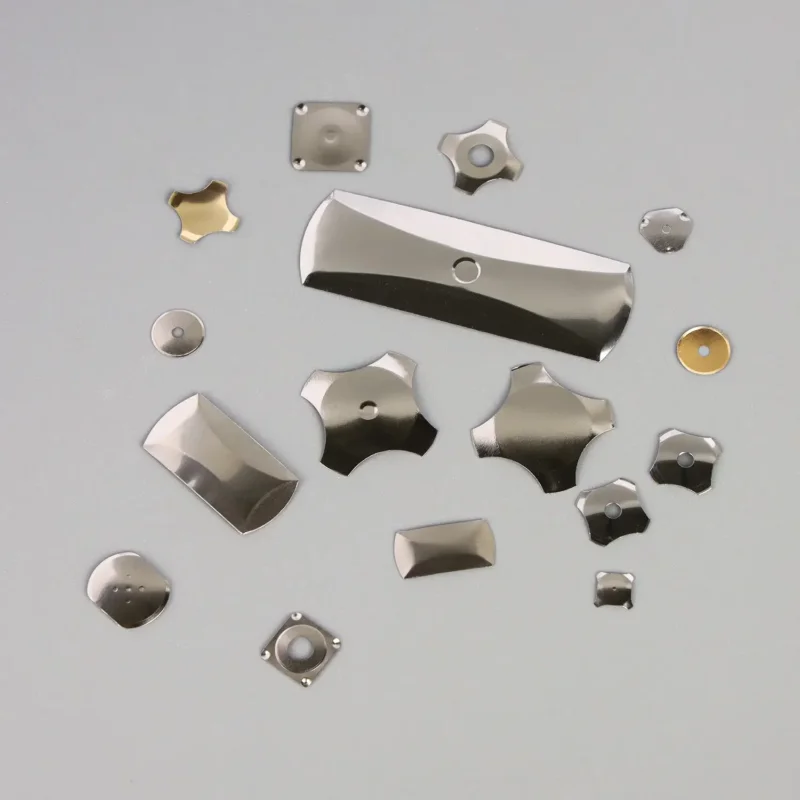
Primary Causes of Snap Dome Failure to Return
The reasons behind non-returning domes fall into a few categories. Some relate to the dome itself, others to installation problems or operating conditions.
Mechanical Over-Travel Damage
Perhaps the most common culprit. When excessive force pushes a snap dome beyond its designed travel distance, permanent deformation occurs. The metal yields past its elastic limit and loses the internal stress that enables return.
This happens when:
- Actuators sit too close to the dome surface
- Users press harder than necessary
- Overlay materials provide insufficient travel limiting
- Assembly tolerances stack unfavorably
Once a dome over-travels significantly, the damage is done. The component needs replacement rather than repair.
Material Fatigue Over Time
Every snap dome has a finite cycle life. Quality components handle millions of actuations, but eventually fatigue sets in. The metal loses springiness gradually—sometimes so slowly that users don’t notice until complete failure.
| Dome Quality | Typical Cycle Life | Fatigue Characteristics |
|---|---|---|
| Standard Grade | 500,000-1,000,000 | Gradual force reduction |
| Premium Grade | 1,000,000-3,000,000 | Maintains feel longer |
| High-Cycle Grade | 5,000,000+ | Engineered for durability |
| Economy Grade | 100,000-500,000 | Earlier degradation |
Corrosion and Environmental Damage
Metal components don’t fare well against moisture, salt, or corrosive atmospheres. Corrosion weakens the dome material and can create surface deposits that interfere with movement.
Environments particularly harsh for snap dome longevity include:
- Coastal areas with salt air exposure
- Industrial settings with chemical vapors
- High humidity without adequate sealing
- Applications involving liquid contact
Even seemingly protected indoor installations sometimes suffer when humidity cycles cause condensation inside enclosures.
Installation-Related Snap Dome Return Problems
Improper Mounting Surface
A snap dome needs a flat, rigid surface beneath it. Any irregularity—a raised solder joint, debris particle, or warped PCB area—can prevent proper seating. The dome might work initially but develop return problems as it conforms to the uneven surface over repeated actuations.
Adhesive Interference
The adhesive holding domes in position occasionally migrates where it shouldn’t. If adhesive seeps under the dome edge or onto the contact surface, it can physically impede movement. Temperature cycling sometimes causes adhesive to soften and shift.
Inadequate Clearance Design
The space between dome crown and actuator deserves careful attention during design. Too little clearance means every press risks over-travel. Too much means the button feels disconnected or requires excessive travel before engagement.
Getting this right involves accounting for:
- Dome height at rest position
- Actuator length and positioning
- Overlay material thickness and flexibility
- Manufacturing tolerances on all components
- Any compression of soft materials over time
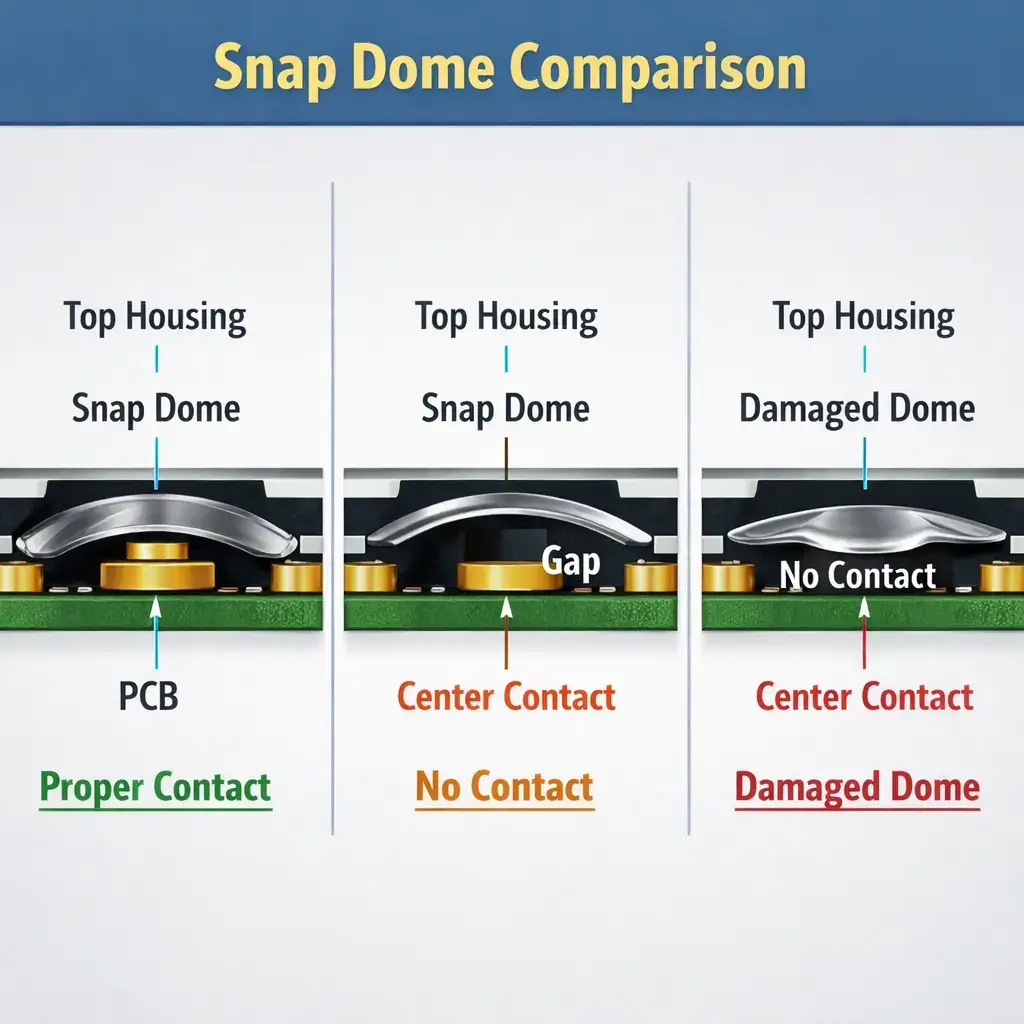
Diagnosing Snap Dome Return Issues
Visual Inspection First
Remove any overlay and examine the dome directly. Look for obvious deformation—a dome that stays visibly collapsed even without pressure has suffered mechanical damage. Check for corrosion, debris, or adhesive contamination.
Compare Against Working Units
If other domes in the same assembly work normally, the problem likely lies with that specific component rather than design or environmental factors. Consistent failure across multiple positions suggests systemic issues.
Consider Usage History
Products returned from the field often provide clues in their usage patterns. High-frequency buttons fail before rarely-used ones. Buttons near liquid entry points show corrosion first. Understanding how and where the product was used narrows down probable causes.
Preventing Snap Dome Return Failures
Prevention beats troubleshooting every time. Several strategies reduce the likelihood of this particular failure mode.
Design considerations that help:
- Specify adequate over-travel protection in actuator design
- Choose dome ratings appropriate for expected cycle life
- Include environmental sealing for harsh applications
- Ensure flat, clean mounting surfaces during assembly
- Test samples beyond expected use conditions
Quality incoming inspection catches defective domes before they reach assemblies. And proper storage—away from humidity and temperature extremes—preserves component integrity until installation. If you wantto know more about snap domes, please read about What Is a Snap Dome and How Does It Work?
FAQ
Can a snap dome that won't spring back be repaired?
Generally no. Once a dome suffers permanent deformation from over-travel or fatigue, the internal stress that enables return cannot be restored. Replacement represents the only reliable solution. Attempting to reshape a deformed dome typically results in unpredictable performance or immediate re-failure.
How can manufacturers test for snap dome return reliability?
Cycle testing remains the standard approach. Automated equipment actuates domes repeatedly while monitoring force curves and electrical contact. Changes in actuation force, return timing, or contact resistance indicate degradation. Accelerated life testing at elevated temperatures sometimes predicts long-term behavior.
Does actuation force affect how long a snap dome maintains proper return?
Yes, higher force domes generally resist fatigue longer because they’re made from thicker or stronger materials. However, the relationship isn’t perfectly linear. A dome operated near its force rating consistently may outlast a lighter dome subjected to occasional over-force events. Matching dome selection to actual use conditions matters more than simply choosing the strongest available option.