
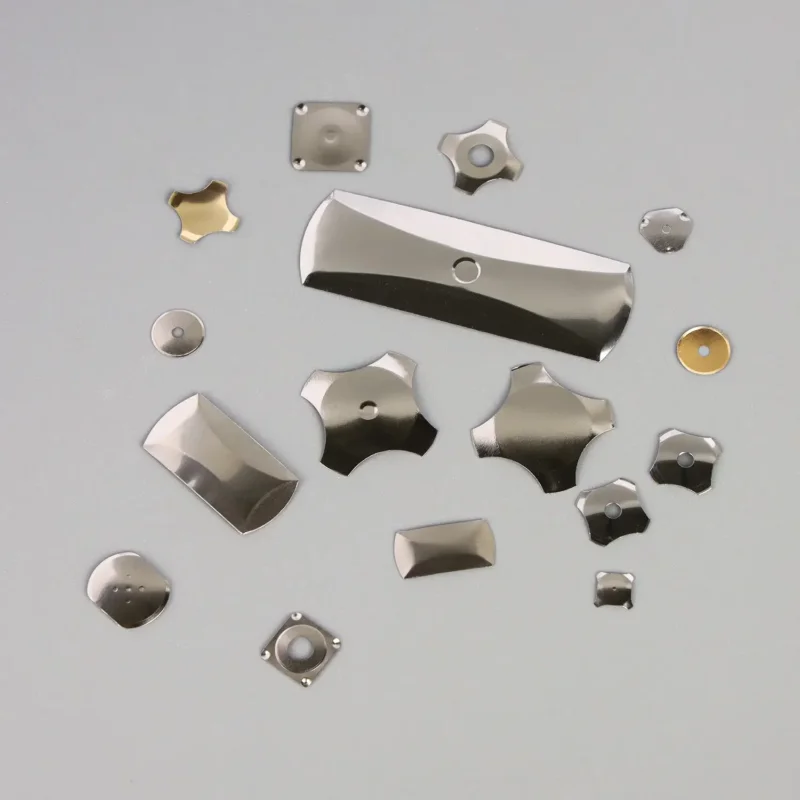
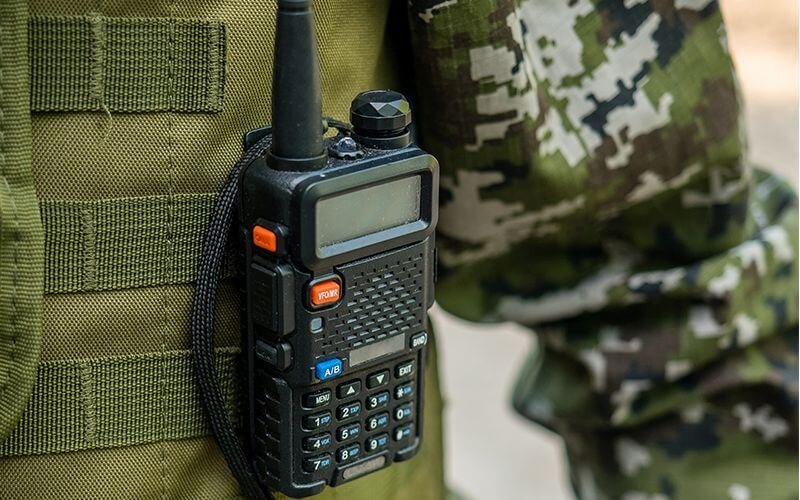
When you look at a fighter jet or a tactical radio, you tend to see the big picture. The wingspan, the armor plating, the massive engines. It is easy to miss the tiny things that actually make the machine usable for a human being. But if you zoom in—way in—to the cockpit controls or the comms handset, you find these small, curved discs of steel Metal domes. In the civilian world, they change TV channels. In the military and aerospace sectors, they are doing something much more critical: they are bridging the gap between a split-second decision and a mechanical reactiont.
The Unforgiving Nature of the Mission
Electronic components usually hate two things: vibration and temperature swings. Unfortunately, those are the two things that define military and aerospace environments. A standard membrane switch or a cheap plastic button just doesn’t cut it here. If a pilot is pulling 9Gs, or if a tank is rumbling over rough terrain, a loose spring in a mechanical switch can bounce. That “contact bounce” creates false signals.
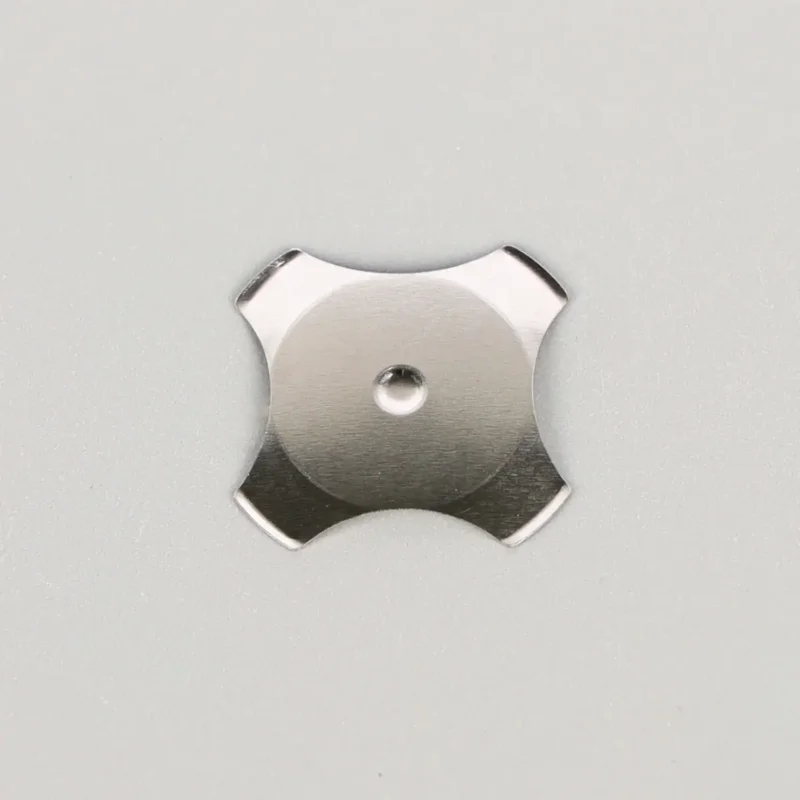
This is where the physics of a metal dome becomes vital. Because it is a single piece of stainless steel with no loose parts, it has an incredibly high resonance frequency. It doesn’t jitter easily. It sits there, under tension, waiting for a deliberate press. It is sort of a minimalist approach to engineering—fewer parts mean fewer things to break when the environment gets hostile.
1. Tactile Feedback Through the Glove
There is also the human factor. In a controlled room, you can look at a screen to see if you pressed a button. In a high-stress scenario—smoke, noise, adrenaline—visual confirmation isn’t always an option. You need to feel it.
Military specs often call for a much higher “actuation force” than your average consumer gadget. A remote control might need 150 grams of force. A control panel in an armored vehicle might need 500 or 600 grams. Why? Because the operator is likely wearing thick tactical gloves or flight gear. A soft button feels like nothing through a layer of Nomex or leather. The metal dome has to push back hard enough to send a “snap” sensation through the glove and into the finger. It is a communication loop. The brain says “press,” the finger pushes, and the dome snaps back to say “done.” Without that specific click, there is hesitation, and hesitation is dangerous.
2. EMI Shielding and Space Constraints
There is also a stealth aspect to this. Every electronic device emits some level of Electromagnetic Interference (EMI). Conversely, devices can be jammed or disrupted by incoming EMI.
Because the dome is conductive metal, it can be integrated into a grounding solution. It acts as a tiny part of the shield. When the switch is open, it’s a piece of floating metal; when closed, it grounds out. This helps in designing control panels that are “quiet” electromagnetically.
Plus, there is the issue of space. In a cockpit, there is no room for bulky mechanical switches. Everything is fighting for space. Metal domes allow engineers to put a reliable switch directly onto a flexible circuit board that can wrap around corners or fit into tight, irregular housings. It is about packing maximum functionality into minimum volume.
Metal Domes in Aerospace

1. Extreme-Condition Performance
Aerospace engineers face a nightmare scenario: if that grit or moisture penetrates a switch, the contact fails, and the system goes dark. This is why they lean so heavily on metal domes. They allow the entire control panel to be sealed under a continuous, heavy-duty graphic overlay. The dome sits safely inside a hermetically sealed pocket, utterly indifferent to the environment outside. Whether it is resisting fine silica dust in a desert storm or the freezing condensation of high-altitude flight, the sealed metal dome remains one of the few ways to guarantee a signal is sent without ever exposing the sensitive internal circuitry to the elements.
2. Surviving G-Force and Temperature Extremes
The temperature range is another killer. Electronics in a commercial drone might work fine on a sunny day, but aerospace components have to survive the “soak.” This is where the vehicle sits on a runway in Dubai at 50°C (122°F) and then minutes later is at 30,000 feet where it is -50°C.
Materials expand and contract. Plastic gets brittle in the cold and soft in the heat. Stainless steel metal domes, however, are remarkably stable. They maintain their spring ratio—that snap feel—across a much wider range.
We can see a rough comparison of why standard switches get swapped out for domes in these sectors:
| Feature | Standard Consumer Switch | Mil-Spec / Industrial Metal Dome |
|---|---|---|
| Operating Temp | -20°C to +60°C | -55°C to +125°C |
| Vibration Resistance | Low (prone to chatter) | High (monostable structure) |
| Actuation Force | 100g – 200g (Light touch) | 300g – 600g+ (Glove compatible) |
| Sealing Potential | Difficult to fully seal | Easy to hermetically seal |
Conclusion
It is easy to think of technology as just software and screens, but eventually, someone has to touch the machine. In high-stress environments, that touch point is a potential point of failure.
Whether it is the control interface in Aerospace or the button in a jet fighter, the requirement is the same: absolute certainty. The metal dome provides that. It is a piece of technology that hasn’t been replaced by touchscreens in these sectors because touchscreens don’t click, and they don’t work well when covered in oil, dust, or blood. The metal dome is simple, rugged, and consistently reliable, proving that sometimes the oldest, simplest mechanical solutions are still the best ones for the toughest jobs on Earth (and above it).