
You interact with them probably a dozen times a day without ever really pausing to look at them. You press “Start” on the microwave, punch in a code on a security pad, or adjust the speed on a treadmill. That satisfying, crisp click you feel under your finger? That is the hallmark of metal dome membrane switches. It is a piece of technology that feels incredibly simple on the surface—just a flat button—but underneath, there is a surprising amount of engineering going on.
It’s actually kind of fascinating how we judge the quality of a machine by its buttons. If a button feels mushy or unresponsive, we think the machine is cheap. If it has a sharp, definitive snap, it feels premium. That is the job of this specific switch type: to bridge the gap between a human finger and a digital circuit board in the most reliable way possible.
Understanding the Layers of Metal Dome Membrane Switches
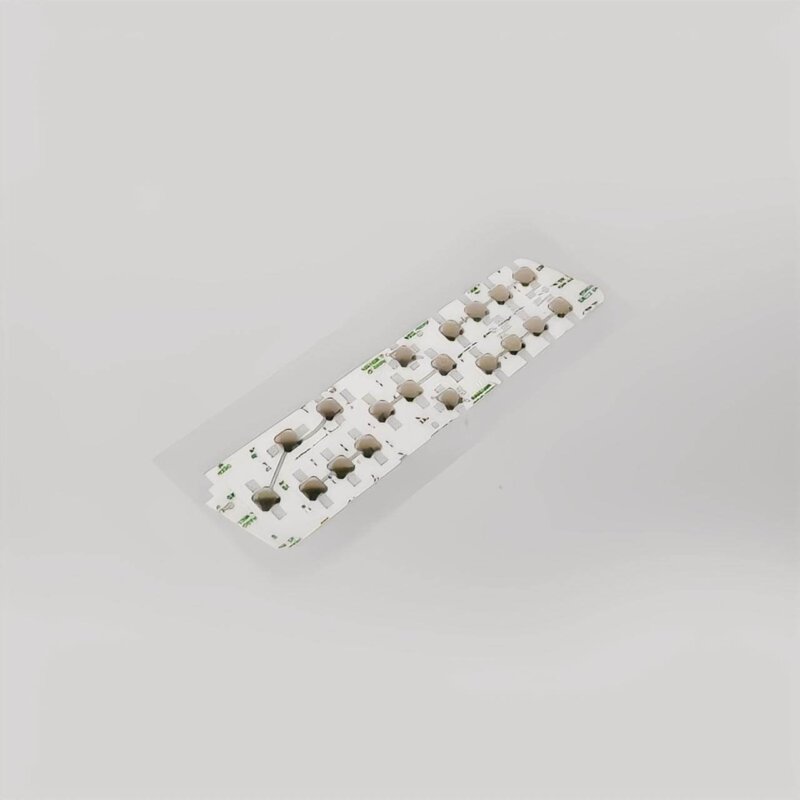
When you try to explain what these things actually are, it helps to think of them as a high-tech sandwich. They aren’t just one part; they are a stack of flexible layers glued together. If you were to slice one in half, you would see a few distinct strata.
At the very bottom, you usually have the circuit layer. This is where the electricity flows. It’s often printed with conductive silver ink or copper. Sitting right on top of that circuit is the star of the show: the metal dome. This is a tiny, curved disc of stainless steel.
Here is the general stack-up you encounter:
- Graphic Overlay:The top layer you see and touch, usually polyester or polycarbonate with printed text.
- Adhesive/Spacer:A sticky layer that holds everything together and gives the dome room to sit.
- Retainer:A layer that keeps the metal dome from sliding around.
- Metal Dome:The spring mechanism that snaps down.
- Circuit Layer:The tracks that carry the signal.
The magic happens when you press the graphic overlay. You push down on the dome, it collapses (snaps) to hit the circuit below, closing the loop. When you let go, it snaps back up. It’s simple, but the construction of metal dome membrane switches has to be precise. If the spacer is too thick, you can’t press it. If it’s too thin, the button might trigger itself.
The Tactile Advantage of Metal Dome Membrane Switches
The main reason engineers choose this technology over others is the “feel.” In the industry, they call it tactile feedback. There is an older, cheaper alternative called a “polydome,” where the button is just a raised bubble of plastic. Those tend to feel spongy. You press them, and you aren’t 100% sure if the machine registered the command.
With metal dome membrane switches, there is no guessing. The steel dome has a snap ratio. When it collapses, you feel it in your fingertip and often hear a faint click. This is crucial in environments where you might be wearing gloves or where the machine is noisy. You need that physical confirmation.
Here is a quick look at how the metal dome compares to the softer polydome option:
| Feature | Metal Dome Switch | Polydome Switch |
| Tactile Feel | Sharp, crisp snap | Soft, squishy resistance |
| Actuation Force | Customizable (High or Low) | Generally lower/softer |
| Durability | Extremely High (1M+ cycles) | Moderate |
| Cost | Moderate | Low |
| User Confidence | High | Low |
Where You Find Metal Dome Membrane Switches
Because these switches are sealed tight, they show up in places where regular keyboards would die instantly. Think about a gas station pump. It gets rained on, splashed with fuel, and baked in the sun. A standard mechanical keyboard with gaps between the keys would fill with water and fail in a week.
Metal dome membrane switches are inherently low-profile and sealed. The graphic overlay covers the entire surface, meaning dirt, grease, and water stay on the outside.
Common applications include:
- Medical Devices:Easy to wipe down with alcohol or bleach without damaging the electronics.
- Industrial Controls:Panels on heavy machinery that deal with oil and grime.
- Consumer Appliances:Microwaves, dishwashers, and washing machines.
- Instrumentation:Handheld meters used by electricians or surveyors.
It is interesting to note that while touchscreens are taking over a lot of interfaces, they haven’t killed the metal dome. There is still a strong preference for physical buttons in safety-critical situations. You don’t want to look at a touchscreen to stop a machine; you just want to feel the button and press it.
Design Challenges and Venting
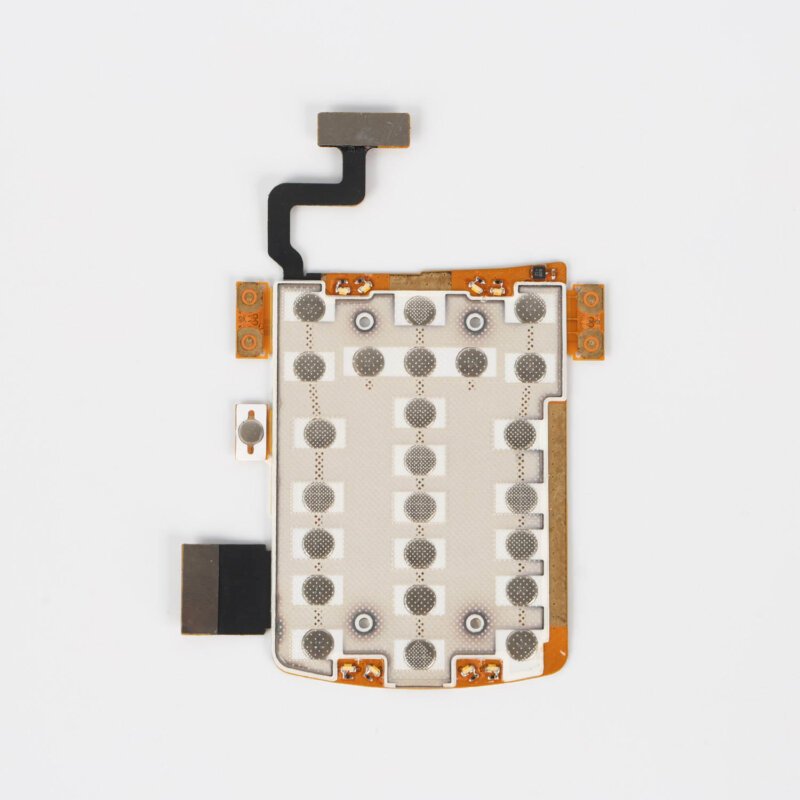
One thing that often trips up designers when making metal dome membrane switches is air. It sounds weird, but these switches need to breathe. When you press that metal dome down, the air underneath it needs somewhere to go. If the switch is sealed perfectly air-tight, the air gets trapped and acts like a spring, making the button hard to press.
Designers have to incorporate tiny air channels—vents—between the layers. These vents let air move between the keys or out to the edge of the switch. It’s a delicate balance because you want air to move, but you don’t want water to get in. Usually, the path is so narrow and winding that air can pass, but moisture is blocked. It’s these invisible details that determine whether metal dome membrane switches last for ten years or fail in ten months. If you want to know more about metal dome membrane switches, please read Advantages of Metal Dome Membrane Switches.
FAQ
Are metal dome membrane switches waterproof?
By default, the top surface is water-resistant because it is a single sheet of plastic. However, making the entire assembly fully waterproof (IP67 rated) requires special perimeter adhesives and careful design of the tail (where the cable comes out). So, while they are naturally splash-proof, full submersion protection is an added design feature.
How long do these metal dome membrane switches last?
They are incredibly durable. A standard stainless steel dome is usually rated for 1 million cycles. Some specialized ones can go up to 5 million. In most cases, the electronic device itself will become obsolete before the metal dome membrane switches wear out.
Can you repair a metal dome membrane switches if one button fails?
Generally, no. Because the layers are laminated together with strong industrial adhesives, you can’t really peel them apart to fix a single dome without destroying the circuit traces. If the panel fails, the standard procedure is to peel off the entire unit and replace it with a new one.