
Buttons are everywhere. Remote controls, microwaves, medical devices, industrial panels—anywhere a person needs to interact with electronics, buttons appear. But what actually makes a button feel like a button? That satisfying click, the tactile confirmation that something has been pressed? In countless devices, the answer lies in a component most people never think about: the dome sheet.
A dome sheet is a precisely engineered layer containing multiple metal domes arranged in specific positions. These domes provide the tactile response and electrical switching action for membrane keypads and other input interfaces. Understanding what a dome sheet does—and why it matters—helps explain how so many everyday devices achieve reliable, responsive user interaction.

Understanding the Dome Sheet Structure
At its core, a dome sheet consists of small metal domes mounted onto a flexible carrier material. The domes themselves are typically made from stainless steel, formed into convex shapes that collapse when pressed and spring back when released. The carrier holds them in precise alignment, matching the button layout of whatever device they serve.
Primary components include:
- Metal domes (usually stainless steel, sometimes nickel-plated)
- Carrier film (polyester or polyimide sheet)
- Adhesive layer for mounting
- Spacer layer in some configurations
- Protective backing (removed during installation)
The carrier film holds everything together. Polyester (PET) is common for standard applications. Polyimide handles higher temperature environments better. The adhesive layer bonds the dome sheet to the circuit board or membrane layer beneath, ensuring domes stay positioned correctly over their contact points.
How the Domes Work
Each individual dome acts as both a tactile element and an electrical switch. In the resting state, the dome sits in its convex shape, holding the button surface slightly elevated. When pressed, the dome collapses with a distinct snap—this is the click users feel. The collapsed dome bridges two electrical contacts beneath it, completing a circuit. Release pressure, and the dome springs back, breaking the connection.
This mechanism is elegantly simple. No complex moving parts. No separate springs required. The dome itself provides both the tactile feedback and the switching function. That simplicity contributes to reliability, which is why dome sheets appear in applications ranging from TV remotes to medical equipment.
Types and Variations of Dome Sheet Configurations
| Dome Type | Typical Force Range | Common Applications | Tactile Feel |
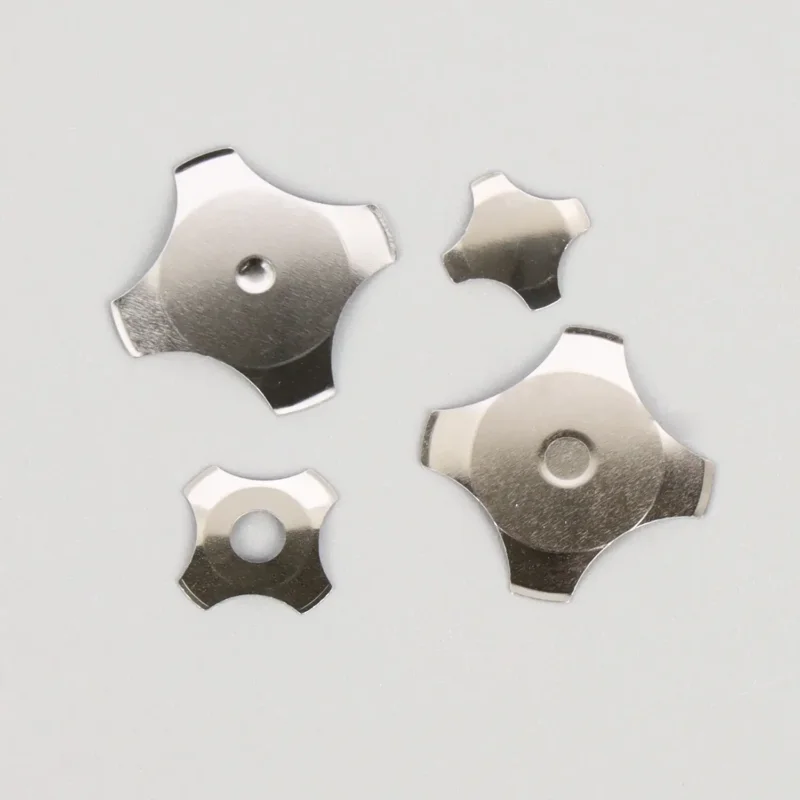
| Four-leg dome sheet | 150g–350g | Consumer electronics, remotes | Crisp, distinct click |
| Triangle dome sheet | 100g–250g | Compact devices, mobile accessories | Softer, lighter feel |
| Oblong dome sheet | 150g–400g | Membrane keyboards, industrial panels | Firm, stable response |
| Round dome sheet | 100g–500g | Various applications | Varies by size |
Four-leg dome sheets are probably the most common. Their shape provides a clean, predictable snap that users find satisfying. Triangle domes work well in space-constrained designs. Oblong domes suit elongated button shapes.
Force rating matters significantly. A dome sheet designed for a handheld remote might use lighter domes—easier on the fingers during extended use. Industrial control panels often use heavier domes to prevent accidental activation in environments where operators wear gloves or work around vibration.
Custom Dome Sheet Layouts
Standard dome sheets exist, but many applications require custom configurations. Custom dome sheet layout must match the circuit board design exactly, with each dome positioned precisely over its corresponding contact pads.
Customization options typically include:
- Dome quantity and spacing
- Individual dome force ratings (mixing forces on a single sheet)
- Carrier material selection
- Adhesive type and coverage pattern
- Overall sheet dimensions and shape
- Tail design for connection purposes
This flexibility allows designers to optimize the user experience. Some products use varying dome forces—lighter for frequently pressed buttons, heavier for critical functions that should not be activated accidentally. A well-designed dome sheet tailors the tactile experience to the specific product and its intended users.
Applications Where Dome Sheet Technology Excels
The range of products using dome sheets is genuinely broad. Anywhere membrane switches or low-profile keypads appear, dome sheets likely provide the tactile feedback.
- Consumer electronics (remotes, game controllers, appliances)
- Medical devices (monitors, diagnostic equipment, infusion pumps)
- Industrial controls (machinery panels, process controllers)
- Automotive interfaces (climate controls, steering wheel buttons)
- Telecommunications equipment
- Point-of-sale terminals
- Test and measurement instruments
Medical and industrial applications particularly value the reliability and sealed construction possible with dome sheet technology. Membrane interfaces with dome sheets can be completely sealed against moisture, dust, and contamination—critical in sterile environments or harsh industrial settings.
Consumer electronics benefit from the cost-effectiveness. A dome sheet adds satisfying tactile feedback without significantly increasing manufacturing complexity or expense. That balance of performance and economy explains why the technology persists despite touchscreen proliferation.
Advantages and Limitations of Dome Sheet Design
Like any technology, dome sheets involve trade-offs. Understanding both strengths and weaknesses helps determine whether they suit a particular application.
Advantages:
- Reliable tactile feedback with consistent feel
- Long operational life (often millions of cycles)
- Low profile suitable for thin device designs
- Cost-effective for medium to high volume production
- Compatible with sealed, washable membrane interfaces
- Simple integration with flexible circuit technology
Limitations:
- Tactile feel is predetermined by dome selection (not adjustable after assembly)
- Requires precise alignment during manufacturing
- Limited travel distance compared to mechanical switches
- Force options, while varied, cannot match full mechanical keyboard range
- Not suitable for applications requiring extremely high actuation forces
For most applications where dome sheets make sense, the advantages significantly outweigh limitations. The technology has matured over decades, and manufacturers have refined production processes to achieve excellent consistency.
FAQ
How long does a dome sheet typically last?
Most quality dome sheets are rated for one million to five million actuations per dome, sometimes more depending on design and materials. In practical terms, this exceeds the useful life of most consumer products by a wide margin. Even heavily used buttons rarely approach these limits before the product itself becomes obsolete or is replaced for other reasons.
Can a dome sheet be replaced if it fails?
Technically yes, though practicality varies. In devices designed for serviceability, replacing a worn dome sheet is straightforward—remove the old one, align and install a new one. However, many consumer products are not designed for component-level repair. The dome sheet is integrated during manufacturing and accessing it requires disassembly that may damage other components or seals.
What causes a dome sheet to feel mushy or unresponsive?
Several factors contribute. Worn domes that have lost spring tension feel soft. Contamination beneath the dome can prevent proper collapse or contact. Misalignment between domes and contact pads causes inconsistent response. In humid environments, moisture infiltration sometimes affects performance. Adhesive degradation allowing domes to shift is another culprit. Quality dome sheets from reputable manufacturers minimize these issues through better materials and tighter process control.