
There is a specific kind of satisfaction in pressing a button and feeling a crisp, sharp response. It is a distinct mechanical confirmation—a “snap” that travels from the fingertip right up the arm. That sensation, which tells you definitively that a device has received a command, usually comes from a component smaller than a fingernail: the snap dome.
These tiny curved discs are everywhere. While they look simple,their role is critical. They bridge the gap between human intention and electronic action, providing both the electrical connection and the tactile feedback that makes a device feel “responsive” rather than dead.
The Mechanics Behind the Click
To understand what a snap dome is used for, one has to look at how it moves. In its resting state, the dome sits on a printed circuit board (PCB) like a miniature tent or an inverted bowl. It hovers over two electrical contacts. When a user applies force,the dome collapses. The center of the metal dimple snaps down, touching the central contact pad and closing the circuit.
The metal has to be flexible enough to snap down but strong enough to spring back instantly once the finger is removed. This is why material selection is so rigid. Manufacturers almost exclusively use specific grades of stainless steel, like SUS 301 or 304. These alloys have high tensile strength and excellent fatigue resistance.
A quality snap dome is often rated for a lifespan of 500,000 to over 1,000,000 cycles. That is years of channel surfing or volume adjusting. If the metal were any softer, it would deform permanently after a week; any harder, and it might crack under the stress. It is a balancing act between longevity and that specific “click ratio”—the difference in force between the push and the snap—that defines how good a button feels.
Where You Actually Find Snap Dome
It is easy to assume these components are only found in cheap electronics, but that couldn’t be further from the truth. The utility of the snap dome spans across industries that require precision, durability, and compact design.
Consumer Electronics: The Everyday Click
The most obvious habitat for these components is the living room. Pick up a TV remote. The power button that gives a solid click? That’s a snap dome. But they are also critical in mobile technology. While smartphones have moved to touchscreens, the side volume keys and power buttons often still rely on four-legged tactile snap domes because they take up almost zero vertical space. In gadgets where every millimeter counts, a switch that is less than 0.5mm thick is invaluable.
The Automotive Dashboard
Modern cars are full of snap domes. Steering wheel controls, window switches, and dashboard buttons need to function in freezing winters and scorching summers. Rubber switches can stiffen in the cold or get too soft in the heat, changing the “feel.” Stainless steel snap domes are largely immune to these temperature swings. Furthermore, drivers need to operate controls without taking their eyes off the road. The sharp tactile feedback of a metal dome provides that necessary confirmation without visual verification.

Medical Devices and Reliability
Equipment in hospital like infusion pumps, patient monitors, and defibrillators often use membrane switches—flat surfaces that can be wiped down with harsh chemicals. It allows the device to be hermetically sealed against fluids and bacteria while still giving the nurse or doctor the tactile confidence that they have successfully pressed a button. A touchscreen might fail if the user is wearing gloves or if the screen is wet, but a mechanical dome works on pure pressure, making it a safer choice for critical medical interfaces.
Different Shapes Of Snap Dome For Different Feels
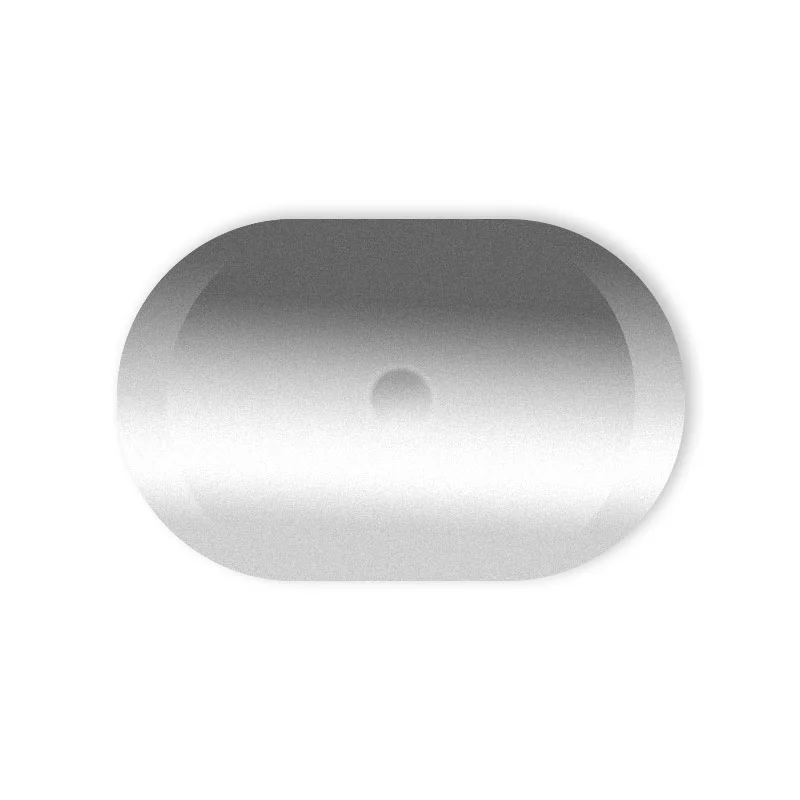
Not all clicks are created equal, engineers choose different shapes of domes to achieve different tactile experiences. In highly specific constraints—like the thin edge of a digital stylus—engineers might even implement an Oval Dome Switch to fit the unique geometry, but usually, the choice comes down to two main contenders.The two heavyweights in this arena are the Round Dome and the Four-Legged (Cross) Dome.
The four-legged snap dome is interesting because the legs allow for more “travel”—the distance the button goes down before clicking. This often feels more luxurious or substantial to the user. On the other hand, the round dome is the workhorse of miniaturization. Because the entire rim sits on the circuit board, it is less likely to get jammed by dust or debris, which making it robust.

Different Materials Of Snap Dome For Different Environments
Most high-quality snap domes are stamped from stainless steel . This isn’t an accident; this specific grade of steel has a high tensile strength, meaning it remembers its original shape even after being mashed down hundreds of thousands of times. A classic example is the metal dome, which relies on high-grade foundation to maintain its precise actuation profile without succumbing to metal fatigue. If a manufacturer swaps this for a lower-grade domestic steel to save cost, you end up with a button that gets “tired” and stays flat after a few months of use.
The Manufacturing Reality
Today, the industry relies heavily on dome arrays—custom sheets of peel-and-place stickers where the domes are already arranged in the exact layout of the device’s circuit board. Imagine a sticker sheet for a microwave control panel: twenty domes, perfectly spaced, held in place by a layer of adhesive PET (polyester) film. This ensures that the alignment is perfect. If a dome is slightly off-center relative to the contact pad below, the button might feel “dead” or require amount of force to work.
There is also the issue of “bounce.” When metal hits metal, it doesn’t just stop; it vibrates microscopically. This can cause the electronics to read a single press as multiple signals—a phenomenon known as contact bounce. High-end domes often have silver or even gold plating on the contact side to ensure that the electrical connection is clean and stable, reducing the risk of signal errors in sensitive equipment.
Why We Still Need Snap Dome
In an era where screens are taking over everything, the snap dome persists. Why? Because humans crave certainty.A snap dome provides a physical anchor in a digital world, it allows for “blind” operation.
They are used to give machines a voice. As long as we need that physical reassurance, these little pieces of steel aren’t going anywhere. If you want that interaction with technology to feel just a bit more real, it all starts with choosing a snap dome manufacturer.