
When you pick up a remote control or press a button on a microwave, there is that specific, satisfying “click.” It’s tactile. It feels responsive. Most people never think about what’s happening underneath that button, but for product designers and procurement managers, that little click is everything. It usually comes from a small piece of stainless steel, known as a snap dome. Sourcing these components seems simple enough on the surface, but finding the right metal dome manufacturer can actually be quite a headache.
There are so many suppliers out there, and they all claim to be the best, the fastest, or the cheapest. But how does one really know? It is often a mix of digging through data and getting a general “vibe” from the company. It’s not just about the price per unit; it’s about whether that unit works the first time, the thousandth time, and the millionth time. If the switch fails, the whole device feels cheap, or worse, it stops working.
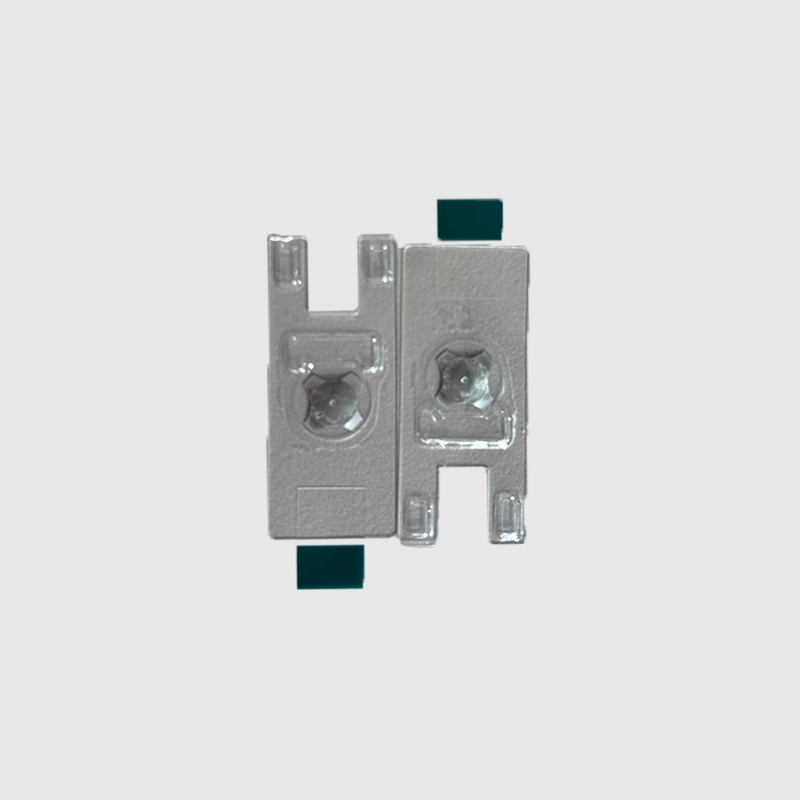
1. Assessing Manufacturing Precision and Technology
The first thing that jumps out when looking at a potential partner is their equipment. You can’t really make high-quality tactile components with outdated machinery. It just doesn’t work that way. A reputable metal dome manufacturer needs to invest in high-precision stamping presses. We are talking about components that are sometimes smaller than a fingernail, where the difference of a few microns changes the tactile feel entirely.
It is worth observing how they handle the tooling process. Do they make molds in-house? If a manufacturer relies entirely on outsourcing their tooling, it adds a layer of delay and potential miscommunication. When looking at their capabilities, one should look for specific tech setups.
- High-speed stamping machines: For consistent volume.
- Laser inspection tools: For checking dimensions without touching the delicate parts.
- Clean room environments: Essential for preventing dust from ruining contact points.
If the factory floor looks like a chaotic garage, the product will probably reflect that. It’s a bit subjective, sure, but a clean, organized shop floor usually signals a disciplined metal dome manufacturer that cares about precision.
2. Quality Control Protocols in a Metal Dome Manufacturer
Quality control is one of those terms that gets thrown around a lot. “We have high quality,” everyone says. But what does that actually mean? When evaluating a metal dome manufacturer, one needs to look past the marketing fluff. You want to see the certifications, obviously, like ISO 9001, but paperwork is just the start.
Real quality control is about the testing. Metal domes are mechanical. They move. They flex. Eventually, they break. The question is when. A solid supplier should be able to provide life cycle test data. Are they testing their batches for 100,000 cycles? 1 million? 5 million?
It is also interesting to see how they handle the “bad” apples. Every production run has defects. A good manufacturer has automated optical inspection (AOI) systems to catch the weird-shaped ones before they get packed. If they rely solely on human visual inspection for millions of tiny domes, eyes get tired, and mistakes happen. It’s just human nature.
3. Customization Capabilities and Design Support
Not every project uses a standard 10mm circle dome. Sometimes the PCB design is tight, or the actuation force needs to be heavier to prevent accidental presses. This is where flexibility becomes the dealbreaker. A rigid metal dome manufacturer who only sells off-the-shelf parts might not be helpful for innovative consumer electronics.
You want a partner who can look at a drawing and say, “Okay, but if we change the leg angle slightly, you’ll get a better click ratio.” That kind of feedback is gold. It shows they understand the physics of the snap dome, not just the stamping of it.
| Feature | Standard Supplier | Strategic Metal Dome Manufacturer |
|---|---|---|
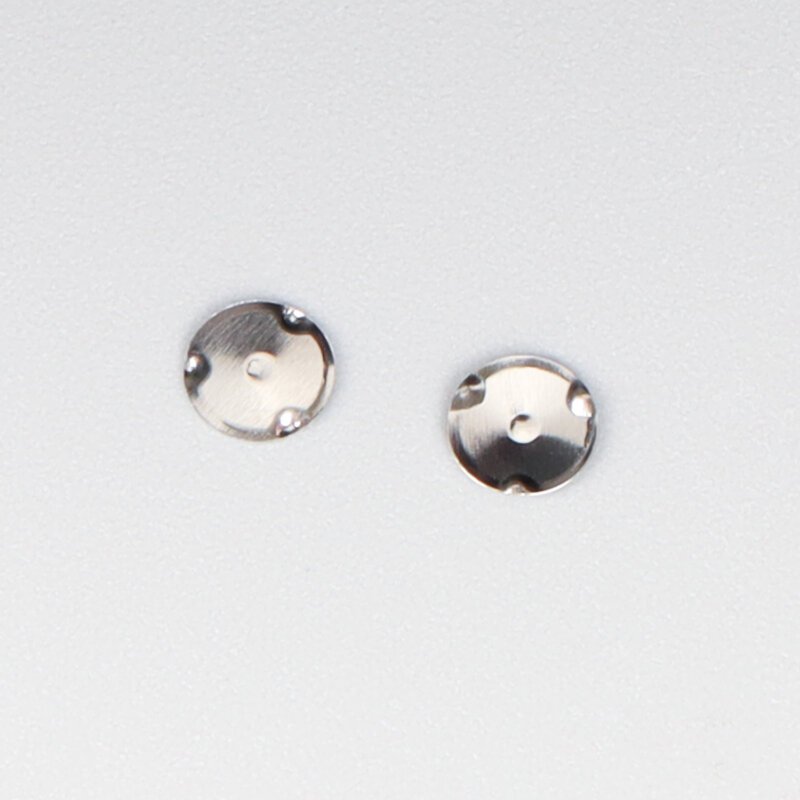
| Shape Availability | Limited (Round metal dome, 4-Leg metal dome) | Extensive (Triangle, Oblong, Custom) |
| Force Tolerance | +/- 30g or higher | +/- 10g to 20g (High Precision) |
| Surface Treatment | Basic Nickel plating | Gold, Silver, Nickel, Brushed |
| Prototyping | Slow, expensive | Fast sampling, engineering support |
4. Lead Times and Supply Chain Stability
Time is money, as the cliché goes. But in manufacturing, waiting on parts is worse than spending money—it stops everything. When evaluating a metal dome manufacturer, one must ask about their raw material stock. Stainless steel (usually SUS 301 or similar) is the core material. If the manufacturer doesn’t keep enough raw coil in stock, they are at the mercy of the market.
Lead times fluctuate, but consistency is key. If they promise two weeks, it should be two weeks. It is often observed that smaller workshops might promise the moon—”We can do it in 3 days!”—but then fail to deliver because a machine broke down. A larger, more established manufacturer usually has redundancies. They have backup machines. They have backup power.
It’s also smart to check their shipping options. Do they have good relationships with logistics carriers? It seems minor, but having your parts stuck in customs because the paperwork was sloppy is a nightmare no one wants.
5. Communication and Problem Solving
Finally, there is the human element. You aren’t just buying metal; you are entering a relationship. Language barriers can happen, especially with overseas sourcing, but the effort to communicate matters more. Does the metal dome manufacturer respond to emails within 24 hours? Do they understand technical English or the specific engineering terminology of your industry?
Things will go wrong eventually. A batch might be too soft. A shipment might get lost. The true test of a manufacturer is how they react when there is a problem. Do they blame the shipping company? Do they blame your design? Or do they say, “Let us figure this out,” and send a replacement batch immediately?
It feels reassuring when a supplier asks questions about your application. It means they want the part to work, not just to make the sale.
Conclusion
Choosing the right partner is a balancing act. You rarely find someone who is the cheapest, the highest quality, and the fastest all at once. You usually have to pick two. However, by focusing on these five criteria—precision, quality control, customization, stability, and communication—you can weed out the risky options.
Ultimately, the best metal dome manufacturer is the one you don’t have to worry about. You send the order, the parts arrive, and the buttons click perfectly. That is the goal.
If you want to know more about metal dome manufacturer, please read about Metal Dome Manufacturers: How to Choose the Right Partner.
FAQ
What is the typical life cycle of a metal dome?
It varies by design and material, but a standard high-quality metal dome usually lasts between 100,000 to over 1 million cycles. Some premium manufacturers can engineer domes to withstand up to 5 or 10 million cycles for heavy-use industrial applications.
Can a metal dome manufacturer customize the "click" feeling (tactile ratio)?
Yes, absolutely. The tactile ratio, or the “snap” feeling, is determined by the shape, thickness, and material of the dome. Experienced engineers can adjust the tooling to change the actuation force and return force to get the specific feel you want.
Why is gold plating used on some metal domes?
Gold plating is often used to lower contact resistance and prevent oxidation (rust or corrosion) over time. While stainless steel is durable, gold ensures a very reliable electrical connection, which is crucial for sensitive devices like medical equipment or high-end consumer electronics.