
Standard metal domes work beautifully for most applications. The industry has refined common sizes, forces, and configurations over decades—covering perhaps 80% of real-world needs quite adequately. But then there’s that other 20%. Products where standard options don’t quite fit, don’t feel right, or don’t perform optimally for specific requirements.
That’s where custom metal dome design enters the picture. It’s not a path taken lightly—tooling costs, development timelines, and minimum quantities create barriers that make standard parts attractive whenever possible. Yet for products demanding particular characteristics, custom development proves worthwhile. Sometimes essential.
This guide covers the complete custom metal dome design process from initial concept through production. Not superficial overview material, but practical information for engineers and product designers actually navigating these decisions. The goal: helping readers understand when custom makes sense, what the process involves, and how to execute it successfully.
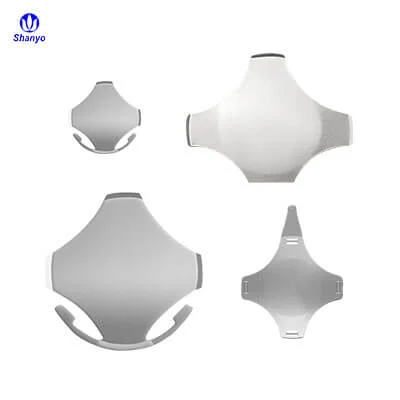
When Custom Metal Dome Design Makes Sense
Before diving into how, understanding when custom development justifies its costs and complexity matters fundamentally. Not every non-standard requirement warrants custom tooling.
Situations Favoring Custom Development
Certain circumstances push strongly toward custom metal dome solutions:
Unique form factors. When product geometry absolutely requires non-standard dome shapes or sizes, standard catalogs simply don’t help. Unusual button layouts, curved surfaces, or space constraints sometimes demand precisely fitted components.
Specific tactile requirements. Standard force and travel combinations might not deliver desired user experience. Products targeting particular tactile signatures—lighter than typical, crisper than standard, specific force curves—often require custom specifications.
Volume considerations. High-volume production amortizes tooling costs across millions of units, making custom economically sensible. A $15,000 tooling investment disappears into rounding errors when spread across 10 million pieces.
Competitive differentiation. Premium products sometimes specify custom metal dome designs precisely because competitors use standard parts. The resulting tactile distinction—however subtle—supports brand positioning and quality perception.
Integration requirements. Complex assemblies might need domes integrating specific features: unusual leg configurations, integrated shielding, combined carrier formats, or compatibility with particular adhesive systems.
Situations Favoring Standard Parts
Conversely, certain circumstances argue against custom development:
- Low to moderate volumes (under 500,000 units annually)
- Tight timelines without room for tooling development
- Limited engineering resources for specification development
- Applications where standard tactile characteristics work acceptably
- Cost-sensitive products where tooling investment proves prohibitive
Honest assessment often reveals that standard parts with minor compromises outweigh custom development burden. The temptation to customize everything should yield to practical evaluation of actual requirements versus nice-to-haves.
The Economic Threshold Question
A rough economic analysis helps frame custom decisions. Consider:
- Tooling investment required (typically $8,000-$25,000)
- Per-piece price difference versus standard alternatives
- Expected lifetime volume across product generations
- Development time costs and opportunity costs
- Risk costs if custom design requires revision
If tooling costs add less than $0.01 per piece across expected volume, and custom design provides meaningful performance benefits, the math usually supports custom development. If tooling adds $0.10 or more per piece, benefits need to be substantial indeed.
Custom Metal Dome Applications
Automotive Custom metal domes are critical for vehicle interfaces where distinct tactile feedback and high reliability are mandatory. Common applications include key fobs, steering wheel controls, dashboard switches, and window regulators. These domes are engineered to withstand extreme temperature fluctuations (automotive grade), vibration, and humidity while maintaining consistent actuation force, ensuring the driver receives immediate input confirmation without distraction.
In medical technology, precision and safety are paramount. Custom metal domes in medical provide the sharp tactile response and audible “click” necessary for operators to confirm input without looking at the device. Applications range from surgical instruments and portable diagnostic tools to patient monitoring systems and hearing aids. These components often feature gold plating for superior conductivity and are integrated into sealed assemblies to withstand rigorous sterilization and cleaning procedures.
Industrial environments demand rugged components capable of surviving rough handling, dust, and chemical exposure. Industrial custom metal domes for heavy machinery controls, handheld barcode scanners, and factory automation panels are often designed with higher actuation forces to prevent accidental activation by operators wearing thick gloves. They offer extended lifecycles to minimize maintenance downtime in high-throughput operational settings.
Force And Tactile Specifications
| Parameter | Description | Typical Range | Specification Approach |
|---|---|---|---|
| Peak actuation force | Maximum force before snap-through | 80-500gf | Specify target ±tolerance |
| Tactile ratio | Force drop percentage during snap | 40-70% | Specify minimum acceptable |
| Return force | Force at which dome returns | 30-70% of peak | Often left to manufacturer |
| Force tolerance | Acceptable variation unit-to-unit | ±15% to ±30% | Tighter costs more |
Life And Reliability Specifications
Specifying reliability requirements guides design decisions:
Cycle life requirements. Minimum acceptable cycles before failure (typically 500,000 to 10 million depending on application).
Environmental requirements. Temperature range, humidity exposure, chemical exposure, vibration specifications.
Failure definition. What constitutes failure—complete loss of function, degraded tactile feel, increased contact resistance, some combination?
Testing protocols. Reference industry standards (such as relevant sections of MIL-STD specifications) or define custom test procedures.
Over-specifying reliability adds cost without benefit. Under-specifying risks field failures. Understanding actual application demands—not worst-case imaginary scenarios—guides appropriate specification levels.
The Custom Metal Dome Development Process
With specifications established, actual development proceeds through several phases. Understanding this process helps set realistic expectations.
Design Review And Feasibility Assessment
Initial custom metal dome discussions typically involve design review meetings—whether virtual or in-person—where customer requirements meet manufacturing reality.
During feasibility assessment, manufacturers evaluate:
- Whether requested specifications are achievable physically
- What tooling approach best addresses requirements
- Preliminary cost and timeline estimates
- Potential specification conflicts or concerns
- Alternative approaches that might work better
Sometimes requests prove infeasible—physics doesn’t cooperate. A tiny dome with high travel, low force, and exceptional life might simply be impossible. Good manufacturers explain constraints clearly and propose achievable alternatives rather than accepting impossible specifications and delivering disappointing results.
This phase also surfaces specification ambiguities. Requirements clear to the customer might be unclear to manufacturers, or vice versa. Resolving ambiguities early prevents expensive misunderstandings later.
Tooling Design And Fabrication
Custom metal dome production requires forming tools—precision dies that stamp flat material into dome shapes. Tooling represents the major custom development investment.
Tooling components typically include:
- Forming dies creating dome shape
- Trimming tools cutting outer profile
- Leg-forming features if applicable
- Handling features for manufacturing automation
Tooling development timeline:
- Design and approval: 1-2 weeks
- Fabrication: 3-6 weeks typically
- Initial tryout and adjustment: 1-2 weeks
- Total: 5-10 weeks depending on complexity
Tooling cost factors:
- Size and complexity of dome
- Tolerance requirements (tighter = more expensive tooling)
- Production rate requirements (higher rate = more robust tooling)
- Number of variations (single tool versus family tooling)
Tooling costs range from approximately $8,000 for simple designs to $25,000 or more for complex, high-precision, high-volume applications. These are one-time investments amortized across production volume.
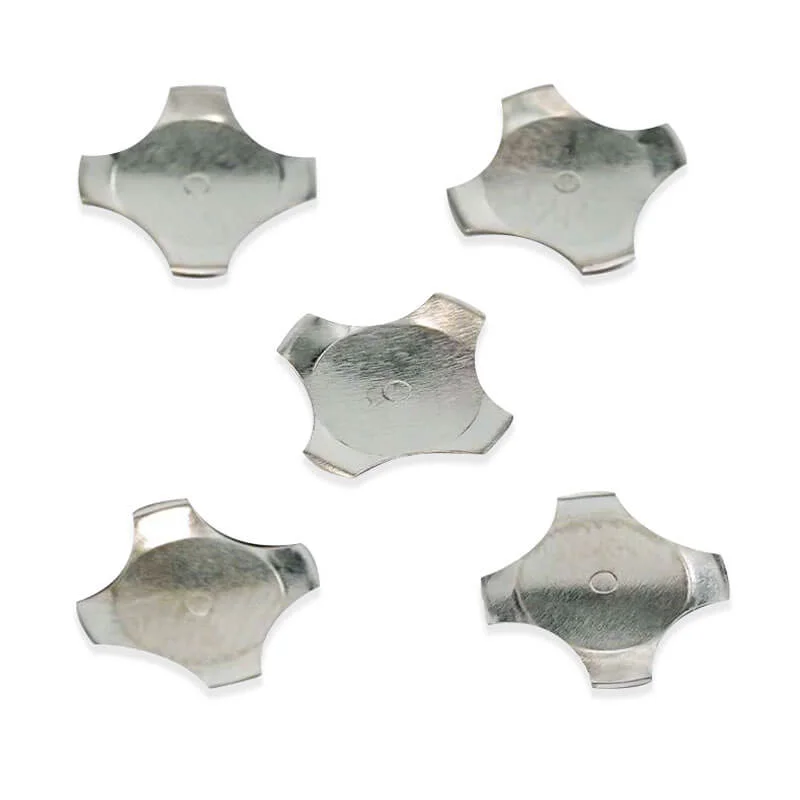
Prototype Development And Testing
Once tooling produces initial parts, prototype evaluation begins. This phase often involves multiple iterations.
First article inspection verifies dimensional conformance to specifications. Measurements against drawings identify any tooling adjustments needed.
Force and tactile testing evaluates whether mechanical performance meets requirements. Standard testing equipment measures force curves; subjective evaluation assesses tactile feel.
Application testing installs custom metal dome prototypes in actual product assemblies (or representative test fixtures) to evaluate real-world performance.
Common prototype phase discoveries include:
- Force slightly higher or lower than target (tool adjustment)
- Tactile ratio acceptable but different than expected
- Fit issues with customer assemblies
- Unexpected interactions with overlay materials
- Appearance or finish concerns
Manufacturers expect some iteration during prototype phases. Specifications based on theoretical calculations rarely match reality perfectly on first attempt. Building iteration time into project schedules prevents schedule surprises.
Design Validation And Approval
Before production release, validation testing confirms custom metal dome designs meet all requirements reliably.
Validation testing typically covers:
Environmental testing:
- Temperature cycling (minimum/maximum storage and operating)
- Humidity exposure (typically 85°C/85% RH for extended periods)
- Thermal shock if required by application
Mechanical testing:
- Life cycling to specification requirements
- Force consistency verification across temperature
- Contact resistance measurements throughout life
Reliability testing:
- Accelerated life testing projecting long-term performance
- Failure mode analysis if any failures occur
- Statistical process capability assessment
Successful validation leads to production approval. Failed validation requires design revision—sometimes minor adjustments, sometimes significant changes. Building validation time into schedules (typically 4-8 weeks depending on test requirements) prevents unrealistic expectations.
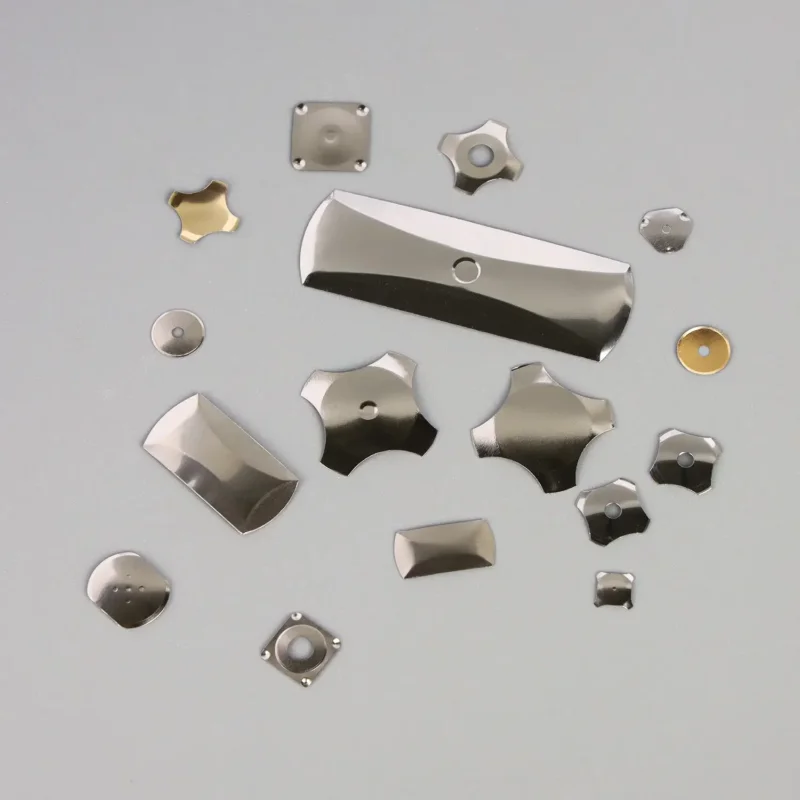
Manufacturing Considerations For Custom Metal Dome Production
Production Tooling Versus Prototype Tooling
Prototype tooling sometimes differs from production tooling. Prototype tools might be:
- Simpler construction, lower cost
- Slower running speed capability
- Less robust, shorter life expectancy
- Single-cavity versus multi-cavity production tools
If prototypes used simplified tooling, production tooling investment occurs before volume manufacturing begins. This additional cost and timeline should factor into planning.
Production tooling specifications depend on:
- Annual volume requirements
- Production rate needs
- Tolerance consistency requirements
- Expected program lifetime
High-volume programs warrant premium tooling with longer life and better consistency. Lower-volume programs might use prototype-grade tooling for production if volumes remain modest.
Quality Control For Custom Parts
Custom metal dome production requires quality systems ensuring consistency.
In-process controls typically include:
- Material verification (thickness, temper)
- Tool condition monitoring
- Force testing at defined frequencies
- Dimensional verification
- Visual inspection protocols
Outgoing inspection typically covers:
- Force testing (sampling or 100% depending on requirements)
- Dimensional verification (sampling)
- Visual standards compliance
- Packaging and labeling verification
Critical applications might require enhanced quality provisions:
- Statistical process control with defined Cpk requirements
- 100% force testing (automated testers enable this economically)
- First article inspection for each production lot
- Retained samples and traceability documentation
Specifying quality requirements during development ensures manufacturing processes support them. Adding requirements after production launch proves more difficult and expensive.
Supply Chain And Logistics Considerations
Custom metal dome production involves ongoing supply chain management beyond initial development.
Inventory considerations:
- Minimum order quantities (typically 5,000-50,000 pieces)
- Lead times for production orders (typically 4-8 weeks)
- Safety stock strategies for uninterrupted supply
- Demand variability management
Logistics options:
- Bulk packaging (lowest cost, requires customer handling)
- Tape and reel packaging (suitable for automated assembly)
- Carrier sheet formats (manual or semi-automated assembly)
- Custom packaging configurations
Change management:
- Engineering change procedures for specification updates
- Tooling modification processes and costs
- Qualification requirements for changes
- Communication protocols between customer and manufacturer
Establishing clear supply chain expectations during development prevents surprises during production. Understanding minimum quantities, lead times, and flexibility constraints helps customers plan appropriately.
FAQ
What are the minimum order quantities for custom metal dome production?
Minimum quantities typically range from 10,000 to 50,000 pieces for initial production runs. Some manufacturers accept 5,000 pieces at premium pricing. Very small quantities under 5,000 pieces rarely make economic sense for truly custom designs—the tooling investment simply cannot amortize reasonably. Near-standard modifications sometimes accommodate smaller volumes more practically than fully custom approaches.
How long does custom metal dome tooling last before replacement?
Quality production tooling typically produces 5 million to 20 million pieces before requiring replacement. Actual life depends on dome complexity, material thickness, and production rate. Replacement tooling costs less than original—usually 50% to 70% since design work is already complete. Manufacturers monitor tool condition and notify customers when replacement approaches.
Can existing custom metal dome designs be modified after production begins?
Yes, modifications remain possible though costs vary with change scope. Minor adjustments like small force tweaks often require only tool modification—perhaps 20% to 40% of original tooling cost. Major changes might require complete new tooling at full investment. Any modification requires appropriate revalidation testing. Typical modification timelines run 4 to 8 weeks depending on extent.