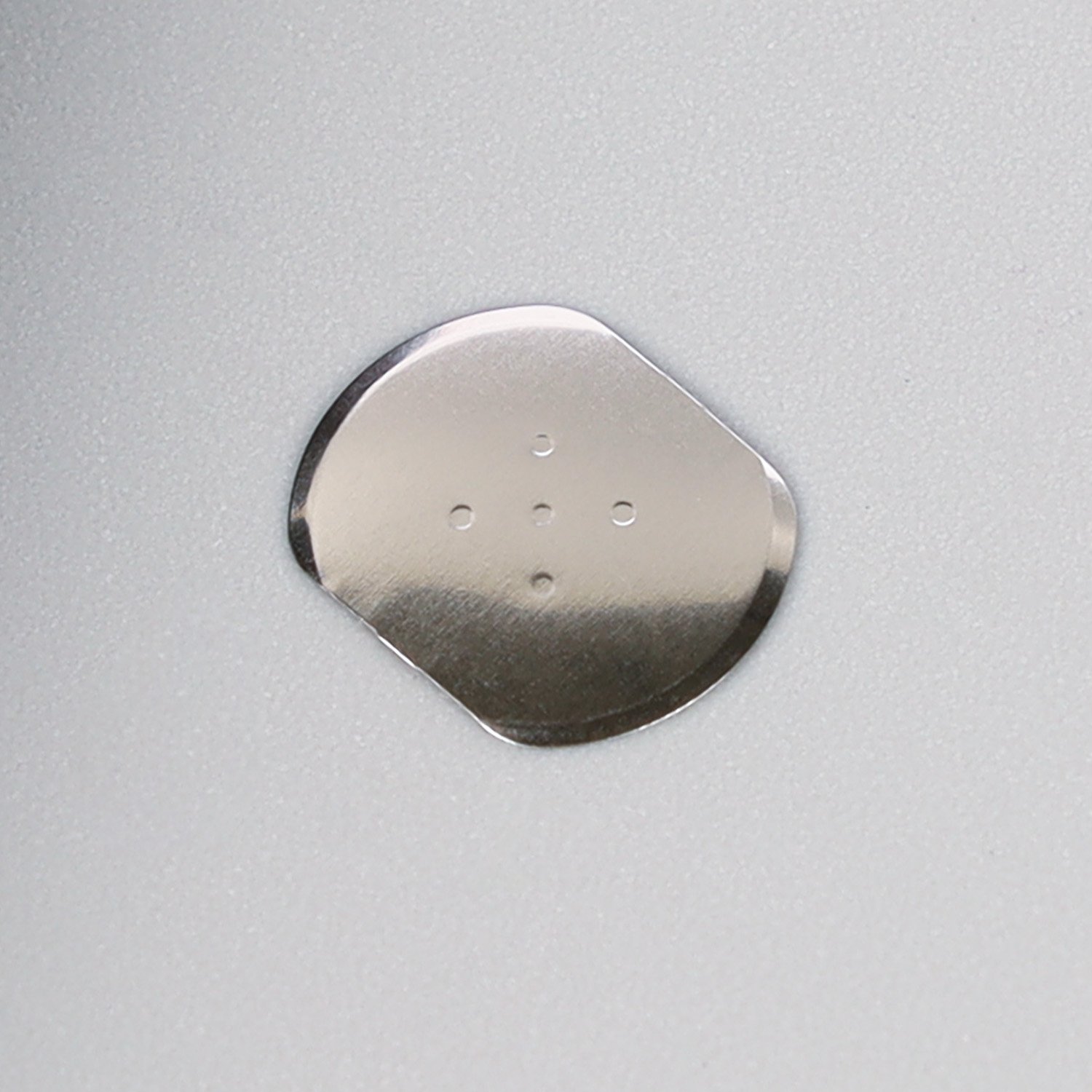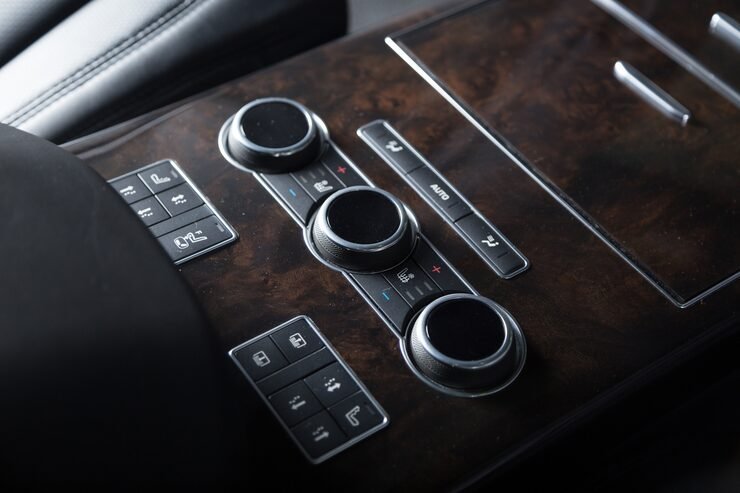
Press a button on a keyboard, a car dashboard, or a medical monitor, and a small metal disc under the surface probably decides how that press feels. Metal dome switches give buttons their crisp click and long service life, which is why they show up in so many mass-produced keypads. Shape is one of the first choices a buyer faces. Round domes get most of the attention, but the square version solves problems that round domes cannot.
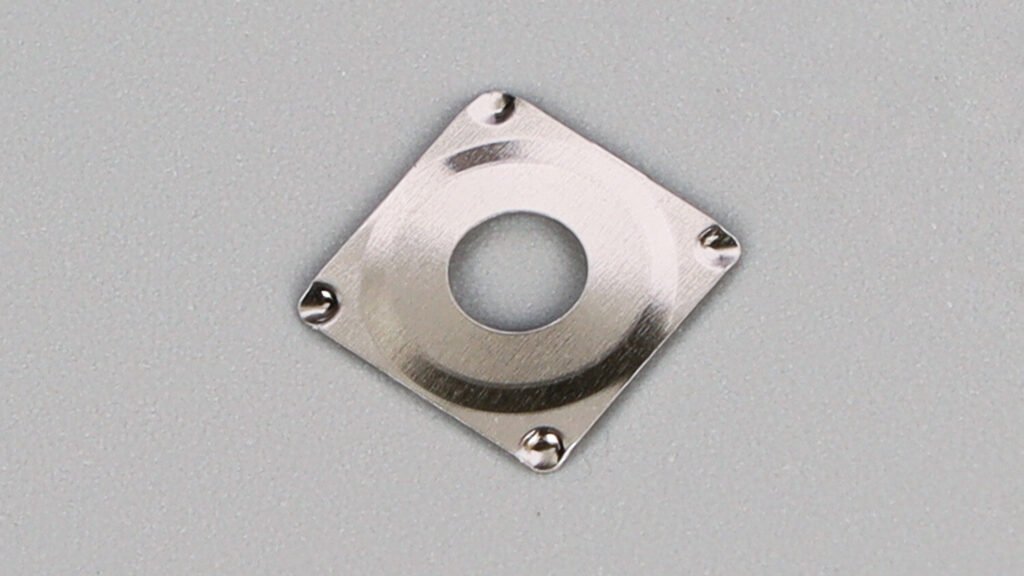
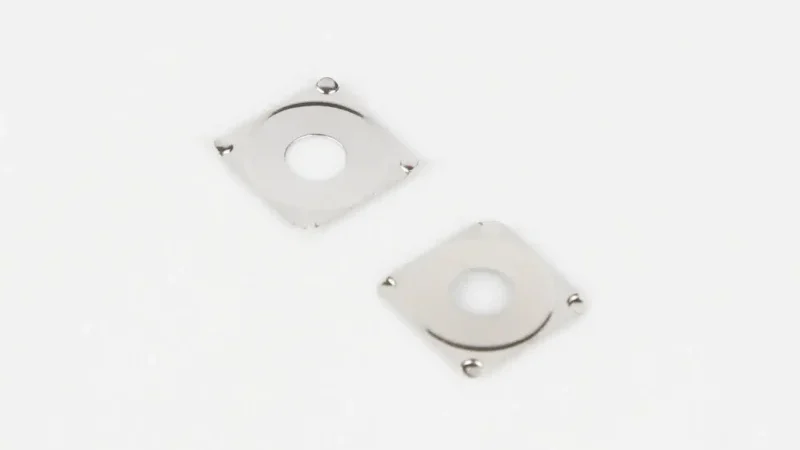
A square metal dome switch is a momentary tactile contact stamped from thin stainless steel. It has a square body with rounded corners, a circular snap area in the center, and four small feet at the corners that rest against the circuit. Pressing the center collapses the dome, closes the circuit, and produces a sharp click; releasing the load lets the dome snap back and open the circuit again. The geometry suits large-format keys, grid-based keypads, and designs that need a defined orientation or a higher trip force, and buyers source them through a dedicated square dome switch product line.
The sections below explain the construction, the snap action behind the click, how the square shape compares with other domes, and what to confirm before placing an order.
What Is a Square Metal Dome Switch?
A square metal dome switch is a stamped stainless steel contact with a square outer body, a round central snap area, and four corner feet that hold it stable on the circuit until the dome collapses under finger pressure.
The Geometry Behind the Square Body
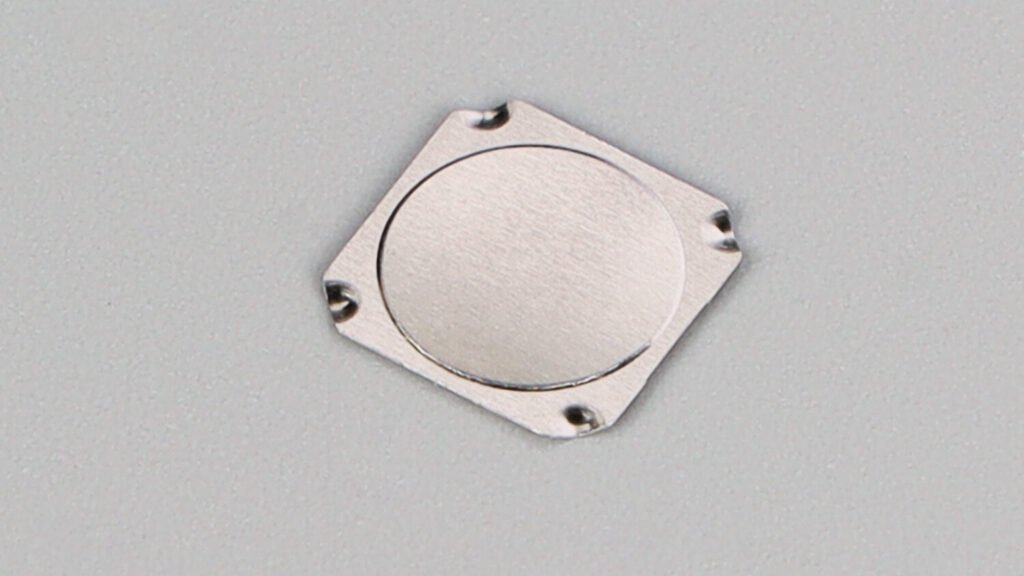
The part looks deceptively simple. A thin sheet of spring stainless steel is stamped and formed into a rounded-square skirt, and the center of that skirt curves upward into a dome. The four feet sit at the corners and define the support points around the central snap area. When an actuator loads the center, the curved section resists until it reaches the trip point, then buckles through with the click users associate with a well-made button.
The square outline also gives placement equipment and inspection cameras a visible orientation reference, which makes assembly errors easier to catch before the unit is sealed.
This part is easy to confuse with the four-leg dome, often called a cross dome. A four-leg dome has a round center with four distinct legs extending outward. A square dome keeps a nearly continuous square body with a circular snap zone inside it. They behave in similar ways, but they are different parts. In any dome switch design, the approved part drawing remains the controlling document, because overall size, height, hole option, and trip force can vary within the same shape family.
Materials and Basic Construction
Stainless steel grades such as SUS301 and SUS304 dominate the industry because they combine spring elasticity with fatigue and corrosion resistance. Sheet thickness commonly falls between 0.05 and 0.1 mm, thin enough to keep the finished switch inside slim assemblies.
Square domes come in two main variants. A no-hole version gives the actuator an uninterrupted central surface. A center-hole version leaves a defined opening in the middle, which designers use for venting, light pipes, or mechanical clearance. The two are not interchangeable and should be chosen together with the actuator design.
Size Fundamentals
Square domes start smaller than most people expect. Published dome guides list the square format among the smallest available, starting around 4 mm, while round domes range from roughly 3 mm to 20 mm in diameter (checked against industry technical guides, 30 September 2026). Custom square domes can also be engineered toward higher trigger forces than standard geometries.
How Does a Square Metal Dome Switch Work?
The dome works through snap action. It holds its curved shape under light load, then suddenly buckles at the trip point, touching the circuit below to complete it. Releasing the button lets the dome recover and break the circuit again.
The sequence inside one press runs like this:
- The user applies downward force on the key.
- Force passes through an overlay or actuator onto the center of the dome.
- The dome resists, and the applied load builds up.
- At the trip point, the curved section collapses suddenly.
- The collapsed dome bridges the center contact and the outer contact on the circuit.
- The circuit closes and the input registers.
- The load is released.
- The dome snaps back to its formed shape, and the circuit opens.
The whole cycle takes milliseconds, and it repeats for millions of cycles when the design is right.
Trip Force, Release Force and Tactile Ratio
Three numbers describe the feel of any dome. Trip force, sometimes written Fmax, is the load needed to make the dome snap. Release force, or Fmin, is the force the dome still exerts as it starts to return. The tactile ratio combines them: tactile ratio = (Fmax − Fmin) / Fmax × 100. A higher ratio reads as a crisper click. These definitions follow a published industry technical guide on tactile metal domes (checked 30 September 2026). Common keypad domes sit anywhere from about 100 to 600 grams-force, with specialized parts reaching far higher.
Why the Four Corner Feet Matter
The feet are not decorative. They establish four stable support points so the dome deflects evenly instead of rocking. A raised mask edge, debris, or an uneven copper region under one corner can tilt the dome and shift the force response. That is one reason square domes reward careful circuit layout: all four corners need clean, flat, intended support areas.
Square vs. Other Metal Dome Shapes
Square domes trade some availability for stability and space efficiency. They deliver a crisp feel and, per published industry data, life ratings up to 10 million cycles, which puts them ahead of most alternatives for large keys and grid layouts.
Tactile buttons in general fall into a few families: metal dome switches, silicone rubber domes, and mechanical keyswitches. Metal domes are the thin, low-cost option with the sharpest feedback. Within the metal dome family, five shapes cover nearly every design:
| Kupolform | Taktil känsla | Typical Size Range | Relative Life | Best Suited For |
|---|---|---|---|---|
| Fyrkant | Crisp | From about 4 mm | Up to 10 million cycles | Large keys, grid layouts, defined orientation |
| Round | Soft, low profile | 3–20 mm diameter | Hög | Low-profile membrane overlays, general keypads |
| Triangle | Sharp, high force | 5–13 mm | Måttlig | High-force needs in tight spaces |
| Fyrbent | Crisp | 5–20 mm | Moderate to high | Circuits with traces on one side |
| Oval | Soft | 3×4 mm to 51×13.7 mm | Måttlig | Long narrow keys, slider zones |
Ranges compiled from published dome industry guides (checked 30 September 2026).
When a Square Dome Is the Better Choice
- The available key area is square or wide, such as a spacebar, power button, or function strip.
- The design benefits from four defined corner supports that stop the dome from shifting.
- The target trip force is hard to reach with a standard round geometry.
- The panel layout uses a grid where orientation control during placement matters.
A round dome remains simpler when rotation is irrelevant and the circuit already uses a circular outer contact. Neither shape is universally better; the envelope, the actuator, and the layout decide it.
Key Specifications to Check Before Ordering
Before ordering, confirm six things: size envelope, trip and release force, center-hole option, plating, operating environment, and supply format. Each one changes both the feel and the cost of the finished switch.
| Parameter | Typical Industry Range | Anteckningar |
|---|---|---|
| Body size | From about 4 mm upward | Larger bodies spread force across wide keys |
| Material | SUS301 / SUS304 stainless steel | Standard grades for elasticity and fatigue life |
| Trip force | Roughly 100–600 gf for common keypad domes | Custom parts can target higher forces |
| Operating temperature | −45 °C to +100 °C | Covers automotive and industrial interiors |
| Electrical rating | Up to 1 watt, 0.1–50 V DC | Momentary signal switching, not power |
| Plating | Nickel, silver, or gold | Gold lowers and stabilizes contact resistance |
| Service life | 1–10 million actuations | Depends on force, stroke, and material |
Figures reflect common published ranges across the dome industry (checked 30 September 2026); confirm exact values on the supplier drawing for your part.
Center Hole or No-Hole
Choose a center hole only when the stack needs it: air movement, light transmission, or clearance for a protruding feature. Confirm the hole diameter together with the actuator tip so the plunger loads the snap area without catching the hole edge.
PCB Contact Layout and Overtravel
The circuit under a square dome usually has an isolated center contact and an outer contact region that supports the dome at its specified locations. Keep via, raised mask edges, and component bodies outside the active footprint. Overtravel, meaning pressing the dome past the flat plane of its feet, should be limited by the overlay design rather than the user’s finger.
Where Are Square Metal Dome Switches Used?
Square metal domes appear wherever a wide key, a grid layout, or a high-force press needs reliable tactile feedback: keyboards, appliance panels, industrial controls, automotive interiors, and medical devices.
Typical applications include:
- Large keyboard keys such as spacebars, enter keys, and power buttons, where a round dome would concentrate force in one spot.
- Home appliance and industrial control panels that see thousands of presses and need consistent feedback across a wide button.
- Automotive interior controls, including steering wheel switch pods, climate panels, and door lock switches. A dome switch car application has to survive vibration, temperature swings, and gloved operation, so higher trip forces and sealed assemblies are common there.
- Medical and monitoring equipment, where the thin profile fits behind sealed membranes and the click confirms each input.
- Consumer devices with grid keypads, where the square body aligns naturally with the layout.
In most of these products the domes are not placed one by one. They arrive as part of a metallkupol array or dome sheet, pre-aligned on an adhesive carrier, so automated placement can set dozens of switches in a single step.
Advantages and Limitations of Square Metal Domes
Square domes offer uniform force on large keys, a stable four-point support, defined orientation, and long life, but they demand a matching square footprint and careful corner alignment in return.
Fördelar:
- Force spreads evenly across wide buttons, so the press feels the same wherever the user hits the key.
- The square body gives placement equipment a clear orientation reference.
- Four corner feet resist lateral shift inside an array.
- Published industry data credits the square format with life ratings up to 10 million cycles.
Begränsningar:
- The circuit footprint must match the square outline and corner positions exactly.
- Standard catalogs carry fewer square options than round ones, so custom tooling is more likely.
- Corner support areas must stay flat and clean; uneven surfaces tilt the dome and distort the feel.
- Very low-profile designs may favor thin round domes instead.
How to Source Square Metal Domes: A Buyer’s Checklist
Successful sourcing starts with a short technical brief. Suppliers can quote faster and more accurately when the request states the key size, force targets, environment, and expected volumes up front.
Work through this list before contacting suppliers:
- Measure the available key area and the maximum dome envelope.
- Define the target trip force and release force, or at least the feel you want: soft, medium, or firm.
- Decide on the center-hole option based on venting, lighting, or clearance needs.
- Select a plating based on contact resistance and corrosion requirements.
- State the operating temperature range and any sealing or vibration demands.
- Specify the supply format: loose domes, dome arrays, or peel-and-place sheets.
- Set the required cycle life for the application.
- Ask for samples and force-curve data before committing to tooling.
Reputable dome switch manufacturers will answer this brief with a proposed drawing, a force curve, and samples. Sending your key layout and overlay stack at the same time shortens the review, because the supplier can check actuator alignment and corner support before quoting.
VANLIGA FRÅGOR
Are square metal domes available in custom sizes and forces?
Yes. Stamping and forming processes allow non-standard body sizes, heights, and force curves. Most projects start from the nearest standard size and adjust material, thickness, and forming to hit the target force. Custom tooling usually applies, so it makes sense at production volumes.
How long do square metal dome switches last?
Common dome designs survive 1 to 5 million actuations, and the square format reaches up to 10 million cycles in published industry ratings. Actual life depends on the trip force, the stroke the overlay allows, and the operating environment. Asking for cycle-test data on the specific part is the only reliable way to confirm a rating.
Should square domes be supplied loose or in pre-assembled arrays?
Loose domes suit manual assembly and low volumes. Dome arrays, where the domes sit pre-aligned on an adhesive carrier, suit automated placement and keep positioning within tight tolerances across a whole panel. High-volume keyboard and control panel projects almost always use arrays because they reduce placement errors and assembly time.