Why Custom Dome Arrays Are Gaining Ground in Medical Device Design
Off-the-shelf components work fine — until they don’t. In medical device development, there’s a point where standard parts start limiting what the design can achieve. That’s especially true for user interfaces, where the feel, spacing, and responsiveness of every button directly affect how a clinician interacts with the device. Custom dome arrays exist precisely for this reason.
Rather than forcing a PCB layout to accommodate a generic dome sheet, custom dome arrays flip the equation. The switching layer gets built around the device’s specific needs. It sounds like a subtle distinction, but for engineers working within tight dimensional constraints and strict regulatory expectations, it changes quite a lot.
What Makes Custom Dome Arrays Different from Standard Options
A standard dome array comes in predefined configurations — fixed dome sizes, uniform spacing, consistent actuation force across every position. That’s fine for general-purpose electronics. Medical devices, though, tend to have interface requirements that don’t fit neatly into a catalog.
Tailored Layout and Dome Positioning
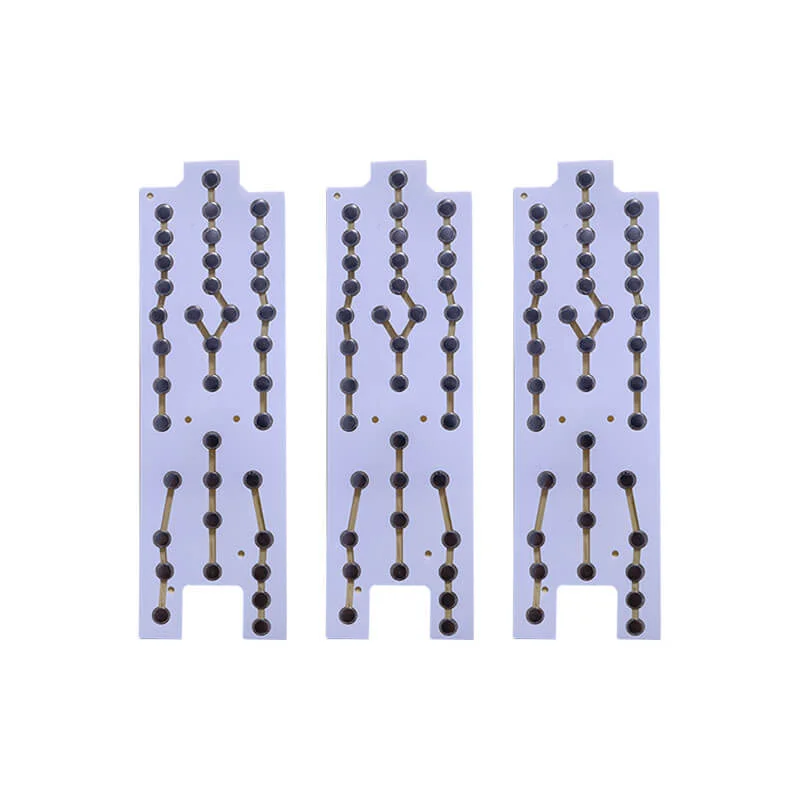
With custom dome arrays, every dome position is mapped to the exact contact pad location on the PCB. No compromises on spacing. No awkward workarounds to align a standard sheet with a non-standard board layout. The dome sits precisely where it needs to, which improves both tactile consistency and electrical reliability.
Mixed Force Profiles on a Single Sheet
One of the more practical advantages is the ability to place different dome types on the same array. A device might need a firm 300-gram actuation force on a critical confirm button, but a lighter 150-gram touch on navigation keys. Custom dome arrays handle this by mixing dome sizes, shapes, or leg configurations within one laminated assembly.
That kind of flexibility just isn’t available with off-the-shelf options.
Key Advantages of Custom Dome Arrays in Medical Applications
| Fördel | Impact on Medical Device Design |
|---|---|
Exakt placering av kupolen | Eliminates alignment issues during assembly |
Variable actuation forces | Matches tactile feel to function priority |
Optimized footprint | Supports compact and irregular PCB shapes |
Material selection control | Enables compliance with sterilization and biocompatibility needs |
Reduced assembly steps | Lowers production time and handling-related defects |
Consistent batch quality | Supports regulatory documentation and traceability |
How Custom Dome Arrays Support Regulatory and Manufacturing Goals
Medical devices don’t just need to work well. They need to be traceable, repeatable, and validated. Custom dome arrays actually help with that process in ways that aren’t immediately obvious.
Design Control and Documentation
When custom dome arrays in medical applications are specified, every parameter — dome diameter, force rating, material grade, adhesive type, layer stack-up — gets documented as part of the device’s design history file. That level of specificity makes it easier to satisfy FDA or CE marking requirements, because the component is fully characterized rather than loosely referenced from a catalog.
Streamlined Assembly
From a manufacturing perspective, custom dome arrays reduce the number of discrete steps in the assembly process:
The array arrives as a single, pre-assembled laminate sheet.
It aligns directly to the PCB using registration marks or tooling holes.
One placement step covers all switch points simultaneously.
Functional testing validates the entire array in a single pass.
Fewer steps means fewer chances for error. In a cleanroom or controlled production environment, that efficiency matters — both for yield rates and for keeping per-unit costs manageable.
Common Medical Devices That Benefit from Custom Dome Arrays
The applications span a wide range of device categories. Some of the more common ones include:
Patient monitoring systems with dense button layouts
Infusion pumps requiring deliberate, error-resistant inputs
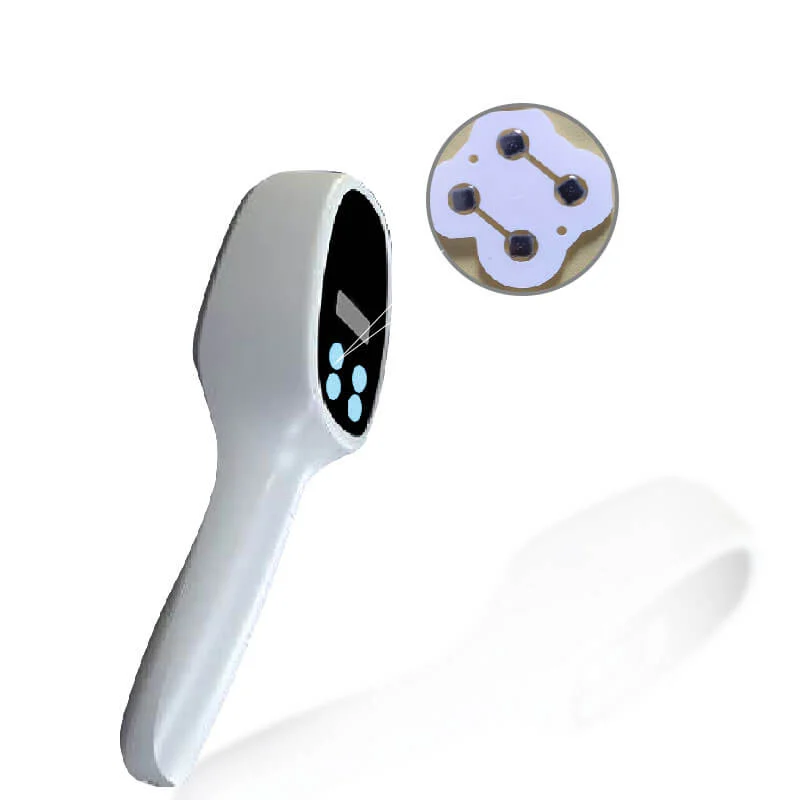
Portable diagnostic instruments with compact, irregular interfaces
Surgical control panels where glove-friendly feedback is essential
Emergency equipment that demands reliable actuation under stress
What ties these together is the need for an interface that feels right and works consistently, even after thousands of cycles in demanding conditions. Custom dome arrays deliver on both counts because the design starts from the device’s actual requirements rather than from a generic template.
When Customization Becomes Worth the Investment
There’s a fair question about cost. Custom tooling and design work do add upfront expense compared to buying standard arrays. But for medical devices — where production volumes are often moderate and reliability expectations are high — the return tends to justify it. Fewer field failures, smoother assembly, cleaner documentation. Over the life of a product, those things add up.
VANLIGA FRÅGOR
How long does it take to develop custom dome arrays for a new medical device?
Lead times vary, but most suppliers can move from initial design consultation to prototype samples within two to four weeks. Full production tooling may take a bit longer depending on complexity, though experienced manufacturers often run these timelines in parallel with the device’s broader development schedule.
Can custom dome arrays include features beyond basic switching?
Yes. Some designs incorporate grounding domes, shielding layers, or integrated LED light pipes alongside the switching domes. The custom format allows engineers to consolidate multiple interface functions into a single laminated component, which simplifies the overall device stack-up.
Are custom dome arrays more reliable than standard ones?
Not inherently — the base materials and dome construction are often identical. The reliability advantage comes from the precision of fit. Because every dome is positioned exactly where the PCB expects it, there’s less risk of misalignment, inconsistent contact, or premature wear caused by off-center actuation. That tailored fit translates to better long-term performance in practice.