
Why Snap Domes Remain Popular in PCB Applications
Snap domes have been around for decades, yet they continue appearing in countless electronic products. There’s good reason for this staying power. These small metal components deliver reliable tactile feedback at relatively low cost, making them attractive for everything from consumer gadgets to industrial control panels.
When mounted directly on printed circuit boards, snap domes create responsive switch mechanisms without requiring complex assemblies. The dome sits over a contact point, collapses when pressed, completes the circuit, then springs back. Simple in concept, but execution requires attention to several critical details.
Getting the integration wrong leads to inconsistent button feel, intermittent connections, or outright failures. The following considerations help avoid common pitfalls when designing snap domes into PCB-based products.
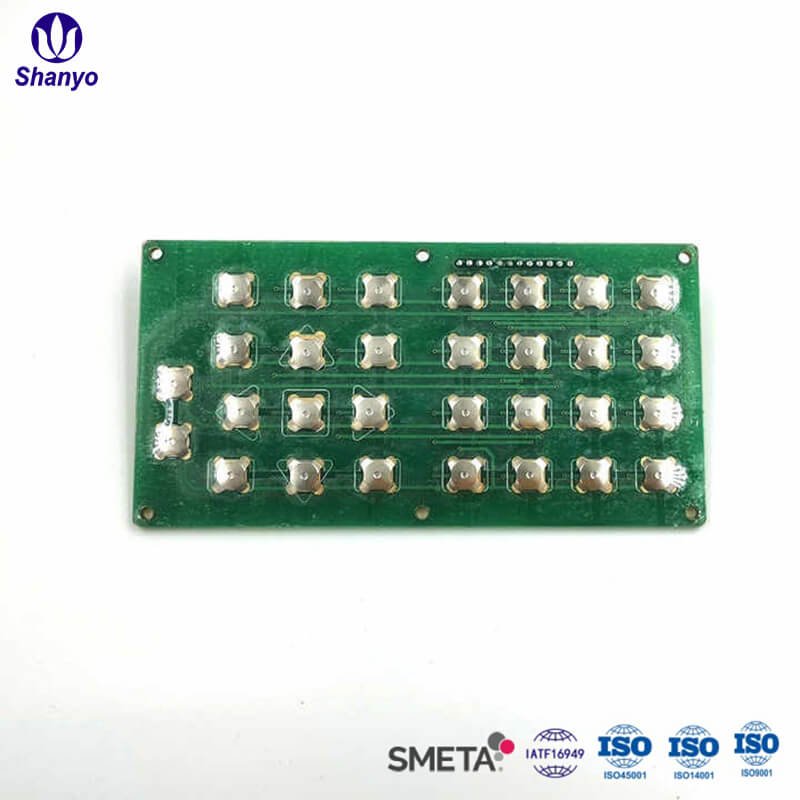
1. PCB Contact Pad Design for Snap Domes
The contact pad layout on the PCB surface directly influences electrical performance and tactile consistency. This isn’t something to leave until late in the design process.
Contact Geometry Matters
Most snap domes require a center contact surrounded by an outer ground ring or contact area. When the dome collapses, its center touches the inner pad while its edges maintain contact with the outer area—completing the circuit.
Common contact configurations include:
- Center dot with surrounding ring (most typical)
- Dual contact points for redundancy
- Custom patterns for specific dome geometries
- Segmented outer contacts for directional sensing
Dimensional Specifications
The relationship between dome size and pad dimensions needs careful attention. Pads too small risk intermittent contact. Pads too large may allow dome movement or misalignment.
| Dome Diameter | Recommended Center Pad | Outer Contact Width | Minimum Spacing |
|---|---|---|---|
| 4-6mm | 1.0-1.5mm | 0.8-1.0mm | 0.3mm |
| 8-10mm | 1.5-2.5mm | 1.0-1.5mm | 0.4mm |
| 12-16mm | 2.5-3.5mm | 1.5-2.0mm | 0.5mm |
| 18mm+ | 3.5-4.5mm | 2.0-2.5mm | 0.6mm |
2. Surface Finish Selection for Snap Domes
The PCB surface finish affects both electrical conductivity and long-term reliability of the dome contact interface. Not all finishes perform equally in this application.
Recommended Finish Options
Several surface treatments work well with snap domes:
- ENIG (Electroless Nickel Immersion Gold) – Excellent conductivity, good durability, higher cost
- Hard Gold Plating – Superior wear resistance for high-cycle applications
- OSP (Organic Solderability Preservative) – Budget-friendly but limited lifespan
- Immersion Silver – Good conductivity, moderate durability
For products expecting millions of actuations, hard gold plating on contact areas proves most reliable. Consumer products with lower cycle requirements might get away with ENIG or even OSP, depending on the expected service life.
Contamination Concerns
Surface oxidation or contamination creates resistance at contact points. This manifests as intermittent switching or complete failure over time. Some environments—high humidity, industrial settings, outdoor applications—demand more robust finish choices regardless of cost implications.
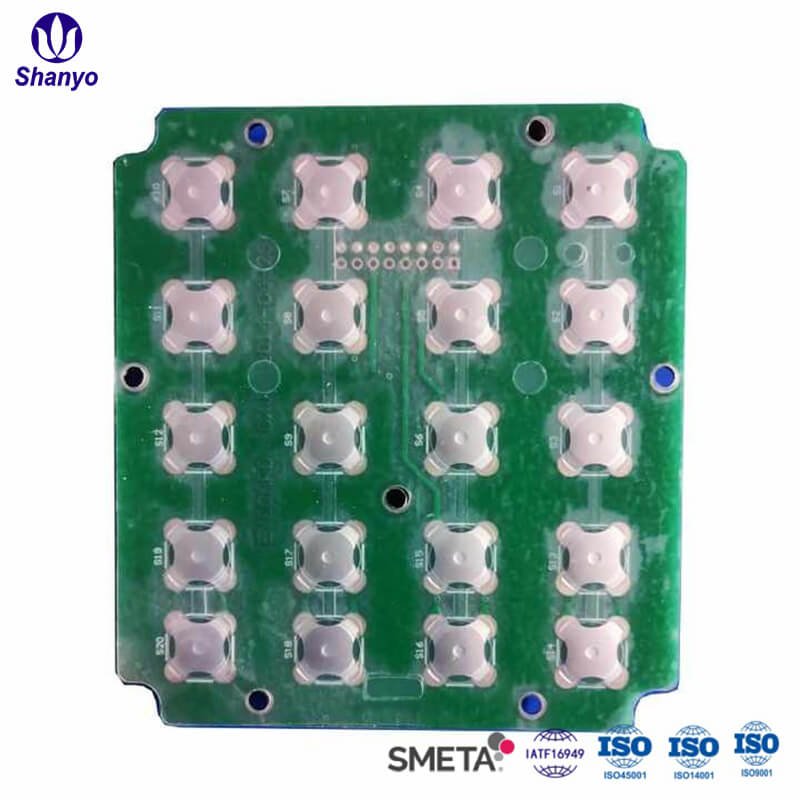
3. Mounting Methods for PCB Integration
How snap domes attach to the PCB affects assembly efficiency, rework capability, and long-term stability. Several approaches exist, each with tradeoffs.
Common Mounting Approaches
The adhesive carrier method remains most popular for production environments. Domes come pre-positioned on a polyester film with adhesive backing. The entire array sticks directly to the PCB surface, ensuring precise alignment.
Alternative methods include:
- Individual dome placement with separate adhesive rings
- Retention plates or frames holding domes mechanically
- Overmolded housings capturing domes during assembly
- Pick-and-place compatible dome carriers for automated lines
4. Environmental and Operating Conditions
Temperature Effects
Metal domes behave differently across temperature ranges. The actuation force typically increases at lower temperatures as the metal stiffens. High temperatures can affect adhesive performance and potentially alter dome characteristics over extended periods.
Most standard snap domes operate reliably from -40°C to +85°C, though this varies by manufacturer and material. Applications outside this range require specialized components.
Moisture and Contamination Protection
For products exposed to moisture, dust, or other contaminants, additional protection becomes necessary. Options include:
- Sealed membrane overlays
- Conformal coating on PCB contacts
- Gasketed enclosure designs
- Specialized dome materials with enhanced corrosion resistance
Automotive and outdoor applications almost always need some form of environmental protection. Even seemingly benign indoor environments can accumulate dust and humidity over product lifespans.
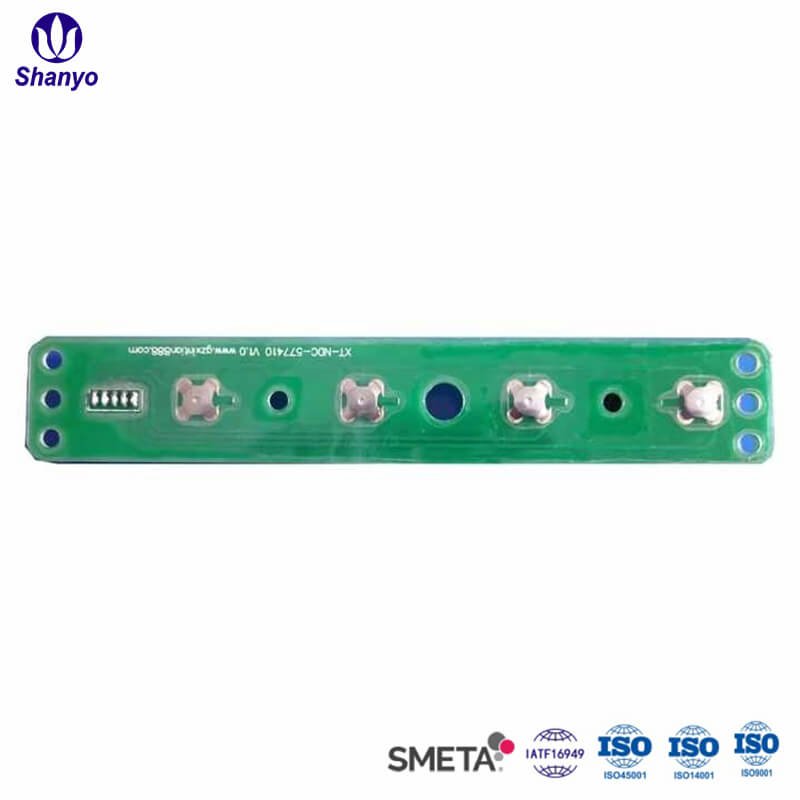
5. Actuation Force and Tactile Feel Optimization
The user experience ultimately depends on how the button feels. Getting this right requires matching dome specifications to application requirements and overlay characteristics.
Force Selection Guidelines
Actuation force should reflect intended use patterns. Light-touch applications need lower force ratings. Industrial equipment might require heavier actuation to prevent accidental triggering.
The overlay material sitting above the dome adds to the total actuation force. Thicker or stiffer overlays increase the force users feel. This combined effect sometimes surprises designers who specified domes without accounting for the complete assembly stack.
Travel and Click Ratio
Dome travel—how far it moves before collapsing—affects perceived responsiveness. Shallower domes provide less travel but enable thinner product designs. Click ratio influences the tactile sensation; higher ratios create more pronounced feedback.
Conclusion
Successfully integrating snap domes onto PCBs involves balancing multiple interrelated factors. Contact pad design establishes the electrical foundation. Surface finish ensures reliable connectivity over time. Mounting methods affect manufacturing and durability. Environmental considerations protect against operating conditions. And actuation specifications determine the end-user experience.
Rushing through any of these considerations typically creates problems down the line—problems that cost more to fix than proper upfront planning would have required. Taking time to address each factor systematically leads to products that perform consistently throughout their intended lifespan. If you want to know more about snap domes, please read about What Is a Snap Dome and How Does It Work?
FAQ
Can snap domes be reworked if placement errors occur?
Rework is possible but depends on mounting method. Adhesive-mounted domes can sometimes be carefully removed and replaced, though the adhesive layer typically requires renewal. Carrier-based arrays are generally more difficult to rework without damaging adjacent domes or the PCB surface.
What causes intermittent contact issues with snap domes on PCBs?
Several factors contribute to intermittent behavior including contaminated contact surfaces, insufficient dome compression due to incorrect overlay height, oxidized PCB pads, adhesive degradation allowing dome movement, and damaged domes from excessive force during assembly or use.
How many actuations can snap domes handle on PCB applications?
Quality snap domes typically withstand one million to five million actuations when properly integrated. Actual lifespan depends on actuation force, environmental conditions, contact surface quality, and dome material. High-cycle applications benefit from hard gold plating on PCB contacts.