
In the world of electronics manufacturing, everyone is obsessed with shrinking things down. Phones get thinner, watches get smarter, and medical devices need to be portable enough to carry in a pocket. This constant drive for miniaturization puts a lot of pressure on the humble switch. You can’t just slap a big mechanical button on a fitness tracker. It doesn’t work. This is where the round metal dome quietly saves the day. It’s not as flashy as a touchscreen, but it is the tactile heartbeat of thousands of devices we use every single hour.
The Compact Engineering of the Round Metal Dome
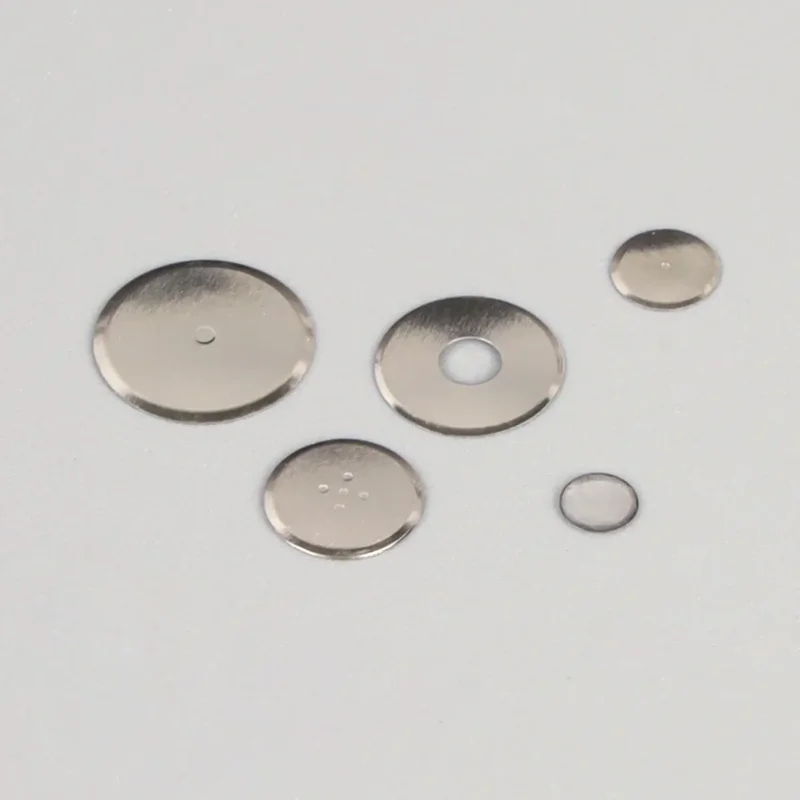
The most obvious thing about a round metal dome is, well, it’s round. It doesn’t have “feet” or legs sticking out the corners like the classic cross-shaped domes. This might seem like a small detail, but on a Printed Circuit Board (PCB) crowded with microprocessors and resistors, those missing legs free up valuable real estate.
Because it lacks feet, the footprint is contained entirely within its diameter. This allows engineers to place them very close to other components. Think about the side buttons on a smartphone or the tiny controls on a hearing aid. There isn’t room for wasted space. A round metal dome fits into these tight corners naturally.
However, the feel is different. If you press a four-leg dome, it has a long travel—a deep click. A round metal dome is usually stiffer, with a shorter travel. It feels more precise, maybe a little sharper. It’s a different kind of feedback. It’s less of a “clunk” and more of a distinct “snap.” It takes some getting used to for designers who normally work with larger switches, but for modern, sleek devices, that short travel is actually preferred. It feels premium.
Sealing Advantages of Using a Round Metal Dome
One of the biggest headaches in product design is the environment. Dust, sweat, rain, coffee spills—electronics hate them all. This is arguably the strongest selling point of the round metal dome.
Because the edge of the dome is a continuous circle, it sits flush against the PCB or the spacer layer. There are no gaps between legs for dust to sneak in. When you tape a round metal dome down with a polyester overlay or a layer of adhesive, it creates a naturally sealed pocket. It is much easier to achieve a high IP rating (Ingress Protection) with a round shape than with a cross shape.
It’s kind of like trying to cover a bowl with plastic wrap versus covering a star-shaped object. The bowl is just easier to seal. For devices that live outdoors or in hospitals where they get wiped down with harsh chemicals, this natural sealing ability is critical. You see these domes used constantly in handheld GPS units or marine equipment for exactly this reason.
Common Uses for the Round Metal Dome in Industry
Because of these traits—compactness and sealability—you tend to find these components in specific sectors. They aren’t usually the first choice for a cheap TV remote (membrane switches are cheaper there), but they dominate where reliability is non-negotiable.
Wearable Technology
Smartwatches and fitness bands are the natural habitat of the round metal dome. The internal space in a watch is practically non-existent. A round dome allows for a functional, tactile button that doesn’t compromise the water resistance of the device.
Medical Instrumentation
In a hospital, equipment needs to be sanitized. A switch panel that traps bacteria is a liability. Round metal domes in medical allows manufacturers to create flat, easy-to-wipe interfaces that still provide that necessary “click” confirmation to the nurse or doctor. You don’t want a “mushy” button when you are setting an IV pump; you want to know for sure that you pressed it.
Automotive Key Fobs
Next time you unlock your car, think about the button. It’s likely a round metal dome or a modified version of it. It needs to survive being sat on, dropped in puddles, and rattled around in a purse, yet it still needs to work every time.
Comparing the Round Metal Dome to Other Shapes
| Feature | Round Metal Dome | Four-Leg (Cross) Dome | Triangle Dome |
|---|---|---|---|
| Footprint | Smallest, very compact. | Larger, requires space for legs. | Medium, good for dense arrays. |
| Tactile Feel | Sharp, short travel, firm. | Soft, long travel, classic click. | High force, very crisp. |
| Sealing | Excellent (Continuous edge). | Poor (Gaps between legs). | Moderate. |
| Life Cycle | High (if vented properly). | Very High (Millions of cycles). | High. |
| PCB Trace Routing | Can be tricky under the dome. | Easy (traces can run under legs). | Moderate. |
Integration Challenges with the Round Metal Dome
Of course, it’s not all perfect. There are quirks. The biggest issue with a round metal dome is venting.
Since the rim seals so well against the board, it traps air underneath. If you press down and the air has nowhere to go, the dome won’t snap. It just squishes. It feels terrible. Engineers have to be very diligent about designing air channels—tiny grooves in the PCB or the spacer layer—to let that air escape during actuation and return afterwards. If you forget the vent, the switch fails.
Another thing is the “sweet spot.” Because round domes often have a smaller diameter, the actuator (the nub that pushes the dome) must be perfectly centered. If it is off by even a millimeter, you might press the edge of the dome instead of the center. This increases the force needed to actuate it and can lead to the metal deforming permanently over time. It requires tight manufacturing tolerances. You can’t be sloppy with alignment here.
- Tip for Designers: Always check the “trip force” ratio. A round metal dome with a high trip force feels great, but if the return force is too low, the button might stick down if the overlay is too heavy.
Resource
- Wikipedia – Elasticity (Physics): The core principle behind why a metal dome snaps back to its original shape.
- Introduction to Membrane Switches: While domes are components, they are often part of a larger membrane switch assembly.
Add Your Heading Text Here
Can a round metal dome be soldered directly to the board?
Generally, no. Most metal domes are held in place by an adhesive cover tape or a dome array structure. Soldering stainless steel directly to a copper pad is difficult and the heat can alter the temper (springiness) of the metal, ruining the tactile feel.
Why does my round dome button feel "dead"?
This is almost always a venting issue. If the round metal dome is sealed too tightly without an air path, the air pressure fights your finger. It could also be that the actuator is too soft and is absorbing the click energy instead of transferring it to the dome.
Are gold-plated domes better than standard stainless steel?
For signal integrity, yes. While the stainless steel itself is conductive, a thin layer of gold plating on the contact side of the round metal dome ensures that the electrical connection remains stable over years of use, preventing oxidation which can cause flickering signals.