
Specification sheets for metal snap domes contain numbers that look simple enough. Force in grams, travel in millimeters, life in cycles. Three figures, seemingly straightforward. Yet these specifications interact in ways that matter enormously for actual product performance—interactions that pure numbers on a datasheet don’t always communicate clearly.
This guide unpacks the major specifications—force, travel, and life—explaining not just what they measure but how they affect real-world performance. Because understanding specifications properly means understanding the experience they create, not just the numbers themselves.
Force Specifications For Metal Snap Domes
Force ratings attract the most attention when selecting metal snap domes. Understandably so—force determines how buttons feel under fingertips. But force specifications involve more nuance than single numbers suggest.
Actuation Force Explained
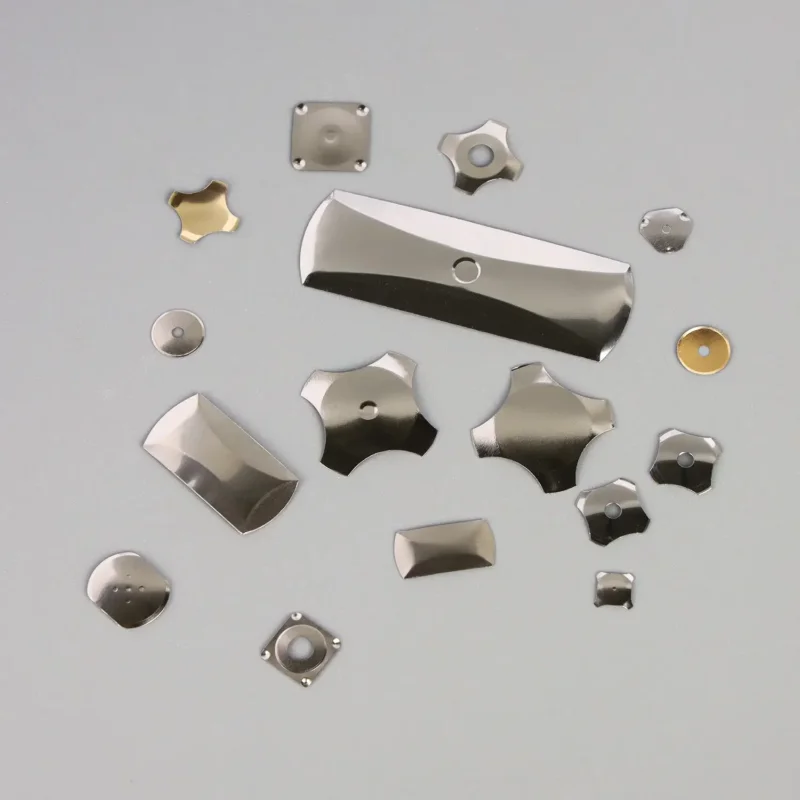
Actuation force (sometimes called trip force or click force) measures the peak resistance before snap-through occurs. Press down on a dome, feel resistance building, then—at actuation force—the dome inverts suddenly. This number typically appears in grams-force (gf) or Newtons.
Standard metal snap domes range from roughly 100gf to 500gf, though specialized designs extend beyond this range. Lighter forces suit applications requiring quick, effortless input. Heavier forces prevent accidental activation and feel more substantial.
But here’s what specifications don’t show directly: actuation force interacts heavily with dome size. A 200gf force from a 6mm dome feels different than 200gf from a 12mm dome. The larger dome spreads force across bigger finger contact area, changing perceived resistance even at identical peak forces.
Operating Force Versus Tactile Ratio
Beyond simple actuation force, the relationship between peak force and post-snap force matters considerably. This relationship—called tactile ratio or snap ratio—determines how crisp the click feels.
Tactile ratio calculation:
- Measure peak force before snap-through
- Measure minimum force during or after snap
- Divide: (Peak – Minimum) / Peak × 100%
Higher percentages indicate more dramatic force drops—crisper, more distinct snaps. Quality metal snap domes typically achieve 40% to 60% tactile ratios. Premium designs might reach 70% or higher.
A dome rated 200gf with 50% tactile ratio drops to 100gf during snap. That 100gf drop happens rapidly, creating the satisfying click sensation. A dome with only 25% ratio drops just 50gf—less dramatic, mushier feeling.
Force Tolerance Considerations
Specifications include tolerances—typically ±20% to ±30% for standard metal snap domes. A 200gf dome with ±25% tolerance might measure anywhere from 150gf to 250gf. This variation matters for user experience consistency.
| Tolerance Level | Typical Range | Application Suitability |
|---|---|---|
| ±15% or better | Premium grade | High-end electronics, medical |
| ±20% | Standard grade | Consumer electronics, appliances |
| ±25% | Commercial grade | Industrial, cost-sensitive |
| ±30% or wider | Economy grade | Basic applications only |
Travel Distance In Metal Snap Domes
Pre-Travel And Over-Travel
Total button travel divides into distinct phases:
- Pre-travel: distance before snap-through occurs
- Snap distance: movement during dome inversion
- Over-travel: additional movement after contact
Metal snap domes typically offer 0.15mm to 0.35mm of dome travel itself. However, total button travel depends heavily on overlay design, actuator geometry, and housing clearances. The dome contributes its portion; surrounding components add theirs.
Pre-travel affects perceived responsiveness. Minimal pre-travel makes buttons feel immediate—press and instant response. Extended pre-travel creates cushioned feel, sometimes desirable for preventing accidental activation.
Over-travel provides reliability margin. If contact occurs precisely at snap-through with zero over-travel, slight tolerance variations might cause intermittent connection. Some over-travel ensures reliable contact across production variations.
Height And Diameter Relationships
Dome geometry creates inherent relationships between dimensions:
- Larger diameters enable greater heights
- Greater heights provide more travel distance
- More travel typically means more distinct tactile events
- Taller domes require more force for same material thickness
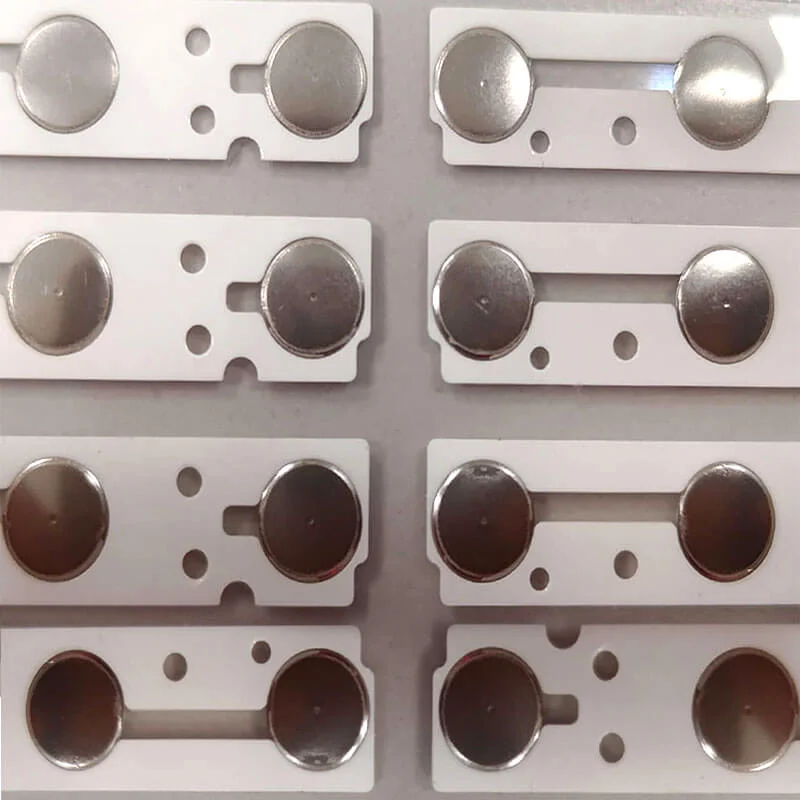
Small domes (4-6mm diameter) might offer only 0.15mm travel. Large domes (12-16mm) can provide 0.30mm or more. This relationship constrains design options—sometimes space limitations force smaller domes with less travel than ideal for tactile quality.
Experienced designers learn to work within these constraints. Selecting the largest dome fitting available space often optimizes tactile performance, though other factors like force requirements and cost may override this preference.
Travel And User Perception
Human fingertips detect remarkably small movements—differences of 0.1mm register consciously with attentive users. Travel distance affects several perception aspects:
- Sense of depth—more travel feels more substantial
- Control precision—adequate travel allows modulated pressing
- Completion certainty—distinct travel endpoint confirms full actuation
- Physical fatigue—extended travel over many cycles tires fingers
Very short travel works well for rapid, repetitive input. Gaming applications sometimes prefer minimal travel for speed. Longer travel suits applications where deliberate, confirmed input matters more than speed.
Life Expectancy Of Metal Snap Domes
How Life Testing Works
Manufacturers test metal snap domes using automated equipment cycling domes repeatedly at controlled force and speed. Tests continue until domes fail electrically (no longer make reliable contact) or mechanically (cracked, permanently deformed, or significantly degraded tactile response).
Standard test conditions typically specify:
- Actuation force at 150% of rated force
- Cycle rate around 180-300 cycles per minute
- Room temperature, normal humidity
- Clean laboratory environment
Real-world conditions differ from laboratory testing. Higher forces, faster cycling, temperature extremes, contamination—all potentially reduce actual service life below rated specifications.
Degradation Patterns Before Failure
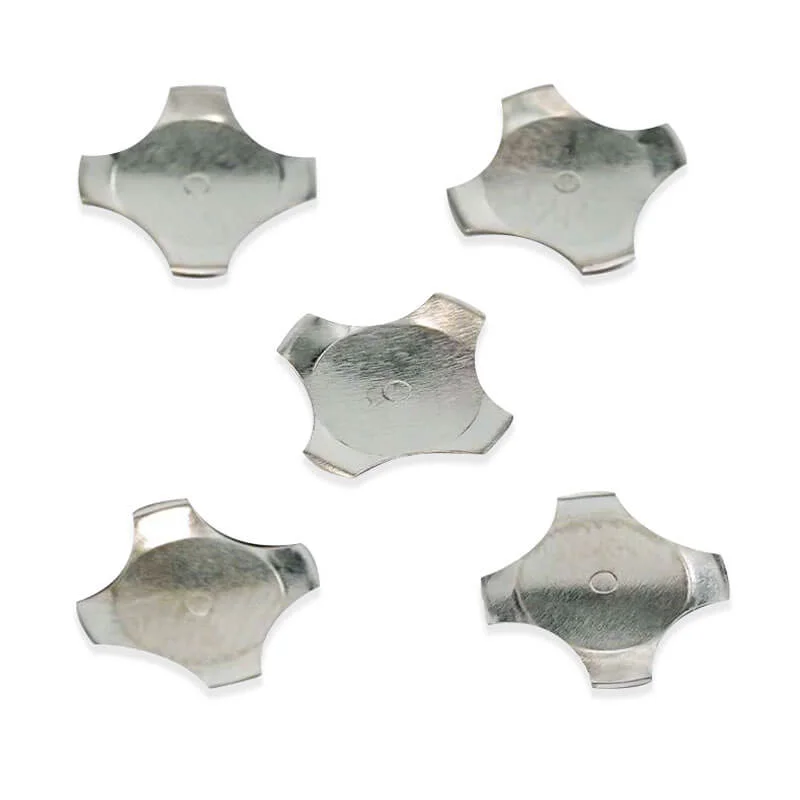
Metal snap domes rarely fail suddenly during normal service. Instead, performance degrades gradually:
- Tactile ratio decreases—snap becomes less distinct
- Force consistency worsens—some presses feel different
- Contact resistance increases—electrical performance degrades
- Return snap weakens—dome recovers more slowly
- Eventual failure—dome cracks, deforms permanently, or loses function
Monitoring these degradation signs during development testing helps predict field reliability. Domes showing significant degradation at 500,000 cycles probably won’t reach 1 million cycles in production use. If you want to know more about metal snap domes, please read How Metal Snap Domes Create Tactile Feedback.
FAQ
How do temperature extremes affect metal snap domes specifications?
Temperature influences all three primary specifications. Cold conditions increase force slightly—material stiffens. Heat decreases force somewhat. Travel remains relatively stable across temperature ranges. Life generally suffers at extreme temperatures; accelerated fatigue occurs during thermal cycling. Quality metal snap domes maintain acceptable performance from -40°C to +80°C, though specifications measured at room temperature shift somewhat across this range.
Can metal snap domes specifications be customized for unique applications?
Yes, manufacturers offer extensive customization. Force ratings adjust through material thickness, dome geometry, and heat treatment variations. Travel changes through height and diameter modifications. Life improvements come from premium materials, plating options, and tighter manufacturing controls. Custom specifications typically require minimum order quantities and tooling investments, but specialized applications justify these costs when standard options prove inadequate.
What specifications matter most for good tactile feel?
Tactile ratio arguably matters most for perceived feel—the force drop during snap-through creates the satisfying click sensation. However, absolute force appropriate for the user population and application context matters too. Travel distance affects perceived substance and confirmation. Life specifications don’t directly affect feel but determine how long that good feel persists. Balancing all three while prioritizing tactile ratio typically optimizes user experience.