
It is strange how much of modern life depends on a simple piece of curved steel. You press a button on a microwave, a key fob, or a medical monitor, and you expect a specific response. A click. A snap. It feels immediate and crisp. When it works, nobody thinks about it. But when that button feels mushy, or double-clicks when it shouldn’t, or just gives up after a few months, people notice. They blame the metal dome manufacturer, the device, the engineering.
Almost never do they blame the source of the component itself, yet that is usually where the problem started.
For procurement teams and product engineers, the search for a metal dome manufacturer is often more frustrating than it looks on paper. It seems like a commodity product—just stamped metal, right?—but the gap between a “good enough” part and a high-performance component is massive. It isn’t just about bending steel; it’s about consistency, material science, and the ability to replicate a feeling a million times over.
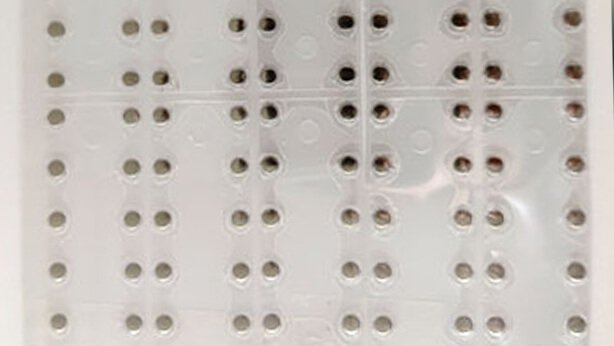
The Reality of Metal Dome:
Most buyers start by looking for a catalog part. They want a 10mm round metal dome switch with 250 grams of force. A simple request. However, any experienced sourcing agent will tell you that numbers on a datasheet are essentially just a suggestion until they are tested.
A specialized metal dome manufacturer understands that “250 grams” is a center point, not an absolute. Imagine a keyboard where the “A” key feels stiff and the “S” key feels loose. That is a manufacturing failure, not a design choice.
It comes down to the tooling. High-precision tooling requires maintenance (which is expensive) and high-quality carbide materials (also expensive). If a manufacturer is cutting corners on tool sharpening, the edges of the domes get sloppy, and the tactile feel—the “snap ratio”—starts to degrade. It creates a batch of switches that technically work but feel terrible.
Material Of Metal Dome : The Secret Sauce
You can’t talk about these components without talking about Japanese steel. While there are domestic steel options in almost every country, the vast majority of high-reliability domes use Japanese SUS 301 or 304 stainless steel.Why? Fatigue resistance.
A metal dome is essentially a spring that gets abused. It has to invert and revert hundreds of thousands of times without cracking. There is a noticeable trend where a budget metal dome manufacturer might substitute the material for a locally sourced alternative that looks the same under a microscope but behaves differently after 50,000 cycles. The snap starts to soften. The button gets “tired.”
When auditing a supplier, it is worth looking at their material certificates. If they are vague about where the steel comes from, or if they treat material sourcing as a secondary detail, it is usually a red flag. Realistically, for a standard consumer device, you want to see data supporting at least 500,000 cycles.
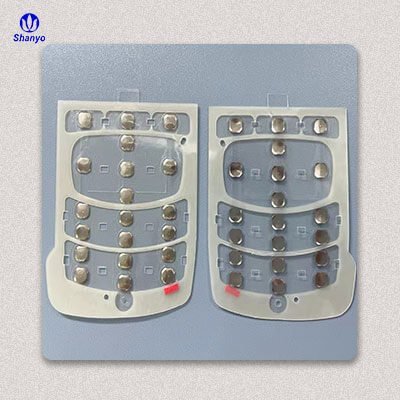
Assessing Capabilities: A Quick Comparison Between Metal Dome Manufacturers
It helps to understand that not all factories are set up the same way. There are general metal stamping shops, and then there are dedicated dome manufacturers. The difference is usually in the testing equipment.
The Plating Dilemma
A transparent manufacturer will guide a buyer based on the PCB design. If the circuit board uses carbon pads, maybe nickel plating is fine. If it’s gold immersion on the board, matching it with a gold-plated round metal dome is the safest bet to prevent galvanic corrosion.
From an observational standpoint, this depends entirely on the environment. A metal dome manufacturer might push gold plating because it has a higher profit margin, but it is also the only real defense against harsh oxidation. In a humid environment, or inside a device that isn’t perfectly sealed (like a cheap remote control), bare steel can eventually oxidize, leading to contact resistance issues.
Suddenly, the user has to press the button harder and harder to get a signal. It isn’t that the dome is broken mechanically; it’s that the electrical connection is dirty. A transparent manufacturer will guide a buyer based on the PCB design. If the circuit board uses carbon pads, maybe nickel plating is fine. If it’s gold immersion on the board, matching it with gold on the dome is the safest bet to prevent galvanic corrosion.
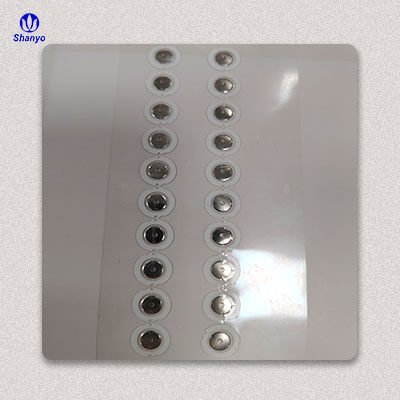
Manufacturing Custom Arrays
These days, fewer companies are buying loose domes in a bag. It’s a nightmare for assembly lines. Who wants to pay a worker to pick up a 4mm piece of metal with tweezers and glue it down? Consequently, the industry has largely migrated to dome sheets, where the domes are pre-arranged on an adhesive backing to match the circuit board exactly.
This places a new burden on the metal dome manufacturer. They aren’t just metal stampers anymore; they are converters. They need clean rooms to handle the adhesive films and precise vision systems to ensure alignment.
If a dome is off-center on the sheet by just 0.2mm, it can miss the contact pad on the PCB. The button clicks, but nothing happens. When vetting a supplier, looking at their “placement accuracy” specs for these sheets is just as important as the metal specs.
The Human Element of Engineering
There is a funny thing about specifications: they can’t measure feeling. You can send a CAD file to a factory, they can cut the tool perfectly, and the result can still feel “wrong.”
This is where the subjective value of a partner comes in. A good metal dome manufacturer usually has an applications engineer who has felt thousands of different buttons. They might look at a design and say, “With this overlay thickness, a round dome is going to feel too stiff. You should switch to a four-leg cross dome to get a softer travel.”
That kind of advice only comes from experience. It saves weeks of prototyping. It is the difference between a transactional vendor who just fills orders and a partner who understands the end application. Because in the end, the goal is to provide that reassuring, invisible confirmation that technology is working exactly as it should.