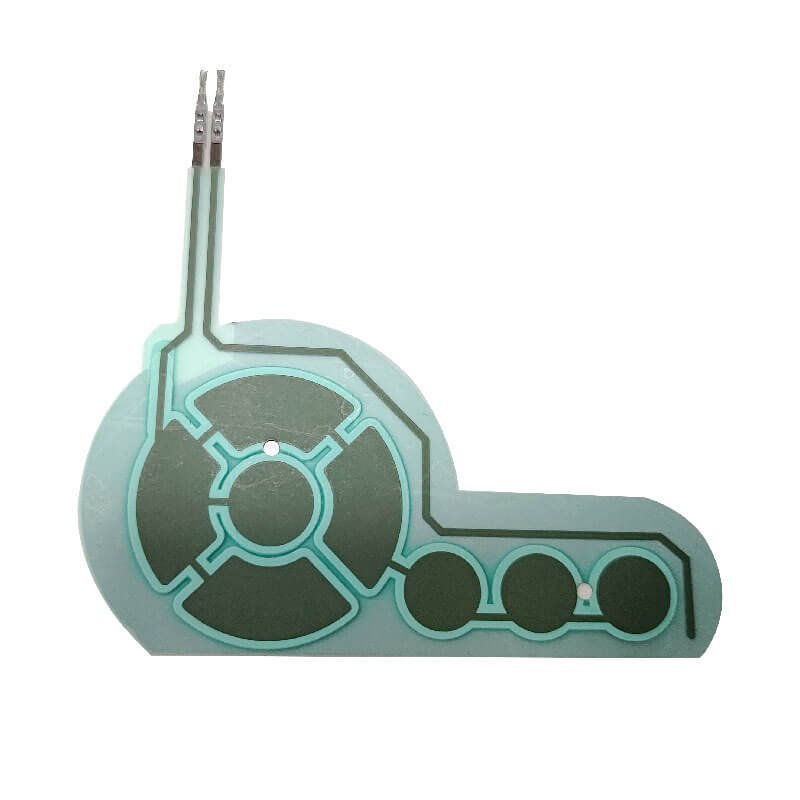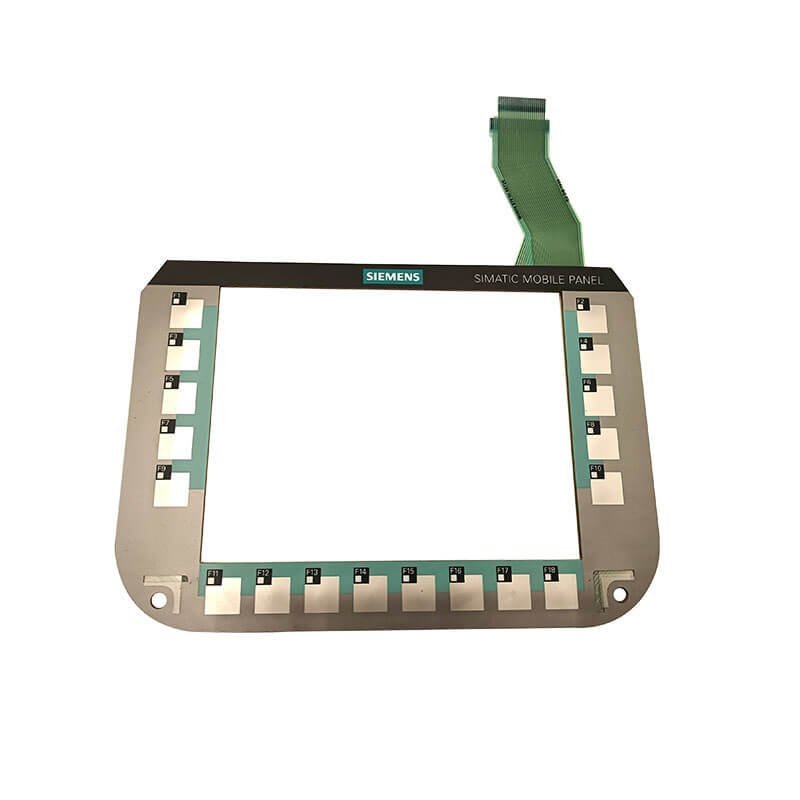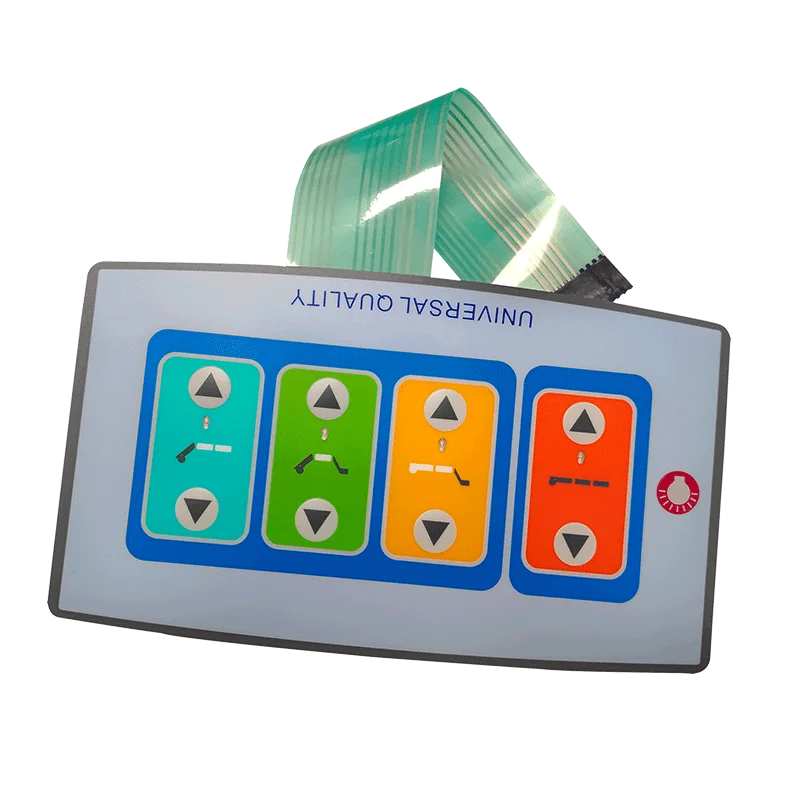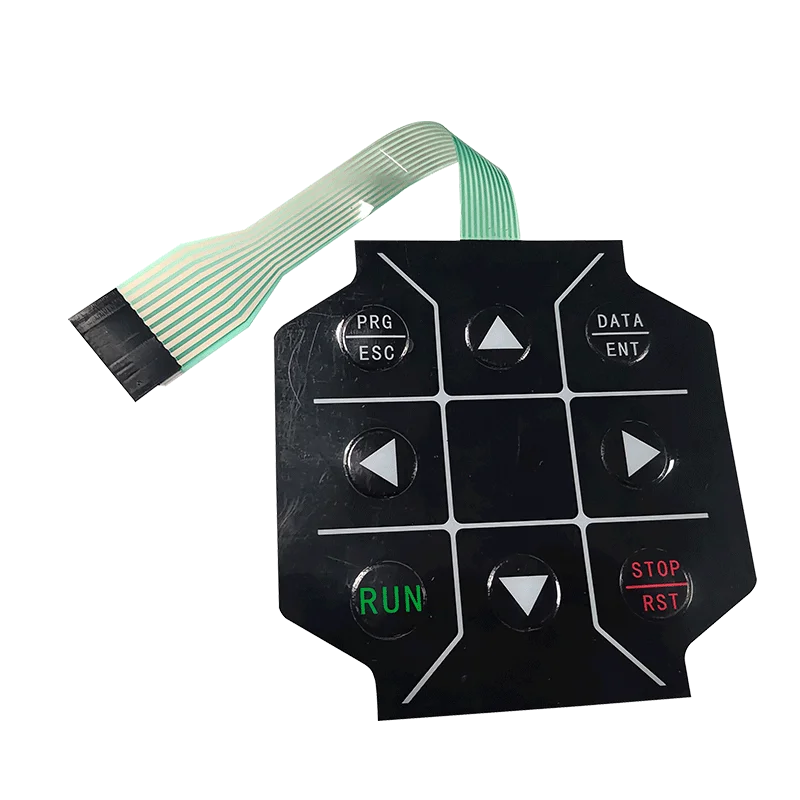


Custom Tactile Membrane Switches

Custom Tactile Membrane Switches

ライフサイクル: ≥500,000 cycles;

Environmental Sealing: Up to IP67 / IP68 protection rating.

Profile Thickness: As low as < 1.0 mm total assembly.

Interface Customization: Full custom graphics, circuits, and embossing.

Primary Applications: Medical devices, industrial controls, automotive panels, consumer appliances.

Customization: Supported.

製品カテゴリー

お問い合わせ

What Are Membrane Switches?

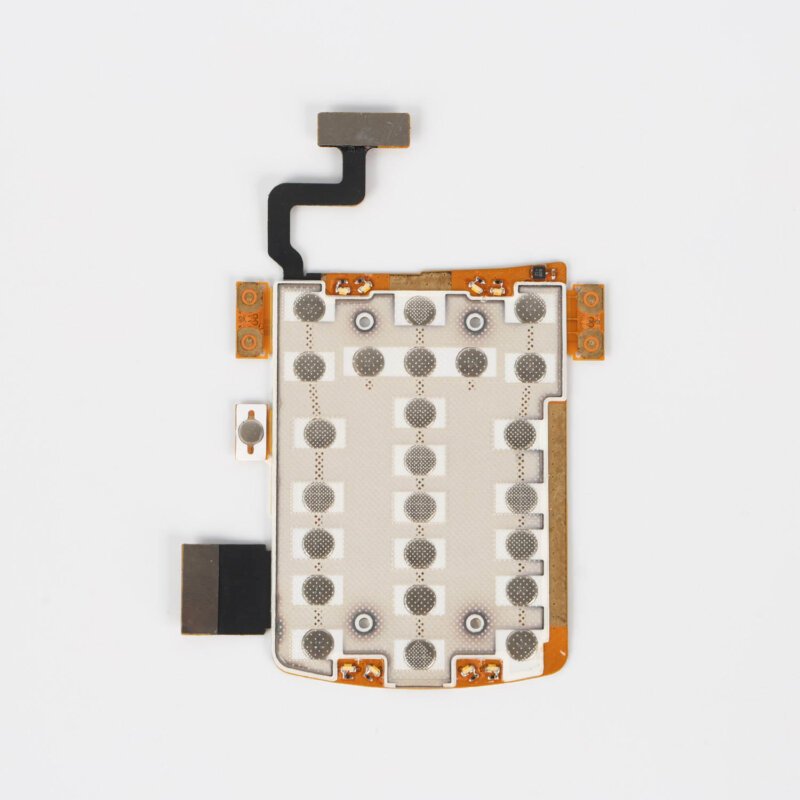
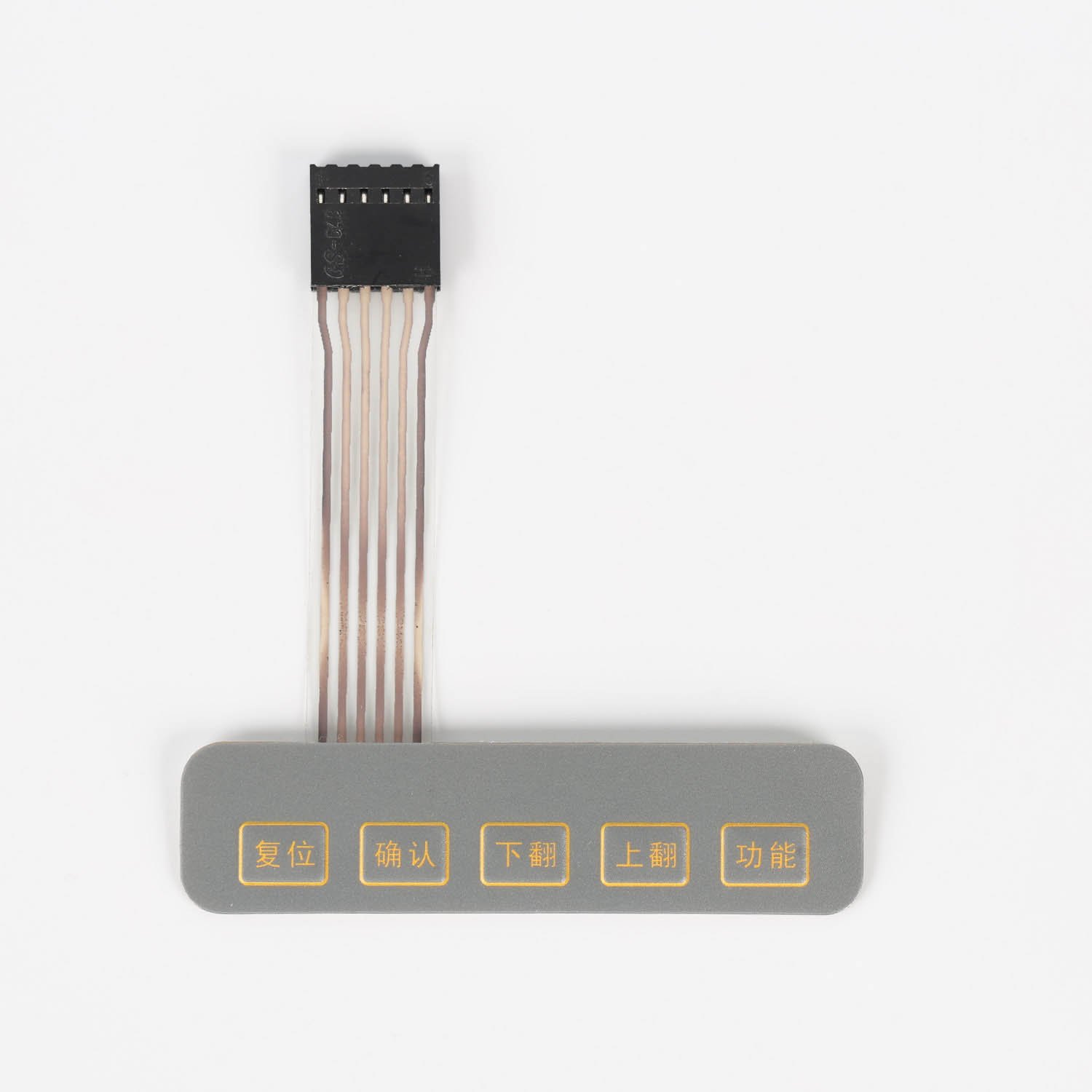
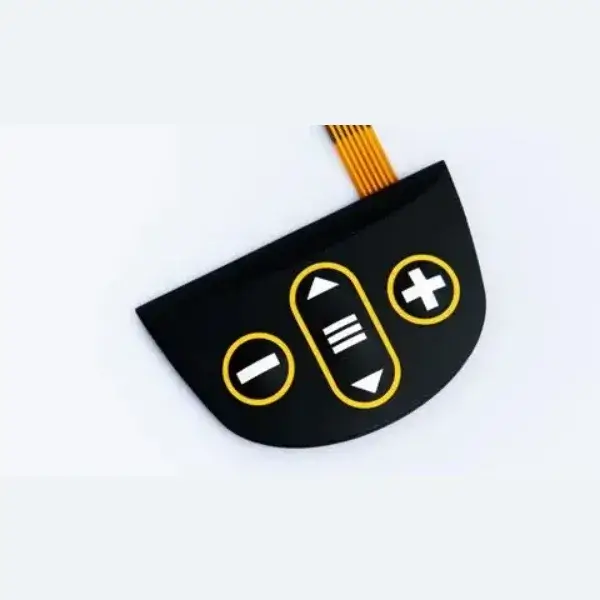
メンブレン・スイッチ is a modern, user-interface control panel that functions as a momentary-action electrical switch. It operates by closing a circuit when a user presses a button on its flexible surface; the circuit opens again once pressure is released. Constructed from layers of thin, flexible films and adhesives, it is an integral part of a membrane switch panel and offers a sleek, low-profile alternative to traditional mechanical switches or more complex touch screens. Due to their sealed nature, design flexibility, and cost-effectiveness, custom membrane switches have become the preferred solution across countless industries.

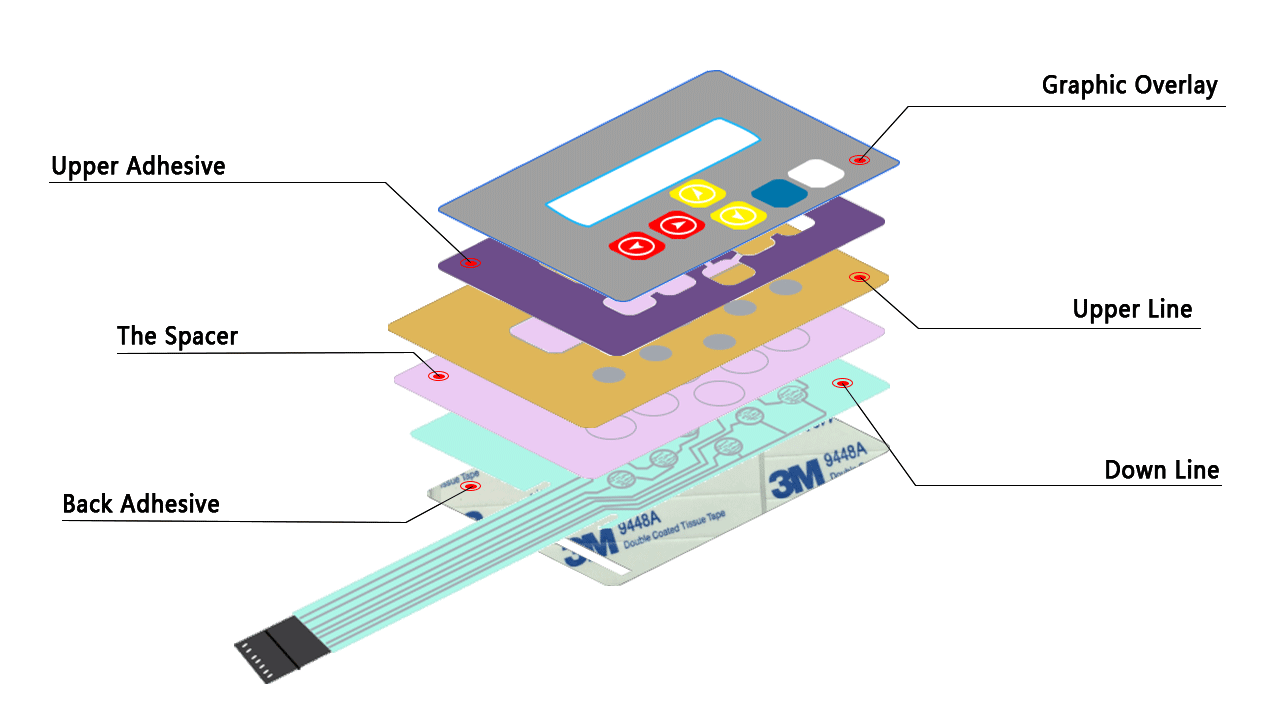
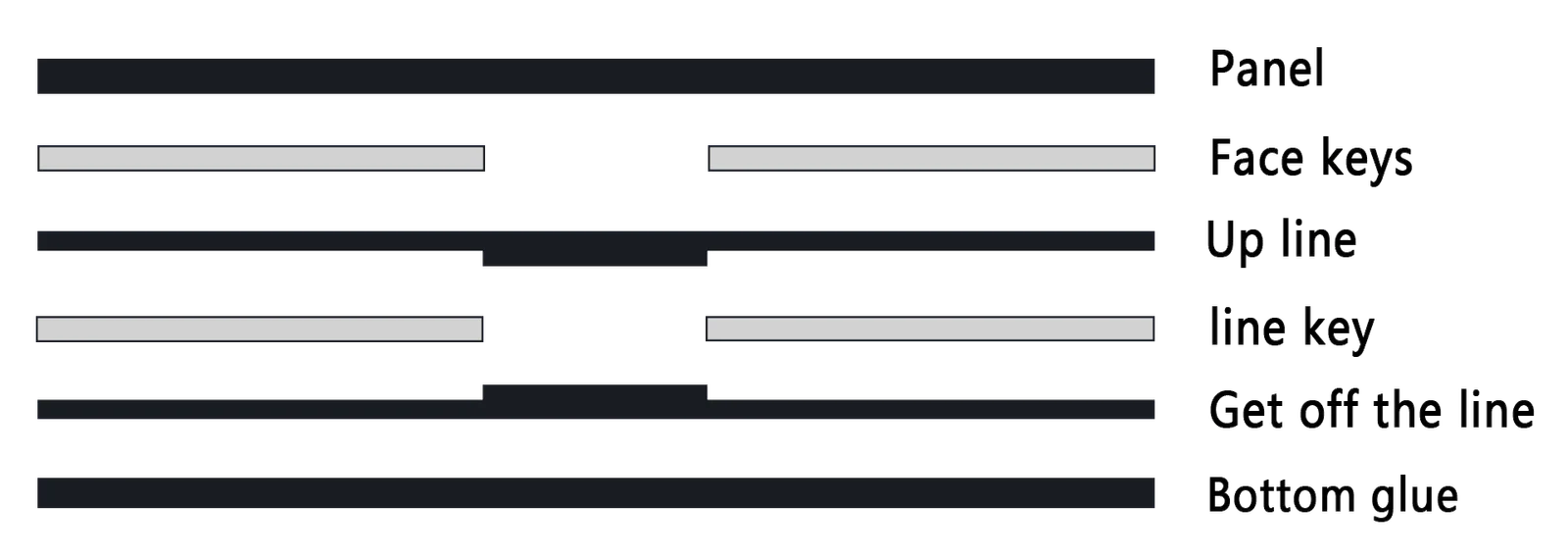
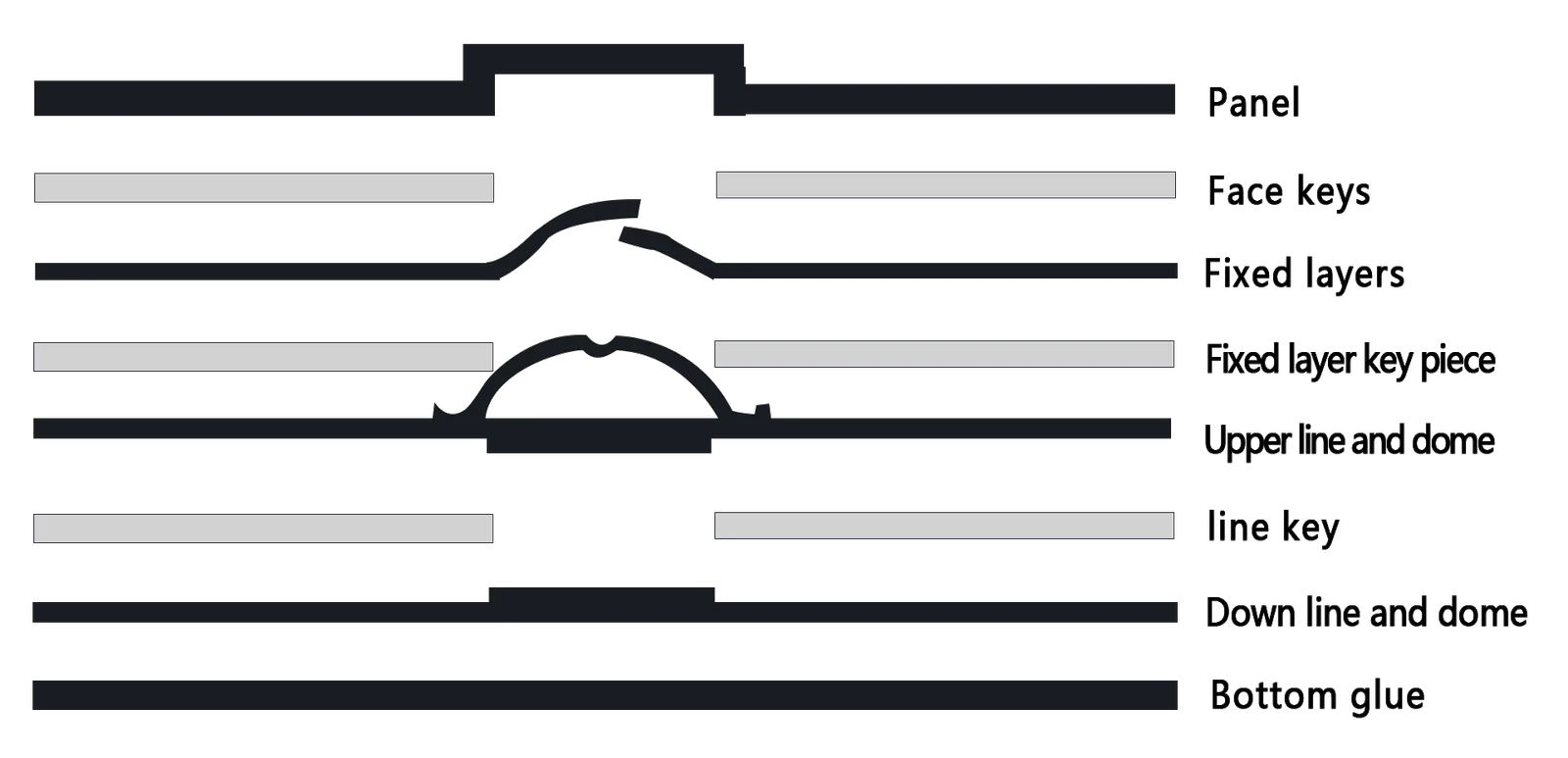
Membrane Switch Components

LayerCommon Name / FunctionKey Details & Materials
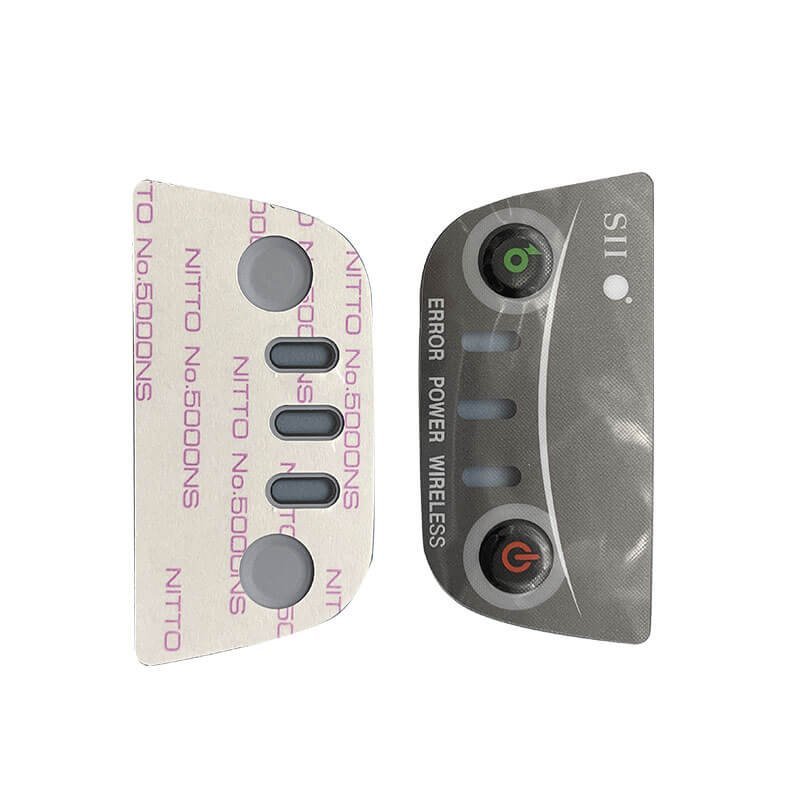
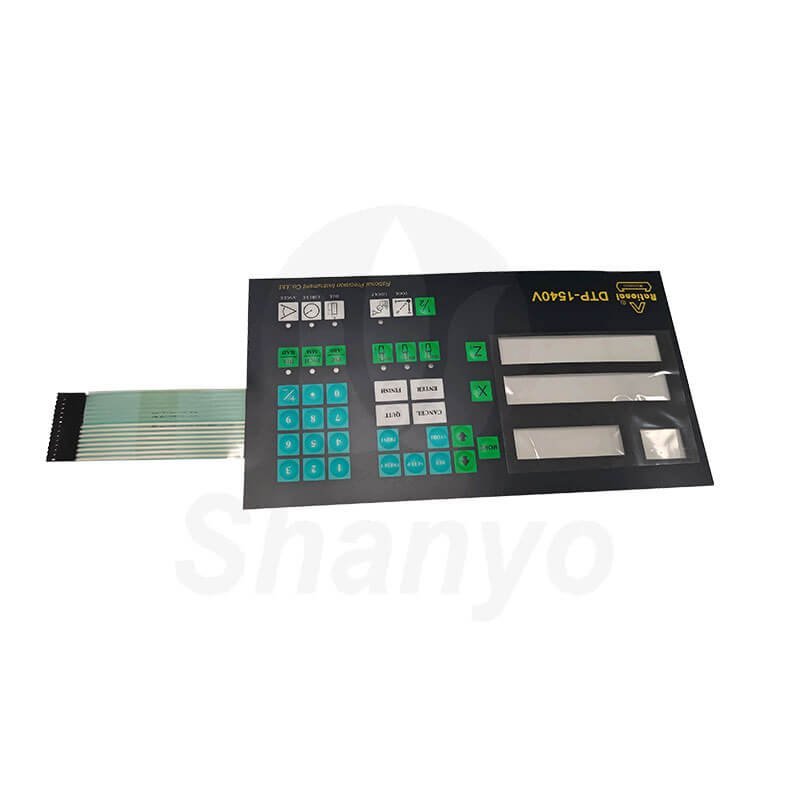
Graphic OverlayUser Interface SurfaceThe topmost layer users see and touch.
Usually made of Polyester (PET) or Polycarbonate (PC).
Printed with icons, colors, and branding. Can be textured or embossed for better feel.
Upper AdhesiveTop Adhesive LayerBonds the Graphic Overlay down to the circuit spacer assembly.
Top SpacerSpacer / Dome Cavity LayerA PET layer with cavities (cut-outs) that define the active switch area and provide space for the “click” travel.
In tactile switches, the metal or polyester dome sits in this cavity.
Copper CircuitCircuit Layer (Flexible Printed Circuit)The conductive pathways. Copper on a flexible PET substrate offers superior durability and conductivity compared to printed silver ink.
The design defines the switch contacts and connects to the tail.
Insulation InkDielectric Overcoat / Insulating LayerA printed ink layer that covers and protects the copper traces, preventing short circuits.
It leaves only the intended contact points exposed.
Bottom AdhesiveRear Adhesive / Mounting LayerThe adhesive used to permanently mount the entire membrane switch assembly onto the device enclosure or PCB.
Rigid BackerRigid Support Layer (Optional)A stiffener (e.g., aluminum, stainless steel, or FR4) laminated to the back.
Provides structural support for free-standing keypads or areas with connectors.
Membrane switch

Types of Membrane Switches

The widespread adoption of membrane keypads is driven by their distinct advantages over mechanical switches and touchscreens:

Non tactile membrane switch

Non-Tactile Membrane Switch


A non-tactile switch provides no physical “click” feedback. Activation is instead confirmed through visual (LED), audible (beep), or on-screen indicators. In this design, conductive traces on the upper and lower circuit layers connect when pressed. Non-tactile switches are often more resilient and can be rated for significantly more activations than their tactile counterparts.

Tactile Membrane Switch


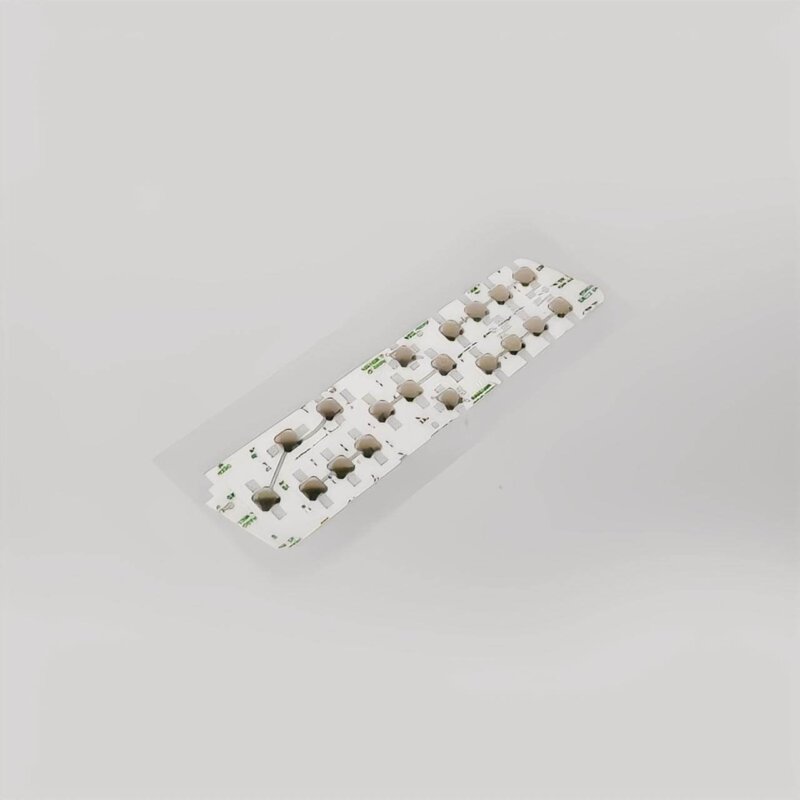
This type is engineered to deliver physical, tactile feedback—typically a “snap” or “click” sensation—to confirm an activation. This response is achieved by integrating a metal or polyester dome switch under the key area. The force, travel, and feel of this tactile membrane switch can be customized to meet specific application requirements.

Tactile membrane switch

Key Parameters for Membrane Switches

The following table outlines the key technical specifications for a standard membrane switch:

ParameterStandard RangeHigh-end/Custom range
Actuation Force (Tactile)100gf – 500gf50gf – 1000gf
Operating Life1 Million cyclesUp to 5 Million+ cycles
Contact Resistance< 100 Ω< 10 Ω
Operating Temperature-20°C to +60°C-40°C to +85°C
Ingress Protection (IP)IP54IP67/IP68
Circuit TracesSilver/Carbon InkCopper Flex Circuits, Gold Plating
Embossing Height0.10mm – 0.50mmCustom shapes & multi-level

Design and Selection Guide

As a leading membrane switch manufacturer, Shanyo offers extensive customization to bring your interface to life:

Why Choose Shanyo's Membrane Switches?

The widespread adoption of membrane keypads is driven by their distinct advantages over mechanical switches and touchscreens:

Slim Profile & Lightweight

The layered film construction allows for extremely thin and portable designs, ideal for space-constrained applications.

Cost-Effective

Simple design and abundant materials make them a more affordable solution than mechanical assemblies or capacitive touch screens, especially for medium to high volumes.

Easy to Clean & Seal

The completely flat, seamless front surface prevents dirt, liquid, and bacteria ingress, making membrane switch panels easy to wipe down and sterilize—a critical feature for medical and industrial use.

Highly Customizable

Offers unparalleled freedom for branding, color, layout, and tactile feel, allowing for the creation of a truly unique membrane button interface.

Durable & Reliable

With no moving parts to wear out, the sealed construction provides excellent resistance to moisture, chemicals, and environmental contaminants.

用途を見つける:多彩なデザイン

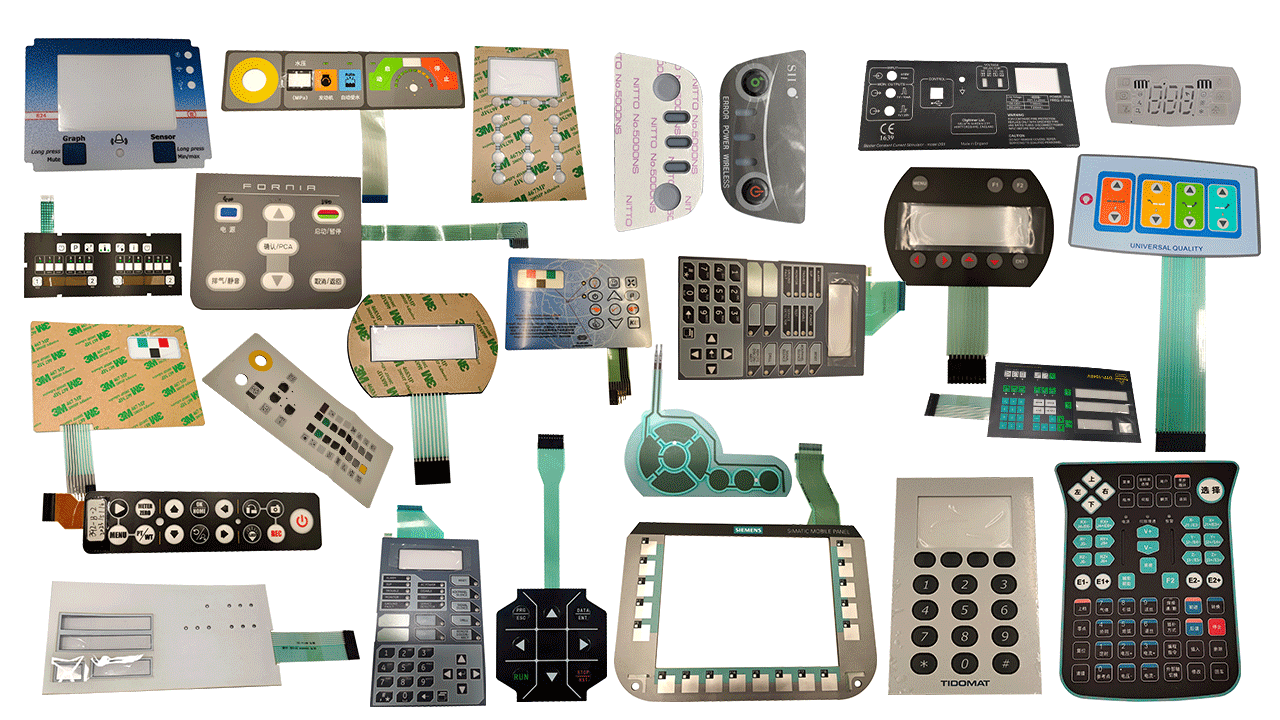
Shanyo's Membrane Switches can be applied to various industries and specific products.

Application FieldTypical Use CaseKey Benefits Provided by LGF Dome Sheets
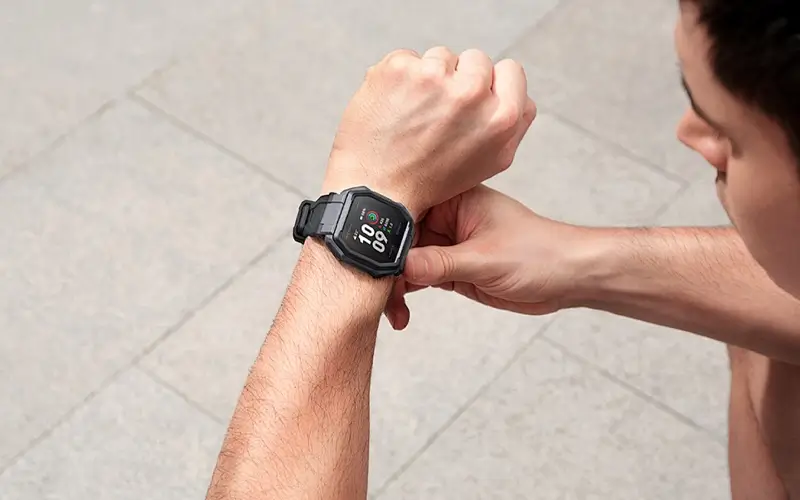
コンシューマー・エレクトロニクスSmartwatch crowns, high-end remote controls, gaming controllers.Delivers brand-defining uniform backlight and premium haptics in compact, design-driven devices.
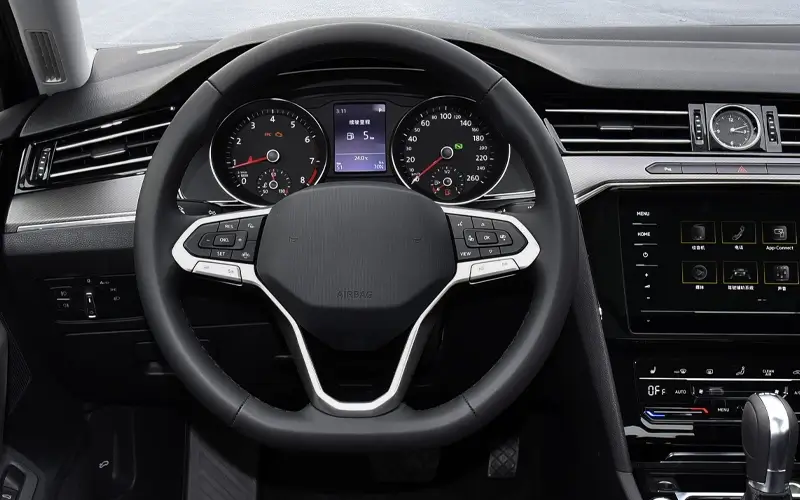
Automotive InteriorsSteering wheel controls, center console touch panels, window switches.Meets automotive-grade durability and temperature requirements while offering excellent visibility and feel.
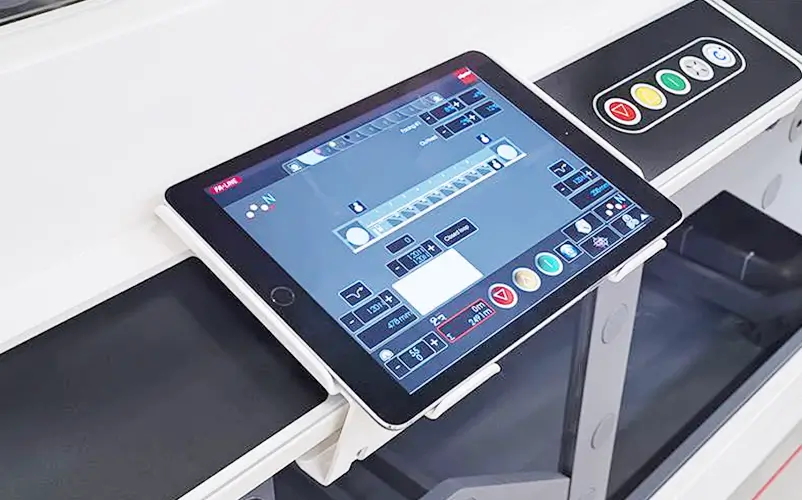
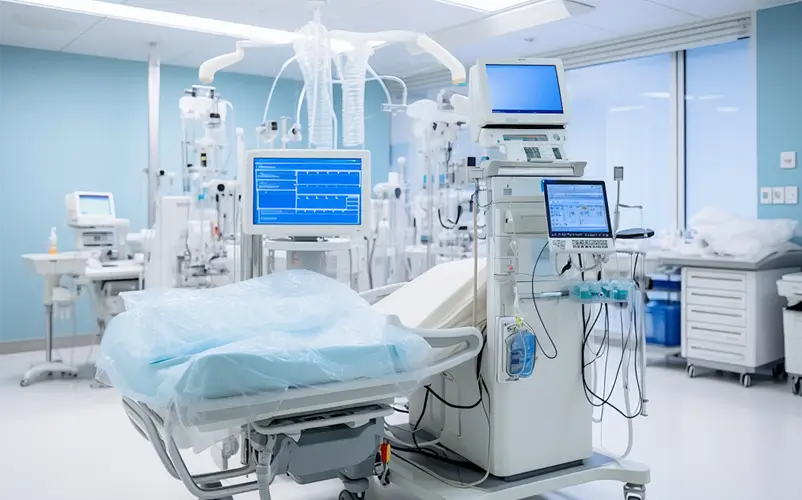
Medical DevicesPatient monitor interfaces, portable diagnostic equipment.Ensures clear, reliable operation in low-light environments; seamless surface is easy to clean and disinfect.
Industrial Controls & Home AppliancesIndustrial HMI panels, control panels for premium kitchen appliances.Provides a robust, reliable interface with excellent visibility in various lighting conditions.

消費者

触覚メタルドームは、ゲーミング・コントローラーからメカニカル・キーボードに至るまで、高級家電製品に欠かせない部品である。.

フィットネスウェアラブル

フィットネス・トラッカー、ウェアラブル、高性能アプリケーションに最適です。.

インダストリアル

産業用機器には、過酷な環境や極端な温度下での連続使用に耐える堅牢なキーボードやヒューマン・マシン・インターフェースが求められることが多い。.

メディカル

医療業界では、製品のユーザー・インターフェースとして、山陽のメンブレン・スイッチとタッチ・スクリーン技術が長年にわたり利用されてきた。.

航空宇宙

シャンヨは、航空宇宙産業向けのバックライト付きヒューマン・マシン・インターフェースやバックライト付きパネル、サイネージの設計で20年以上の経験がある。.

ミリタリー

特殊部隊が敵陣に潜入するとき、AN/PRC-163マンパック無線機のすべての部品が命綱となる。.

山陽のパートナー

Shanyo collaborates with leading companies across various industries worldwide to design and manufacture membrane switches for them.

ヘルプセンター

よくあるご質問

Q1: What is the difference between a membrane switch and a mechanical switch?

A: Membrane switches are flat, layered, and sealed, offering a lower profile, better environmental sealing, and lower cost. Mechanical switches are individual, bulky components with moving parts that protrude, offering a different tactile feel but with more crevices for contaminants.

A: The lifespan varies by design. A standard tactile membrane switch with metal domes is typically rated for 1 to 5 million activations. Non-tactile versions or those with advanced circuit printing can often exceed 5 million cycles.

A: Absolutely. One of their core strengths is environmental sealing. By using gaskets, specialized adhesives, and sealed connectors, a membrane switch panel can be engineered to meet high IP ratings such as IP67 or IP68 for complete protection against dust and water immersion.

A: Common methods include: LED indicators (for individual icons), Electroluminescent (EL) backlighting (for uniform, area-wide glow), and Light Guide Film (LGF) (for efficient and even distribution of light from edge-mounted LEDs).

A: Begin by defining your requirements: interface layout, desired tactile feedback (or non-tactile), environmental conditions (IP rating, temperature), electrical specs, and budget/volume. Contacting an experienced membrane switch manufacturer early in your design phase is the best way to ensure an optimal, cost-effective solution tailored to your needs.

必要なガイド

How To Install And Interface A Membrane Switch Panel

Getting Started With Membrane Switch Panel Installation The membrane switch panel arrives. Now what? Installation seems straightforward enough—peel backing, stick it down, plug it in. But rushing through this process
What Is A Membrane Switch Panel?

Understanding What a Membrane Switch Panel Actually Is They’re on medical devices, gym equipment, appliances, industrial machinery. Chances are good that several membrane switch panels were pressed today without any

関連商品

お問い合わせ

電子メール

電話

住所

青島経済技術開発区威河路252号天河工業園20工場

トップに戻る

お問い合わせ