
Understanding the Basics Before You Design a Metal Dome
Designing a metal dome isn’t quite as straightforward as picking a component off the shelf. Sure, standard options exist, but getting the tactile feel right for a specific application requires careful consideration of multiple factors. The dome shape, material, force curve, and integration method all play into the final user experience.
Before diving into specifications, it helps to understand what the metal dome actually does. When pressed, it collapses and makes electrical contact with the PCB beneath. That collapse creates the tactile “click” users feel. The challenge lies in controlling exactly how that collapse happens, how much force it requires, and how the dome returns to its original shape.
Key Parameters in Metal Dome Design
Shape Selection
The shape of a metal dome affects both tactile response and layout flexibility. Common options include:
- Round domes – Most popular, offering symmetrical force distribution
- Oblong domes – Useful when space is tight in one direction
- Four-leg domes – Provide stable contact and consistent feedback
- Triangle domes – Less common, used in specialized applications
- Cross domes – Designed for specific actuation patterns
Round metal domes remain the industry standard for general purposes. They’re easier to manufacture, less prone to orientation issues during assembly, and deliver predictable performance regardless of where pressure is applied on the surface.
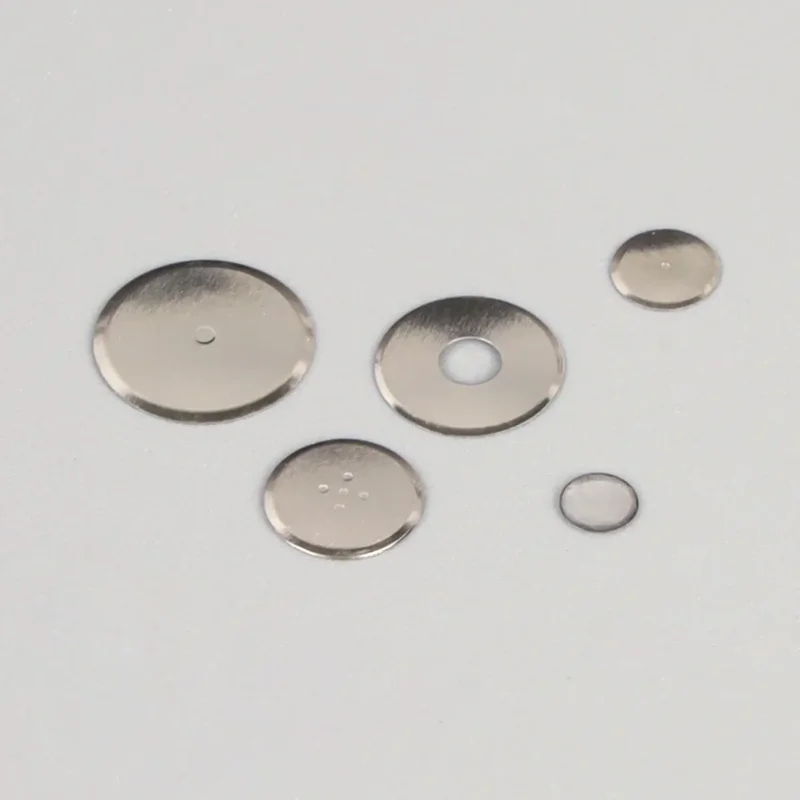
Size and Dimensions
Metal dome sizing depends heavily on the application. Smaller domes fit compact devices but typically require less actuation force. Larger domes can handle higher force requirements and often produce a more pronounced click.
Typical diameter ranges fall between 4mm and 20mm. Height varies too, usually from 0.1mm to 0.5mm depending on the desired travel distance and tactile intensity. Getting these dimensions wrong means the dome either bottoms out too quickly or feels sluggish during actuation.
Force Rating and Tactile Response
Force rating, measured in grams or Newtons, indicates how much pressure triggers the dome collapse. This specification directly impacts user experience. Too light, and accidental presses become a problem. Too heavy, and the button feels unresponsive or tiring to use repeatedly.
| Force Range | Typical Feel | Common Applications |
|---|---|---|
| 100–150g | Light, easy press | Remote controls, consumer electronics |
| 150–250g | Medium, balanced | Keyboards, medical devices |
| 250–350g | Firm, deliberate | Industrial controls, automotive |
| 350g+ | Heavy, resistant | Safety-critical applications |
Material Considerations for Metal Dome Design
Stainless Steel Grades
Most metal domes use stainless steel, typically 301 or 304 grade. The choice affects corrosion resistance, spring properties, and longevity.
- 301 stainless steel – Higher carbon content, excellent spring characteristics, most common choice for metal dome production
- 304 stainless steel – Better corrosion resistance, slightly softer, used in environments with moisture concerns
- Beryllium copper – Premium option with superior conductivity and fatigue resistance, but more expensive
Material thickness plays into this too. Thinner material produces lighter actuation force; thicker material creates firmer response. Standard thicknesses range from 0.05mm to 0.15mm.
Surface Treatments and Plating
Contact reliability depends partly on surface treatment. Options include:
- Gold plating – Best conductivity, excellent corrosion resistance, highest cost
- Silver plating – Good conductivity, more affordable than gold
- Nickel plating – Budget-friendly, decent performance for less demanding applications
For applications requiring millions of actuations, gold plating on the contact points tends to be worth the investment. It prevents oxidation that might otherwise increase contact resistance over time.
Integration and Assembly Tips for Metal Dome Design
Array vs. Single Dome Configuration
Metal domes can be supplied individually or pre-mounted on adhesive carrier sheets (dome arrays). Each approach has tradeoffs:
Single domes:
- More flexibility in placement
- Lower component cost
- Higher assembly labor
- Risk of misalignment during production
Dome arrays:
- Faster assembly with precise positioning
- Reduced handling errors
- Higher per-unit cost
- Less flexibility for irregular layouts
For high-volume production, arrays generally make more sense. The upfront cost offsets assembly time savings. Prototyping or low-volume runs might favor individual domes for flexibility.

PCB Pad Design
The metal dome only works properly if the PCB pads beneath are correctly designed. Key considerations include:
- Center contact should be slightly raised or at minimum flush with surrounding area
- Outer ground ring needs adequate width for stable dome seating
- Surface finish (ENIG, OSP, or HASL) affects long-term contact reliability
- Solder mask openings must match dome footprint precisely
Mismatched pad geometry leads to inconsistent tactile feel, contact bounce, or premature failure. It’s one of those details that seems minor but causes real problems when overlooked.
Common Mistakes in Metal Dome Design
Even experienced engineers occasionally stumble on these points:
- Specifying force rating without considering the overlay material thickness
- Ignoring environmental factors like temperature extremes or humidity
- Choosing dome size based solely on available space rather than user comfort
- Overlooking snap ratio when focusing only on peak force
- Failing to prototype with actual production materials
Final Thoughts on Getting Metal Dome Design Right
Designing an effective metal dome requires balancing multiple variables simultaneously. Size, shape, material, force rating, and integration method all interact in ways that affect the final product. There’s no single perfect formula, which is partly why experienced designers still prototype extensively before committing to production specifications.
The good news is that once these parameters are dialed in correctly, metal domes deliver remarkably consistent performance. That satisfying click users feel every time they press a button? It starts with thoughtful design decisions made long before the product ever reaches their hands. If you want to know more about metal domes, please read about What Is a Metal Dome and How Does It Work.
Frequently Asked Questions
What is the typical lifespan of a metal dome?
Most quality metal domes handle between one million and five million actuations without significant degradation. Lifespan varies based on material, force rating, and operating environment. Applications requiring even higher cycle counts may need specialized dome designs or premium materials like beryllium copper.
How does dome shape affect tactile feedback?
Round metal domes provide the most consistent feedback because force distributes evenly across their symmetrical surface. Oblong or irregular shapes may feel different depending on press angle or location. Four-leg designs offer stability and defined contact points, making them popular for applications demanding precise tactile response.
Can metal dome specifications be customized?
Yes, many manufacturers offer custom metal dome designs tailored to specific requirements. Custom options include non-standard sizes, unique force curves, specialized plating, and proprietary shapes. Minimum order quantities typically apply, and tooling costs may be involved for truly custom geometries.