
Press a button on a quality remote control or gaming controller. Feel that satisfying click beneath your fingertip—the crisp confirmation that something happened. That sensation isn’t accidental. It’s engineered. And more often than not, a small piece of curved stainless steel called a metal snap dome creates it.
The tactile feedback from these components seems simple. Push button, feel click. But underneath that straightforward experience lies surprisingly elegant physics. Understanding how metal snap domes generate their characteristic response reveals why they’ve become the preferred solution for interfaces demanding reliable, satisfying user feedback.
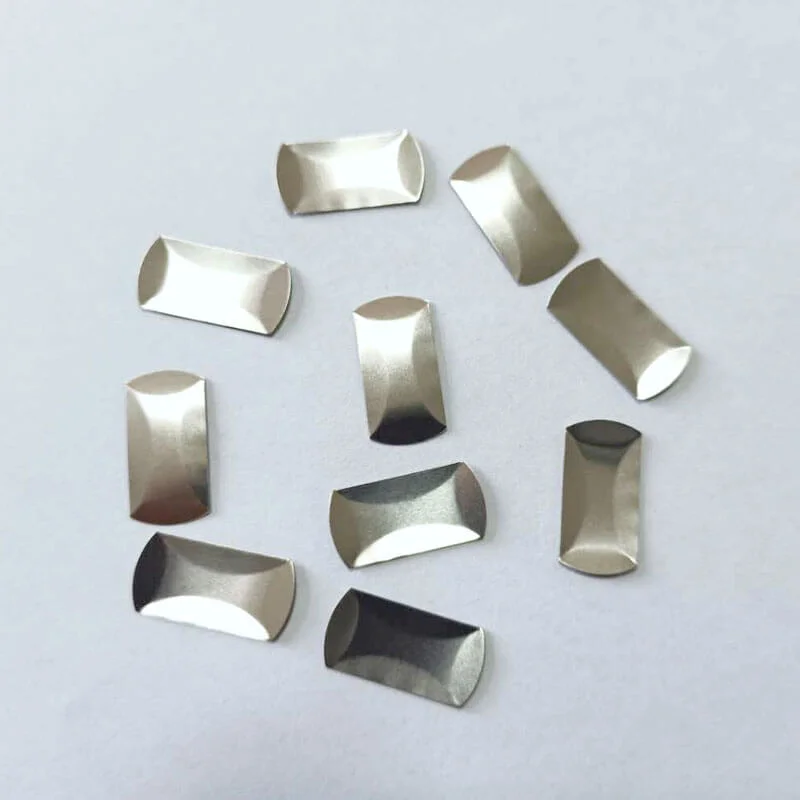
The Basic Physics Behind Metal Snap Domes
Bistable Mechanics Explained
A metal snap dome exhibits what engineers call bistable behavior. It has two stable states: the resting convex position (curved upward like a small hill) and the inverted concave position (curved downward into a bowl shape). The dome prefers staying in either state rather than anywhere in between.
Transitioning from one state to another requires overcoming an energy barrier. Push on the dome gradually and resistance builds. Keep pushing past a critical point and—snap—the dome suddenly inverts. Remove pressure and it snaps back equally suddenly.
This snap-through action differs fundamentally from gradual compression. A foam pad squishes progressively. A coil spring deflects proportionally. Metal snap domes store energy then release it rapidly, creating distinct transitions users can feel.
The Force Curve Profile
Force curves describe how resistance changes throughout a button press. For metal snap domes, this curve has a characteristic shape:
- Initial phase: force increases as finger begins pressing
- Peak force: maximum resistance just before snap-through
- Collapse phase: force drops rapidly as dome inverts
- Bottom-out: dome contacts circuit, minimal additional travel
- Return: releasing pressure triggers reverse snap-through
The dramatic force drop during collapse creates the “click” sensation. Users feel resistance building, then sudden release. This pattern communicates clearly—the button activated. No ambiguity.
The ratio between peak force and post-snap force (called tactile ratio or snap ratio) affects perceived crispness. Higher ratios produce more distinct clicks. Typical quality metal snap domes achieve ratios between 40% and 60%, meaning post-snap force drops to roughly half the peak or less.
Material Properties That Make Metal Snap Domes Work
Stainless Steel Characteristics
Most metal snap domes use SUS301 stainless steel—a work-hardening austenitic alloy. This material offers several properties essential for dome function:
- High yield strength after work hardening
- Excellent fatigue resistance through millions of cycles
- Consistent spring behavior across temperatures
- Corrosion resistance for long service life
- Formability allowing precise dome shaping
The work hardening aspect matters particularly. Manufacturing processes actually strengthen the material, improving spring properties over the base alloy characteristics.
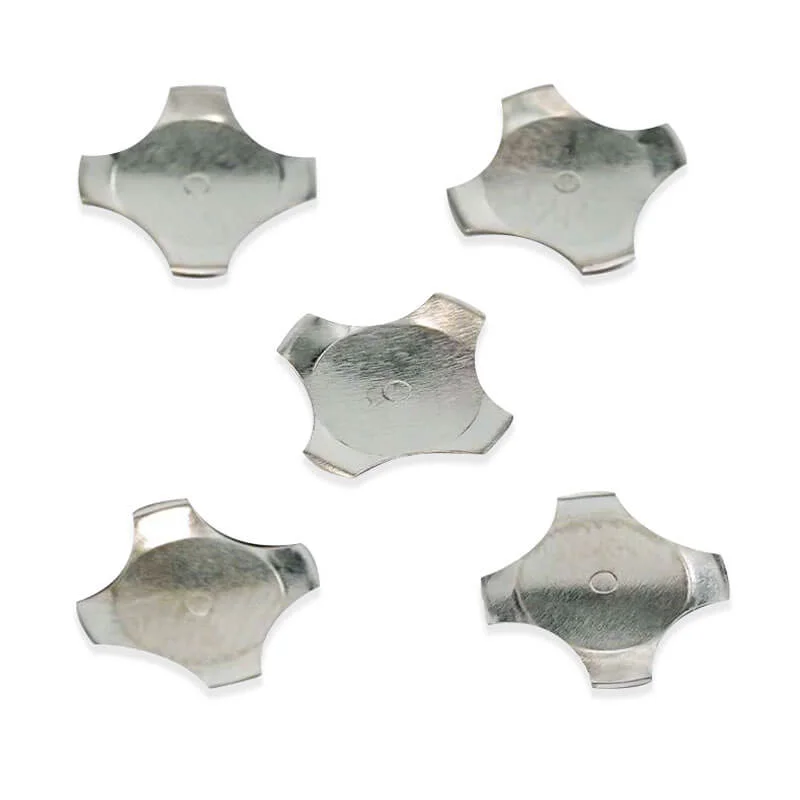
Thickness And Geometry Interactions
| Parameter | Typical Range | Effect on Feedback |
|---|---|---|
| Material thickness | 0.05-0.15mm | Thicker = higher forces |
| Dome diameter | 4-16mm | Larger = higher force capacity |
| Dome height | 0.15-0.35mm | Higher = more travel, distinct feel |
| Leg configuration | 3-5 legs | More legs = better centering |
| Surface curvature | Varies | Sharper = crisper snap |
How Users Actually Perceive Metal Snap Domes Feedback
Engineering specifications describe dome behavior. But human perception doesn’t follow specifications directly. Understanding how users experience tactile feedback helps explain why certain dome characteristics matter more than measurements might suggest.
Sensory Processing Of Click Events
Human fingertips contain dense concentrations of mechanoreceptors—specialized nerve endings detecting pressure, vibration, and texture. When a metal snap dome inverts, these receptors detect:
- Rapid force change during snap-through
- Brief vibration from impact and rebound
- Audible click sound accompanying the event
- Slight temperature difference of metal dome
The brain integrates these signals into a unified perception of “clicking.” Multiple sensory channels reinforce each other, making the event feel more distinct than any single channel alone would produce.
This multi-sensory aspect explains why metal snap domes feel more satisfying than alternatives producing similar force curves but without the sharp snap transition. The rapid event activates more sensory processing than gradual deflection.
Psychological Confirmation Effects
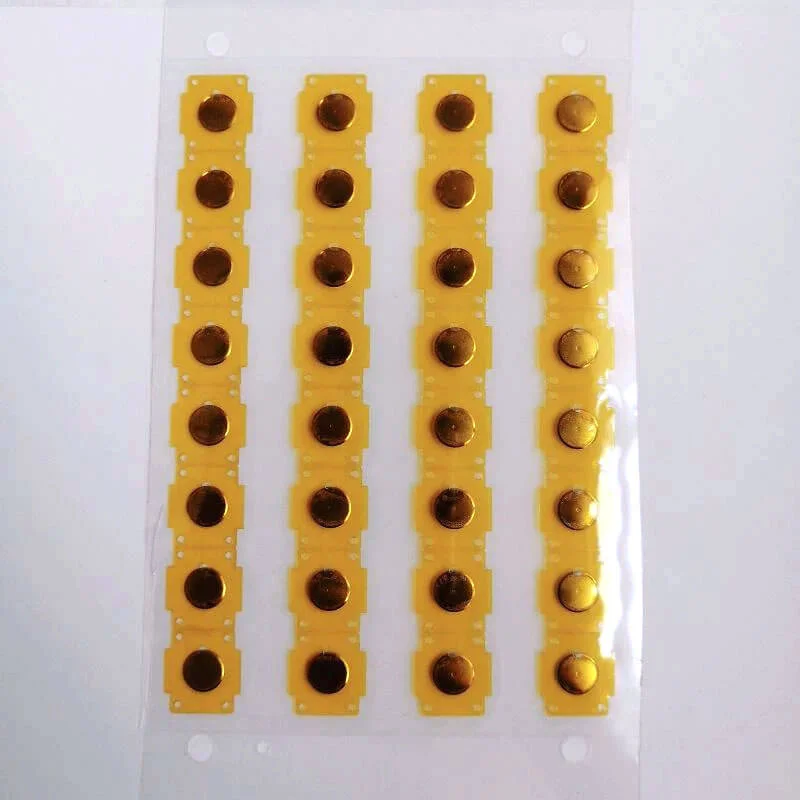
Beyond pure sensation, tactile feedback provides psychological confirmation. Users feel certain their input registered when interacting with a well-designed metal snap dome array, eliminating the need to look at the screen for verification or second-guess whether the button actually activated.
This confirmation effect reduces cognitive load during interaction. Users can press buttons confidently without devoting attention to monitoring success, especially when navigating through a precise metal snap dome array interface. For applications like car controls, remote controls, and gaming controllers—where multitasking is common—this matters substantially.
Preference Variations Across Users
Not everyone prefers identical tactile characteristics. Some users favor:
- Light, quick clicks for rapid input sequences
- Heavier, substantial clicks conveying quality feel
- Quiet responses for discrete environments
- Louder clicks providing audible confirmation
Product designers target specific user populations, selecting metal snap domes matching expected preferences. Gaming controllers emphasizing speed might use lighter, faster domes. Premium remote controls might choose heavier, more deliberate responses.
FAQ
Why do some metal snap domes feel crisper than others?
Several factors influence crispness perception. Tactile ratio (force drop during snap-through) matters most—higher ratios feel crisper. Dome geometry, material thickness, and surface curvature all affect ratio. Overlay transmission also plays significant role; thin stiff overlays preserve crispness while thick soft materials dampen it. Manufacturing consistency determines whether each dome performs identically too.
Do metal snap domes wear out and lose their tactile feedback?
Quality metal snap domes maintain consistent feedback through millions of actuations. However, eventual fatigue does occur with extreme cycling. Degradation typically appears as reduced tactile ratio—the snap becomes less distinct—before complete failure. Premium stainless steel alloys and proper design specifications minimize degradation throughout realistic product lifespans.
Can tactile feedback from metal snap domes be customized for specific applications?
Yes, extensively. Dome diameter, height, material thickness, leg configuration, and surface geometry all affect feedback characteristics. Manufacturers offer standard options covering common requirements, plus custom dome development for unique applications. Force ratings from under 100 grams to over 500 grams accommodate diverse user needs. Working with experienced suppliers helps identify optimal specifications for particular applications.