
The Basic Principle Behind How Metal Dome Switches Work
Every time someone presses a button on a remote control, microwave, or car dashboard, there’s a good chance a metal dome switch is doing the work underneath. These components have been around for decades, yet many people have never stopped to think about what actually happens when they press down.
At its core, a metal dome switch operates on a surprisingly simple principle. A small, curved piece of stainless steel sits above a circuit board contact. When pressure is applied from above, the dome collapses downward, touches the contact point, and completes an electrical circuit. Release the pressure, and the dome springs back to its original shape, breaking the connection.
That’s the basic idea anyway. The reality involves some interesting engineering that determines how the switch feels, how long it lasts, and how reliably it performs over millions of cycles. The snap action during collapse creates what users perceive as tactile feedback, that satisfying click confirming the button actually registered.
Internal Structure of Metal Dome Switches
The Dome Itself
The metal dome is typically made from stainless steel, usually 301 grade, formed into a curved disc shape. This curvature isn’t random. It’s carefully engineered to provide specific force characteristics and ensure consistent snap action during operation.
Common dome configurations include:
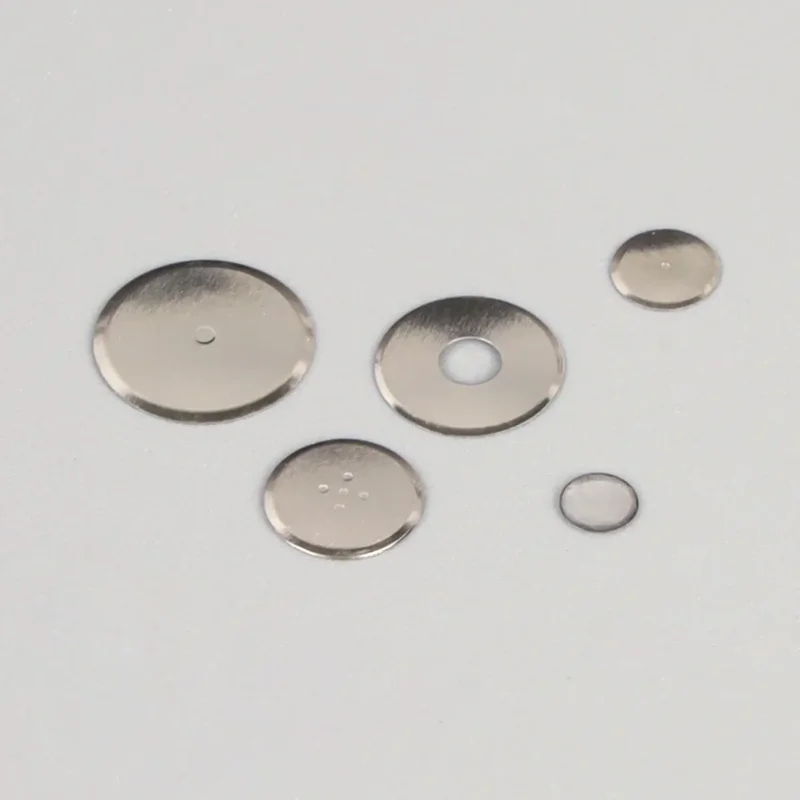
- Round domes – Symmetrical design, most widely used
- Oblong domes – For tight spaces requiring rectangular layouts
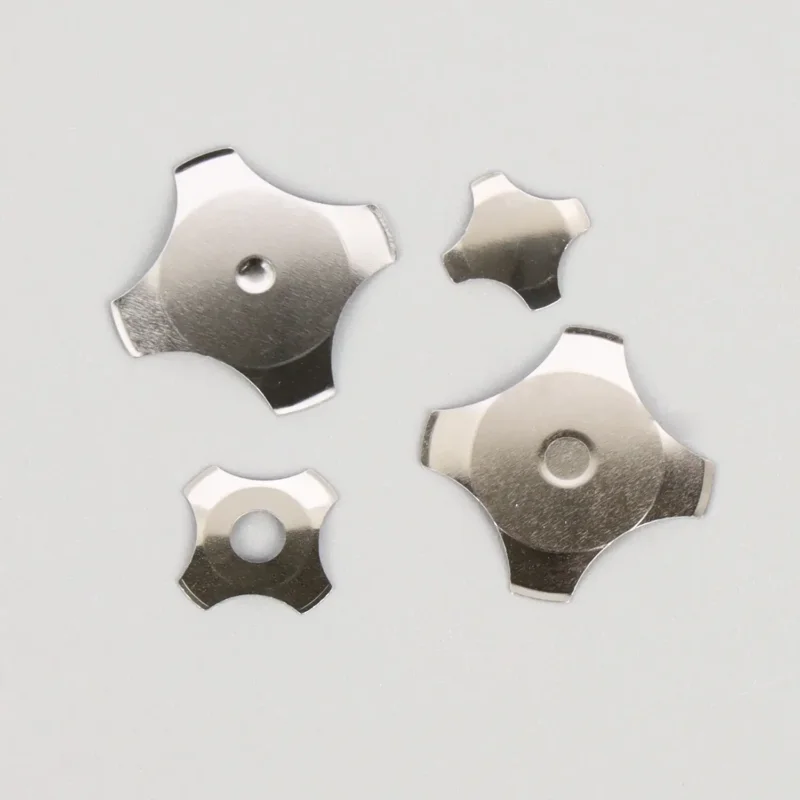
- Four-leg domes – Provide stable seating and consistent contact
- Triangle domes – Specialized applications with unique space constraints
The dome’s dimensions (diameter, height, material thickness) directly influence actuation force and tactile intensity. Smaller domes generally require less force to actuate, while larger ones can support higher force ratings.
Circuit Board Contact Pads
Beneath the dome sits the PCB with its contact pads. A typical arrangement includes a center contact surrounded by a ground ring or multiple outer contacts. When the dome collapses, its underside bridges the gap between these conductive areas, allowing current to flow.
The contact pad design matters more than people might expect. Pad geometry, surface finish, and spacing all affect how cleanly the electrical connection occurs. Poor pad design can lead to contact bounce or intermittent connections.
Overlay and Retention Layers
etal dome switches don’t just float above the circuit board. They’re held in position by adhesive layers or polyester sheets that keep everything aligned. A typical assembly might include:
- Graphic overlay (what users see and touch)
- Adhesive spacer layer
- Dome retention sheet with adhesive
- Metal dome positioned over PCB contact
- Circuit board with contact pads
This layered construction protects the dome while allowing force transmission from the user’s finger down to the switch mechanism.
The Actuation Cycle of Metal Dome Switches
Pre-Travel Phase
When pressure first applies to the button surface, the dome resists. Force builds gradually as the dome begins to deflect. This initial resistance gives users a sense of the button’s presence before anything happens electrically.
The pre-travel phase feels important to user experience. Too short, and accidental presses become common. Too long, and the button feels mushy or unresponsive.
Snap Action and Contact
At a certain force threshold, the dome reaches its collapse point. The curved surface suddenly inverts, snapping downward with an audible and tactile click. This snap action is what distinguishes metal dome switches from softer alternatives like rubber domes.
The moment of collapse coincides with electrical contact. The dome’s center touches the PCB pad, completing the circuit and registering the input. Everything happens within milliseconds.
| Phase | What Happens | User Perception |
|---|---|---|
| Initial press | Dome begins deflecting | Slight resistance felt |
| Force buildup | Dome approaches collapse threshold | Increasing firmness |
| Snap point | Dome inverts rapidly | Distinct click sensation |
| Contact made | Circuit closes | Input registered |
| Bottom out | Dome fully compressed | Solid stop feel |
| Release | Dome springs back | Ready for next press |
Return and Reset
Once pressure releases, the dome’s spring properties push it back to its original convex shape. This return action breaks electrical contact and resets the switch for the next cycle. The dome doesn’t just slowly relax. It snaps back with noticeable force, which users often feel as a secondary tactile event.
This return force needs to be strong enough to reliably reset the switch but not so strong that it fights against the user’s finger during the press. Balancing these characteristics is part of what makes metal dome switch design interesting.
Why Metal Dome Switches Feel Different From Other Technologies
Comparing Tactile Characteristics
Not all switches feel the same. Metal dome switches occupy a middle ground between different technologies, offering distinct advantages:
- Crisper snap than rubber domes, which tend to feel mushy
- Quieter operation than most mechanical keyboard switches
- More consistent than membrane-only designs
- Lower profile than traditional mechanical switches
The snap ratio (relationship between peak force and contact force) largely determines how pronounced the click feels. Metal dome switches typically achieve snap ratios around 40-60%, creating clear tactile feedback without excessive force requirements.
Durability Considerations
These switches handle repeated use remarkably well. Quality metal dome switches routinely achieve one to five million actuations before performance degrades. Some premium designs exceed even these numbers.
The durability comes from the material properties of stainless steel and the relatively simple mechanical action. There are no complex pivot points or sliding contacts to wear out. The dome simply flexes, contacts, and returns.
Common Applications for Metal Dome Switches
Given their characteristics, metal dome switches appear across many industries and product categories:
- Consumer electronics (remote controls, keyboards, gaming controllers)
- Automotive controls (dashboard buttons, steering wheel interfaces)
- Medical devices (diagnostic equipment, patient monitors)
- Industrial controls (machinery panels, testing equipment)
- Appliances (microwave panels, washing machine interfaces)
- Telecommunications (desk phones, conferencing equipment)
Each application might use slightly different dome specifications, but the underlying operating principle remains consistent. The technology scales well from tiny watch buttons to larger industrial controls.
Factors Affecting Metal Dome Switch Performance
Several variables influence how well these switches perform in practice:
- Dome material and thickness affect force rating and lifespan
- Environmental conditions (temperature, humidity) can impact tactile feel
- Overlay material and thickness change how force transmits to the dome
- Contact pad surface finish affects electrical reliability
- Assembly quality determines long-term consistency
Getting these factors right requires attention during both design and manufacturing phases. Metal dome switches that feel great out of the box might degrade if underlying specifications weren’t properly considered for the intended use environment.
Understanding Why Metal Dome Switches Remain Popular
Despite newer technologies emerging, metal dome switches continue seeing widespread use. The combination of satisfying tactile feedback, reliable electrical contact, compact size, and reasonable cost makes them hard to replace for many applications.
The technology is mature but not outdated. Manufacturers keep refining materials, dome geometries, and integration methods to improve performance. That simple snap action, perfected over decades of development, still delivers exactly what most products need from their button interfaces.
Understanding how these switches work helps appreciate the engineering behind everyday devices. That click felt when changing channels or adjusting temperature settings represents decades of refinement in a component most users never actually see.
If you want to know more about metal dome switch, please read about What is a metal dome switch.
If you want to know more about metal dome switch, please read about What is a metal dome switch.
Frequently Asked Questions
How long do metal dome switches typically last?
Most quality metal dome switches are rated for one million to five million actuations. Actual lifespan depends on operating conditions, force levels, and manufacturing quality. High-end designs with premium materials can exceed these numbers, while budget components might fall short.
Are metal dome switches waterproof?
The metal dome itself isn’t inherently waterproof, but the complete switch assembly can be designed for moisture resistance. Sealed membrane overlays and proper gasket designs allow metal dome switches to function reliably in wet or humid environments when properly specified.
What causes metal dome switches to fail?
Common failure modes include metal fatigue from excessive cycling, corrosion on contact surfaces, contamination from dust or liquids, and adhesive degradation over time. Proper design, quality materials, and appropriate environmental protection minimize these risks significantly.