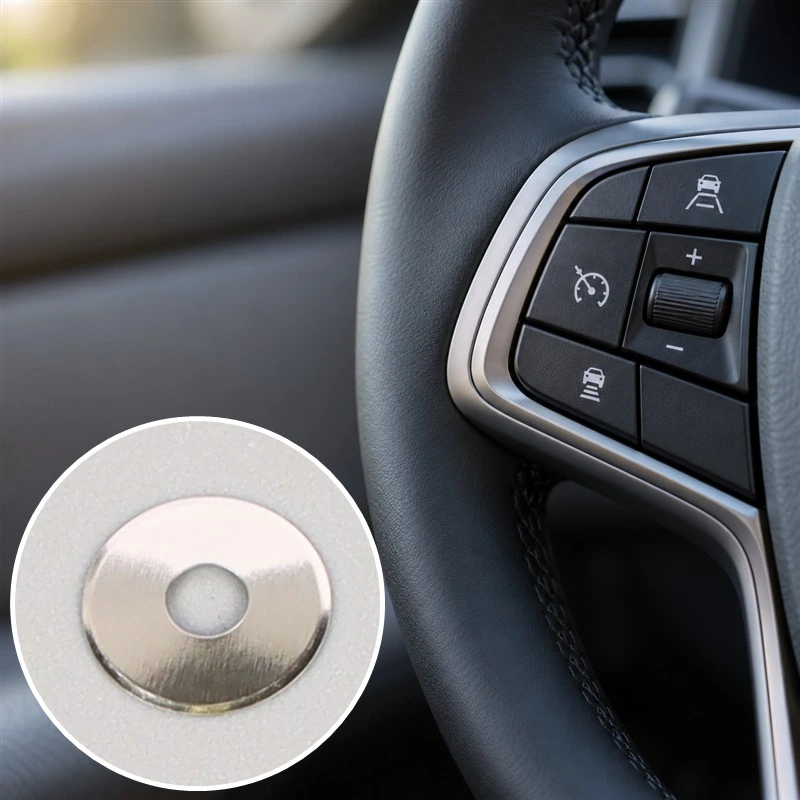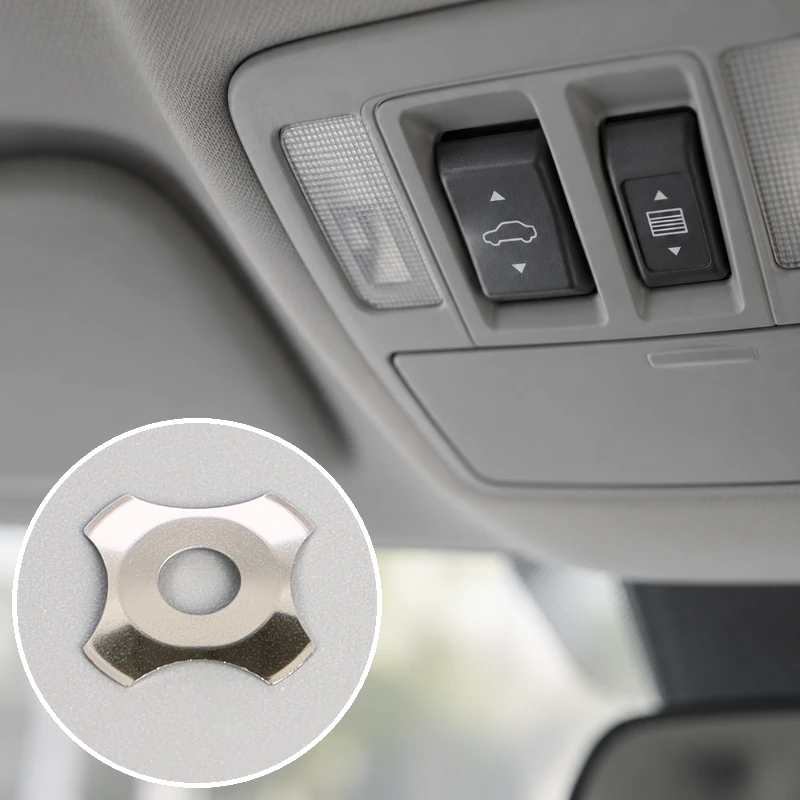
A modern vehicle contains dozens of small switches that drivers touch every day: steering wheel buttons, window controls, center stack keys, and key fobs. Inside many of them sits a cúpula metálica, a small disc of formed stainless steel that snaps when pressed, closes the circuit, and gives the button its crisp click. The part costs pennies, but it works in safety-relevant, high-cycle environments where a drifting click force or a dead contact quickly becomes a warranty claim.
IATF 16949 matters because it is the automotive industry’s dedicated quality management standard, and holding it tells you a metal dome supplier runs audited systems for preventing defects, controlling variation across production runs, and tracing every batch back to its material lot. It marks the difference between a supplier that inspects quality at the end of the line and one that builds quality into the process.
This article explains what the standard covers, how it differs from ISO 9001, and what to verify before placing an order.
What is a metal dome and why is it used in vehicles
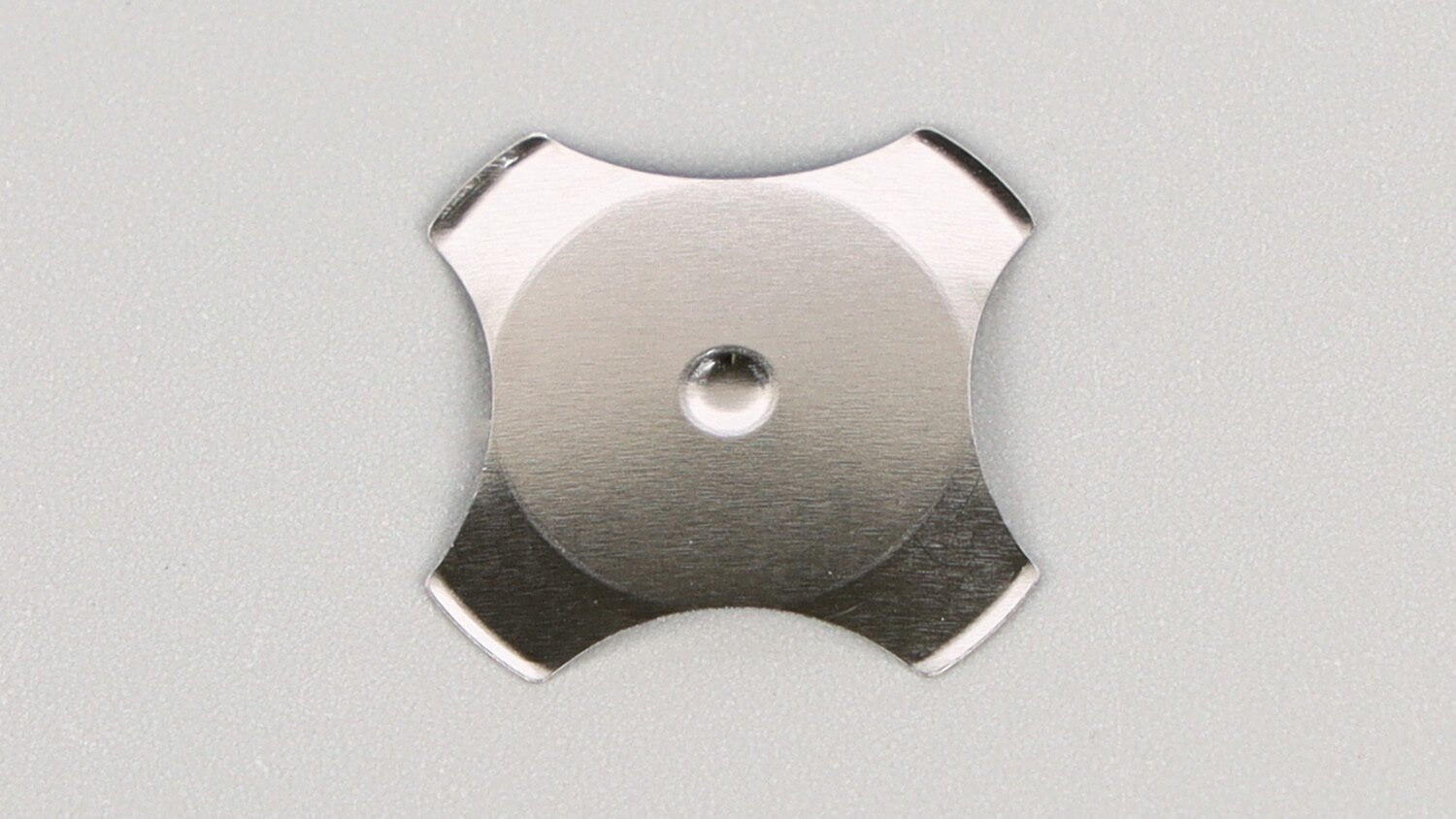
A metal dome is a dome-shaped piece of spring stainless steel that acts as both the contact and the tactile element of a switch. When a user presses the button, the dome snaps through, touches the circuit pads below, and produces a distinct click. A metal dome switch uses this one simple part to deliver electrical contact and tactile feedback at the same time.
That simplicity is why domes appear throughout vehicle interiors: steering wheel controls, door and window switches, overhead consoles, infotainment buttons, and keyless entry fobs. Automotive use raises the bar compared with consumer electronics. A dome in a car may need to survive one million actuations or more, hold its actuation force within a tight tolerance band, and keep working from -40 °C in a cold-soaked cabin to 85 °C in summer heat. A TV remote can tolerate a slightly softer click after two years. A steering wheel button cannot, because inconsistent tactile feedback reads to the driver as a defect in the vehicle itself.
What is IATF 16949 certification
IATF 16949 is the international quality management standard written specifically for the automotive supply chain. Developed by the International Automotive Task Force, it takes the full structure of ISO 9001:2015 and layers automotive-specific requirements on top: defect prevention, product safety, traceability, and control of sub-suppliers.
The standard applies to any organization that manufactures production or service parts destined for a vehicle at any tier of the supply chain. A stamping shop making switch domes falls squarely inside that scope. Certification is issued only after an audit by an IATF-recognized certification body, and the rules governing those audits are maintained by IATF Global Oversight, the organization that administers the scheme on behalf of the task force. The current version is IATF 16949:2016, and it cannot be held without also meeting every requirement of ISO 9001.
IATF 16949 vs ISO 9001: what is the difference
ISO 9001 is a generic quality management standard for any industry. IATF 16949 includes every ISO 9001 requirement and adds automotive-specific ones. An IATF-certified supplier therefore meets ISO 9001 by definition, but an ISO 9001-certified supplier meets only a fraction of what automotive customers expect.
| Area | ISO 9001 | IATF 16949 |
| Scope | Any industry, any organization | Automotive production parts only |
| Customer-specific requirements | General customer focus | OEM-specific requirements integrated into the QMS |
| Quality planning tools | Organization’s choice | Core tools required: APQP, FMEA, MSA, SPC, PPAP |
| Product safety | General requirements | Documented product safety process across the lifecycle |
| Traceability | Where needed | Batch-level traceability expected for production parts |
| Supplier control | Evaluation and monitoring encouraged | Supplier development, monitoring, and second-party audits |
| Internal audits | QMS audits | QMS, manufacturing process, and product audits |
For a buyer, the practical reading is simple: ISO 9001 shows a supplier has a management system. IATF 16949 shows that the system is built for automotive reality.
Why IATF 16949 matters when sourcing a metal dome supplier
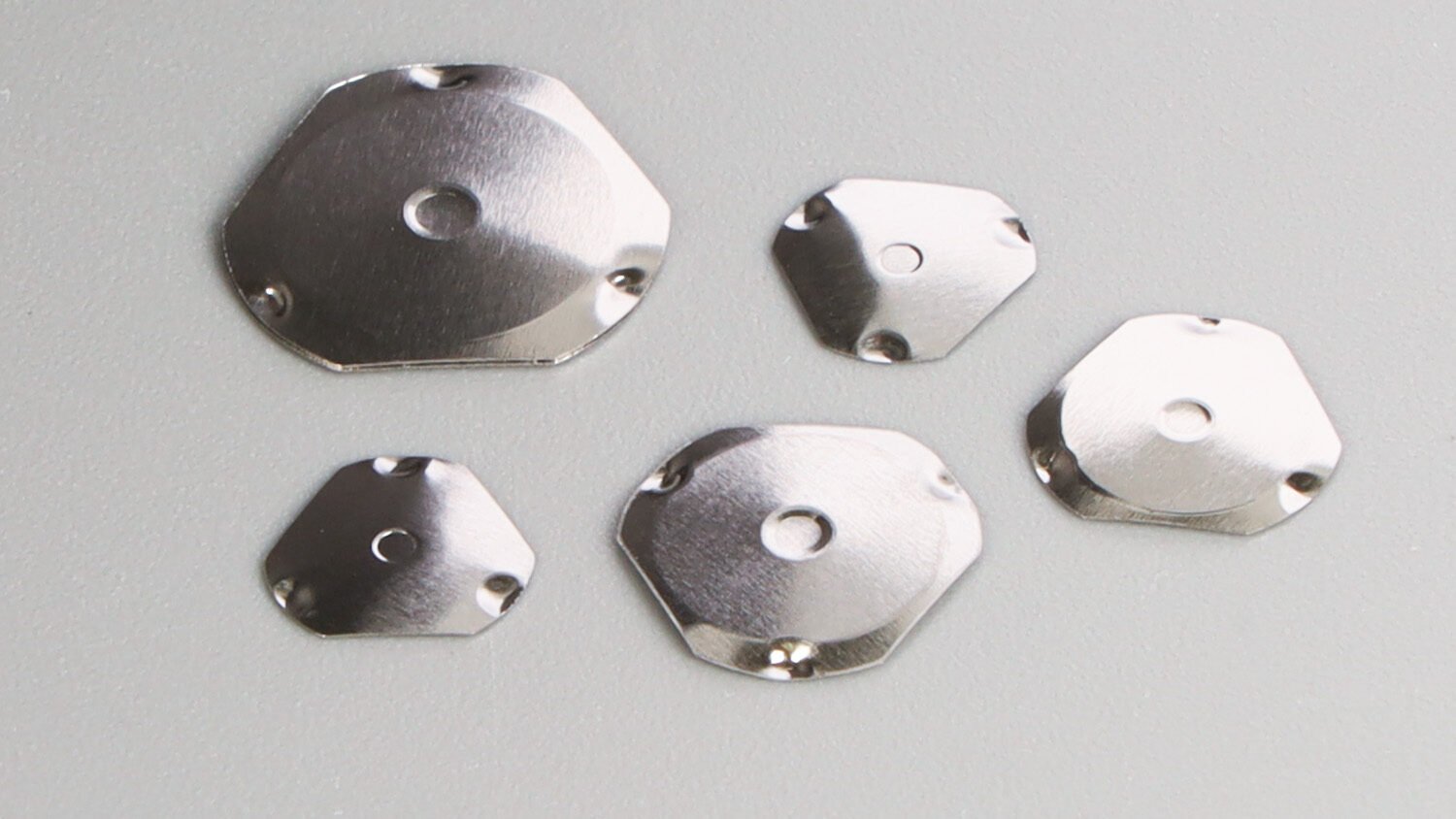
A metal dome is a precision stamping. Its click force, travel, and snap ratio depend on tooling condition, material temper, and plating control, and any of these can drift silently across a long production run. IATF 16949 exists to catch exactly this kind of drift. The certificate is evidence that the supplier runs a system designed to prevent defects rather than sort them out at final inspection. At Shanyo, our automotive production facility operates under a fully audited IATF 16949:2016 Quality Management System, ensuring every metal dome batch complies with strict automotive standards.
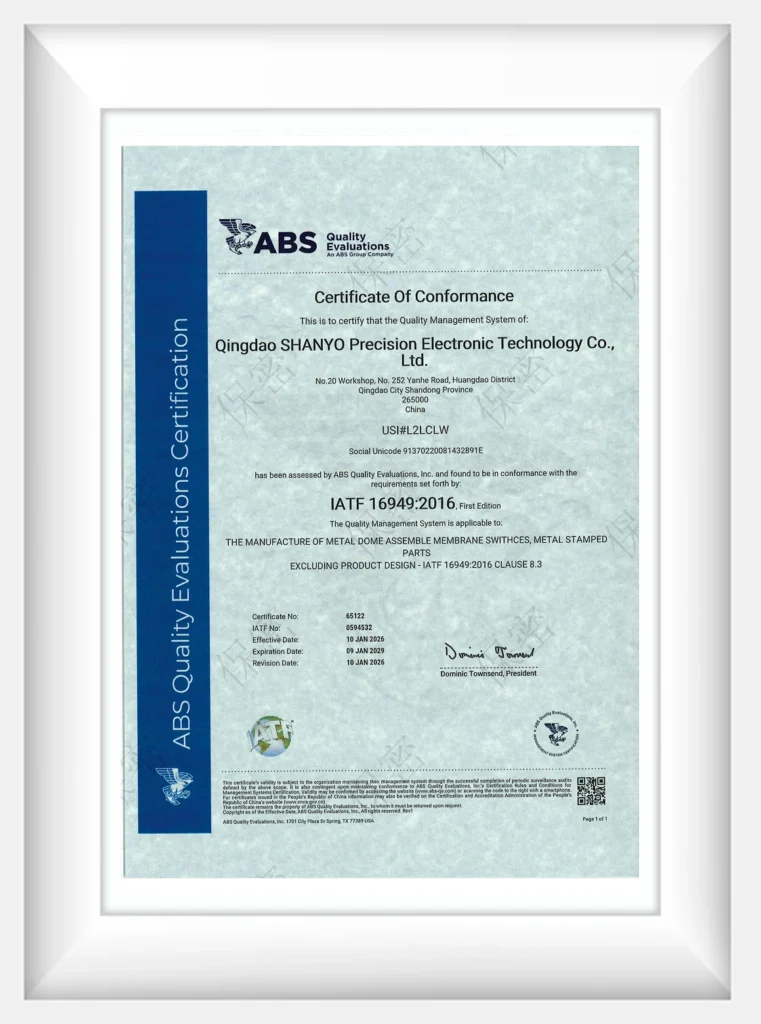
Defect prevention through core tools
The automotive core tools map directly onto dome production. FMEA forces the supplier to list what can go wrong, such as off-force domes, cracked plating, or contaminated contacts, and to put controls in place before production starts. SPC tracks dome height and click force over time, so a wearing die triggers adjustment before parts drift out of tolerance. PPAP requires the supplier to prove a new part or process change before mass production, and MSA confirms the force gauges and test equipment actually measure what they claim to measure.
Traceability and product safety
Every production batch must link back to its steel coil, plating lot, tooling set, and process records. If a field failure shows up in a switch module, the supplier can isolate the affected batches instead of scrapping a year of shipments. Product safety requirements matter here too, because domes sit inside controls the driver uses while the vehicle is moving.
Supply chain risk management and audits
An IATF-certified supplier must control its own supply chain, from stainless steel mills to plating services, and must pass surveillance audits to keep the certificate. Suppliers serving automotive applications at this level also work to customer-specific requirements from vehicle makers, which is why the certification tends to correlate with disciplined documentation and predictable delivery.
How to verify a supplier’s IATF 16949 certification
Ask for the certificate, then check it. A genuine certificate has a defined scope, a validity window, and an issuing body you can confirm independently.
- Request the certificate and read the scope line. It should cover the processes making your parts, such as the stamping of precision metal components, not a different site or activity.
- Check the issue and expiry dates. Certificates run on a three-year cycle with surveillance audits in between.
- Confirm the certification body is IATF-recognized. Certificates from unrecognized bodies carry no weight with automotive customers.
- Match the certified address to the factory that will actually stamp your domes. Group certificates do not always cover every site.
- Ask for sample PPAP documentation and a control plan for your part number. A supplier that lives the standard will produce these without hesitation.
Frequently asked questions
Is IATF 16949 mandatory for automotive suppliers?
Not by law. No regulation requires it. In practice, major vehicle makers and tier-one suppliers write it into their sourcing contracts, so a supplier without it is effectively shut out of the automotive supply chain.
Can a supplier get IATF 16949 without ISO 9001?
No. IATF 16949 contains every ISO 9001 requirement, so the certification audit covers both at once. A supplier does not need a separate ISO 9001 certificate first, but it must meet ISO 9001 in full to pass.
How long is an IATF 16949 certificate valid?
Three years. Surveillance audits take place during the cycle, and a serious unresolved nonconformity can lead to suspension or withdrawal before the certificate expires.