Every gamer has hit a face button that won’t register, a bumper that double-fires, or a D-pad that needs a second press. These input failures frustrate players. Most trace back to the switch under the keycap and the material it is made from.
A interruptor de domo metálico prevents input failures because its stainless-steel dome snaps cleanly between open and closed, giving a defined actuation point, steady contact, and a lifespan in the millions of cycles. A soft rubber pad relaxes with use and starts missing presses. That mechanical gap is why domes fail far less in real play.
Here is how the snap produces reliable input and where rubber designs actually break.
Why game controllers develop input failures in the first place
Most button failures start with the conductive rubber pad wearing out or contact resistance climbing until the board stops reading the press as a clean signal.
Stock controllers use a silicone membrane: a rubber nub bridges two PCB contacts. The rubber relaxes with heat and use, so the press feels soft and the contact turns inconsistent.
The most common failure modes
- Mushy feel: no sharp click, so players can’t tell if the press landed.
- Rising resistance: oxidation or carbon wear makes the MCU miss actuation.
- Double-click: a tired dome or rubber bounces, sending two signals for one press.
- No response: the pad wears through or the nub deforms, leaving an open circuit.
How a metal dome switch closes the circuit
A metal dome switch closes the circuit only at the moment of the snap, not through a slow rubber squeeze.
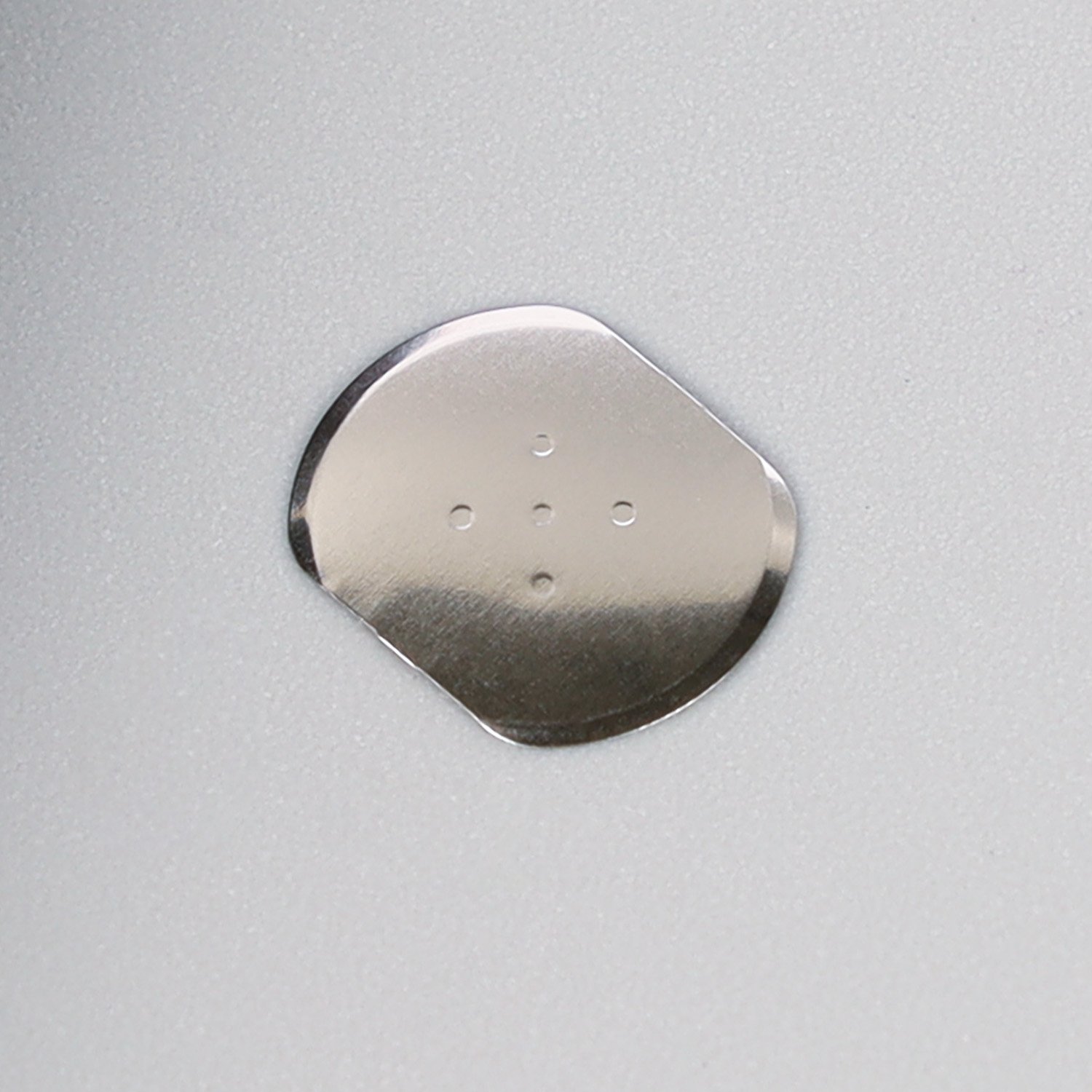
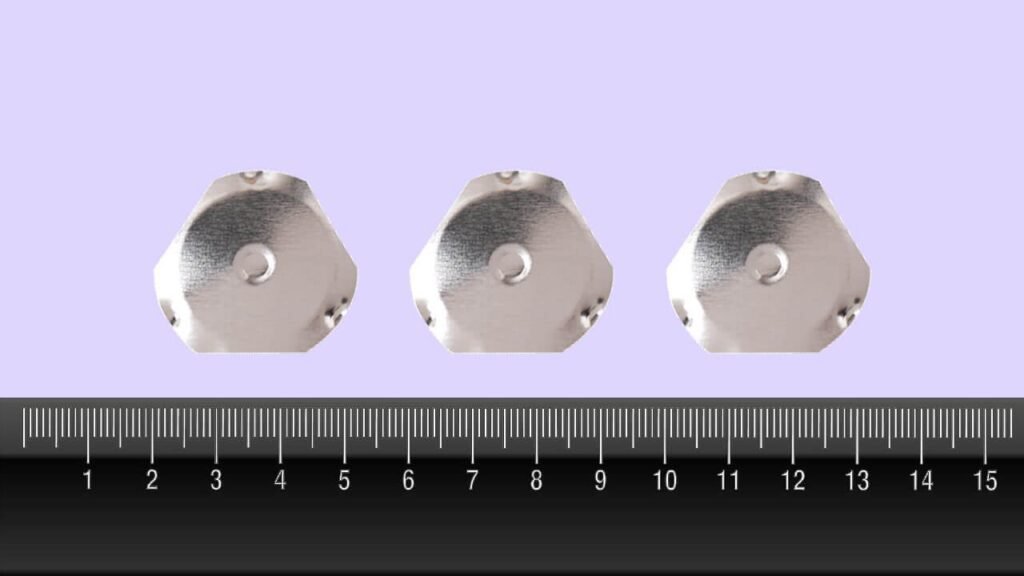
The dome is a shallow inverted cap, usually AISI 304 stainless, seated above the contacts on the metal dome switch PCB. At rest it bows up, and the circuit stays open. Press the cap and it buckles past its snap point, its underside touching both pads. Release, and the steel pops it back. A metal dome switch button has one repeatable event: collapse, contact, and return. No carbon to smear, no rubber to relax.
Why the snap ratio decides whether a button feels reliable
The snap ratio is what makes a click crisp and trustworthy instead of mushy and doubtful.
Snap ratio, also called click ratio, is the percent drop in resistance from the dome’s buckling peak to its floor. A typical range runs 40 to 60 percent. Above about 50 percent the click is sharp; below 35 percent the dome collapses without a clear snap and feels soft. Past 60 percent, the click gets loud, but the four legs strain, cutting life.
Metal dome array vs. rubber membrane: the reliability gap
A metal dome array beats a rubber membrane on travel, contact stability, and cycle life, the three things that cause missed inputs when they go wrong.
Travel is shorter too: a dome closes in about 0.3 mm with a defined break, so rapid presses don’t blur. Contact stability next: bare 304 grows oxide in humidity or sweat, and resistance can rise from under 100 mΩ toward 1 Ω, where the controller misses presses. Nickel plating handles most cases; gold flashes the harsh ones. Bodies such as IPC acceptability standards set the continuity tests suppliers use on assembled boards. Lifespan: quality domes run 1 million to 5 million cycles; rubber degrades sooner.
| Propiedad | Rubber membrane | Interruptor de cúpula metálica |
| Viajar | 1.0 to 1.5 mm (soft) | ~0.3 mm (crisp) |
| Siéntase | Mushy fades | Sharp, stable |
| Life | Baja | 1M to 5M cycles |
Footprint and PCB layout for controller keypads
Getting the metal dome switch footprint right keeps every key feeling identical across a production run instead of drifting unit to unit.
The footprint is the pad layout the dome sits over, and the support gap under it decides whether the snap lands cleanly. Hold it near 0.10 mm: under 0.05 mm the dome can’t fully collapse and the snap goes mute; over 0.30 mm it wobbles and force drifts across the batch. The force you feel is the assembled number, not the bare dome, because the overlay pre-loads it by about 15 to 25 gf.
Array and sheet assembly
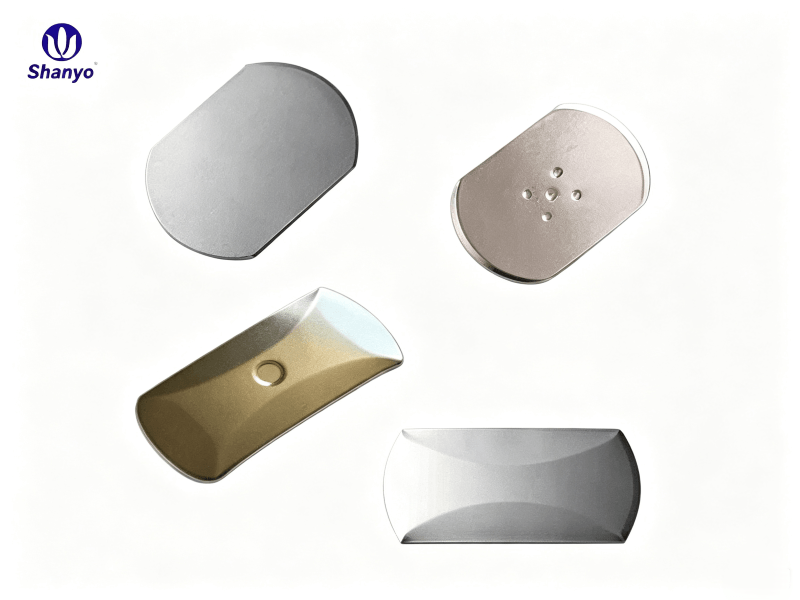
Domes ship on a metal dome switch sheet that holds a whole metal dome switch array and laminates over the PCB. On a tight metal dome switch keyboard or controller face, the sheet packs many keys in a small area and shields the steel from dust and moisture.
Repairing and replacing metal dome switches in controllers
A metal dome switch repair is usually one desoldered tact switch, not a dead board, as long as the dome is a discrete part rather than a laminated layer.
Shoulder buttons show this best. The LB/RB switches are often 6×6 mm through-hole tactile parts: desolder the four legs, fit a generic part, and the button returns to spec. A laminated dome array is different, glued with industrial adhesive, so you peel the whole overlay and fit a new one built to the same footprint. Repair a single discrete switch or surface grime; replace when the overlay cracks, traces wear, or liquid corrodes several contacts.
Choosing the right dome for D-pads, face buttons, and triggers
Picking the right dome geometry means matching actuation force to the button’s job so it neither misfires nor wears early.
A controller’s D-pad and face buttons form one metal dome array. Triggers want a light 60 to 100 gf dome for speed; face buttons sit at 160 to 200 gf so a heavy thumb doesn’t false-trigger; system keys go 250 gf and up. A round dome suits tight spaces with a softer press; a four-leg dome gives more travel and a firmer click. Match force to the finger and shape to the space, and rubber-style failures don’t appear.
PREGUNTAS FRECUENTES
Do metal dome switches eliminate controller drift?
No. Drift comes from the analog stick’s potentiometer or Hall sensor wearing or drifting, not the button switch. A metal dome fixes button-side failures, not a stick that reads movement with no input.
Are metal dome switches the same as mechanical keyboard switches?
They share crisp feedback but differ. A metal dome is a thin stainless snap element, often in a membrane stack or low-profile pad, while a mechanical switch is a larger enclosed mechanism with its own spring and housing. Domes win on height and cost for dense key layouts.
How many presses can a controller dome switch survive?
A quality metal dome rates 1 million to 5 million cycles. That beats a conductive-rubber pad, so button failures drop once a dome replaces the membrane.