
We live in a tactile world. Every day, your fingers interact with hundreds of interfaces. You unlock your car, you start the microwave, you adjust the volume on your headphones, you type on a keypad. In each of these moments, there is a tiny, unsung hero doing the heavy lifting: the snap dome. But not all snaps are created equal.
While you can open a catalog and buy a standard 10mm stainless steel dome for pennies, that generic part is often the first thing to fail when put into a specialized environment. A dome designed for a TV remote is simply not going to survive inside the steering wheel of a truck in Alaska, nor will it provide the precision required for a surgical laser controller. This is where the custom metal dome becomes essential. It is the difference between a product that feels “cheap” and one that feels “engineered.”
Customization isn’t just about changing the size. It is about altering the metallurgy, the shape geometry, the plating, and the force curve to match the exact “haptic signature” a brand requires. It’s a fascinating blend of physics and psychology. Let’s dive into how five major industries are pushing the boundaries of what these little pieces of metal can do.
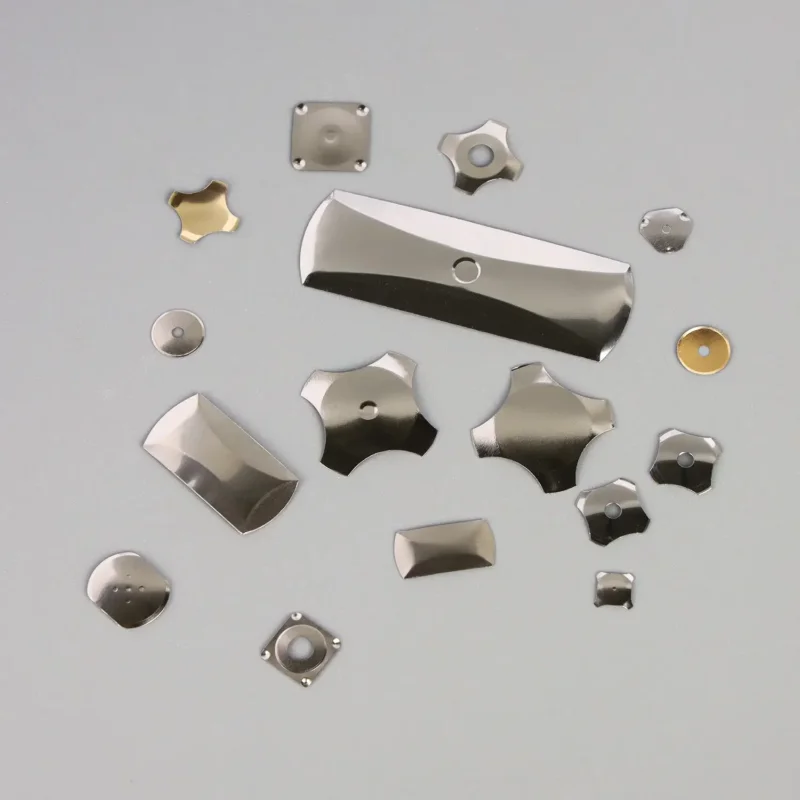
The Engineering Science Behind a Custom Metal Dome
Before looking at the industries, it helps to understand what can actually be customized. A lot of people think a dome is just a stamped piece of steel. Technically, yes. But practically, it is a complex spring.
When engineers design a custom metal dome, they are playing with three main variables: Force, Travel, and Ratio. The “Force” is how hard you have to push. The “Travel” is how far it moves down. But the “Ratio” (often called the Snap Ratio) is the secret sauce. It is the percentage drop in force once the dome collapses. A high ratio (>50%) feels very crisp and sharp—like snapping a dry twig. A low ratio (<30%) feels soft and muted—like pressing into firm rubber.
Material Selection and Plating
Standard domes use SUS 301 stainless steel. It’s good, it’s springy, it works. But for a custom metal dome, the material science gets deeper. You might need a specific hardness temper (like EH or SEH) to get a higher life cycle.
Then there is the surface. In humid environments, raw stainless steel can develop micro-oxidation. It won’t rust away, but it becomes resistive. The signal gets fuzzy. To fix this, custom applications often call for gold or silver plating. Gold is the gold standard (literally) because it never oxidizes. If a device needs to sit on a shelf for ten years and then work perfectly on the first press—like a fire alarm—you need gold.
Automotive Industry: Durability Meets Custom Metal Dome Design
The automotive sector is arguably the most demanding environment for any electronic component. Think about where your car lives. In the summer, the dashboard can reach 80°C (176°F). In the winter, it can drop to -30°C. Metal expands and contracts with heat. If you use a cheap, standard dome, that thermal cycling will eventually cause the metal to fatigue or lose its “snap.”
Automotive engineers rely heavily on custom metal dome designs to combat this. They aren’t just looking for a switch that works; they are looking for a switch that feels premium. Have you ever sat in a luxury sedan and pressed the buttons on the center console? There is a solidity to them. A heavy, muted “thud.” That isn’t accidental. That is a custom-engineered force curve. Low-end cars often have “clicky,” high-pitched buttons that feel hollow. High-end manufacturers specify domes with dampening materials or specific leg geometries to reduce the acoustic pitch of the snap.
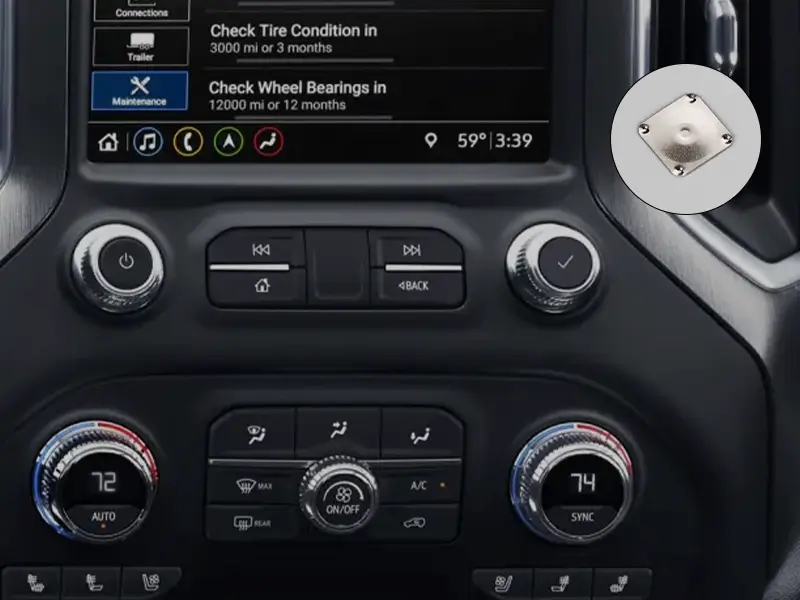
The Key Fob Challenge
The key fob is another beast entirely. It sits in your pocket, getting crushed by keys, coins, and lint. It gets dropped on the pavement. The buttons here need to be incredibly stiff to prevent accidental opening of the trunk, but they also have to be small enough to fit on a tiny PCB. A standard 200g dome might be too light, leading to accidental presses. So, automakers will order a custom metal dome that is small (maybe 6mm) but has an unusually high force (400g). This ratio is hard to achieve with off-the-shelf parts without cracking the steel, so custom tooling is required to get the stress distribution just right.
Medical Technology: Precision in Custom Metal Dome Manufacturing
Custom metal dome in medical field changes. It’s not about luxury; it’s about certainty. If a nurse presses a button on an infusion pump to stop a dosage, that button must work. There is no room for “maybe.”
The unique challenge in medical interfaces is the “Glove Factor.” Medical staff almost always wear gloves—nitrile, latex, sometimes double-layered. This dulls the sense of touch. A light-touch switch (like the one on your microwave) is almost imperceptible through gloves. You press it, but you aren’t sure if you actually triggered it.
To solve this, medical device designers specify a custom metal dome with a very high tactile ratio. They want a sharp, distinct “break” that sends a vibration up the finger, strong enough to be felt through the glove. It provides physical confirmation without the user needing to look at the screen.
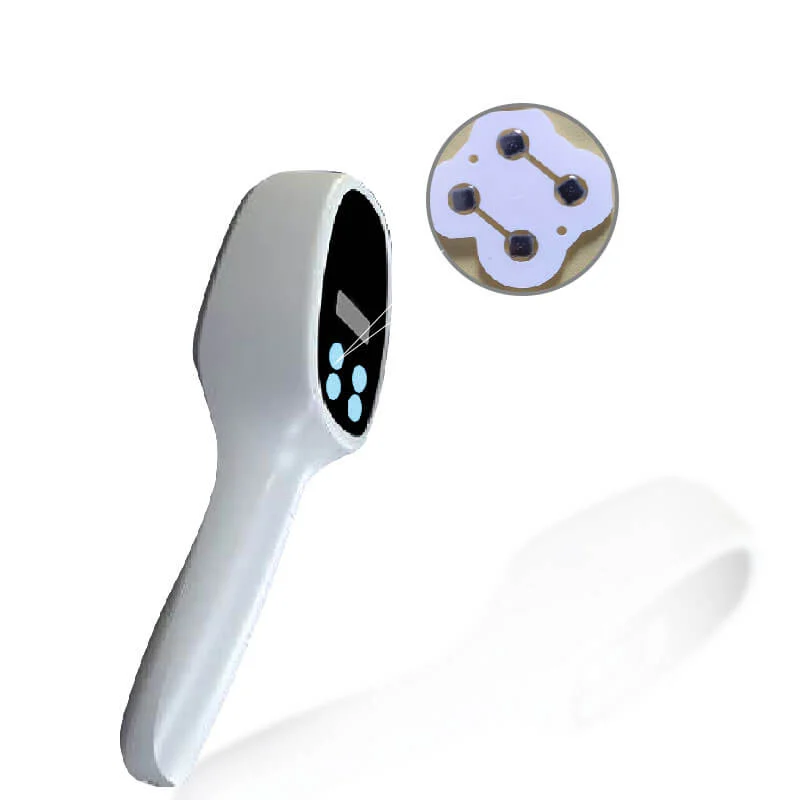
Sanitation and Sealing
Hospitals are messy. Devices are wiped down constantly with bleach and alcohol. The switches must be sealed. Custom domes are often designed to sit under a continuous overlay without any gaps. However, this sealed environment creates air pressure issues (the “suction cup” effect). Custom layouts often include micro-venting channels in the PCB or the spacer layer to allow the dome to breathe without letting liquids in. It’s a delicate balancing act of airflow vs. liquid ingress protection.
Consumer Electronics and the Miniature Custom Metal Dome
If you look at the last ten years of gadgets, the trend is obvious: everything is getting thinner. Phones, smartwatches, fitness trackers—they are all shaving off millimeters.
This is a nightmare for switch design. A mechanical switch needs vertical space to move. A custom metal dome is the solution because it has an incredibly low profile—often less than 0.5mm height. But even standard domes are becoming too big for modern wearables.
Designers are now pushing for “micro” domes, sizes as small as 3mm or 4mm. Or, they need weird shapes.
- The Oblong Dome: In the side volume buttons of a smartphone, the PCB is a long, thin strip. A round 5mm dome might be too wide. So, manufacturers create an oval or oblong custom metal dome. It fits the narrow board but still provides the surface area needed for a finger press.
- The Truncated Circle: Sometimes they just chop the sides off a round dome to make it fit between other components.
These custom shapes drastically change the physics of the snap. An oval doesn’t snap the same way a circle does. It has a “spine” of strength. Engineers have to run finite element analysis (FEA) simulations to ensure that an oblong dome doesn’t just fold in half like a taco when pressed.
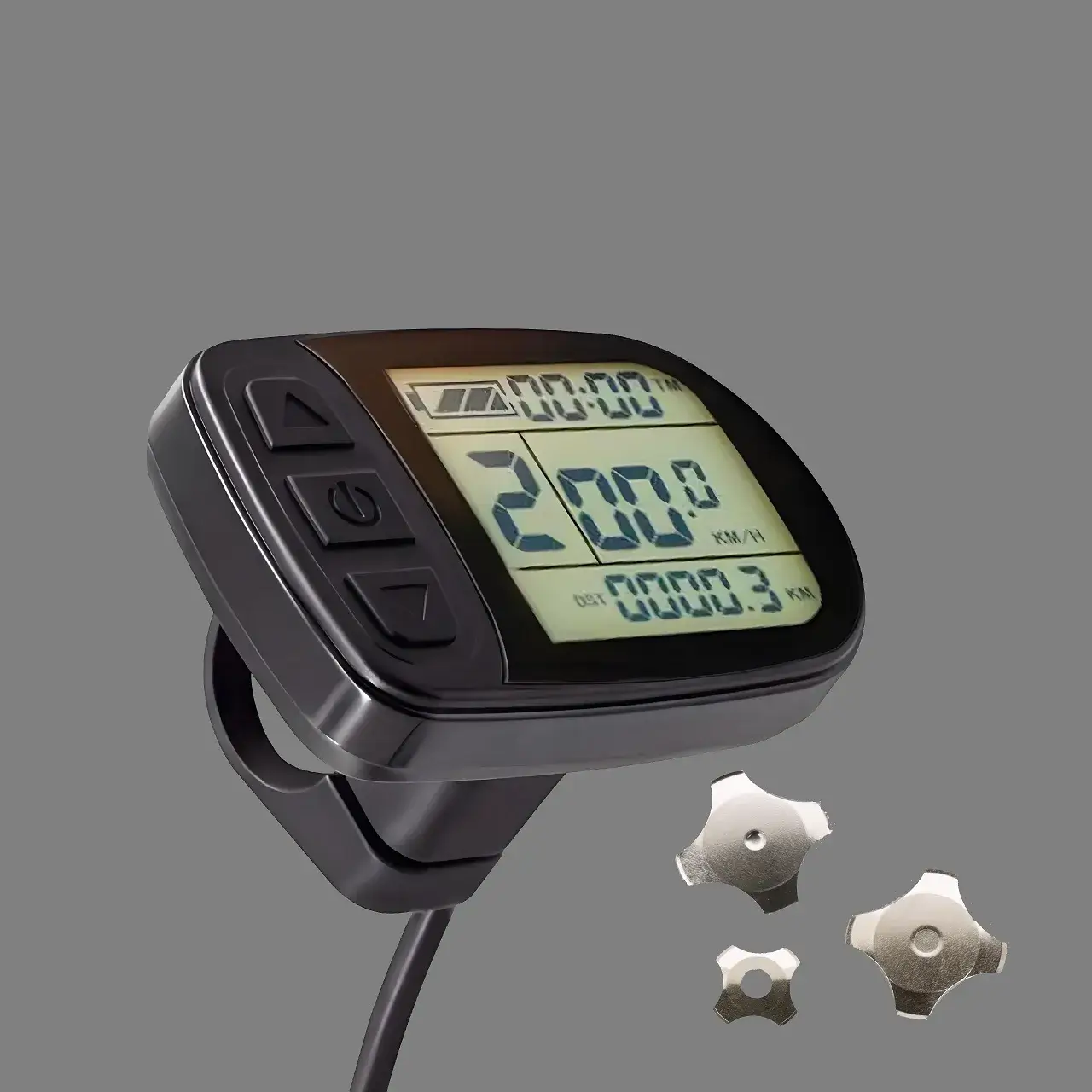
Industrial & Heavy Machinery Custom Metal Dome Needs
Walk out of the clean consumer lab and into a factory floor or a construction site. Here, the users aren’t gently tapping screens; they are mashing buttons on a crane controller or a CNC machine. Their hands are rough, often covered in heavy leather work gloves or grease.
A standard 150g or 200g dome is useless here. The weight of a leather glove alone might be enough to trigger it. Custom metal dome in industrial demand a custom metal dome with heavy actuation forces—often 500g, 600g, or even higher.
Producing a high-force dome isn’t just about using thicker steel. If you make the steel too thick, it becomes brittle. It snaps once and breaks. The customization here involves finding specialty alloys or using a larger diameter (12mm-16mm) that can support the high force while maintaining elasticity.
Life Cycle Longevity
In a factory, a “Cycle Start” button might be hit 5,000 times a day. Standard consumer domes are rated for maybe 100,000 to 500,000 cycles. That’s a few months of use in a factory. Industrial clients will pay the tooling costs for a custom metal dome that is rated for 1 million to 5 million cycles. This often involves a secondary polishing process to remove any micro-burrs on the edge of the dome that could cause stress fractures over time.
Aerospace and Defense: Critical Custom Metal Dome Systems
This is the extreme end of the spectrum. In aerospace, failure can be catastrophic. The buttons in a cockpit or a military radio undergo forces that most electronics never see: G-force, rapid decompression, and intense vibration.
Vibration is the enemy of electrical contact. If a helicopter is vibrating at a certain frequency, a standard switch might “chatter”—making and breaking contact hundreds of times a second. This is confusing for the computer system. Custom metal dome in aerospace often utilize a custom metal dome with a “multi-leg” or triangular design rather than a simple circle. These shapes can offer better stability. Furthermore, redundancy is key. Sometimes designs will stack two domes or use a dome with multiple contact points to ensure that even if the pilot presses the button off-center during turbulence, the signal still fires.
The plating here is almost exclusively thick gold. Not flash gold, but substantial plating. In military applications, equipment might sit in a storage depot for 15 years before being used. When it is finally powered on, that switch contacts cannot be oxidized.

Comparative Analysis of Sector Requirements
| Industry | Primary Driver | Typical Force | Material/Plating | Special Feature |
|---|---|---|---|---|
| Automotive | Temperature & Feel | 300g – 450g | SUS 304, Nickel/Silver | Silent snap, audible tuning. |
| Medical | Reliability & Hygiene | 250g – 400g | Gold Plated | High tactile ratio (for gloves). |
| Consumer | Size Constraints | 100g – 220g | Standard SUS 301 | Oblong/Oval shapes. |
| Industrial | Ruggedness | 500g – 1000g | Thickened Alloy | 1M+ Cycle life rating. |
| Aerospace | Safety/Redundancy | 300g – 600g | Heavy Gold | Multi-leg/Triangular designs. |
Resource
- ASTM B488 – Standard Specification for Electrodeposited Coatings of Gold: This explains why gold is used for high-reliability contacts and the different types of hardness and purity required.
- Haptics – Wikipedia: A great overview of the physiology of touch and why the “snap ratio” matters so much to the human brain.
FAQ
Is the tooling cost for a custom metal dome prohibitive?
It depends on volume. Yes, creating a custom stamping die costs money—usually a few thousand dollars. However, if you are building 50,000 units, the unit cost of the dome itself is fractions of a cent. The NRE (Non-Recurring Engineering) cost vanishes quickly in mass production. For small runs (under 1,000), it might be better to modify the PCB layout to fit a standard dome instead.
Can you just stack two domes to double the force?
You can, and some people do, but it is risky. Stacking two 200g domes to get 400g seems logical, but the friction between the two metal surfaces can cause inconsistent clicking and wear. A single custom metal dome engineered for 400g is always a more reliable solution than a “sandwich” of standard parts.
How do you prototype a custom dome without buying the tool
You generally don’t. Because the feel of the dome relies on the work-hardening of the metal during the stamping process, you can’t 3D print it or laser cut it and expect it to work. You often have to commit to a “soft tool” (a cheaper, temporary mold) to get physical samples for testing.