
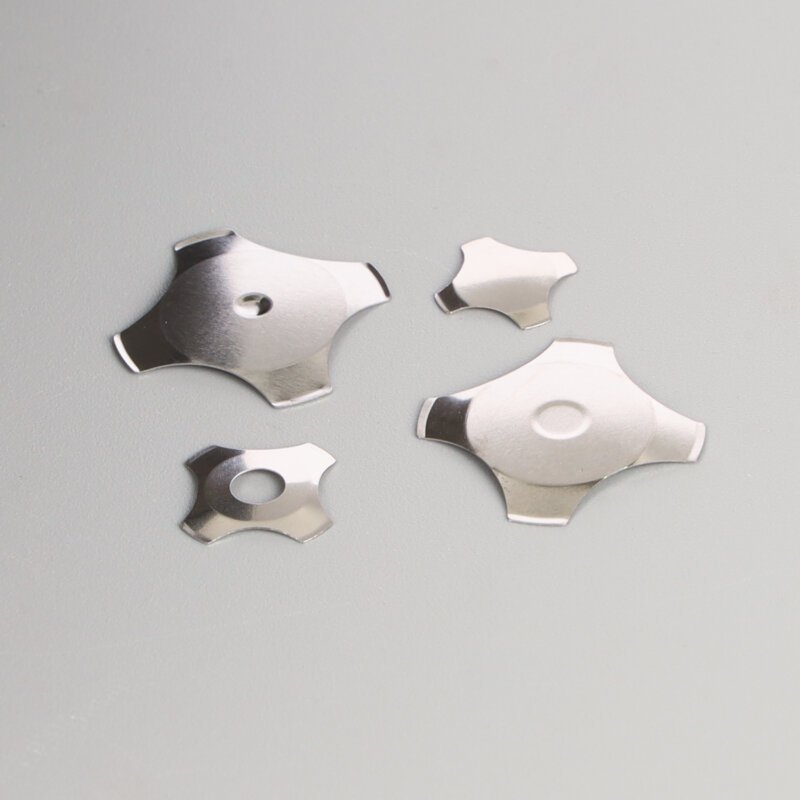
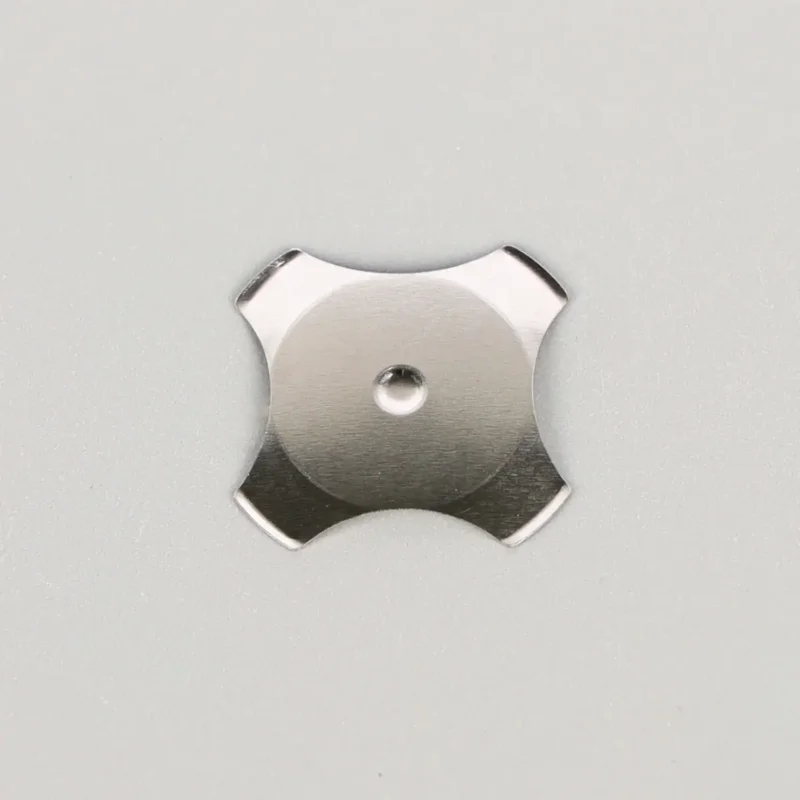
If you take apart almost any electronic device you own—an old remote, a game controller, maybe even the microwave panel—you’re probably going to find these little curved pieces of metal. They look like tiny inverted bowls. These are metal domes, sometimes called snap domes or tactile domes,
It’s easy to overlook them. When we press a button, we just expect a reaction. But that specific “click” feeling, that crisp snap that tells your finger, “Okay, message received,” that is usually the work of a metal dome. Without them, electronics would feel mushy. They would feel unresponsive. There is a psychological aspect to it, really. Humans need confirmation. When you press a flat membrane switch that doesn’t snap back, there is a momentary doubt—did it work? Did I press it hard enough? Metal domes solve that anxiety instantly.
They bridge the gap between human intention and machine action. It is just a piece of stamped stainless steel, but the engineering behind it is surprisingly deep. They regulate current flow while providing haptic feedback. It’s a momentary switch mechanism that has somehow survived the touch-screen revolution, simply because sometimes, you just need to feel a button click.
Core Advantages of Metal Domes (Cross-Industry Features)
So, why are they everywhere? It’s not just about the feeling, though the tactile feedback is massive. It is about reliability and profile.
You have to consider the space inside modern electronics. It is shrinking. Everything is getting thinner, lighter, more compact. A traditional mechanical switch with a spring and a plunger takes up vertical space—maybe 5mm, maybe 10mm. A metal dome? We are talking about fractions of a millimeter. You can slide them into the thinnest layers of a smartphone circuit board or a flexible membrane keypad without adding bulk.
Then there is the durability factor. It’s actually kind of wild how long these things last. Depending on the plating and the manufacturing quality, a standard metal dome can withstand anywhere from 100,000 to over 5 million cycles. A “cycle” is just a press and release. Five million presses. That is likely longer than the actual device will survive.
Material Consistency and the Supply Chain
The reliability starts way before the stamping press. It starts with the steel. Most domes are made from high-grade stainless steel types like SUS 301 or 304. The metallurgy has to be incredibly precise because the “snap” relies on the metal’s memory—its ability to deform and return to its exact original shape millions of times without cracking.
Interestingly, the supply chain for this raw material is linked to the broader steel industry, where technologies like the electric arc furnace have changed how we source and recycle steel. While the end user just feels a click, the consistency of that steel strip—often produced from recycled scrap melted down in an electric arc furnace to ensure specific chemical compositions—determines if the dome feels crisp or sluggish. If the carbon content isn’t controlled during that initial melting and refining process, the spring tension varies, and the dome fails early. It is a long journey from a massive furnace to a 4mm dome in a key fob, but the material quality connects them.
Metal Domes for Consumer & Wearables Applications
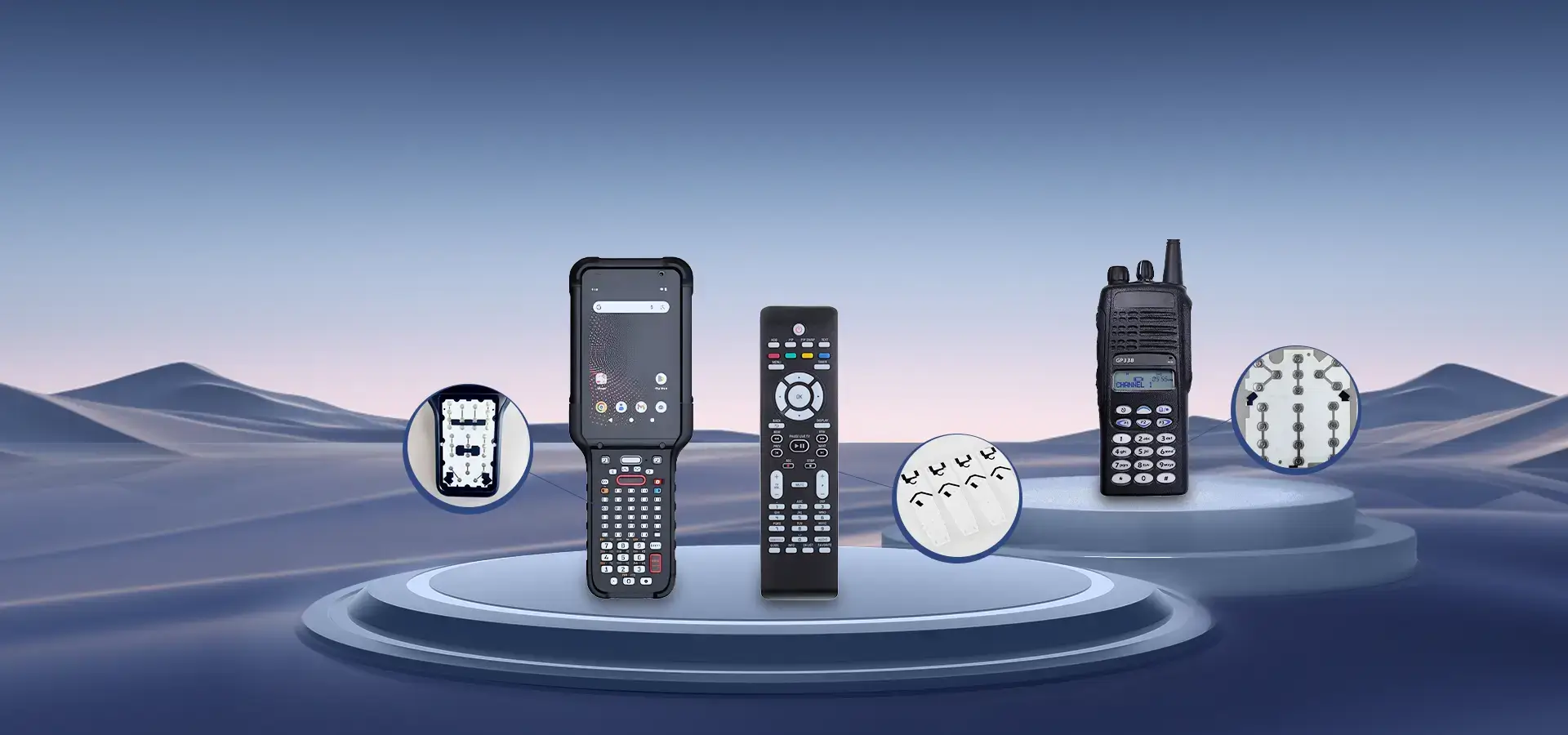
This is where most people interact with metal domes, even if they don’t know it. The consumer electronics sector is arguably the biggest volume driver for these components.
Smartphones and Cameras
Think about the volume buttons on a phone or the shutter button on a digital camera. That distinct two-stage feel in a camera—half-press to focus, full press to snap—is often engineered using specific dome arrays or double-action domes. In smartphones, space is the ultimate currency. Engineers are fighting for every micron. Metal domes are usually taped directly onto the PCB (Printed Circuit Board) or a flex circuit to handle the power and volume inputs. It is rarely a soft rubber contact anymore; it is almost always a metal dome because the user wants that premium, rigid click.
Wearables and Hearables
The challenge gets harder with wearables. Look at wireless earbuds or smartwatches. The internal real estate is practically non-existent. Here, you see the smallest tactile metal domes, sometimes as small as 3mm or 4mm in diameter. They have to operate with very little actuation force because, well, you can’t push hard on an earbud sitting in your ear without it hurting.
The trend in 2025 and beyond is definitely moving toward “sealed” designs for waterproofing. Metal domes fit this perfectly because they can be encapsulated under a sealed layer. Whether it is a fitness tracker getting dunked in a pool or headphones in the rain, the dome underneath remains mechanical and functional, unlike capacitive touch sensors which often go haywire when wet.
Metal Domes for Automotive, Medical & Industrial Applications
Moving away from gadgets, the requirements change. It stops being just about “thinness” and starts being about safety and operating environments.
The Automotive Interior
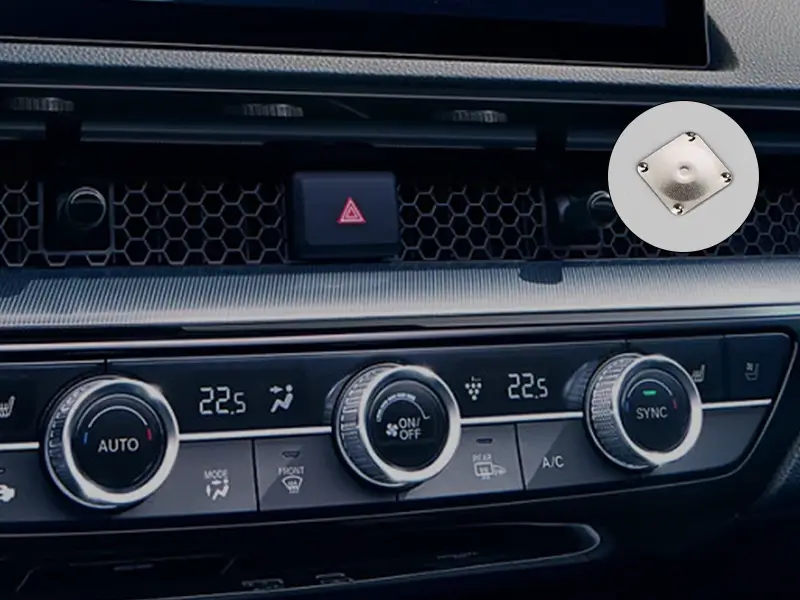
Cars have changed. It used to be big, chunky toggle switches. Now, the steering wheel is basically a keyboard. The dashboard is a cockpit. Automotive manufacturers love metal domes because they handle temperature swings well. A car parked in Arizona might hit 150°F inside; a car in Alaska might hit -30°F. The stainless steel of a dome doesn’t care much. It keeps snapping.
You find them in:
- Key fobs (the most obvious one).
- Steering wheel controls (volume, cruise control).
- Overhead lighting consoles.
- Seat adjustment modules.
There is a safety aspect here too. When you are driving, you cannot look down at your hand. You need to feel that you pressed the button. Haptic feedback is a safety feature in cars. If a driver has to look twice to see if they turned on the defroster, that’s a distraction. The snap of the metal dome confirms the action without visual verification.
Medical Devices
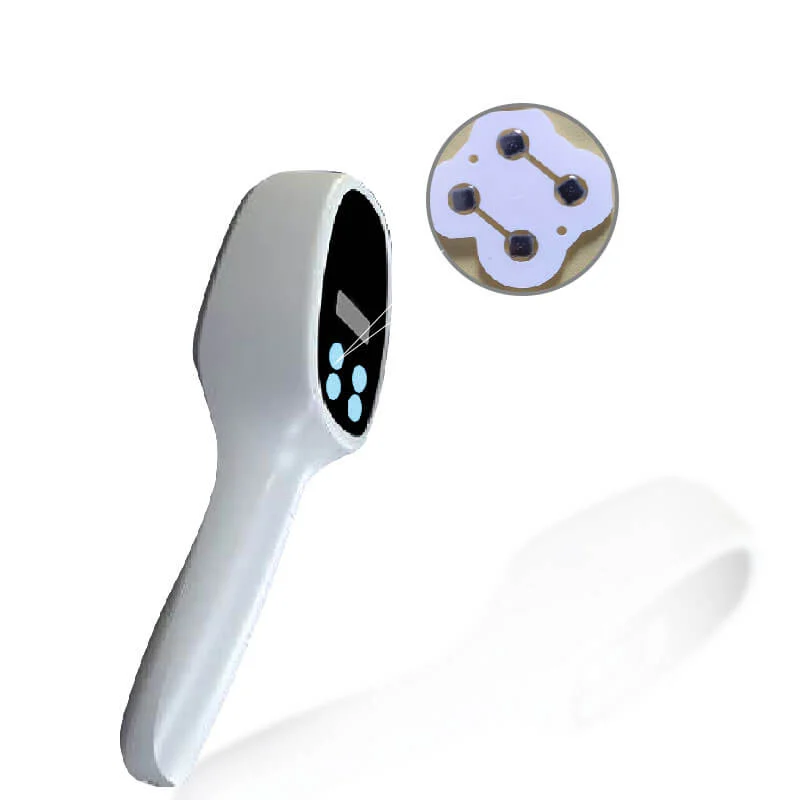
In the medical field, the stakes are different. It’s not about luxury; it’s about precision. Handheld surgical tools, insulin pumps, and portable monitors use metal domes extensively. Hygiene is the big factor here. Medical devices need to be wiped down, sterilized, and sealed against fluids. Because metal domes are low profile, they are easily covered by a flat graphic overlay. This creates a smooth, continuous surface that doesn’t trap bacteria like a traditional raised button would.
Also, think about the “trip force.” In a stressful medical situation, a nurse or patient needs to know—without a doubt—that the button was pressed. A high-force dome (maybe 400g or 500g force) is often used to prevent accidental presses while ensuring a deliberate, conscious activation.
Industrial Controls
Walk onto a factory floor, and look at the control panel of a CNC machine or a lathe. Those buttons get hammered. Oil, grease, dust, metal shavings—it is a nightmare environment for electronics. Industrial applications lean heavily on the “four-leg” metal dome design. These are generally more robust. They might not feel as “clicky” as the triangular ones used in phones, but they are stable. They are often gold-plated to ensure electrical contact reliability even if tiny amounts of oxidation or contamination try to get in.
Metal Domes for Military & Aerospace Applications
This is the extreme end of the spectrum. The specifications here are often overkill for normal life, but necessary for survival.
Military
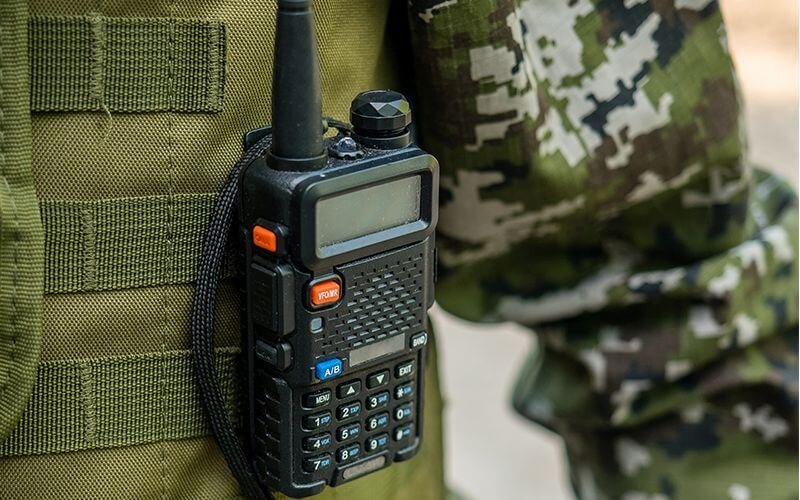
Military radios and tactical gear use what we often call “heavy” domes. The soldiers might be wearing thick gloves. A delicate 150g click meant for a smartphone is useless if you are wearing tactical gloves; you won’t even feel it. Military specs often call for high actuation forces—sometimes up to 600g or more—so the operator can feel the snap through layers of fabric.
Aerospace
In aerospace, weight is everything, but failure is not an option. Tactile Metal domes replace heavier electro-mechanical switches to save ounces. But they have to survive G-forces and vibration. If a switch chatters (disconnects and reconnects rapidly) during a rocket launch or a jet maneuver due to vibration, systems can fail. Metal domes, having a low mass and high tension, are naturally resistant to vibration.
There is also the issue of EMI (Electromagnetic Interference). Metal domes, being metal, can be part of a shielding strategy if grounded correctly, helping military devices stay silent to electronic snooping or resistant to jamming.
Choosing the Right Metal Dome for Your Application
If you are actually in the position of designing a product, or just curious how engineers pick these things, it is not one-size-fits-all. It is a balancing act.
The Shape Factor of the Metal Dome
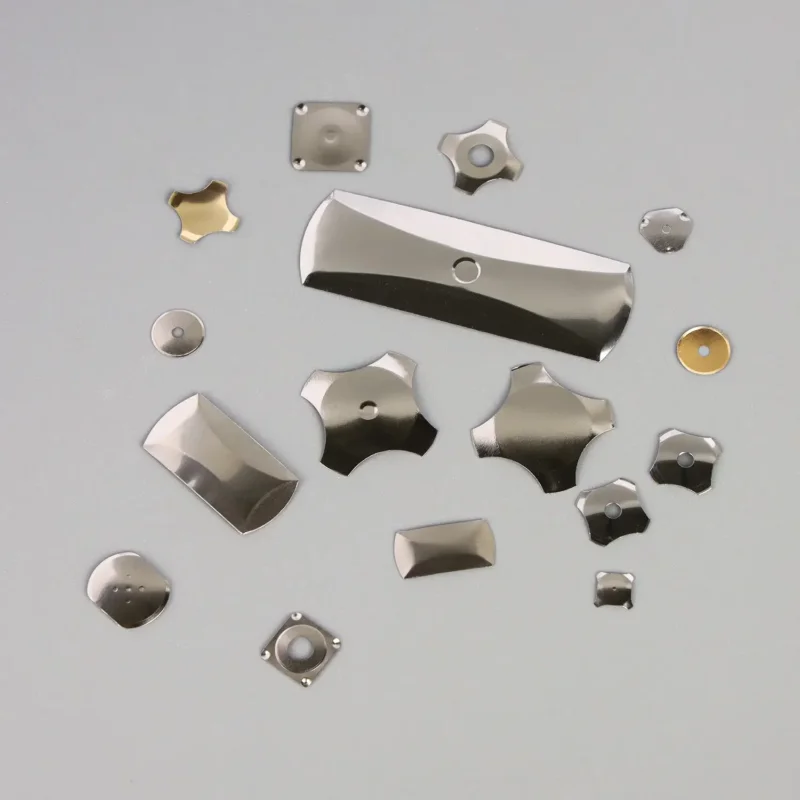
You generally see four main shapes. It helps to look at them side-by-side to understand why you’d pick one over the other.
| Dome Shape | Key Characteristic | Typical Application |
|---|---|---|
| Round Metal Dome | Long life, smooth feel | Keyboards, industrial panels |
| Four-Leg Metal Dome | High travel, spacious | Test equipment, general electronics |
| Triangular Metal Dome | Strong “click” (high tactile ratio) | Smartphones, handhelds |
| Square Metal Dome | Fits narrow spaces | PCB edges, thin wearables |
| Oval Metal Dome | Elongated footprint, tight width constraints | Side-volume buttons, hearing aids, stylus pens |
The "Click" Ratio of the Metal Dome
This is a term industry people throw around. It refers to the relationship between the force required to push the dome down and the force it pushes back with. A higher ratio feels “snappier” or “crispier.” A lower ratio feels softer.
High Ratio (>50%): Very loud snap. Good for noisy environments or cheap toys.
Low Ratio (<30%): Soft feel. Good for quiet environments like libraries or meeting rooms.
Material and Plating of the Metal Dome
We mentioned the steel earlier. While the raw stainless steel often originates from a process involving an electric arc furnace to clean up the scrap metal, the finish is what matters for the contact.
Stainless Steel (No Plating): Cheap, reliable, good for most things.
Nickel Plating: Better corrosion resistance.
Gold Plating: The gold standard (literally). Low contact resistance. If the signal is very low voltage, or the environment is corrosive (like a marine application), you pay the extra for gold.
Conclusion
It is strange to think that so much of our modern life relies on bending a tiny piece of steel. From the moment we wake up and turn off the alarm, to driving to work, to setting the microwave for dinner, we are constantly engaging with metal domes.
They are a technology that hasn’t really been replaced because they do one thing perfectly: they tell us, physically, that we have made a connection. As industries evolve—as cars become computers and medical devices become home appliances—the humble metal dome adapts. It gets smaller, or tougher, or coated in gold, but the principle remains the same.
Whether it is the recycled steel churning in an electric arc furnace that eventually becomes a switch, or the final assembly of a fighter jet cockpit, these components connect the industrial world to the human touch. They are the interface. And until we figure out how to wire our brains directly into our devices, we are probably going to keep needing that click.