
At first glance, metal snap dome shapes seem like minor details. A dome is a dome, right? Press it, feel the click, move on. But spend time working with different configurations and the differences become obvious—sometimes surprisingly so. The shape beneath that button affects how it feels, how reliably it works, and how long it lasts.
Three main geometries dominate the metal snap dome market: round (typically four-leg or five-leg), triangle (three-leg), and oblong variations. Each brings distinct characteristics that suit particular applications better than others. Choosing wisely requires understanding these differences, not just picking whatever appears on the first datasheet that crosses your desk.
Understanding Basic Metal Snap Dome Geometries
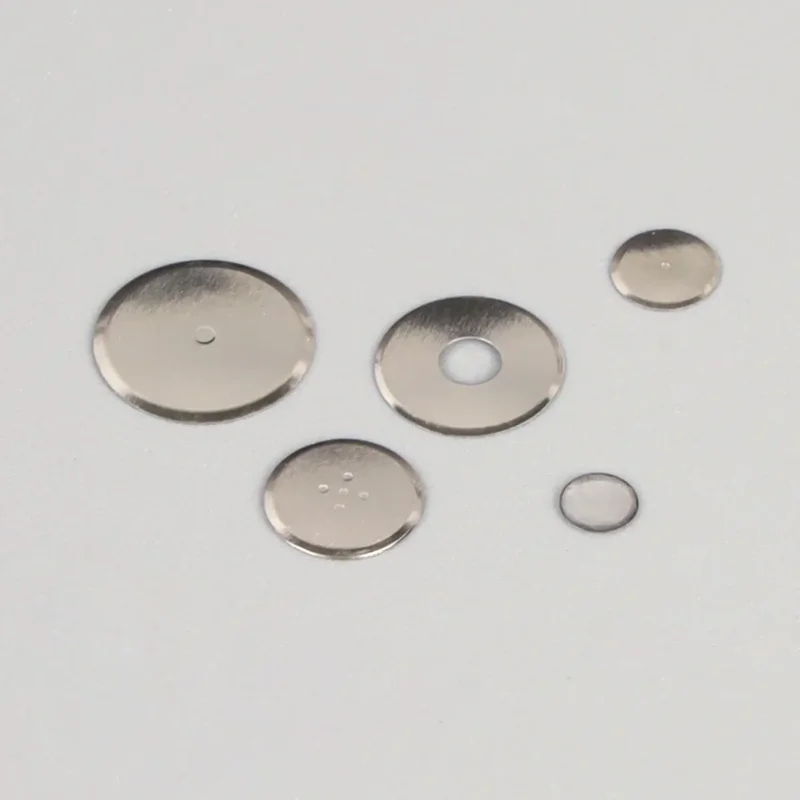
Round Metal Snap Dome Configurations
Round metal snap dome designs feature circular perimeter shapes. But “round” actually encompasses several sub-varieties:
- Four-leg round: most common, with four support legs evenly spaced
- Five-leg round: similar to four-leg but with additional leg for stability
- Continuous skirt: round perimeter without distinct legs
The legs provide both support and electrical grounding path. Four-leg designs balance manufacturing simplicity with adequate stability. Five-leg versions improve centering but cost slightly more. Continuous skirts offer excellent support but require more precise mounting.
Most standard metal snap dome selections feature four-leg round configurations. They’ve become default choices for good reason—they work well across diverse applications without obvious weaknesses.
Triangle Metal Snap Dome Configurations
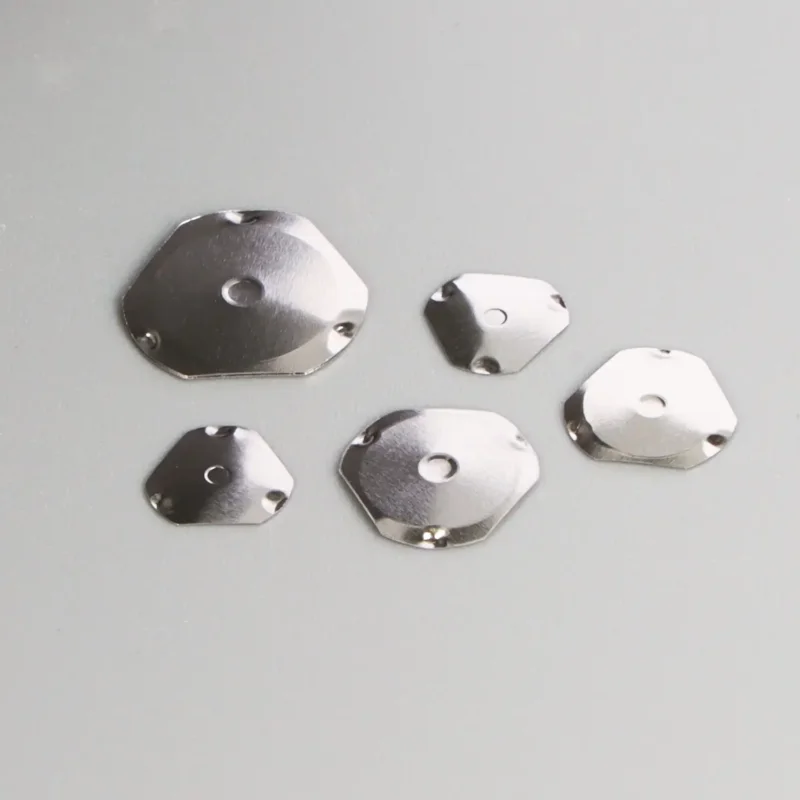
Triangle metal snap dome shapes use three support legs arranged in triangular pattern. The dome surface itself typically remains circular or nearly so—the triangle refers to leg arrangement rather than overall shape.
Three-point support creates interesting mechanical properties. Like a three-legged stool that never wobbles on uneven surfaces, triangle domes seat consistently on imperfect substrates. This geometric advantage matters more than casual consideration might suggest.
Four-Leg And Multi-Leg Metal Snap Domes
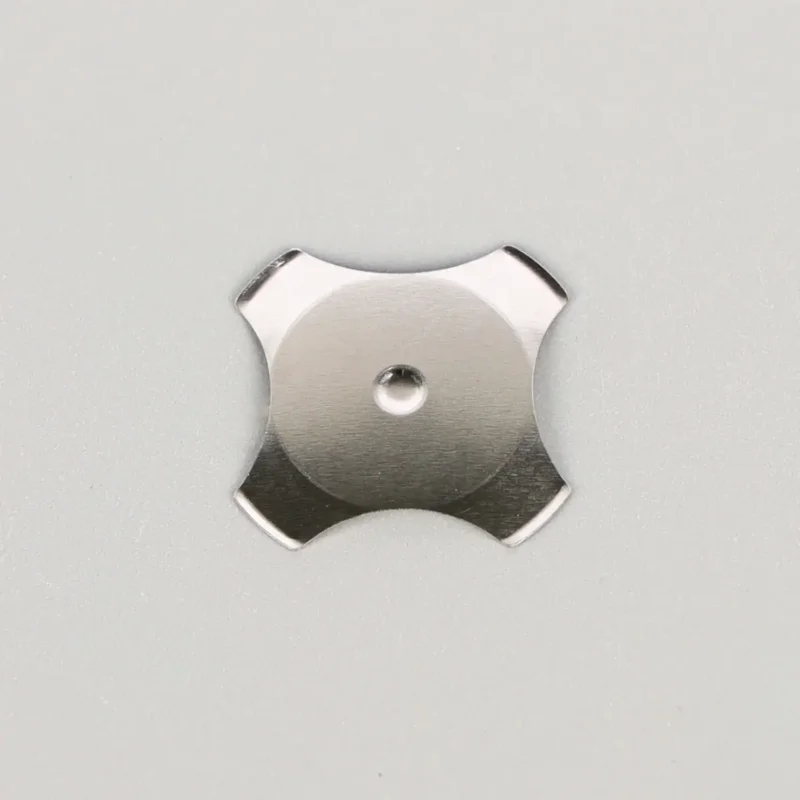
Four-leg domes position support legs at 90-degree intervals around the perimeter. Five-leg designs add a fifth point, typically with uneven spacing optimized for particular force distributions. Some specialized designs use six or more legs for specific applications.
More legs generally improve centering and force distribution. But more legs also increase manufacturing complexity and cost. The sweet spot for most applications lands at four or five legs, balancing performance against practical constraints.
Performance Comparison Of Metal Snap Dome Shapes
Actuation Feel And Consistency
| Shape Type | Centering Ability | Force Consistency | Tactile Crispness |
|---|---|---|---|
| Four-leg round | Good | Very good | Excellent |
| Five-leg round | Excellent | Excellent | Excellent |
| Triangle | Good | Good | Very good |
| Continuous skirt | Excellent | Very good | Good |
Contact Reliability Differences
Electrical contact reliability depends heavily on center pad alignment and dome centering during actuation. Off-center pressing—users don’t always hit buttons perfectly centered—can affect contact quality.
Multi-leg designs generally center better under off-axis pressing. The additional legs resist tilting that might prevent clean center contact. This advantage grows with dome size; larger domes experience more leverage from off-center forces.
Triangle domes can tilt more easily along the axis between any two legs. The third leg provides a pivot point rather than resistance. Careful circuit pad design compensates for this tendency, but the geometric predisposition exists.
For applications where users might press buttons at angles—handheld devices, automotive controls, industrial panels with gloved operators—this centering behavior matters practically.
Application Suitability For Different Metal Snap Dome Shapes
Consumer Electronics Applications
Remote controls, gaming controllers, smartphones—these applications typically favor four-leg round metal snap dome configurations. The combination of crisp feel, manufacturing efficiency, and broad availability makes them practical defaults.
Specific considerations for consumer electronics:
- High volumes demand cost-effective solutions
- Consistent feel across production runs matters
- Compact sizes common, favoring smaller round domes
- Users expect responsive, satisfying feedback
Five-leg variants appear in premium products where slightly better centering and consistency justify modest cost increases. Budget products might use triangle domes if manufacturing tolerances prove challenging to control.

Industrial And Commercial Applications
Industrial panels, commercial equipment, and professional devices often tolerate—even benefit from—different priorities than consumer goods.
Industrial applications might favor:
- Triangle domes for tolerance-forgiving mounting
- Larger diameter domes for gloved operation
- Higher force ratings preventing accidental activation
- Premium specifications ensuring long service life
The rugged conditions and extended service expectations in industrial settings justify component choices that would seem excessive for consumer products. A metal snap dome that costs twice as much but lasts three times longer makes sense when equipment operates continuously for years.
Medical And Precision Applications
Medical devices, test equipment, and precision instruments demand exceptional reliability and consistency. These applications often specify five-leg round configurations or premium four-leg designs with tightened tolerances.
The small additional cost of five-leg metal snap dome designs proves insignificant against total device costs and reliability requirements. When a button controls critical equipment functions, marginal improvements in centering and consistency become worthwhile investments.

Selection Decision Framework
Primary Selection Criteria
Start with these questions:
- What mounting surface quality can manufacturing guarantee?
- How critical is button-to-button consistency?
- What budget constraints apply?
- What are the environmental exposure conditions?
- How will users typically press the buttons?
Poor mounting surface control suggests triangle domes. High consistency requirements favor five-leg designs. Budget constraints often resolve to standard four-leg choices. Harsh environments need robust symmetrical configurations.
Secondary Considerations
After primary factors, consider:
- Available dome sizes matching space constraints
- Force and travel requirements alignment with geometry options
- Supplier availability and lead time implications
- Testing and validation complexity for non-standard choices
Sometimes practical constraints—what’s readily available, what fits the space, what suppliers can deliver—matter more than theoretical optimal selections. Good enough and available often beats perfect and delayed. If you want to know more about metal snap dome, please read How Metal Snap Domes Create Tactile Feedback.
FAQ
Does metal snap dome shape affect audible click sound?
Shape influences click sound modestly. Four-leg and five-leg round domes typically produce slightly crisper, higher-pitched clicks due to cleaner snap-through action. Triangle domes sometimes generate softer sounds with more complex tonal character. However, overlay materials and housing acoustics affect perceived sound more than dome geometry alone.
Can different metal snap dome shapes be mixed in single products?
Technically yes, but consistency concerns generally argue against mixing. Users notice when adjacent buttons feel different—even subtle variations create perception of inconsistent quality. Mixing shapes might make sense if different buttons have genuinely different requirements, but this approach requires careful validation. Most successful products standardize on single dome configurations throughout.
Which metal snap dome shape offers longest service life?
Shape alone doesn’t determine life significantly—material quality, thickness, force rating relative to actual use forces, and environmental conditions matter more. Given equivalent specifications, five-leg round domes may show slightly longer life due to better stress distribution during cycling. Triangle domes might wear differently due to asymmetric loading.