
When you pick up a TV remote, it doesn’t really matter if you have to press the volume button twice because the first press didn’t register. It’s annoying, sure, but nobody gets hurt. Now, imagine that same scenario with a defibrillator or an insulin pump. The stakes are just a little bit different.
Medical devices inhabit a world where “reliability” isn’t a buzzword; it’s a legal and moral requirement. This brings us to the interface—the buttons. While touchscreens are flashy, they lack the one thing medical professionals crave: physical confirmation. This is why the custom metal dome has quietly become the standard for critical medical equipment. It offers a tactile certainty that a glass screen or a rubber keypad just can’t match.
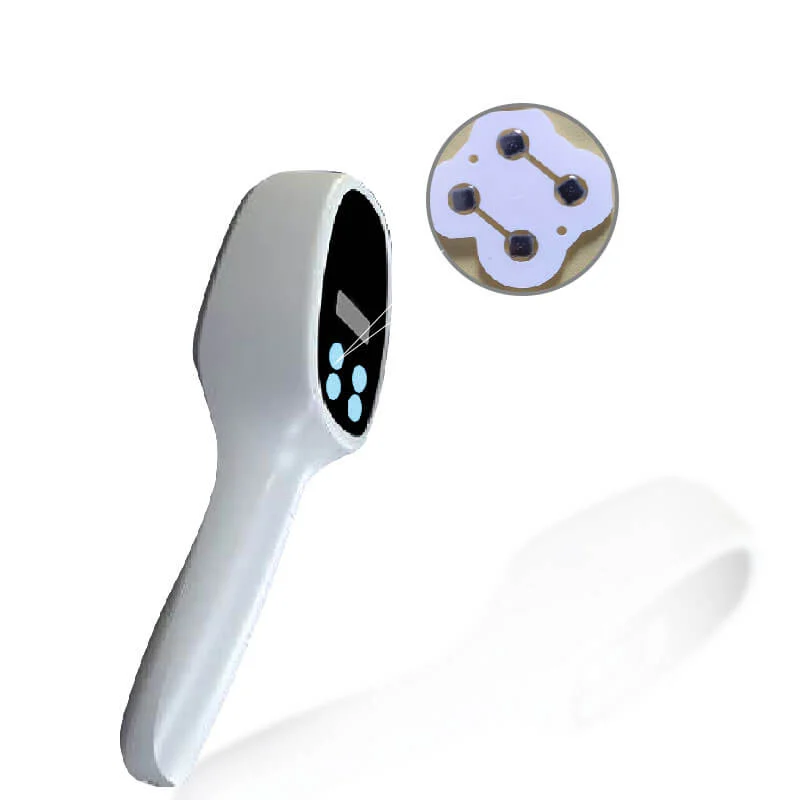
Why Medical Devices Need a Custom Metal Dome Approach
You might wonder, why “custom”? Why not just use the standard switches you find in a calculator?
The answer usually comes down to one thing: gloves. Doctors, nurses, and lab techs are almost always wearing them. Sometimes it’s a thin layer of nitrile; sometimes it’s heavy latex or even double-gloving for surgery. A standard, light-touch switch feels invisible through a glove. You press it, but your brain doesn’t get the signal that the action happened.
A custom metal dome allows engineers to manipulate the “force curve.” They can design a dome that requires a bit more pressure to actuate but “snaps” back with a much sharper vibration. This high “tactile ratio” sends a distinct jolt up the finger, cutting through the layers of latex. It tells the user, without them having to look down, “Yes, you pressed me.”
Hygiene and the Sealed Interface
Hospitals are, by necessity, harsh environments for electronics. Not because they are dirty, but because they are constantly being cleaned. Devices are wiped down with bleach, alcohol, and aggressive disinfectants ten times a day.
If you use a standard mechanical switch with a plastic cap, there are gaps. Liquid gets in. Bacteria gets in. It’s a nightmare to sanitize.
The beauty of a custom metal dome array is that it is flat. It sits underneath a continuous graphic overlay (that plastic sticker with the button icons). There are no cracks, no crevices, and no way for fluids to seep inside. The switch is hermetically sealed.
- Material Choice: Customization allows for the use of high-grade stainless steel or even gold plating.
- Corrosion Resistance: If a seal does break (accidents happen), a gold-plated dome won’t corrode immediately like a cheap copper contact would.
Gold vs. Nickel Plating
In medical tech, you often see specifications for gold-plated domes. It’s not for show. Nickel is cheaper, but it has higher contact resistance and can oxidize over years of storage. Gold is inert. For a device that might sit in an emergency kit for five years before being used once to save a life, that reliability is non-negotiable.
Safety Critical Applications for Custom Metal Domes
ou find these components in devices where an accidental press—or a missed press—could be catastrophic. The customization aspect allows designers to “tune” the activation force to prevent accidents.
For example, a “Fire” button on a surgical laser shouldn’t be easy to press. A custom metal dome for this function might be engineered with a high actuation force (say, 500g) compared to the menu buttons (200g). You have to mean it to press it.
Common Applications:
- Patient Monitors: Alarm silence buttons.
- Infusion Pumps: Setting dosage rates.
- Handheld Surgical Tools: Power activation.
- Home Health Kits: Blood glucose meters.
Comparing Switch Interfaces in Medicine
| Feature | Capacitive Touchscreen | Mechanical Switch | Custom Metal Dome |
|---|---|---|---|
| Tactile Feedback | None (Vibration motor required) | Good, but bulky | Excellent (Sharp Snap) |
| Glove Usability | Poor (Requires special gloves) | Good | Excellent (High ratio) |
| Cleanability | Excellent (Flat glass) | Poor (Gaps around keys) | Excellent (Sealed overlay) |
| False Activation | High risk (Liquid drops) | Low risk | Low risk (Force required) |
Integration Challenges with Custom Metal Dome Arrays
It’s not all perfect, though. Integrating these domes into a medical device takes some serious engineering. The main issue is air.
When you seal a custom metal dome under a plastic sheet to make it waterproof, you create a vacuum seal. When you press the button, the air inside the dome needs to go somewhere. If it can’t escape, the button feels like pushing on a balloon. It’s mushy.
Designers have to create microscopic “venting channels” in the PCB spacer layer. These channels let the air move between the keys but keeps the outside world locked out. It’s a tricky balance. You need the air to move, but you don’t want the cleaning fluid to follow the air.
MRI Compatibility and Material Science
Here is a niche but critical point. Standard stainless steel is slightly magnetic. In an MRI room, where magnetic fields are insanely powerful, you don’t want your equipment pulling toward the magnet or distorting the image.
This is where the “custom” part really shines. Manufacturers can produce a custom metal dome using specialized non-magnetic alloys (like phosphor bronze or specific austenitic stainless steels). You can’t just buy these off the shelf at an electronics distributor; they have to be specially run for the medical application. If you want to know more about custom metal dome application, please read Custom Metal Dome Applications in 5 Key Industries.
Resource
- Haptic Technology – Wikipedia: An overview of haptics and the importance of tactile feedback in human-computer interaction.
- Switch Contact Materials: Understanding why gold is preferred over silver or nickel in critical signal applications.
FAQ
Why don't medical devices just use touchscreens for everything?
Touchscreens are great for menus, but bad for immediate action. If a doctor is looking at the patient, they need to be able to find and press a button by feel. You can’t “feel” a button on a flat glass screen. The custom metal dome provides that necessary physical landmark.
How long does a metal dome last in a medical device?
It varies, but typically they are rated for 1 million to 5 million cycles. Medical devices usually become obsolete technologically before the switch physically wears out, provided it is sealed correctly.
Can a metal dome be used in a disposable medical device?
Absolutely. Because they are just stamped metal, they are relatively cheap in high volumes. They are the perfect solution for single-use devices (like disposable cautery pens) where you need a reliable click but can’t afford a complex mechanical switch.