
We have all had that frustrating moment with a piece of electronics where you press a button, and nothing happens. You press it again, maybe a little harder, and you are left wondering, “Did I actually click it, or is the machine frozen?” That ambiguity is a killer in user interface design. It is exactly why engineers and product designers keep coming back to a specific solution: the metal dome.
While touchscreens are flashy and capacitive buttons are sleek, there is a rugged reliability to metal dome membrane switches that is hard to beat. It isn’t just about nostalgia for physical buttons; it is about the very real, practical benefits that these switches bring to the table, especially in places where failure isn’t really an option. From hospital rooms to factory floors, the advantages are clear once you start looking for them.
The Tactile Feedback of Metal Dome Membrane Switches
The most obvious advantage—the one you notice immediately—is the feel. It’s that crisp “snap.” In technical terms, it’s called tactile feedback, but experientially, it’s just confidence. When you depress one of these switches, the metal dome collapses and then snaps back, providing a physical signal to your fingertip that the circuit is closed.
This is crucial in “eyes-free” situations. If you are operating a heavy crane or adjusting a medical device while looking at a patient, you can’t be staring at the keypad. You need to feel the click.
Unlike “polydomes” (which are just formed plastic bumps and feel sort of mushy), metal dome membrane switches give you a definitive response. It reduces input errors because the operator knows instantly if the command was sent.
Durability and Sealing Capabilities
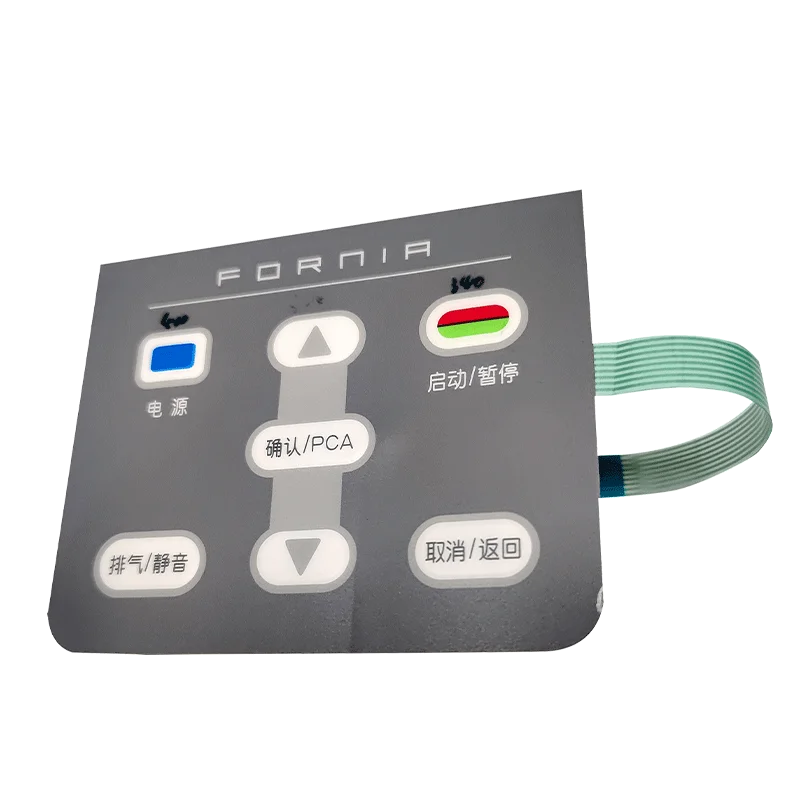
Electronics generally hate water, dust, and grease. The beauty of membrane technology is that it naturally forms a seal. Because the switch is essentially a stack of layers laminated together, the top layer (the graphic overlay) acts as a shield.
There are no gaps between the keys for crumbs or water to slide into. This makes metal dome membrane switches the absolute go-to for harsh environments. You can wipe them down with harsh disinfectants in a hospital, or spray them with a hose in an industrial food processing plant, and the electronics underneath stay dry.
Here are a few environments where this sealing advantage shines:
- Medical Facilities:Constant cleaning with alcohol or bleach.
- Outdoor Kiosks:Exposure to rain, humidity, and dust.
- Industrial Workshops:Presence of oil, metal shavings, and grime.
- Marine Applications:Salt spray and moisture.
Profile and Space Efficiency of Metal Dome Membrane Switches
Modern devices are shrinking. We want everything thinner, lighter, and more compact. Traditional mechanical switches—the big blocky ones you might find on a gaming keyboard—are huge in comparison. They take up a lot of vertical space inside the housing.
Metal dome membrane switches are incredibly low profile. We are talking about a total thickness that is often less than 1mm. This allows designers to place controls in tight spaces where a regular switch just wouldn’t fit. It opens up design possibilities for sleek, handheld devices or curved control panels.
To see the difference, it helps to look at the numbers side-by-side with other options:
| Feature | Metal Dome Membrane Switch | Mechanical Key Switch | Capacitive Touch |
| Thickness | Ultra-thin (< 1mm) | Bulky (> 10mm) | Thin (PCB based) |
| Tactile Feedback | Sharp “Snap” | Variable (Linear/Clicky) | None (needs haptics) |
| Sealing | Excellent (Native) | Poor (Needs covers) | Excellent |
| Glove Use | Works perfectly | Works perfectly | Often fails |
Cost-Effectiveness and Reliability
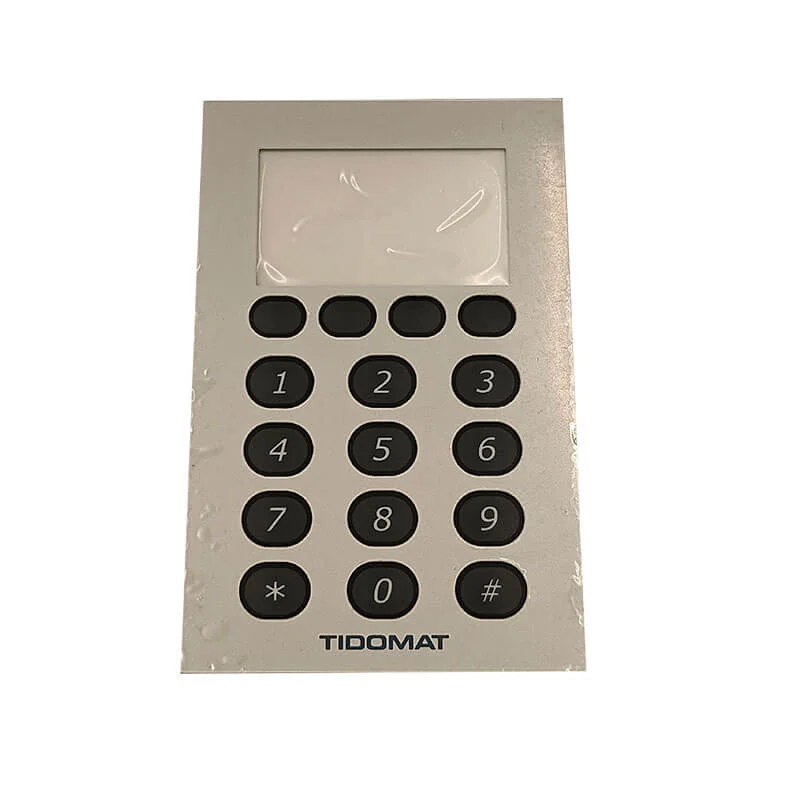
You might assume that because they are custom-made, they are expensive. But for mid-to-high volume production, metal dome membrane switches are surprisingly cost-effective. Once the tooling is set up, the manufacturing process is efficient. Plus, the assembly is simple: the whole keypad usually comes with an adhesive backing. You just peel and stick it to the device casing and plug in the tail. There is no soldering of individual switches involved.
And then there is the lifespan. A standard stainless steel dome is rated for over a million cycles. Some are rated for five million. The graphic overlay might eventually wear down visually after years of abuse, but the switch mechanism itself—the metal dome—is incredibly fatigue-resistant. It keeps snapping back, year after year. If you want to know more about metal dome membrane switches, please read What Is Metal Dome Membrane Switches.
FAQ
Can metal dome membrane switches be backlit?v
Yes, absolutely. This is a very common requirement. Designers can embed super-thin LEDs within the membrane layers to light up specific keys or indicators. Alternatively, they can use fiber optic layers or light guide films (LGF) to distribute light evenly across the whole panel, so you can see the controls in the dark.
Why choose a metal dome over a capacitive touch button?
It usually comes down to gloves and environment. Capacitive touch (like your phone screen) relies on the electrical conductivity of your finger. If you are wearing thick work gloves or if the panel is wet, capacitive screens often get confused or don’t work at all. Metal dome membrane switches work on pure pressure, so they function perfectly regardless of gloves or water.
Are these metal dome membrane switches repairable?
Not typically. Because the unit is a sealed, laminated sandwich of layers, you can’t really open it up to replace a single dome if it somehow fails. The standard repair procedure is to peel off the entire overlay and replace it with a new one. However, given their high reliability, failure is rare unless the device is physically punctured.