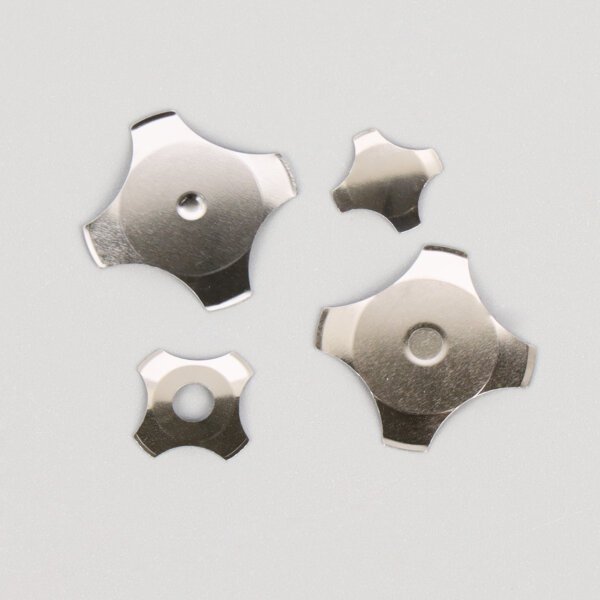
Press a button on a TV remote, a game controller, or a smartwatch and something small happens under your fingertip. A thin metal disc buckles, bridges two contacts, and springs back into shape. That disc is a metal dome, one of the most common components in consumer electronics and the working part of every custom tactile metal dome button.
A metal dome is the momentary switch behind a button. It sits above two contact pads on a printed circuit board, collapses when pressed to close the circuit, and snaps back on release to open it again. Its job is to turn a finger press into a clean electrical signal and a click the user can feel.
Below is where these domes sit inside consumer devices, how the snap works, and which specifications matter before you order.
What a metal dome does inside a consumer device
Inside the device, the metal dome is the moving part of the switch. It replaces the spring, the contact, and the return mechanism with one stamped disc, which is why button assemblies stay thin, light, and cheap to build.
A dome becomes a switch only when stacked with the parts that hold it and the pads it bridges.
Parts of a dome assembly
- The dome, formed from stainless steel strip typically 0.05 mm to 0.15 mm thick
- The carrier, an adhesive tape, PET sheet, or spacer that keeps the dome centered over the pads
- The circuit has two contact pads on a PCB or FPC, one in the center and one ringing it
- The interface, the keycap, rubber plunger, or graphic overlay that passes force from the finger to the dome
Four properties decide how that stack behaves: actuation force, travel, click ratio, and contact resistance. Every other choice, from steel grade to plating, holds those four numbers steady for the life of the product.
Where metal domes are used in consumer electronics
Metal domes appear anywhere a device needs a button that is thin, low cost, and long-lasting. Consumer electronics is the largest market for them because the same dome can be tuned for a wearable’s soft press or a game controller’s firm one.
| Device category | Typical button locations | What the dome has to deliver |
|---|---|---|
| リモコン | Channel, volume, and navigation keys | Light force, crisp click, long cycle life |
| ゲームコントローラー | Face buttons, D-pad, shoulder keys | Firm force, high click ratio, stable registration |
| Wearables and earbuds | Side keys, function buttons | Small diameter, low force, sub-1 mm stack |
| Smartphones and tablets | Side keys, camera keys | Thin stack, dust protection |
| Home appliances | Microwave, washer, and air fryer panels | Sealed overlay, backlit keys |
| Smart home panels | Scene buttons, thermostats | Consistent feel across many keys in one array |
Handheld and portable devices
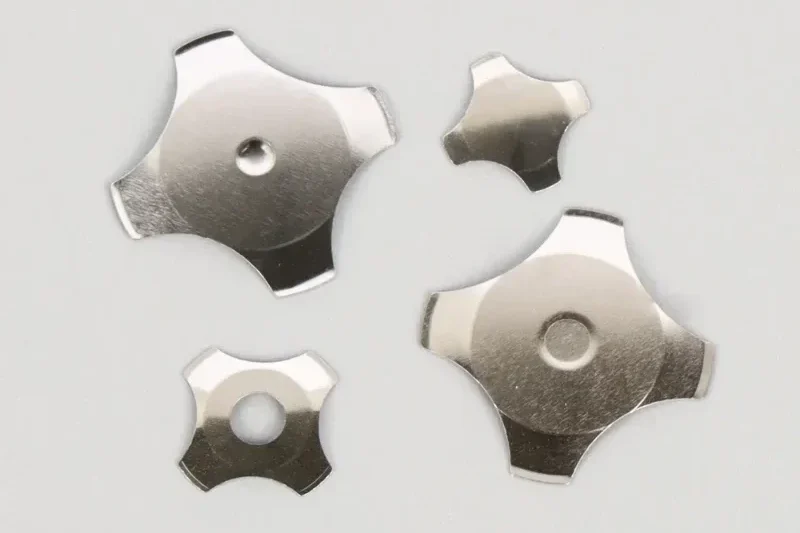
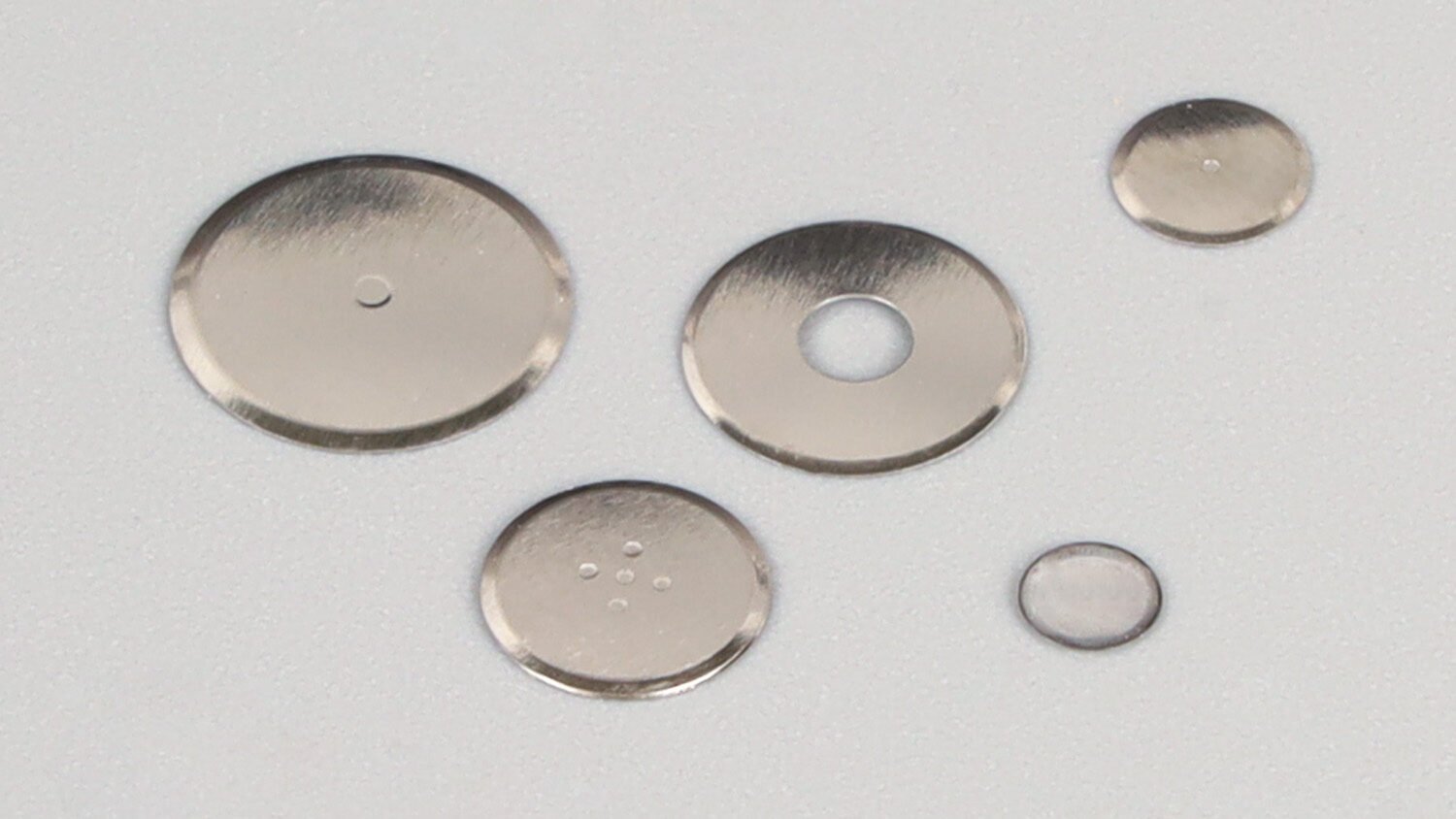
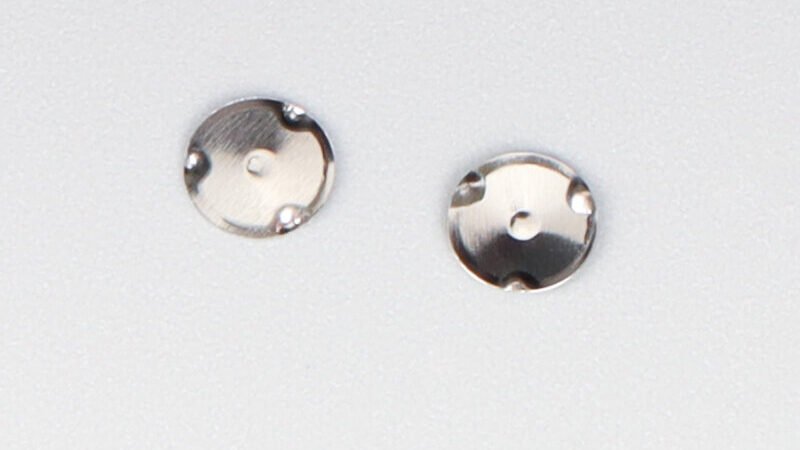
Remotes, controllers, and wearables favor compact domes, often 4 mm to 8 mm across. Round domes suit remotes because the feel is the same at any press angle, while four-leg domes hold position better in a packed gamepad array.
Home and appliance interfaces
Appliances are pressed for years, by different hands, in rooms with steam and grease. Large keys such as a power button often use square domes, which spread force evenly across the key face.
Most consumer projects start from one of the standard configurations used across consumer electronics metal domes, then tune force and travel from there.
How a metal dome switch works
The dome works by snap action. It resists pressure until a set force is reached, then collapses suddenly, and that single movement closes the circuit and produces the click at the same time.
The sequence takes milliseconds:
- The user presses the keycap or overlay.
- Force passes through the plunger or film to the top of the dome.
- The dome flattens gradually and builds spring tension.
- At the trip point it inverts, and its center bridges to the outer ring pad.
- On release the dome returns to its formed shape and the circuit opens.
Why designers choose metal domes over other switch types
Metal domes win on three points: a click the user can feel, a lifespan counted in millions of cycles, and a stack thin enough to sit behind a sealed front panel.
| Switch type | 触覚フィードバック | Typical cycle life | Profile | コスト |
|---|---|---|---|---|
| メタルドーム | Sharp, defined click | 500,000 to 5,000,000+ presses | 非常に薄い | 低い |
| Rubber or silicone dome | Soft, muted | Lower and fades with heat and humidity | Thin | 低い |
| Polyester polydome | Soft and quiet | Around 1,000,000 | 非常に薄い | Lower than metal |
| 静電容量式タッチ | なし | No moving parts | Thin | Higher electronics cost |
A defined click tells the user the press registered. In devices used one-handed, in low light, or through gloves, that confirmation cuts double presses and missed inputs. A stamped stainless dome also holds its click ratio across its rated life, so the tenth press and the millionth press feel alike.
Key specifications for a consumer-grade metal dome
Four numbers decide whether a dome feels right: actuation force, travel, click ratio, and contact resistance. Material, thickness, and plating exist to hold those numbers stable over the life of the device.
| 仕様 | Typical range | What it decides |
|---|---|---|
| 素材 | 301 stainless steel, nickel-plated steel, phosphor bronze | Spring return, fatigue resistance, corrosion resistance |
| 厚さ | 0.05 mm to 0.15 mm | Force, and how thin the stack can be |
| 作動力 | 100 g to 500 g | How heavy the button feels |
| 旅行 | 0.12 mm to 0.5 mm | Whether the key suits a flat, sealed panel |
| クリック率 | Roughly 40% to 60% | How sharp the snap feels |
| 接触抵抗 | Under 100 mOhm | Signal stability at low voltage |
| サイクル寿命 | 500,000 to over 5,000,000 presses | Durability against real use |
| メッキ | Nickel, silver, or gold | Conductivity and resistance to oxidation |
Force is the number most often set wrong. A remote key wants a press light enough for a thumb; a console button on gym equipment should be heavy enough that a bottle set down on it does nothing. Nickel plating covers most products, while silver and gold hold contact resistance lower over time.
Design and assembly considerations
Three decisions drive most of the cost and risk: how the domes arrive for assembly, how precisely they sit over the PCB pads, and how the panel is sealed.
A dome sheet carries domes on a PET film and suits a fixed key layout at moderate volume. A dome array is built for a specific circuit layout and often supplied on carrier tape, so pick-and-place equipment attaches it in one step.
Pad alignment matters more than most designs assume. The center pad and the ring around it have to be concentric with the dome. A dome that sits off center still clicks, but at a different force and with uneven wear, and both faults show up after shipping. Pad diameter, pad gap, solder mask clearance, and the air vent are fixed at the layout stage.
Sealing comes from the layer above the dome: a sealed graphic overlay, a gasket, or a fully enclosed front panel. A formal dust and water claim follows the ingress protection code set out in IEC 60529, which grades an enclosure on a two-digit scale for solids and liquids. The dome’s own contribution is material: stainless steel does not rust in normal use.
How to specify a metal dome for your product
A quote is only as good as the drawing behind it. Suppliers set force, travel, plating, and packaging to order, but they need the numbers and the layout first.
A complete request usually contains:
- Dome diameter, or the key footprint it has to fit inside
- Target actuation force, with an acceptable tolerance
- Travel and click ratio, if the feel has been tested with samples
- Plating requirement and contact resistance limit
- PCB pad drawing, including pad diameter and spacing
- Packaging preference: adhesive-backed single domes, dome sheet, or carrier tape
- Cycle life target and the test method used to verify it
For a first order, ask for samples at two or three force levels. Feel is settled on a bench, not on a specification sheet.
よくあるご質問
How many cycles can a metal dome last in a consumer device?
Most consumer-grade domes are rated between 500,000 and 5,000,000 presses. A device pressed 50 times a day for five years records fewer than 100,000 presses, so game controllers and remotes come nearest the limit.
Can metal domes be used in sealed or waterproof consumer devices?
Yes. The switch is mechanical and has no parts that stop working when wet. The seal comes from the overlay or gasket above the dome, and the finished assembly is rated for dust and water using the ingress protection code.
How much actuation force should a consumer product button need?
Between roughly 100 g and 500 g. Keys pressed often, such as a volume button, sit at the low end so the press stays light. Buttons that must not be triggered by accident sit at the high end.