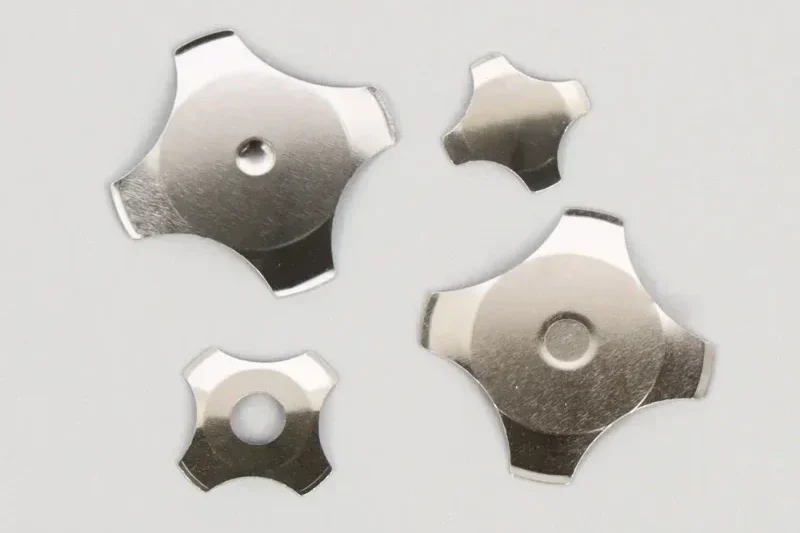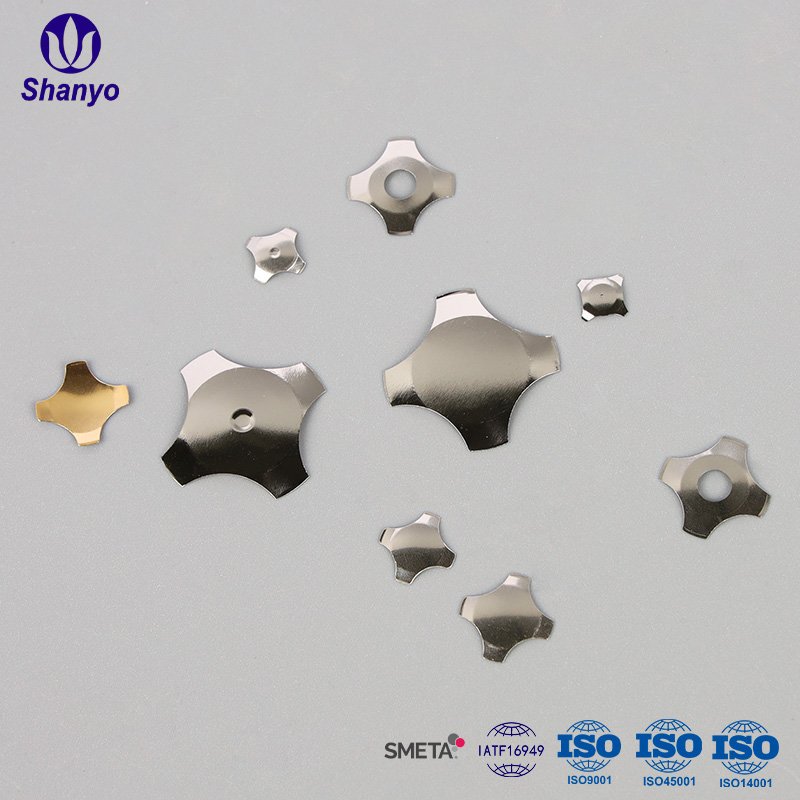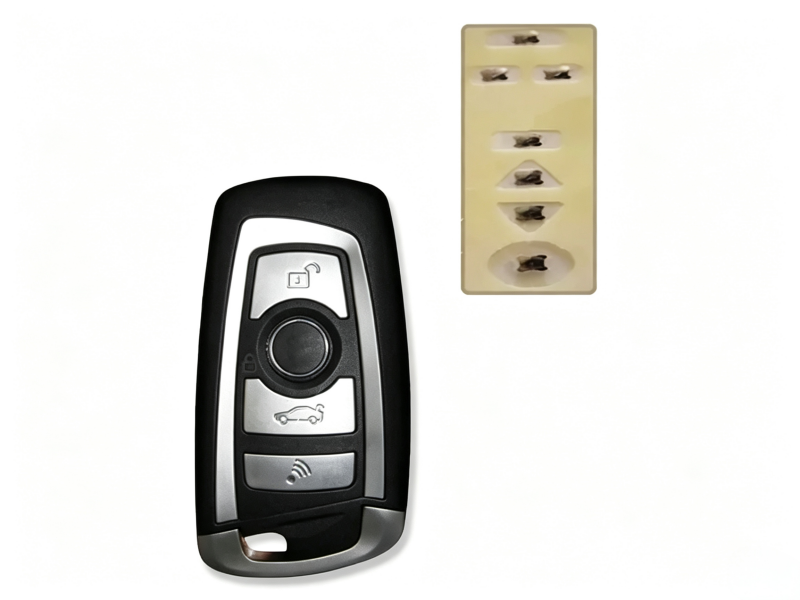
An LGF dome array combines stamped metal domes with a light guide film on one adhesive carrier, so an assembly line places a whole keypad’s worth of switches and backlighting in a single step. Get the dome force, travel and light diffusion right, and the interface feels crisp and reads evenly in the dark. Get them wrong, and the same part produces mushy keys and bright spots that no firmware can fix. That is why the choice of dome array manufacturer shapes both the user experience and the assembly cost of a product. Demand keeps rising with the wider membrane switch market: according to Grand View Research, the global membrane switch market was valued at USD 7.2 billion in 2025 and is projected to reach USD 11.0 billion by 2033, growing at a CAGR of 5.4% from 2026 to 2033, with Asia Pacific accounting for a 44.0% revenue share in 2025. The ten companies below were selected from public company information and are listed for research purposes, not as an official ranking.
Quick comparison table
| Company | Region | Brief introduction |
|---|---|---|
| Snaptron, Inc. | United States | Dome and Peel-N-Place array specialist with the widest standard range and matching placement equipment. |
| Inovan | Germany | Precision stamping house that makes its own snap domes and supplies them from plants in Europe, Asia and Mexico. |
| CSI Keyboards | United States | Custom membrane switch and HMI builder that delivers dome arrays as part of a finished interface. |
| Qingdao Shanyo Precision Electronics Technology | China | Integrated dome, dome array, LGF and membrane switch manufacturer with automotive and medical certifications. |
| Best Technology | China | Shenzhen dome maker offering standard and special arrays, SMD domes and several packaging formats. |
| Keetronics (India) | India | HMI and rugged keyboard manufacturer serving defence, rail and medical programmes. |
| Shenzhen Guanghongda Technology | China | Dome, FPC array and LGF keyboard module supplier with in-house die-cutting. |
| Dongguan Qodee Photonics | China | Light guide film assembly and dome sheet producer with its own LGF module lines. |
| Dongguan Xingyan Electronics | China | Dongguan dome sheet and light guide film plant with roughly 39 million pieces of monthly capacity. |
| Shenzhen Lishinghui Electronics | China | Long-running dome sheet, poly dome and waterproof keypad maker in Shenzhen. |
1. Snaptron, Inc.

Introduction
Snaptron is based in Windsor, Colorado, in the United States. The company makes metal domes and the carrier-based arrays it sells as Peel-N-Place, along with the packaging and placement equipment that goes with them. Standard arrays ship with one dome per square of adhesive, 15 to 30 per sheet depending on dome size, while custom arrays are laid out to a customer drawing on sheets or reels. Much of its business runs through membrane switch and circuit board manufacturers who need repeatable dome placement rather than loose parts, and it publishes PCB pad layouts for five contact patterns so designers can match the footprint before tooling.
Features
- Standard and custom Peel-N-Place arrays, cut to the size and shape a drawing specifies
- Hundreds of in-stock dome styles, plus custom dome design
- Bulk cartridges, pocketed reels and sheet or reel array packaging
- Handheld and automated placement equipment, with test equipment for verification
- Free sample kits and a published design guide for engineers
Best for
Best for: engineering teams that want to prototype from a catalogue fast and then move the same dome into a custom array without changing suppliers.
2. Inovan
Introduction
Inovan is headquartered in Birkenfeld, Germany, and works as a precision stamping and forming supplier rather than a switch assembler. Its snap domes sit alongside slotted pins, coiled spring pins and stamped-bent components, all produced with in-house material, surface and tooling technology. Manufacturing is spread across three plants in Birkenfeld plus sites in Stolberg, Changzhou and Tianjin in China, Zliv in the Czech Republic, and Tultitlán in Mexico. For buyers, that footprint matters: a dome specified in Germany can be produced close to an assembly plant in Asia or North America under the same process documentation.
Features
- Snap domes produced in-house rather than traded
- Deep experience in material selection and surface treatment for contact parts
- Stamping and bending capacity for high-volume programmes
- Production in Germany, Czech Republic, China and Mexico
- Engineering support from drawing review through series production
Best for
Best for: automotive and industrial programmes that need a European-qualified stamping source with plants near their own assembly lines.
3. CSI Keyboards

Introduction
CSI Keyboards operates from Peabody, Massachusetts, in the United States, building custom membrane switches, silicone rubber keypads and complete human-machine interfaces. Dome arrays are one line in that portfolio, next to graphic overlays, flexible circuits, backlighting and sealed switch constructions. The company runs an ISO 9001:2015 certified facility for manufacturing, assembly and quality control, and uses overseas manufacturing resources when volumes justify it. Its customer base is skewed toward regulated and rugged markets such as medical devices, military and defence, aerospace, industrial controls and marine equipment.
Features
- Dome arrays supplied inside a finished switch or keypad assembly
- Custom backlighting, environmental sealing and ruggedised construction
- In-house engineering from sketch or specification through prototype
- ISO 9001:2015 quality management system
- Domestic US build with scalable offshore capacity for higher volumes
Best for
Best for: buyers who would rather qualify one supplier for the whole interface than coordinate domes, overlays and backlighting separately.
4. Qingdao Shanyo Precision Electronics Technology

Introduction
Shanyo is headquartered in Qingdao, China, where it also runs its R&D and engineering centre with a team of about 80 engineers. The company produces metal domes, dome arrays and LGF dome sheets, membrane switches and FPC or PCB pads, and handles die-cut components in the same plant network. Manufacturing runs across Qingdao, a Rizhao factory with monthly capacity up to 5 million pieces, and a plant in Vietnam, supported by sales offices in Malaysia, Singapore, South Korea, Taiwan and the United States. Stamping accuracy is quoted at ±0.01 mm, and the quality system covers IATF 16949 for automotive, ISO 13485 for medical devices, plus ISO 9001, ISO 14001 and ISO 45001.
Features
- LGF dome sheets and dome arrays built on the same stamping and laminating lines
- In-house tooling workshop and high-speed progressive stamping
- Self-developed CCD inspection and automated dome assembly and testing
- Automotive and medical device certifications held at group level
- Production in China and Vietnam for supply chain flexibility
Best for
Best for: automotive electronics and medical device programmes that need LGF backlighting, dome arrays and membrane switches from one qualified source.
5. Best Technology

Introduction
Best Technology is based in Shenzhen, China, in the Bao’an district, and has spent about two decades on metal domes and dome arrays. The range covers standard domes, SMD dome switches that solder directly to a board, standard arrays and special arrays, plus light guide film. Arrays can also be delivered already assembled on a PCB or flex circuit, which suits buyers who want to skip the laminating step. Packaging options include PE bags, tubes and pick-and-place reels, so the same part can feed manual benches and automated lines.
Features
- Standard, special and SMD dome constructions in one catalogue
- Dome arrays laminated onto PCB or FPC on request
- Light guide film supplied alongside dome arrays
- Multiple packaging formats for manual or automated placement
- Published technical guidance on dome force, plating and array design
Best for
Best for: small and mid-volume OEMs that want array, SMD dome and LGF options quoted from a single Shenzhen supplier.
6. Keetronics (India)
Introduction
Keetronics is an Indian manufacturer that has been building human-machine interface hardware since 1994. Its work centres on membrane switches, rugged keyboards, displays and printed electronics rather than domes as a standalone catalogue item, and dome arrays appear inside the tactile switch and keypad assemblies it builds. The company has completed several thousand interface projects, most of them for defence, railway, healthcare and industrial automation customers where sealing, EMI behaviour and long service life matter more than unit price. For buyers, it represents a domestic Indian source for assemblies that would otherwise be imported.
Features
- Membrane switches, rugged keyboards and full HMI assemblies
- Tactile metal dome switch construction with array-based placement
- Sealed and shielded designs for harsh environments
- Displays, e-paper and printed electronics in the same portfolio
- Project engineering for defence, rail and medical qualification
Best for
Best for: Indian defence, railway and medical programmes that need a locally built, qualified keypad assembly rather than imported components.
7. Shenzhen Guanghongda Technology

Introduction
Guanghongda runs a sales office in Bao’an, Shenzhen, and production in Huizhou, China, and has been operating since 2010. Its product list is broad for a company of its size: round, triangle, four-leg, oblong and special metal domes, metal dome sheets, FPC dome arrays, LGF keyboard modules, light guide plates, membrane switches and die-cut parts. The plant covers more than 5,000 square metres with a dust-free workshop, and the engineering team includes staff with over 15 years in the dome field. Much of the output goes into keypads for banking terminals, medical devices, remote controls and Bluetooth products.
Features
- Metal dome sheets and FPC dome arrays from one factory
- LGF keyboard modules assembled in-house
- Die-cutting for foam, adhesive and insulation parts
- Dust-free production area above 5,000 square metres
- Custom dome shapes beyond the standard round and four-leg types
Best for
Best for: buyers who need arrays, LGF modules and die-cut parts consolidated into one shipment from a single Chinese plant.
8. Dongguan Qodee Photonics
Introduction
Qodee Photonics is based in Dongkeng, Dongguan, China, and was set up in 2008 as an optical and electronic component manufacturer. Its four business lines are intelligent LGF assembly, dome sheets, membrane switches and precision hardware. The plant covers about 8,000 square metres with roughly 200 employees, holds ISO 9001:2015 certification and a high-tech enterprise designation, and reports 33 product patents. Light guide film is the technical centre of the business, which shows in how the company treats brightness uniformity and hotspot control as core specifications rather than finishing details.
Features
- LGF assembly as the lead product line, with dome sheets built around it
- Membrane switches and precision hardware in the same plant
- Roughly 8,000 square metres of manufacturing space
- ISO 9001:2015 certified, with a portfolio of product patents
- Custom light guide patterns and dome layouts for consumer and industrial devices
Best for
Best for: products where backlight uniformity is the deciding specification, such as appliance panels and consumer device keypads.
9. Dongguan Xingyan Electronics
Introduction
Xingyan Electronics sits in the Binhai Bay New Area of Dongguan, China, and traces its history to a Shenzhen company founded in 2009. It concentrates on metal dome sheets, light guide film, diffuser film and membrane switches, the narrow set of parts that most keypad stacks actually need. The facility covers 3,600 square metres with about 150 staff and reports monthly capacity near 39 million pieces. Standard lead time is quoted at five days, with three days for urgent orders, which is fast even by regional standards and reflects how the plant is organised around repeat dome sheet runs.
Features
- Metal dome sheets and light guide film as core products
- Diffuser film and membrane switches for complete backlight stacks
- Monthly capacity of roughly 39 million pieces
- Five-day standard lead time, three days for urgent orders
- Applications spanning phones, POS terminals, remotes and appliances
Best for
Best for: high-volume consumer products with tight replenishment cycles, where a five-day standard lead time shortens the whole build schedule.
10. Shenzhen Lishinghui Electronics

Introduction
Lishinghui has been making dome sheets in Shenzhen since 2003, starting in Longgang with metal dome sheet production and adding poly dome sheet capacity a year later. Today the company produces metal and poly dome sheets, light guide film, waterproof keypads and membrane circuits, with more than 120 employees and an affiliated dome factory that supplies stampings directly. Waterproof keypad construction and LGF backlighting are both long-standing lines rather than recent additions, and the customer base has historically included consumer electronics and appliance programmes.
Features
- Metal dome sheet and poly dome sheet production since the early 2000s
- Waterproof keypad construction for outdoor and handheld devices
- Light guide film and membrane circuits in the same portfolio
- Affiliated dome stamping factory for supply control
- UV plunger and silicone dome sheet combinations for thin keypads
Best for
Best for: handheld and outdoor devices that need waterproof keypads with backlighting from a supplier used to long-running consumer programmes.
Comment choisir le bon fabricant de matrices à dôme
Choosing a dome array manufacturer comes down to fit, not fame. A supplier with a large catalogue can still be the wrong partner if its standard dome geometry does not match your travel requirement, or if its light guide film is bought in and cannot be tuned to your overlay. Work through the questions below before requesting quotes, and ask for the same sample set from every candidate so the comparison is like for like.
Match dome geometry, force and travel to your interface
Dome diameter, shape and force decide how a key feels and how reliably it closes the circuit. A remote control button and a medical panel button may look similar but need different actuation forces and travel. Send the drawing and the target force range, then check what tolerance the supplier can hold on force, not just on dimensions. Where the supplier publishes a force tolerance, confirm whether it applies to your construction or only to a standard part.
Check whether LGF is made in-house
Light guide film is where array suppliers differ most. A company that runs its own LGF lines can adjust microstructure, thickness and diffusion to fix hotspots; a trader cannot. Ask where the film is produced, how brightness uniformity is measured, and whether the dome carrier and the film are laminated in the same plant. If backlighting is central to the product, request a lit sample rather than a drawing.
Verify quality systems against your end market
ISO 9001 is a baseline. Automotive programmes usually need IATF 16949, and medical devices need ISO 13485, with cleanroom and traceability provisions to match. Ask for the certificate scope, not just the certificate, and confirm which plant it covers. A group-level certificate that excludes the factory making your part is not much use during an audit.
Assess tooling, MOQ and lead time before quoting
Array tooling is modest compared with injection moulds but still carries a setup cost, and it is usually quoted separately. Ask what the tooling charge covers, who owns the tool, and how long a repeat order takes once the tool exists. Minimum order quantities vary widely between a stamping house running reels and an assembler building to order, so compare total cost at your real annual volume rather than at the sample quantity.
Conclusion
The ten companies above fall into three broad groups. Snaptron and Inovan supply domes and arrays as precision components and expect the buyer to handle assembly. CSI Keyboards and Keetronics deliver a finished interface and take responsibility for the whole stack. The Chinese manufacturers, including Shanyo, Best Technology, Guanghongda, Qodee, Xingyan and Lishinghui, sit in between, offering arrays, LGF and often membrane switches from one plant at volumes that suit consumer and automotive programmes.
Which group fits depends on where your engineering resource sits. If you have a team that can specify dome force and validate placement, a component supplier gives you the most control and the lowest unit cost. If the interface is one line item among many, an assembly partner saves coordination time. If you need LGF backlighting, ask specifically where the film is made, because that single answer separates a real dome array manufacturer from a reseller. Then check certifications against your end market, confirm tooling ownership, and compare lead times at your actual annual volume. The right supplier is the one whose process matches your product, not the one with the longest customer list.