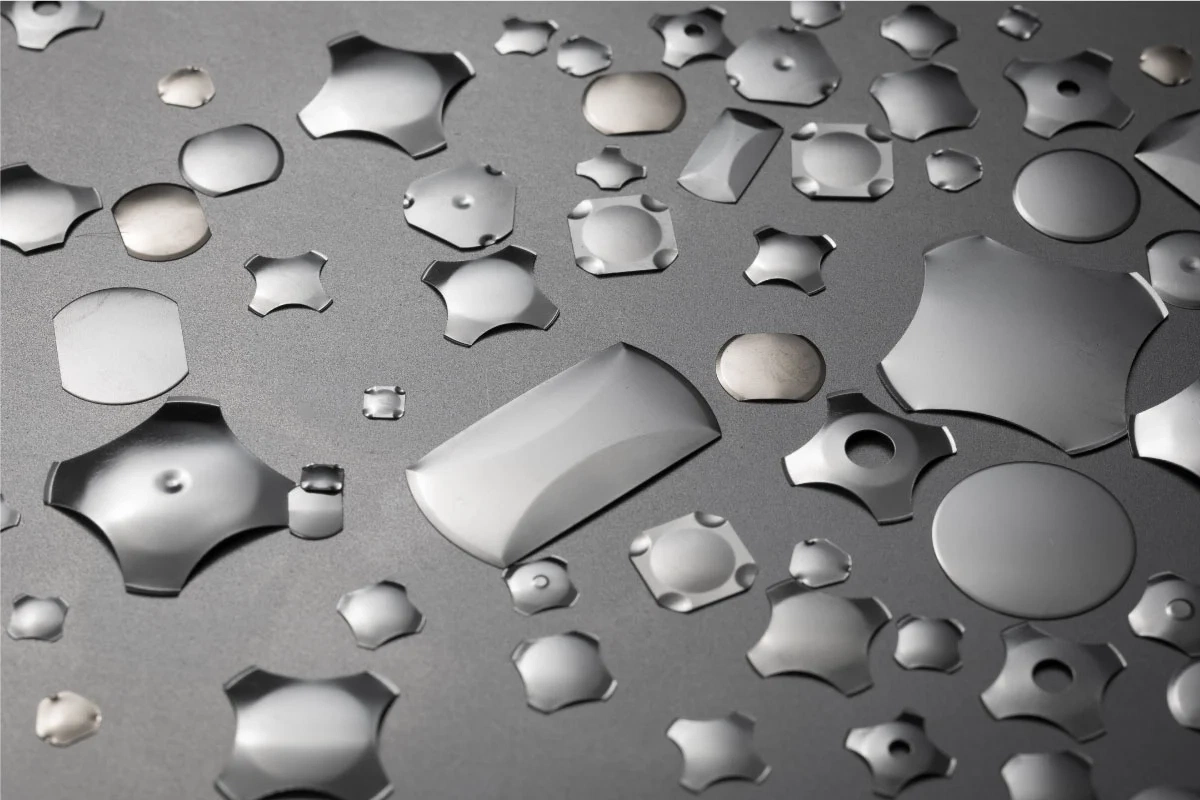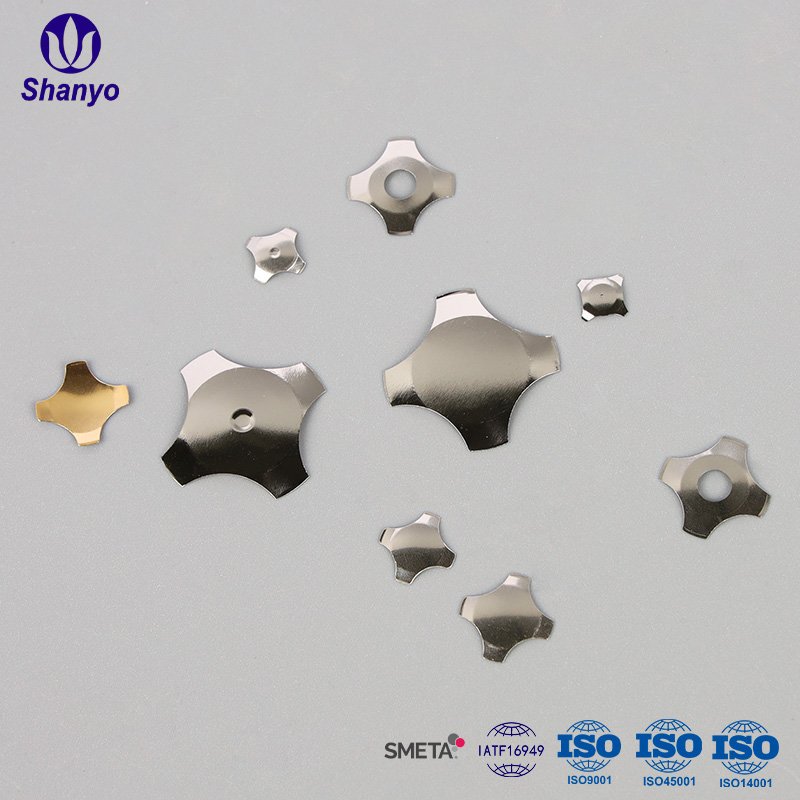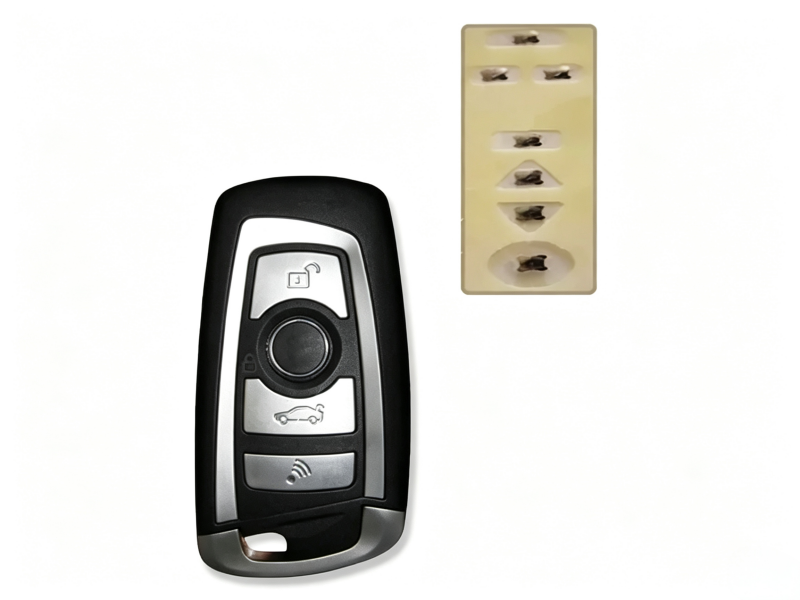
Every membrane switch, remote control and appliance panel that clicks under a finger depends on a small stamped steel part. The metal dome carries the tactile snap, closes the circuit and decides whether a keypress still feels crisp after a million cycles. For buyers, that makes dome sourcing a specification problem rather than a price problem: force tolerance, plating, life cycle and array format all have to match the line that receives them.
The category is growing with the interfaces it serves. According to Grand View Research, the global membrane switch market, one of the main assembly categories that metal domes feed into, was valued at USD 7.2 billion in 2025 and is projected to reach USD 11.0 billion by 2033, a CAGR of 5.4% from 2026 to 2033, with Asia Pacific holding 44.0% of 2025 revenue.
The ten manufacturers below were selected for verifiable production capability in metal domes and dome arrays. Ordering reflects product coverage, engineering depth and how much of the operation is documented publicly, not advertising spend.
Quick Comparison Table
| Company Name | Region | Brief Introduction |
|---|---|---|
| Snaptron, Inc. | United States | Colorado-based manufacturer of metal dome switches, dome arrays and the placement and test equipment that supports them. |
| Nicomatic | France | Bons-en-Chablais maker of Switch’Air domes, dome arrays and automatic dome placement machines. |
| Clik Dome Systems | United Kingdom | Suffolk supplier of a full line of snap dome ranges, PCB domes and FlexiSwitch arrays, with stock in Europe and Asia. |
| Memcon | United Kingdom | Letchworth-headquartered supplier of metal domes and custom arrays to the membrane switch and flexible circuit industry. |
| Shanyo | China | Qingdao manufacturer of metal domes, dome arrays, membrane switches, FPC circuits and silicone keypads under one roof. |
| Best Technology | China | Shenzhen dome and array specialist supplying tape-and-reel and prepositioned formats to export OEMs. |
| Inovan GmbH & Co. KG | Germany | Birkenfeld precision stamping and plating group that produces snap domes alongside contact materials and strip. |
| Truetone Technology Industrial Limited | Hong Kong, China | Kowloon-based snap dome maker working in triangle, round and four-legged formats with in-house tooling. |
| Yu Ray Technology (URTECH) | Taiwan, China | Taiwan manufacturer pairing metal domes with precision die-cut components and AI vision inspection. |
| CSI Keyboards | United States | Massachusetts builder of custom membrane switches and HMI assemblies with domes integrated into the stack. |
1. Snaptron, Inc.

Introduction
Snaptron is based in Windsor, Colorado, in the United States and has concentrated on a single component family for more than three decades. It manufactures metal dome switches, metal dome arrays, and the placement and test equipment that goes with them, so a buyer can specify the dome and the handling hardware in one conversation. Standard four-legged and round formats sit alongside custom parts built to drawing. Most output goes into membrane switches, control panels, medical devices and industrial electronics, and orders are placed directly with the factory rather than through distributors.
Features
- Metal dome switches, dome arrays and related test equipment from one source
- Life ratings up to 10 million actuations on selected switches
- Domestically sourced raw material, with production in the United States
- Quotes returned within 24 to 48 hours of final drawings
- Applications engineering during evaluation and after tooling
Best for: engineering teams that need US-made standard domes quickly and want packaging, arrays and test hardware specified by the same supplier.
2. Nicomatic

Introduction
Nicomatic is headquartered in Bons-en-Chablais in eastern France and has worked in metal dome switching for more than four decades alongside its connector business. Its dome range is sold under the Switch’Air name: four-legged non-stick domes, round and double-radius domes, and pre-assembled dome arrays. Unusually for a dome maker, the company also builds the semi-automatic and automatic placement machines that put domes onto membranes at rates up to roughly 5,000 domes per hour. Domes are made in France and serve consumer electronics, industrial automation, home automation and access control panels.
Features
- Switch’Air four-legged, round and double-radius dome formats
- Standard diameters of 6, 8.4, 10 and 12.2 mm with 170 to 420 g actuation force
- Nickel or gold finishes, with life ratings around one million cycles
- Dome arrays supplied on adhesive labels for direct PCB assembly
- Dome placement machines matched to the dome range
Best for: buyers who want French-made domes with a documented force range and the placement equipment to match them.
3. Clik Dome Systems

Introduction
Clik Dome Systems is headquartered in Suffolk in the United Kingdom, with regional offices in Thailand and China. The company positions itself as a full-line metal dome and dome array supplier, and the catalogue supports that claim: MicroDomes, S-range domes with and without holes, R, T and OL ranges, dimpled domes with feet and wings, PCB domes, oblong space-bar domes and FlexiSwitch arrays on adhesive carriers. Loose domes start at a minimum order of 1,000 pieces, which suits keyboard and panel builders running mixed or modest volumes. Applications sit in membrane switches, control panels and keyboard assemblies sold into Europe and Asia.
Features
- Domes from 5.0 mm to 20.0 mm, plus space-bar domes from 25 mm to 150 mm
- Tin or gold plating to suit different contact systems
- FlexiSwitch dome arrays, poly dome arrays and light distributing film
- Stock inventory with one-day shipping on standard items
- Minimum order of 1,000 pieces on loose domes
Best for: panel and keyboard manufacturers that order in moderate batches and need plating choice without a large commitment.
4. Memcon

Introduction
Memcon is headquartered in Letchworth, England, and runs additional facilities in Kiel in Germany, Michigan in the United States, Hong Kong, Shenzhen in China and São José dos Campos in Brazil. Its range is aimed squarely at membrane switch and flexible circuit manufacturing: metal domes, custom dome arrays, connectors, spacer and adhesive tapes, ITO films and test accessories. The array programme is the part that matters most here. Buyers can specify single-layer arrays on polyester, double-layer constructions with vented spacers, EMI-shielded versions with printed silver or carbon, and double-layer arrays with rubber adhesive for silicone keypad bonding. Domes are also supplied on tape and reel in 14, 16 and 20 mm sizes.
Features
- Single-layer, double-layer, EMI and rubber-adhesive dome array constructions
- Tape-and-reel domes for automated placement
- Connectors, spacers, ITO films and test equipment from one supplier
- Local stock and support across Europe, North America and Asia
- Custom arrays built to drawing, construction and annual quantity
Best for: membrane switch manufacturers that prefer to buy domes, arrays and the surrounding materials from one supplier with regional stock.
5. Shanyo

Introduction
Shanyo is headquartered in Qingdao, China and has manufactured tactile components since 2004. Its core products are metal dome switches from 3 mm to 20 mm in diameter with actuation forces from 100 g to 600 g, stamped from SUS301 and SUS316L stainless steel in thicknesses from 0.08 mm to 0.15 mm, along with dome sheet arrays assembled on PET or FPC carriers. What separates Shanyo from a pure dome stamper is the layer above the dome: membrane switches, FPC circuits, silicone rubber keypads, bus bars and die-cut parts are produced within the same group, so a keypad module can arrive as one part number instead of four.
Tooling, progressive stamping and array assembly are handled in-house, with production sites in China and Vietnam and sales offices in Malaysia, Singapore, South Korea, Taiwan and the United States. The company holds ISO 9001, ISO 14001, ISO 45001 and IATF 16949, and serves automotive electronics, medical devices, consumer electronics, smart home products and industrial control panels.
Features
- Metal domes from 3 mm to 20 mm, 100 g to 600 g, in SUS301 and SUS316L
- In-house tooling and progressive stamping with automated array assembly
- Dome sheets on PET or FPC, plus membrane switches and FPC circuits
- IATF 16949 and ISO 13485 documentation for automotive and medical buyers
- OEM and ODM programmes from prototype batches through volume production
Best for: OEMs that want loose domes, dome arrays and the finished keypad module from one supplier with automotive and medical paperwork already in place.
6. Best Technology

Introduction
Best Technology works from Shenzhen, China and has supplied metal domes to membrane switch and handset manufacturers since 2005. The range covers standard round and four-legged domes, poly domes, custom dome arrays, light guide film and die-cut materials. Much of its output leaves as tape and reel or as prepositioned arrays, a packaging choice that matters more than it sounds: domes arrive oriented and spaced for the feeder that will place them. The company publishes technical guidance for European and American OEM and EMS teams and builds arrays to drawing, including rubber-adhesive and light guide versions for silicone keypads and backlit panels.
Features
- Metal domes, snap domes, poly domes and custom dome arrays
- Tape-and-reel supply for automated placement
- Light guide film and die-cut materials under the same roof
- Array constructions with rubber adhesive or LGF layers
- Specification review and samples for export customers
Best for: export-oriented assembly lines that need domes on reel or array with packaging already matched to the placement process.
7. Inovan GmbH & Co. KG
Introduction
Inovan is based in Birkenfeld in Baden-Württemberg, Germany, where production started in 1966, and belongs to the Prym group. It is a precision stamping and surface technology company rather than a dedicated dome house, and snap domes sit inside a wider contact portfolio that includes contact materials, stamped grids, press-fit parts and electroplated strip. That combination is the point: dome force and contact resistance depend on strip material, temper and plating, and Inovan controls all three in one plant. Punching capacity runs from 25 to 250 tonnes, backed by in-house tool making, selective plating and assembly. Customers are mainly in automotive, information and communications, and electrical equipment, served from plants in Germany, Czechia and Changzhou in China.
Features
- Snap domes produced alongside contact materials and plated strip
- Punching from 25 to 250 tonnes with in-house tooling
- Selective and full-surface electroplating in the same plant
- Automotive-grade quality management across European and Chinese sites
- Engineering support from material selection through assembly
Best for: automotive and industrial programmes where dome performance depends on strip material, temper and plating rather than on the dome alone.
8. Truetone Technology Industrial Limited

Introduction
Truetone Technology Industrial Limited works from Kwun Tong in Kowloon, Hong Kong and produces metal snap domes in triangle, round and four-legged formats. The company describes itself as a revitalised enterprise that restarted in 2023 on the back of more than 50 years of snap dome production, and the manufacturing setup reflects a toolroom background: grinding machines, EDM, punch presses, ultrasonic cleaning and pneumatic life testers, with certified raw material imported from Japan. Output covers electronic device keys, medical equipment and industrial control panels.
Features
- Triangle, round and four-legged metal snap domes
- In-house grinding, EDM and punch press capability for tooling
- Japanese certified raw material
- Pneumatic life testing with repeated in-process checks
- Small and medium batches with fixed delivery commitments
Best for: buyers with a narrow dome requirement who value consistent feel and toolroom flexibility over catalogue breadth.
9. Yu Ray Technology (URTECH)

Introduction
Yu Ray Technology, which trades as URTECH, is based in Taiwan and was founded in 2013. It produces metal domes and precision die-cut components and treats the two as one service: the dome supplies the snap, while the die-cut layers supply insulation, cushioning and dust protection around it. Production relies on AI-assisted vision inspection that runs continuously rather than on sampled checks, and the company works to micron-level die-cutting accuracy. Its domes go mainly into communication devices and precision instruments, with customers across Taiwan and Southeast Asia.
Features
- Metal domes for tactile switching, plus precision die-cut parts
- AI vision inspection running across production
- Micron-level die-cutting accuracy
- Combined dome and die-cut supply for compact assemblies
- Applications in communication equipment and precision instruments
Best for: compact device builders who want domes and the die-cut stack around them from a single Taiwanese source.
10. CSI Keyboards

Introduction
CSI Keyboards is headquartered in Peabody, Massachusetts in the United States and was founded in 1982. It does not sell domes as a catalogue item; it builds the assemblies domes end up in, including custom membrane switches, silicone rubber keypads, capacitive switches, display assemblies and complete HMI units, with metal domes integrated into the tactile layers. Engineering sits at the Peabody plant, which holds ISO 9001:2015, and the company quotes concept-to-design in about two weeks, design-to-part in four to five weeks and prototypes in two to three weeks. Medical, military, aerospace, industrial control and marine customers make up most of its work.
Features
- Custom membrane switches and keypads with integrated metal domes
- Silicone rubber keypads, capacitive switches and display assemblies
- ISO 9001:2015 facility with US-based engineering
- Prototypes in two to three weeks; production parts in four to five
- Full electrical and cosmetic inspection before shipment
Best for: brands that outsource the complete interface instead of buying domes and laminating them in-house.
How to Choose the Right Metal Dome Manufacturer
A dome that measures correctly on paper can still fail on the line. Selecting a manufacturer comes down to four practical checks: whether the dome geometry and force curve fit the actuator above it, whether the plating and documentation survive qualification, whether the packaging format matches how parts are placed, and whether the supplier can hold all of that stable for the life of the programme.
Evaluate Dome Geometry and Force Matching
Diameter, height, leg count and actuation force interact with the overlay, spacer thickness and actuator. Ask for force and travel data at the tolerance you actually need rather than a nominal figure, and test samples in your own stack before tooling is released. A supplier who can explain how dome size shifts the click ratio is usually the one who can hold it in production.
Verify Plating, Life Cycle and Documentation
Contact resistance drifts with plating thickness and wear. Nickel suits general switching, while gold is specified for low-current and low-resistance contacts. Request cycle test data at your force and travel rather than a generic headline number, and confirm whether the supplier can provide PPAP, material certificates and lot traceability if you sell into automotive or medical markets.
Check Array Format and Placement Method
Loose domes, domes on tape and reel, and prepositioned arrays are three different production models. Reels need a feeder that presents pockets consistently, while arrays move alignment risk to the dome supplier. Decide which one your line can absorb before tooling is cut, because changing later affects materials, handling and machine programming.
Review Certifications and Regional Support
Certification matters in proportion to your end market: IATF 16949 for automotive, ISO 13485 for medical, ISO 9001 as a baseline. Geography is just as practical. A supplier with a plant or stock near your assembly site shortens the loop when a force curve needs adjusting or a reel arrives damaged.
Conclusion
The ten suppliers above divide into three groups. Snaptron, Nicomatic, Clik Dome Systems, Truetone and Yu Ray build domes as their main product and compete on catalogue breadth, force range and packaging format. Memcon and Inovan sell domes as part of a wider materials or stamping capability, which suits buyers who need plating, strip or spacer materials specified alongside the dome.
CSI Keyboards sits at the other end, supplying the finished interface rather than the component. Shanyo covers the middle ground: domes, arrays and the membrane switch or FPC module around them, with automotive and medical certification behind it. Choose by the problem you actually have, whether that is a force curve to match, a placement method to fit, a certification to satisfy or a module to outsource, and the shortlist narrows quickly.