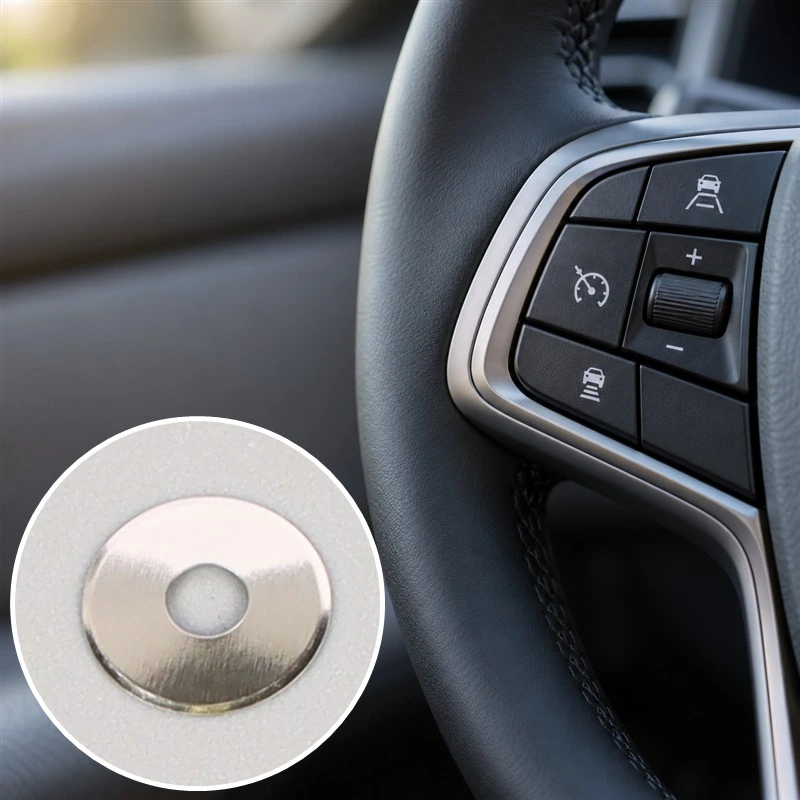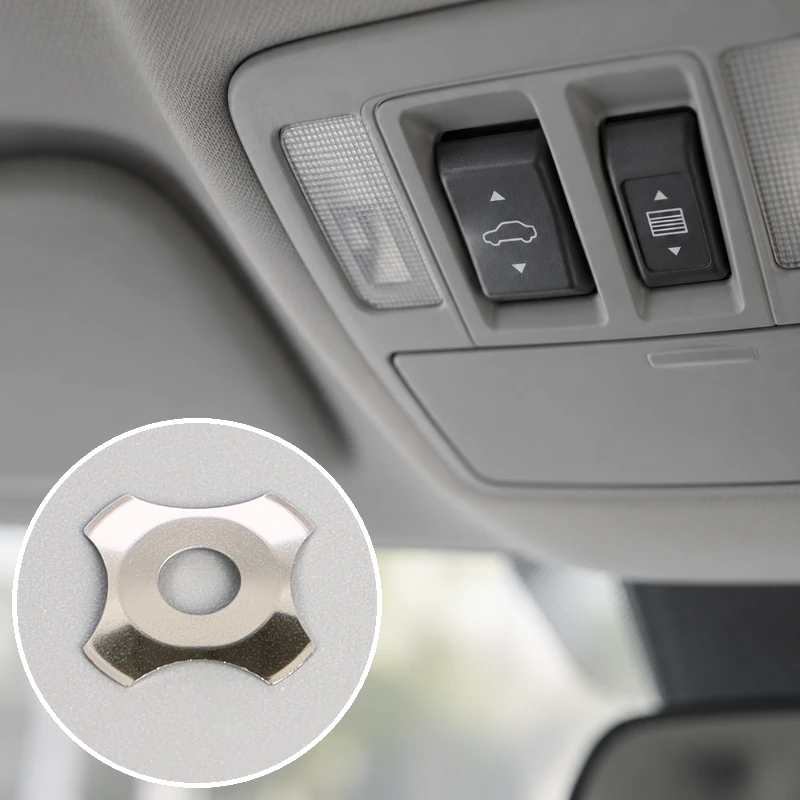
The Journey Behind Every Custom Metal Dome
There’s a common misconception that ordering a قبة معدنية مخصصة is like ordering from a catalog — pick a size, pick a force, and wait for delivery. In reality, the process is far more collaborative than that. Customers play a surprisingly active role throughout the entire journey, from the first conversation with the manufacturer all the way through to mass production sign-off.
Every custom metal dome starts as a need. Maybe the standard off-the-shelf options don’t fit the PCB layout. Maybe the actuation force needs to hit a very specific target. Maybe the application environment demands unusual plating or material specs. Whatever the trigger, the process that follows is iterative, detail-heavy, and — when done well — produces a component that feels like it was born for the product.
This article walks through that process, stage by stage, from the customer’s perspective.
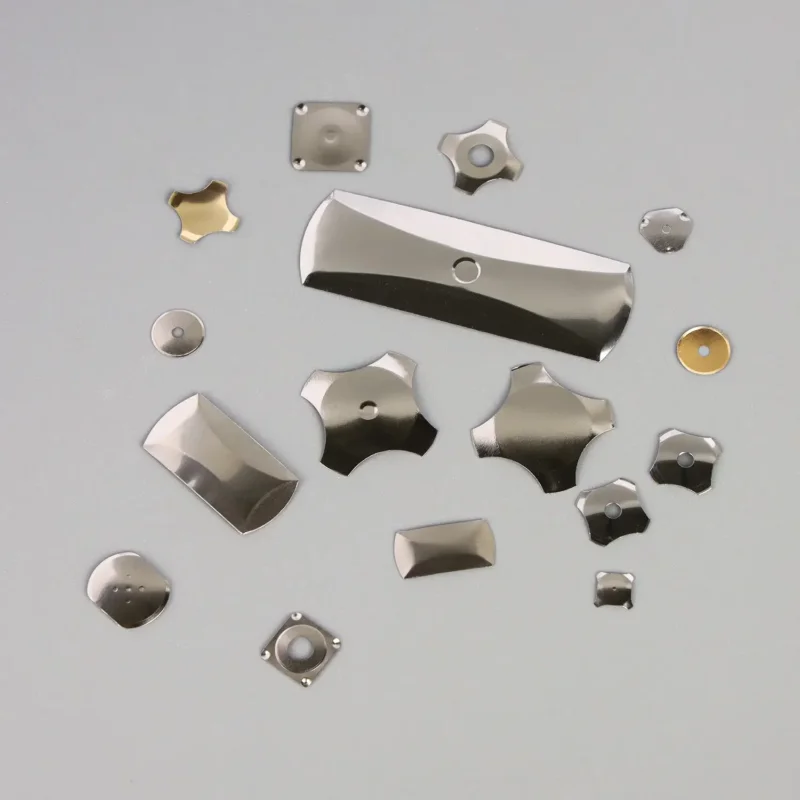
Stage 1 — Initial Custom Metal Dome Request and Requirements
Everything begins with a request, though “request” might be too formal a word for how it often starts. Sometimes it’s a detailed specification document. Other times it’s a rough sketch on a napkin sent as a photo, or even just a verbal description during a call: “We need something about this big, with this much click force, and it has to fit here.”
What Customers Typically Define Early On
At this stage, the customer usually provides — or works with the manufacturer to establish — several key parameters:
Target actuation force and desired tactile feel
Dome diameter and height constraints based on available PCB space
Material preference (stainless steel 301, phosphor bronze, etc.)
Plating requirements (gold, nickel, or specific alternatives)
Operating environment (temperature range, humidity, chemical exposure)
Expected cycle life
Estimated annual volume
Not every customer arrives with all these answers ready. Honestly, most don’t. And that’s completely fine. Part of the manufacturer’s job is to help fill in the gaps, suggest feasible options, and push back gently when a request doesn’t quite make physical sense. The dialogue at this stage matters more than the documentation.
Stage 2 — Design and Engineering Review for the Custom Metal Dome
Once the basic requirements are on the table, the engineering team gets involved. This is where the concept starts becoming a real component.
Translating Requirements into Specifications
The manufacturer’s engineers take the customer’s inputs and translate them into a preliminary design — dome profile, leg configuration (if applicable), material thickness, forming dimensions. They’ll often run simulations or reference historical data from similar custom metal dome projects to predict the force curve behavior.
Customer Collaboration During Design
This phase usually involves some back and forth. The manufacturer might come back with questions:
Can the dome height be increased by 0.2mm to achieve the target click ratio?
Is there clearance for a four-leg design, or does the layout require a round profile?
Would a slightly thicker material be acceptable if it improves cycle life?
The customer reviews, responds, sometimes compromises, sometimes holds firm, particularly when refining specifications for custom قبة معدنية مثلثة الشكل components. It’s a negotiation of sorts — between what’s desired and what’s manufacturable. A good manufacturer guides the customer through these trade-offs without being dismissive of the original intent.
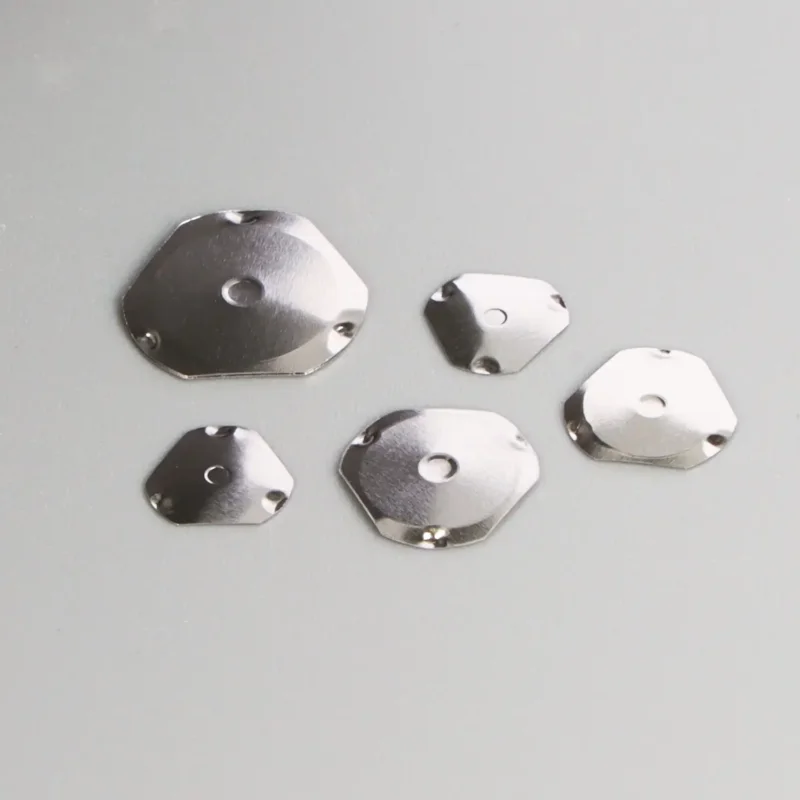
Stage 3 — Tooling and Prototyping
Custom Tooling Development
Once the design is agreed upon, custom stamping tooling needs to be developed. This is one of the significant upfront investments in the custom metal dome process. The tooling — precision dies used to stamp and form each dome — directly determines the accuracy and consistency of the final product.
Tooling timelines vary, but typically range from two to six weeks depending on complexity.
Prototype Samples
After tooling is complete, the manufacturer produces an initial batch of prototype samples. These aren’t production-run pieces — they’re specifically made for the customer to evaluate.
What customers typically check during prototyping:
Physical fitment on the actual PCB or membrane assembly
Actuation force measured against the target spec
Tactile feel — does the click sensation match expectations?
Force curve shape and click ratio
Visual inspection for forming defects or inconsistencies
This stage is where things get tangible. Reading a specification sheet is one thing. Actually pressing the dome with your finger and feeling whether it’s right — that’s something else entirely. Experienced product designers can often tell within a few presses whether the dome needs adjustment or is ready to go.
Stage 4 — Testing, Validation, and Approval
Performance Testing
Before approving for mass production, most customers require formal testing data. This might include:
Force-displacement curve measurement on a sample set.
Cycle life testing — actuating the dome hundreds of thousands or millions of times to verify durability.
Contact resistance measurement to confirm electrical performance.
Environmental testing (temperature cycling, humidity exposure) if the application demands it.
Customer Sign-Off
The test results go back to the customer for review. If everything checks out, they issue approval. If not — and it does happen — adjustments are made. Maybe the force is 15 grams higher than target, or the click ratio isn’t quite as pronounced as desired. Minor tooling modifications, material adjustments, or process tweaks can usually resolve these issues without starting from scratch.
Sometimes it takes one round of prototypes. Sometimes three. There’s no real standard here — it depends on how tight the tolerances are and how particular the application requirements happen to be.
Stage 5 — Mass Production of the Custom Metal Dome
| Production Phase |
Customer Involvement
|
Manufacturer Responsibility
|
|---|---|---|
|
Pre-production setup
|
Confirm order quantity and delivery schedule
|
Calibrate tooling, set up quality controls
|
|
First article inspection
|
Review and approve initial production samples
|
Produce and measure first articles against spec
|
|
Ongoing production
|
Monitor delivery timeline, receive progress updates
|
Maintain process consistency, run in-line QC
|
|
Outgoing quality check
|
Review inspection reports if required
|
Measure force, dimensions, and visual quality
|
|
Shipping and delivery
|
Confirm packaging and logistics requirements
|
Pack per customer spec, arrange shipment
|
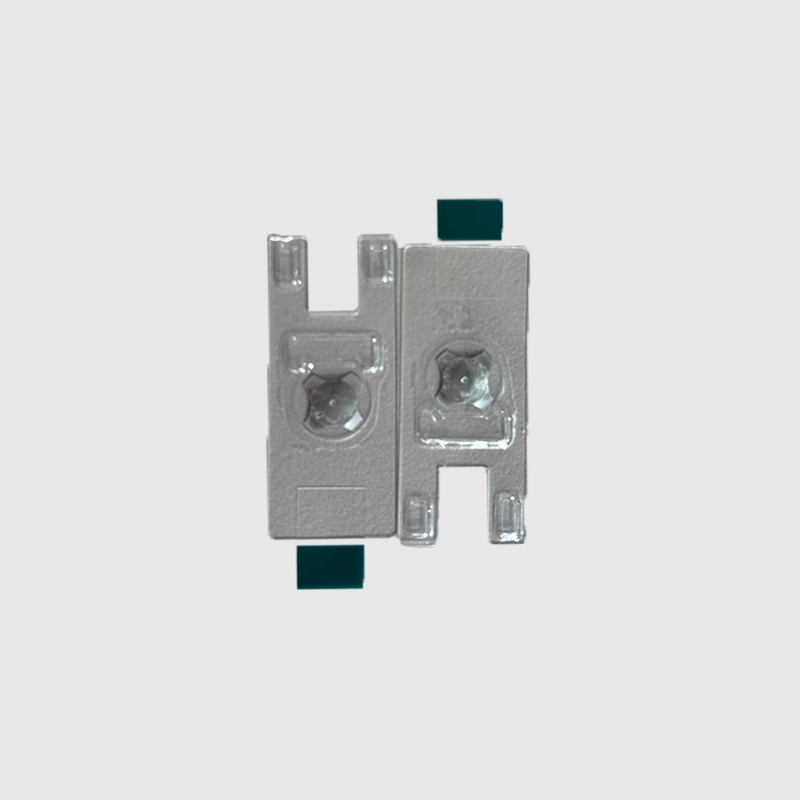
Most manufacturers will produce a “first article” — a small batch from the actual production run — for the customer to approve before the full order proceeds. It’s a safety net that catches any drift between prototype conditions and full-scale manufacturing settings.
Ongoing Communication
Even after production is running smoothly, customers often stay in contact regarding potential design revisions for future orders, volume changes, or second-source qualification. A custom metal dome isn’t usually a one-and-done transaction — it tends to be an ongoing relationship, especially for products with multi-year production lifespans.
الأسئلة الشائعة
How long does the entire custom metal dome process take from request to mass production?
It varies, but a typical timeline runs about 6 to 12 weeks total. That includes design review (1–2 weeks), tooling fabrication (2–6 weeks), prototyping and testing (1–2 weeks), and production ramp-up (1–2 weeks). Complex designs, multiple revision rounds, or specialized testing can extend this further. It’s always a good idea to build in some buffer, especially for new product launches where the dome specification hasn’t been fully locked down yet.
Can customers request changes after mass production has started?
Minor changes — like adjusting order quantities or modifying packaging — are usually straightforward. However, changes to the dome’s physical design (dimensions, force, material) typically require tooling modifications and a new round of prototyping and approval. Most manufacturers are flexible, but mid-production design changes inevitably add cost and delay. It’s one reason the prototyping and approval stages deserve careful attention upfront.
What’s the minimum order quantity for a custom metal dome?
This depends heavily on the manufacturer. Some will accept MOQs as low as a few thousand pieces for initial orders, while others require tens of thousands to justify the tooling investment. The tooling cost itself is usually a separate line item and can be amortized over larger orders. For very small quantities, some manufacturers offer soft tooling options that are cheaper but less durable — a practical compromise for pilot runs or limited-production products.