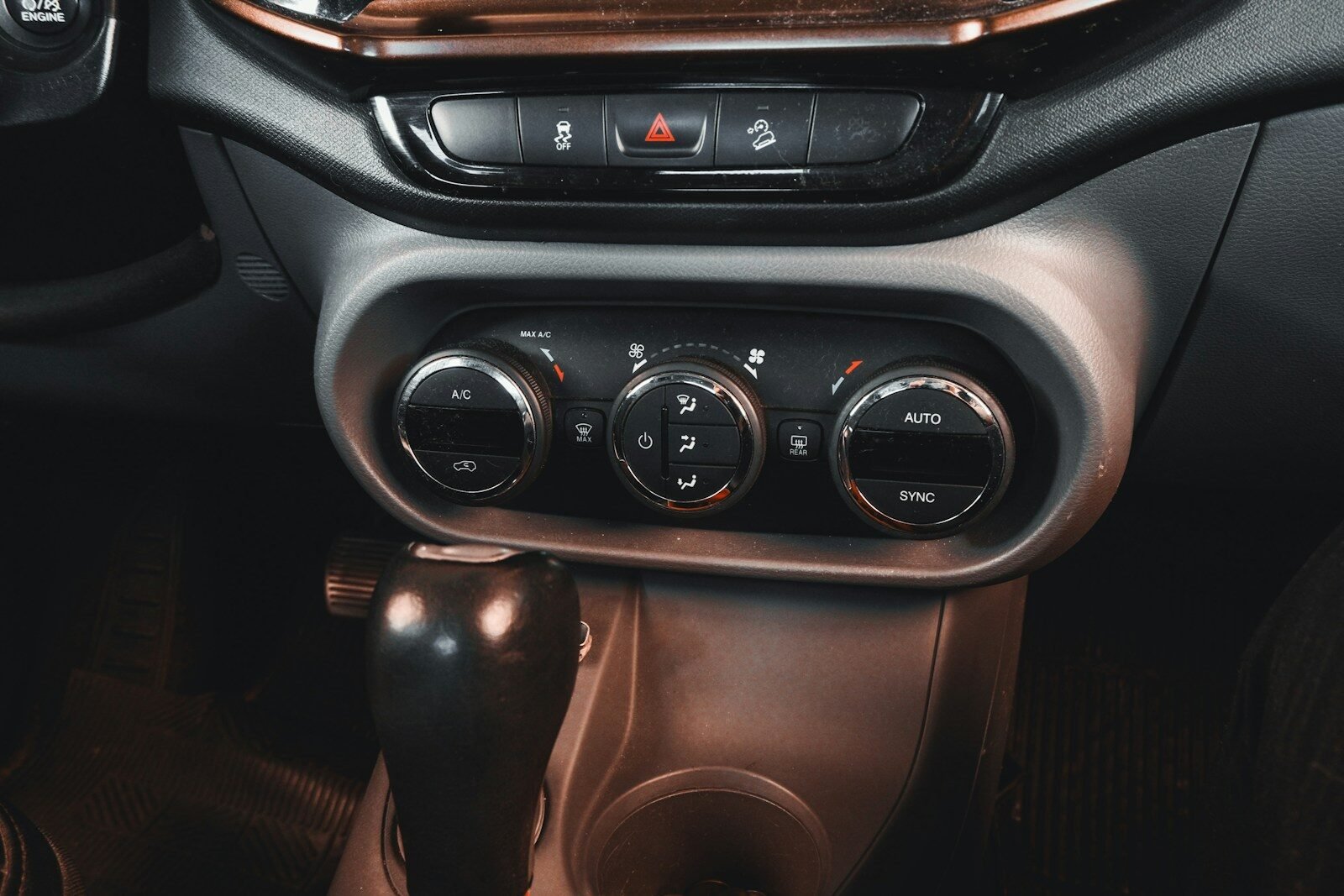
An HVAC control head packs a keypad into a surface smaller than a sheet of paper: temperature, fan speed, mode, defrost, recirculation. Each key has a legend, a backlight and a force target, and the driver finds most of them by position. Behind the panel, the dome sits under an actuator, a light guide and an adhesive carrier, on a board that survives dashboard heat, cold soak, condensation and whatever the owner sprays on the trim. In automotive applications, a dome specified wrong shows up after tooling, when a key that measured fine on the bench feels mushy at the edge of the panel.
Validation here means proving four things on a production-representative stack: that every key position trips inside its force window, that contact resistance stays stable through the loads the mounting location requires, that the panel still looks and feels right afterwards, and that the evidence is written in a form the customer’s quality department will accept. A loose dome that passes a component test proves none of these.
The gates below follow the order an automotive program uses, and each one asks a different question.
What does validation mean at the dome, panel, and vehicle level?
Three separate gates. The component gate proves the dome can be built to a force and outline. The panel gate proves the assembled button works through the real keycap, actuator and light guide. The vehicle gate proves the panel survives its mounting location. Skipping the middle gate is why programs discover a feel problem after tooling.
Component level: the loose dome
The supplier confirms outline, diameter, height, plating, force curve on a flat plate and surface condition. That covers feasibility: whether the force target can be formed in that material and thickness, whether the travel fits the stack, whether the plating suits the pad finish. It does not release a button.
Panel level: the stack that actually gets pressed
The dome is one layer. The key position also holds the keycap, the actuator tip, the carrier film, the adhesive, a vent path and, on a backlit panel, a light guide. Each changes the load path: a tip that is too small concentrates force, a light guide resting on the dome steals travel before the snap, a blocked vent slows the return.
Vehicle level: mounting location decides the load class
A center-stack panel behind a windshield and a panel on a shaded console do not see the same solar load, and a passenger car is not a commercial vehicle. That difference becomes the load class, written into the test plan before samples are built.
Which HVAC-specific conditions set the test list?
The mounting location does, not the dome datasheet. An HVAC panel sees strong solar gain, a cold overnight soak, a wet neighbor in the evaporator case, and a driver who cleans the trim with whatever is in the glovebox. Each narrows the material and stack choices before a single test is written.
Heat, cold, and a panel that sits in sunlight
A dark dashboard gets far hotter than the cabin air. Stainless steel domes for interior use are commonly published across a -40 °C to +85 °C window (published automotive dome data, checked 9 November 2026), but that says nothing about the finished panel. What matters is stack drift: adhesive softening, carrier creep, keycap growth, light guide warping. Cold is the quieter problem. Plastics stiffen, grease thickens, and a key that felt crisp at room temperature can feel dead at -30 °C.
Condensation, spills, and cleaning agents
The HVAC case is a wet place. Condensation forms on cold surfaces, spills land on the panel, and cleaners, sanitizers, hand lotion and sunscreen end up on keys pressed a hundred times a day. Residue on the pads is a known path to leakage current and false triggering. Sealing belongs to the interface, not the dome: front surface, edge laminate, tail exit, adhesive and housing joint each carry ingress risk.
| Load class | Typical HVAC exposure | What to check on the panel |
|---|---|---|
| Climatic (ISO 16750-4) | Solar gain, cold soak, damp heat, dust | Force curve and resistance before and after |
| Mechanical (ISO 16750-3) | Road vibration, key presses, connector loads | Intermittency, dome position, carrier lift |
| Chemical (ISO 16750-5) | Cleaners, lotions, coolant mist | Pad corrosion, legend attack, adhesive softening |
| Electrical (ISO 16750-2) | Load dump, transients, ground offset | Resistance under the specified load current |
ISO 16750-4:2023 groups the climatic tests by mounting location rather than applying one list to every part. Which class covers a center-stack panel is the customer’s decision, settled before the DV plan is signed.
What should the force curve show before you approve a sample?
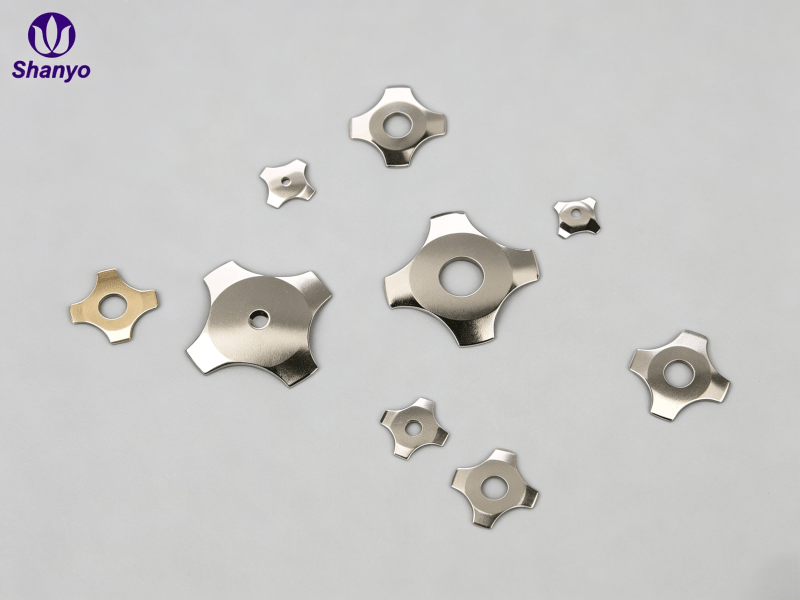
Four numbers measured with the production actuator: trip force, return force, travel to snap, and the tactile ratio between peak and post-snap force. Add bounce behaviour and a second peak if the dome is a four-leg type. A catalogue peak force value tells you nothing about how the button will feel or whether it will switch at the edge.
Reading the curve, not just the peak
Trip force is where the dome buckles. Return force pushes the keycap back. Travel is the distance to the snap. Tactile ratio is the contrast between peak and plateau, and a higher ratio reads as a sharper click. Two details matter: whether the curve was taken on a bare dome or through the keycap and actuator, and whether the return stroke was recorded.
Center, edge, and corner presses
An HVAC key is rarely pressed in the middle. The thumb lands wherever it lands, often at the edge of a wide key or the corner of a rocker. Actuator tilt there raises the force needed to trip the dome and can produce no switch at all while the keycap still moves. Press center, four edges and four corners at every position, and record whether the switch triggers.
Why does an HVAC panel need key-by-key validation?
Because the driver compares neighbours without thinking about it, so the spread across the panel matters more than the average. A panel where the temperature key needs twice the effort of the fan key reads as cheap even when every dome sits inside its own tolerance.
Design intent belongs per key. Defrost and recirculation are pressed rarely and benefit from a firmer feel that resists accidental contact; temperature up and down are pressed constantly and usually want a lighter touch. Two things widen the spread after assembly: keycap geometry, since a tall narrow cap transfers load differently from a wide flat one, and carrier lamination, since adhesive thickness varies across a large array.
Light guide, carrier, and venting
Backlighting is standard on these panels and adds constraints to the same cavity. The light guide has to spread light across the legend without touching the dome or blocking its travel, and the diffuser has to sit far enough from the keycap to avoid hot spots. The carrier holds every dome at fixed coordinates so the keypad registers in one assembly step, which keeps keys aligned with legends after years of heat cycles. Venting belongs on the same list: trapped air has to escape as the dome collapses, or the return is slow and the click flattens.

Which environmental and life tests belong in the DV plan?
The tests that match the load class, run in a sequence that reflects real exposure, with the same measurements taken before and after. Sequence is not administrative detail. Damp heat that follows a thermal cycle finds different failures than damp heat on a virgin sample, and a life test run before climate exposure says almost nothing about year eight.
Start with a full characterization at 23°C and a stated humidity, so every key has a baseline. Then run the loads in the agreed order and repeat the same measurements afterwards. Where the program allows it, monitor function during the life test rather than only at the end: a key that fails at cycle 40,000 and recovers by 50,000 behaves differently from one that degrades steadily.
How many cycles
The cycle target comes from the customer requirement and should be tied to the button’s role. A steering wheel media key and a rear defrost key do not share a duty cycle, and neither should share a test target. A catalogue number is a starting point, not an accepted requirement. Sample size, limits and the definition of failure belong in the same agreement: a key that still switches but has lost half its tactile ratio has failed.
| Test | What it targets on an HVAC panel | Measured again after |
|---|---|---|
| Thermal cycling and shock | Adhesive, carrier, keycap and light guide mismatch | Force curve, travel, appearance |
| Damp heat | Contact interface, insulation, plating | Resistance, leakage current |
| Dust and contamination | Vent path, contact chamber | Resistance, false triggering |
| Vibration and shock | Dome position, connector, carrier lift | Intermittency, registration |
What should arrive before tooling is released?
A quality certificate that names the producing site and the part family, a production part approval package at the level the customer agreed, and change control that links the dome drawing to the array artwork, the circuit data and the key-stack drawing. Without those three, a good sample is just a good sample.
The package normally carries process failure mode analysis, a control plan, measurement system analysis, dimensional results and material test results. The capability target and submission level come from the customer agreement, not a generic figure. Read the control plan closely: it should say which characteristics are checked per lot and which by periodic testing. A plan that measures only nominal force will not catch a plating change, and a plating change is exactly the drift that appears as rising resistance six months later.
Change control and material declaration
Every input that touches the load path can shift fit or feel: material, plating, tooling, adhesive, carrier thickness, release liner, die cutting, packaging. Revision control has to connect them, and any change affecting the load path or contact interface should trigger a re-evaluation of the assembled button, not approval from a component certificate. A full substance declaration belongs in the same conversation.
What goes in the RFQ packet
| Input | Information needed |
|---|---|
| Dome | Shape, diameter, force target, travel, plating, tolerance |
| Array | Coordinates, outline, holes, carrier, adhesive, vent paths |
| Actuator | Tip diameter, height, key travel, hard stop |
| 회로 | Pad artwork, finish, solder mask, substrate, backing |
| Environment | Temperature, humidity, contamination, vibration, test plan |
Shanyo holds IATF 16949 certification, alongside ISO 14001 and ISO 45001 (Shanyo certifications, checked 9 November 2026). One supplier evaluation shows what a complete packet is worth: Valeo opened with an RFQ for a solderable dome combining gold plating with selective tin plating, asked early whether the supplier held IATF 16949, and ran a three-day on-site pre-audit covering cleanliness, tooling, stamping, testing and electroplating. The metal dome case study follows that path from first RFQ to feedback.
What are the common validation failures?
Most are stack failures, not dome failures. The dome does what its curve says; the assembly around it removes travel, adds preload or lets air and moisture into places the drawing never intended.
| 증상 | Usual root cause | Gate that catches it |
|---|---|---|
| Key moves but does not switch at the edge | Actuator tilt, dome off center, insufficient travel | Panel-level corner press |
| Force drifts after heat | Adhesive softening, carrier creep, preload from light guide | Thermal cycle with post-test curve |
| Click flattens over time | Blocked vent, adhesive intrusion under the dome | Vent check, life test |
| Rising resistance in humidity | Pad contamination, plating porosity, flux residue | Damp heat with resistance measurement |
자주 묻는 질문
Can a catalogue dome be used without re-testing on the panel?
It can be a starting point. What it cannot do is skip the panel gate. Catalogue data describes a dome on a flat plate; the button adds a keycap, an actuator, a carrier, adhesive and a light guide, and any of those can move the force curve outside the window you specified.
Does gold plating remove the need for climate testing?
No. Gold stabilises the contact interface, which matters on low-current signal circuits, but it does nothing for the adhesive, the carrier, the vent path or the housing joint. Moisture reaching the pads from the panel edge will defeat a good plating job.
Should the dome be tested before or after reflow?
Both states need a measurement. Incoming inspection confirms the dome and carrier arrived to drawing. Post-reflow inspection confirms the assembly survived the heat and the expansion mismatch without dome shift, adhesive lift or a change in feel. The released specification should state which state the acceptance limits apply to.