Understanding Why Membrane Switches Suit Industrial Use
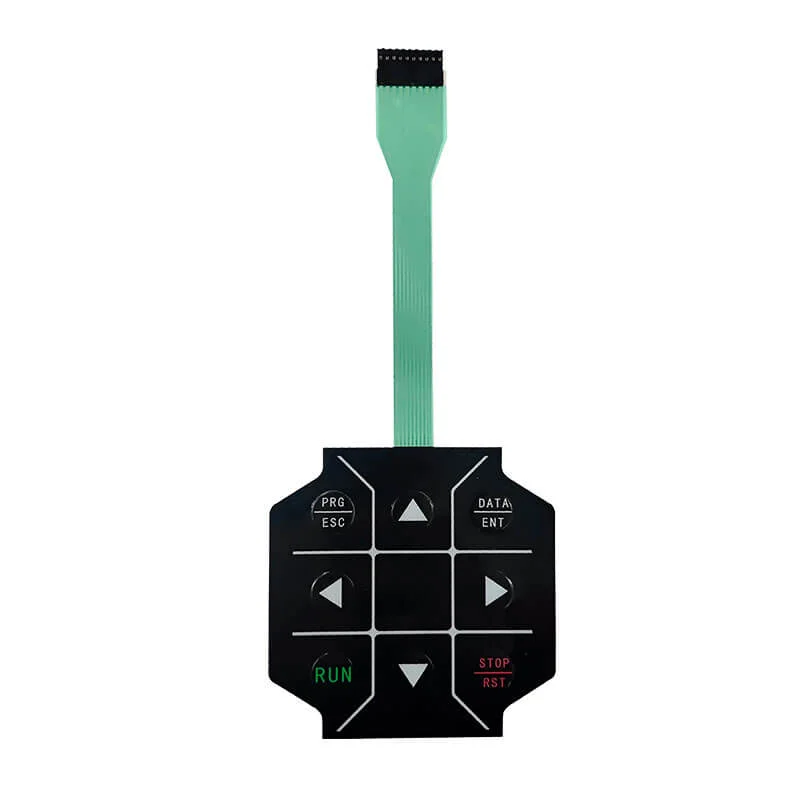
There’s a reason 멤브레인 스위치 show up in so many industrial control panels. The flat construction eliminates gaps where contaminants could enter. No mechanical moving parts means fewer failure points. And the whole assembly can be sealed to meet IP ratings that most other switch technologies struggle with.
That said, not all membrane switches are built equal. A design intended for a medical device touchpad won’t survive long on a CNC machine console where operators are pressing keys with gloved hands hundreds of times a day. The environment dictates the design — and in industrial contexts, that environment is rarely forgiving.
Key Design Factors for High-Intensity Membrane Switches
재료 선택
Material choice probably has the biggest impact on longevity. For the overlay layer, polyester (PET) is the standard in most industrial applications. It handles abrasion well, resists common solvents, and maintains print clarity over time. Polycarbonate works too, though it tends to scratch more easily — something worth noting if the keypad sits in a high-traffic area.
For the circuit layers, silver-based conductive inks remain the most common. But in environments with high humidity or temperature swings, carbon ink circuits or even copper flex circuits might be worth considering. The trade-off is usually cost versus durability.
| Design Element |
표준 옵션
|
High-Intensity Option
|
|---|---|---|
|
Overlay material
|
폴리카보네이트
|
폴리에스테르(PET)
|
|
Circuit ink
|
Silver conductive ink
|
Carbon ink or copper flex
|
|
접착층
|
Standard acrylic
|
High-temp acrylic or silicone
|
|
Tactile feedback
|
Metal dome (standard)
|
Metal dome (heavy actuation)
|
|
밀봉
|
Basic gasket
|
Full perimeter seal, IP67+
|
Circuit Layout and Trace Routing
Trace routing in membrane switches for industrial keypads deserves more attention than it usually gets. Tight trace spacing can lead to silver migration over time, especially in humid conditions. Keeping adequate clearance between traces — and using anti-migration coatings where needed — goes a long way toward preventing intermittent failures that are notoriously hard to diagnose.
The tail (the flexible connector that links the switch to the PCB) is another weak point. In applications where the keypad is mounted on a panel that vibrates, the tail connection experiences repeated flexing. Reinforcing the tail exit point with a stiffener and specifying a strain relief design helps quite a bit.
Tactile Response and Actuation Force
Operators working in industrial settings often wear gloves. That changes the tactile equation significantly. As essential human-machine interfaces, 산업용 장비의 멤브레인 스위치 rely on precise tactile feedback for daily operation. A light-touch membrane switch that feels crisp with bare fingers can feel mushy and unresponsive through heavy work gloves.
Metal domes are the most common way to add tactile feedback. For high-intensity use, specifying a higher actuation force — somewhere around 300 to 500 grams — tends to work better. It gives gloved operators a definitive click feel and reduces accidental key presses from vibration or incidental contact.
Some design teams also add the following to improve operator feedback:
Embossed keys on the overlay for tactile location by touch
LED backlighting behind key positions for low-light environments
Audible beeper integration for confirmation of key press

환경 밀봉
This is where industrial membrane switches really need to earn their keep. A proper seal means more than just laminating the layers together. The design should account for:
Full perimeter sealing with pressure-sensitive adhesive rated for the operating temperature range.
Vent membranes if the keypad will experience altitude changes or significant temperature cycling (trapped air expands and can cause delamination).
UV-resistant overlay coatings for outdoor or sun-exposed installations.
Skipping any of these steps — even one — can cut the product lifespan dramatically. It’s the kind of thing that doesn’t show up in initial testing but becomes obvious six months into field deployment.
Common Pitfalls in Industrial Membrane Switch Design
A few recurring mistakes tend to pop up, even among experienced design teams:
Over-specifying materials where it isn’t needed, driving up cost without meaningful durability gains.
Ignoring the operating temperature range of adhesives — the overlay might survive, but the bond fails.
Designing the tail too short, which creates stress at the connector during assembly or maintenance.
Not prototyping with actual end users. Operators catch usability issues that engineers miss on a bench.
Getting feedback from the people who will actually use the keypad daily is, honestly, one of the most underrated steps in the whole process.
자주 묻는 질문
Can membrane switches handle continuous outdoor exposure?
Yes, with UV-stable polyester overlays and properly rated adhesives, membrane switches perform reliably in prolonged outdoor conditions including direct sunlight and rain.
What IP rating should industrial membrane switches target?
Most high-intensity industrial applications require at least IP65. For washdown environments or heavy chemical exposure, IP67 or higher is recommended.
How many actuations can industrial membrane switches withstand?
Well-designed units typically last over one million actuations. With reinforced domes and quality circuit materials, some designs exceed five million cycles.