Reliability is one of those words that gets thrown around constantly in manufacturing. Every supplier claims it. Every website promises it. But when a dome array fails inside a finished product — a remote control, a medical device panel, an automotive dashboard — reliability suddenly becomes very concrete and very costly.
The tricky part? Unreliable dome arrays don’t usually reveal themselves during incoming inspection. They pass visual checks. They feel fine during initial testing. Problems emerge weeks or months later, out in the field, when domes lose snap, adhesive lets go, or contact resistance drifts upward. By then, the damage to product reputation is already done.
So assessing a produttore di array a cupola‘s reliability means looking beyond the surface. It means examining process, consistency, materials, and track record — not just the shiny sample that arrived perfectly in a presentation box.
Why Dome Array Manufacturer Reliability Matters More Than Price
The Hidden Cost of Unreliable Components
A dome array typically costs a fraction of the total product bill of materials. Maybe a few cents per dome position. That makes it tempting to chase the lowest quote and move on.
But consider what happens when dome arrays fail:
- Field returns and warranty claims
- Customer dissatisfaction and brand damage
- Production line stoppages from incoming quality rejections
- Engineering time spent troubleshooting intermittent contact issues
- Potential safety concerns in critical applications
The cost math changes dramatically when even a small percentage of units fail. A dome array manufacturer offering slightly lower pricing but delivering inconsistent quality creates expenses that far exceed any per-unit savings. This pattern repeats across industries, and yet procurement decisions still default to price comparison more often than they should.
Reliability vs. Initial Quality
Here’s a distinction worth making. Initial quality means the product meets specification when it ships. Reliability means it continues meeting specification over time, under real operating conditions. A dome array manufacturer can deliver perfect initial samples while lacking the process consistency to maintain that quality across thousands of production units or over millions of actuation cycles.
Assessing reliability requires looking at the manufacturer’s ability to sustain performance — not just achieve it once.
Key Indicators of a Reliable Dome Array Manufacturer
Material Sourcing and Control
Reliable manufacturers know exactly where their materials come from. Stainless steel grade, plating chemistry, carrier film properties, adhesive formulation — these aren’t details left to chance or changed without notice.
Questions that reveal material control maturity:
- Do they specify stainless steel grade and source consistently?
- Is plating thickness documented and verified per lot?
- Can they provide material certificates upon request?
- Do they control adhesive storage conditions to prevent degradation?
A dome array manufacturer that cannot answer these questions clearly probably isn’t tracking these variables carefully enough to guarantee consistency.
Process Control and Monitoring
Dome forming is sensitive to tooling condition, press parameters, and material lot variation. Small drifts in any of these can shift actuation force, change tactile feel, or affect dome longevity.
Reliable manufacturers implement statistical process control — monitoring key parameters continuously rather than just inspecting finished products. The difference matters. End-of-line inspection catches defects. Process control prevents them.
| Reliability Indicator | Cosa cercare | Red Flag |
| Force consistency | Cpk values above 1.33 | Wide force variation between units |
| Dimensional accuracy | Documented measurement records | No measurement data available |
| Adhesive bond strength | Peel test results per lot | No adhesive testing performed |
| Cycle life validation | Published endurance test data | No life testing conducted |
| Plating quality | Thickness measurements on record | Visual-only plating inspection |
| Material traceability | Lot tracking from raw material to finished goods | No traceability system |
Practical Methods to Verify Dome Array Manufacturer Reliability
Sample Evaluation Beyond First Impressions
Receiving a beautiful first sample tells you the manufacturer can do it once. Ordering samples across multiple occasions — separated by weeks or months — reveals whether they can do it repeatedly.
Practical sample evaluation should include:
- Force measurement across all dome positions using a force gauge
- Dimensional verification of dome positions against specification
- Adhesive peel testing on representative PCB surface finishes
- Visual inspection under magnification for plating quality and dome symmetry
- Comparison between samples received at different times
That last point is underrated. Batch-to-batch variation is where reliability problems hide. Two sample orders received months apart should be essentially indistinguishable. If they’re not, consistency is lacking.
Request Life Test Data
Any dome array manufacturer claiming reliability should have cycle life test data available. Standard testing involves repeated actuation at rated force, monitoring contact resistance and tactile feel over millions of cycles.
Ask for:
- Test methodology description
- Number of cycles completed
- Contact resistance measurements over test duration
- Force degradation curves if available
- Failure mode information when domes eventually wear out
Manufacturers who conduct life testing routinely can provide this data readily. Those who cannot may not be testing at all — which means reliability claims are assumptions rather than evidence.
Factory Audit or Virtual Tour
Nothing replaces seeing a manufacturing environment firsthand. Cleanliness, organization, equipment condition, worker training — these observations reveal things that documents and certifications cannot.
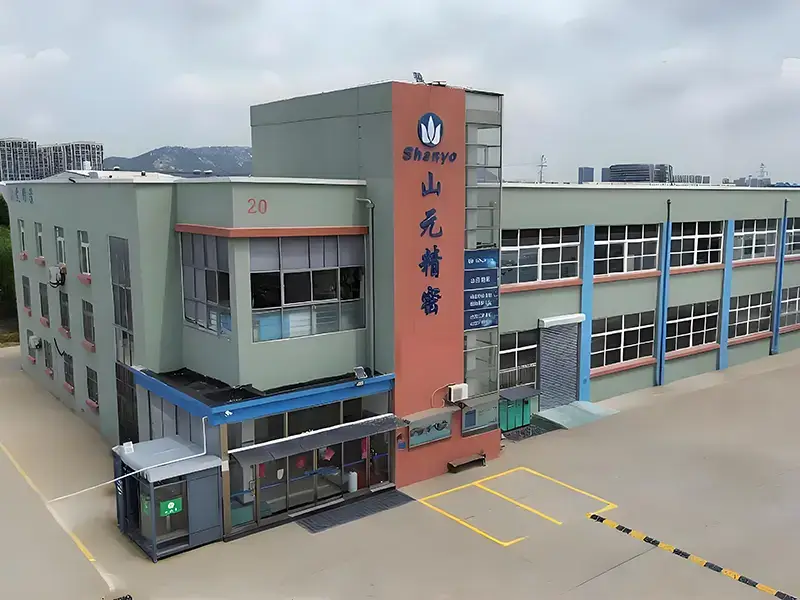
For overseas suppliers where in-person visits are expensive, virtual factory tours have become common. They’re not perfect substitutes, but a dome array manufacturer willing to show their facility live — answering questions in real time — demonstrates transparency that reluctant suppliers won’t match.
During any facility review, pay attention to:
- Tooling condition and maintenance schedules
- Calibration labels on measurement equipment
- Material storage conditions (especially adhesives)
- Work-in-progress organization and labeling
- Employee awareness of quality procedures
If you want to know more about dome array manufacturer, please read Come scegliere il giusto produttore di griglie a cupola.
FAQ
How many actuation cycles should a reliable dome array withstand?
Industry standard expectation is a minimum of one million cycles for standard applications. Many quality dome arrays comfortably exceed this — reaching two million or even five million cycles under controlled testing conditions. However, real-world performance depends heavily on operating environment, actuation force profile, and contact circuit design. A dome array manufacturer should be able to provide specific cycle life data for their products under defined test conditions.
Can you assess dome array manufacturer reliability without visiting their factory?
Yes, though with some limitations. Sample evaluation across multiple orders, review of quality documentation and process capability data, reference checks with existing customers, and virtual facility tours collectively provide a solid reliability picture. Third-party audit reports — if the manufacturer has been audited by recognized OEMs or certification bodies — offer independent validation. Requesting detailed inspection reports with actual measurement data rather than just pass/fail results reveals process control maturity. None of these methods individually replaces an in-person visit, but combined they form a reasonably complete assessment.
What is the most common reliability failure mode in dome arrays?
Force degradation over time is probably the most frequently reported issue. Domes gradually lose peak actuation force and tactile snap ratio, making buttons feel progressively softer and less crisp. This typically results from material fatigue, inadequate plating, or dome geometry that wasn’t optimized for long-term cycling. Adhesive failure ranks as another common mode — domes shifting out of position because the carrier adhesive weakens under thermal cycling or humidity exposure.