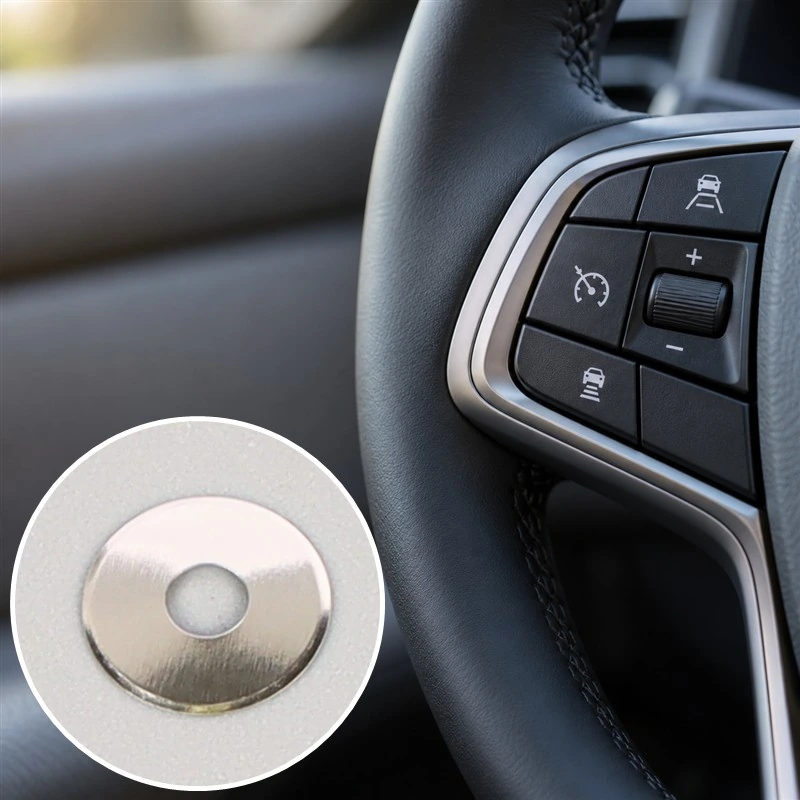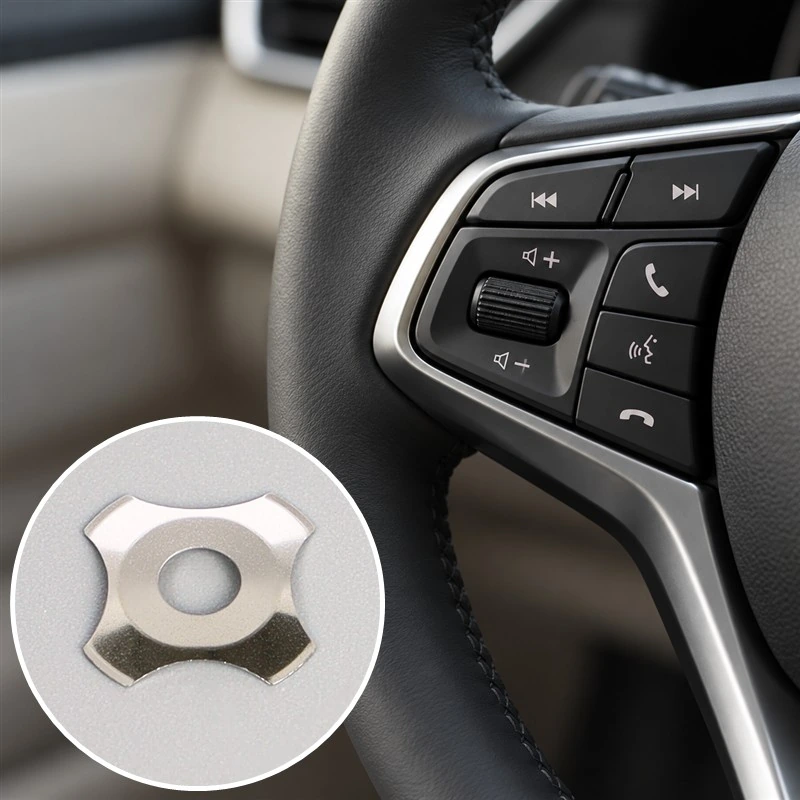
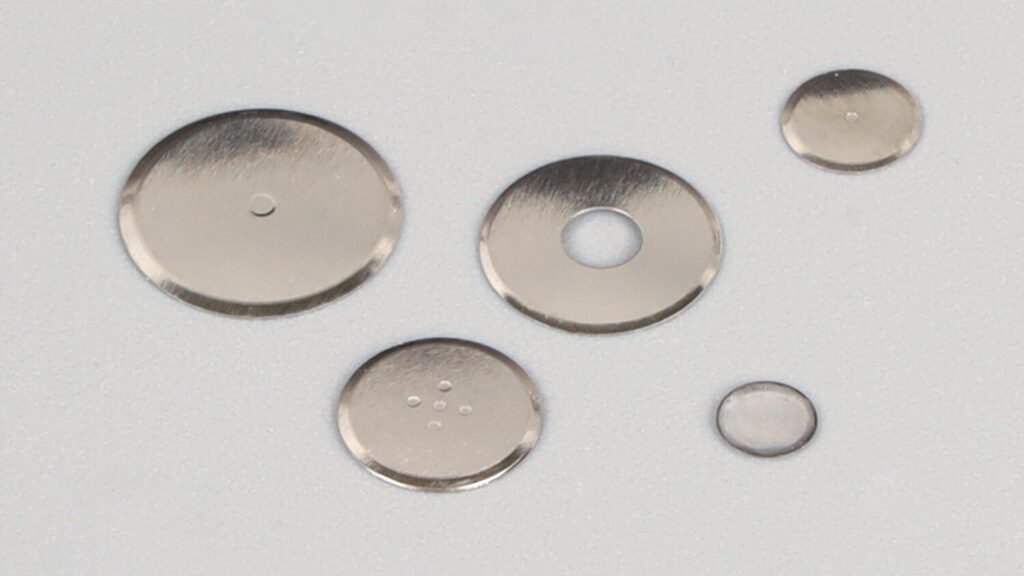
A tailgate button is placed at the part of the car most exposed to water and road spray. Road spray thrown back by the rear tyres hits it, it holds a puddle when the car is parked, and it takes a direct hit whenever someone washes the car at home. Drivers notice the consequences before engineers do: a button that needs three presses, a tailgate that opens on its own in the rain, a handle that feels dead after a cold night. Most of these switches are built around a interruttore a cupola in metallo, a stamped steel dome that collapses onto a contact pad and gives a click the driver can feel through gloves.
A tailgate switch stays reliable in wet environments when the whole assembly is designed as a sealed system rather than as a switch with a rubber cover on top. That means three sealing layers, a welded housing instead of snap fits, a vent that allows pressure to equalize without passing water, metal dome materials chosen to resist humid and salty conditions, and tests that check function after exposure rather than before it. No single IP rating does that work alone.
This article explains where the water comes from, how it gets in, and what each layer of the design has to do about it.
What does a tailgate release switch have to survive?
It has to withstand more water than any other exterior control on the car, and it still has to remain operable by hand while doing so. Rain, road spray, snowmelt, de-icing salt, mud, UV and a pressure washer all reach the same small part, often in the same week.
The exposure is not a single event. A car parked outside goes through a wet-and-dry cycle most days: condensation overnight, a shower at lunch, then sun on a dark handle.
The exposure list behind the button
| Exposure | What it attacks | How the failure shows up |
|---|---|---|
| Rain and standing water | Button gap, housing joint | Intermittent contact, one press in three works |
| Road spray at speed | Seal lip, cable exit | Slow ingress, corrosion over months |
| Pressure washing | Seal edges, vent membrane | Sudden ingress, dead button after a wash |
| De-icing salt and brine | Plating, contacts, connector pins | Rising resistance, phantom release signals |
| Snow, ice, freeze-thaw | Button travel, drain channels | Stuck button, no click |
| UV and heat | Elastomer, adhesive | Seal takes a set, metal dome lifts off its tape |
The mounting position accounts for about half the risk. A switch in the tailgate handle sits under the grip, so water runs down the handle and stops where the harness enters the panel. A drain slot in that location does more than an extra seal on a part that sits in a puddle.
How does water actually get inside a switch?
Water rarely enters through a crack. It enters through gaps that look sealed, creeps along surfaces by capillary action, and gets pumped past lip seals by pressure changes. Most field failures are not full of water. They contain a thin film of moisture that increases contact resistance or leaks just enough current to wake the body control module.
The slow version still clicks, so drivers learn to press twice. The sudden version kills the part in one wash.
The five ingress paths
- The gap between button and housing, the widest opening and the one users press with wet hands.
- The joint between the upper and lower housing, where snap fits leave a capillary path.
- The cable exit, where water runs down the wire and wicks upward into the cavity.
- The connector interface, where an unsealed plug opens the dry side of the switch.
- The vent, if the cavity is vented with an open hole instead of a membrane.
If four of these five paths are sealed, the switch can pass a bench test and still fail in service. The cable exit and the housing joint cause more returns than the button, because engineers give the button attention during design and give the other two less attention.
Condensation and ice
A sealed cavity is not a dry cavity. Air inside carries moisture, and the housing expands and contracts with temperature, pulling at the seals on a cold night and pushing out on a hot afternoon. This breathing motion exchanges air through the same gaps that water uses, and the moisture condenses on the coldest surface inside, usually the metal dome or the pad beneath it.
Below zero, water that entered the day before freezes in the gap and the button stops travelling. The workshop replaces an electrical part even though the cause was a millimetre of ice. The fix is to separate the force path from the wet zone: if the outer wall freezes but the centre of the button is a rubber diaphragm that can still deform, the press still reaches the metal dome and the signal is still sent.
How do you make a tailgate switch waterproof?
You seal it in three layers, weld the housing shut, pot the base, and vent the cavity through a membrane that passes air but not water. Each layer closes a different path, and the assembly is only as weather-resistant as its weakest layer.
Redundancy also provides tolerance: the outer seal can wear or take a set without the part failing that day.
A three layer seal, not one gasket
The outer layer is the button, moulded in silicone or a thermoplastic elastomer and compressed into the housing with an interference fit. It takes the wear, the UV and the direct jet.
The middle layer wraps the metal dome and contact subassembly in a rubber sleeve or sealed membrane, so anything that gets past the button lands there instead of on the contacts. The inner layer is potting compound at the base, where the housing meets the connector block and the cable leaves.
Welding, cable exit and vent
Ultrasonic or laser welding closes the housing joint with a continuous bond and no capillary path, whereas snap fits are cheaper and they leak. At the cable exit, a moulded collar plus a potting bead works better than a single grommet, and the cable should leave downward so water runs off instead of sitting at the entry. A sealed switch with an unsealed plug is an unsealed switch.
An unvented cavity behaves like a bellows, loading the seals with every temperature change. An expanded PTFE membrane passes air but not liquid water, and internal channels can route the vent behind the housing where a jet never hits it.
How to waterproof the button itself
The button is what users touch, so engineers design it for feel first and sealing second. That order causes most of the problems.
Geometry comes first. A face that is domed outward and sloped sheds water; a flat face with a raised rim holds it. A recess around the button collects grit, and grit under a lip seal wears the seal every time the button moves. An overmoulded silicone button bonded to the housing removes the perimeter gap, and a lip or wiper geometry keeps contact pressure as the button travels.
Then the force budget. Sealing adds friction, and friction rises when the seal is cold. The metal dome has to collapse through that resistance with a gloved hand and ice on the face, so choosing a lighter metal dome is usually easier than making the button bigger.
What does the metal dome contribute to wet reliability?
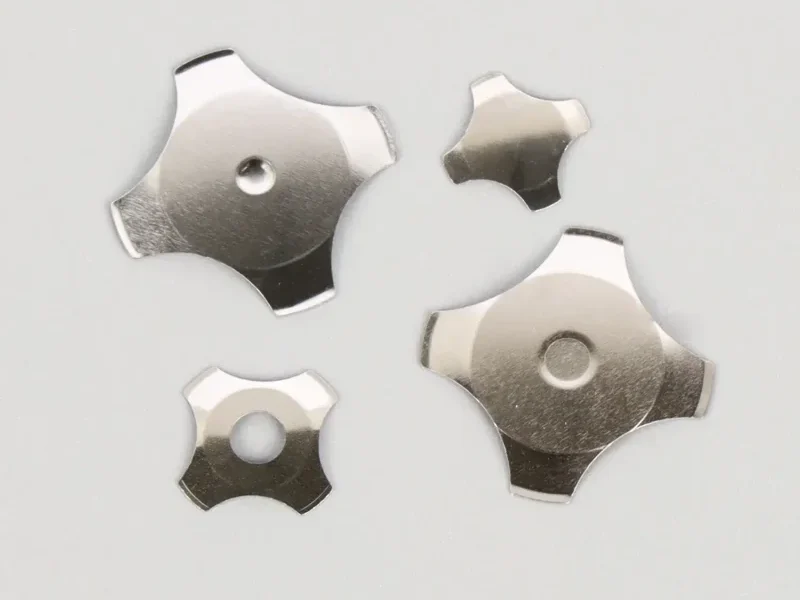
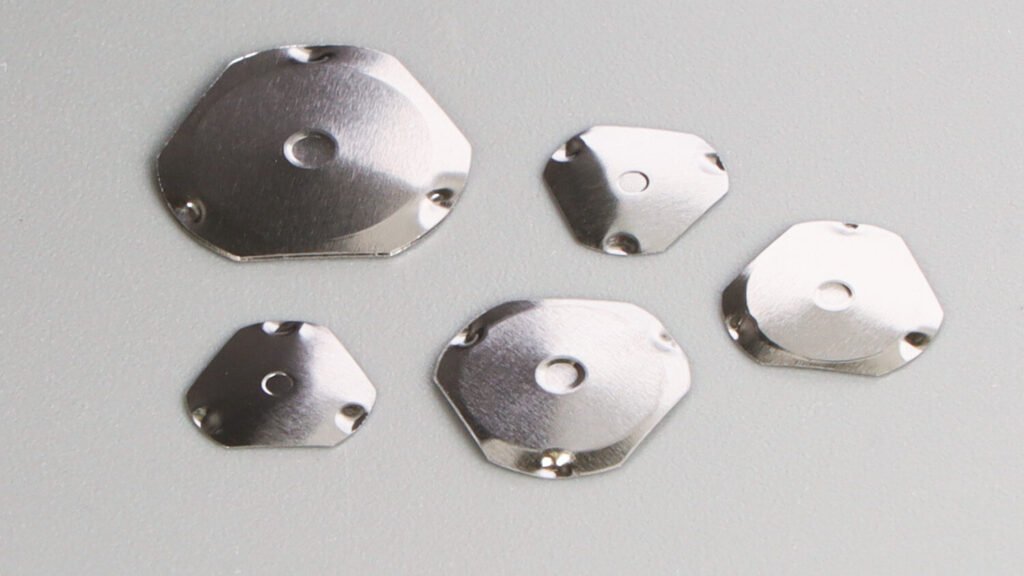
The metal dome determines whether the switch produces a clean signal and whether it still feels like a switch once it is sealed. A metal dome that corrodes, shifts on its tape or needs more force than the sealed button can deliver will fail long before the housing leaks.
The metal dome serves as both the contact and the return spring, so a change to its surface, seating or force shows up as a signal fault or feel fault.
Material and plating under humidity and salt
| Dome construction | Works well for | Watch for |
|---|---|---|
| Stainless steel, unplated | Cost-driven parts in dry interiors | Surface film in humid air raises resistance |
| Nickel plated steel | Exterior use, moderate salt exposure | Oxide build-up at low signal currents |
| Gold over nickel | Low-current signals, long idle periods | Thin gold wears through at high cycle counts |
| Gold with selective tin plating | Solderable domes for automatic assembly | Two plating processes demand tight control |
The choice is not about which plating is best in general; it is about the current the circuit switches. A metal dome carrying microamps needs a surface that stays clean while idle, which points toward gold; a metal dome closing a heavier load tolerates a simpler finish.
Keeping the dome in place, and keeping the feel
A metal dome sits on adhesive tape in a dome array, held by a spacer and pre-loaded by the housing. Thermal cycling expands the housing more than the steel; adhesive creep lets the metal dome shift a fraction of a millimetre; and a tolerance stack that closes the gap between button and metal dome removes the free travel that the snap action needs. A metal dome that has moved still clicks, but not at the force specified in the drawing.
Sealing changes feel too. A rubber layer, a lip seal and a vent add resistance and soften the snap, so the metal dome needs a higher click ratio and travel short enough that the seal does not absorb the stroke. Test the finished assembly with a gloved hand and at cold temperature, not just a bare metal dome on a bench.
Which tests actually prove a switch will survive?
Only a sequence that exposes the part, lets it sit and then checks the function proves anything. A switch that passes one IP test on a bench and is never re-tested after thermal cycling, salt fog or freeze-thaw has demonstrated very little about how it will perform in its fourth winter.
The IP code is defined in IEC 60529, and the IEC publishes a plain-language summary of what each digit covers. Most arguments about “waterproof” come down to which digit was actually tested.
Immersion and jet are different tests
IPX7 means one metre of fresh water for thirty minutes. It is a fair test for a part that might sit in a puddle, but it says nothing about a pressure washer.
The road-vehicle high-pressure test is IP6K9K under ISO 20653:2023, using water at 80°C at 8 to 10 MPa, sprayed at set angles for 30 seconds per position. That is closer to a car wash than a puddle is.
Climatic, corrosion and freeze thaw
ISO 16750-4 covers climatic loads, ASTM B117 and ISO 9227 cover neutral salt spray, and a soak at 85°C and 85 % relative humidity accelerates the hydrolysis that attacks adhesives. Freeze-thaw deserves its own step: fill the gap, freeze, thaw, operate. A part can pass every dry test and fail this one on the first cycle.
Test sequence and function after exposure
| Test | Standard | What it proves | What it doesn’t |
|---|---|---|---|
| Immersion, 1 m / 30 min | IEC 60529 IPX7 | Housing survives standing water | Resistance to a directed jet |
| Hot high-pressure jet | ISO 20653 IP6K9K | Seals survive wash-down pressure | Long-term corrosion |
| Neutral salt spray | ASTM B117 / ISO 9227 | Plating resists chloride attack | Performance after vibration |
| Damp heat, 85/85 | IEC 60068-2-78 | Seals and adhesives survive humidity | Freeze-thaw damage |
| Freeze-thaw with water present | Customer specification | Button travels after icing | Electrical drift over years |
A report that lists passes without the sequence, the recovery time and the function check afterwards is a list of experiments, not evidence.
What should a buyer ask before nominating a dome supplier?
Ask for the manufacturing system and the process evidence behind the part, not a datasheet and a price. A metal dome that meets the drawing but comes off an uncontrolled plating line will fail in the field, and the failure falls on your programme rather than the supplier’s.
Five questions cover most of the risk:
- Which quality system is the site certified to?
- How are metal dome force and position verified in production?
- Which plating processes run in-house, and how is bath chemistry controlled?
- What does the validation report show after exposure, not just before?
- How are changes notified, and what triggers revalidation?
Shanyo holds IATF 16949:2016, along with ISO 14001 and ISO 45001. That matters because sealing and plating are process-driven: a switch design is only as repeatable as the line that builds it.
Valeo opened an RFQ for a solderable metal dome with gold plating and selective tin plating by asking first about IATF 16949. Shanyo submitted audit documentation and hosted a three-day pre-audit from 9 to 11 September covering cleanliness, tooling, stamping, testing and electroplating. The feedback cited the certifications, stamping experience with material as thin as 0.02 mm, and a willingness to invest. The account is in the Valeo metal dome case study.
FAQ
Can a sealed tailgate switch still need a drain path outside the seal?
Yes. The seal keeps water out of the cavity, but it does not keep water off the part. Water sitting against the lip seal degrades the adhesive and freezes in winter, so drain slots and a shield formed by the garnish still matter.
Why does a tailgate button sometimes click without releasing the latch?
A click means the metal dome collapsed. Release depends on the signal reaching the body control module and the latch responding. A moisture film on the contacts can raise resistance enough to weaken that signal, and a harness that has work-hardened at the handle pivot does the same.
Can a metal dome switch still work through a thick rubber button or gloves?
Yes, if the force budget is designed for it. Metal dome force, seal friction and rubber stiffness add up, and the total has to stay within what a thumb can deliver in the cold. A lighter metal dome with a higher click ratio usually works better than a stiffer metal dome pressed through a thicker button.