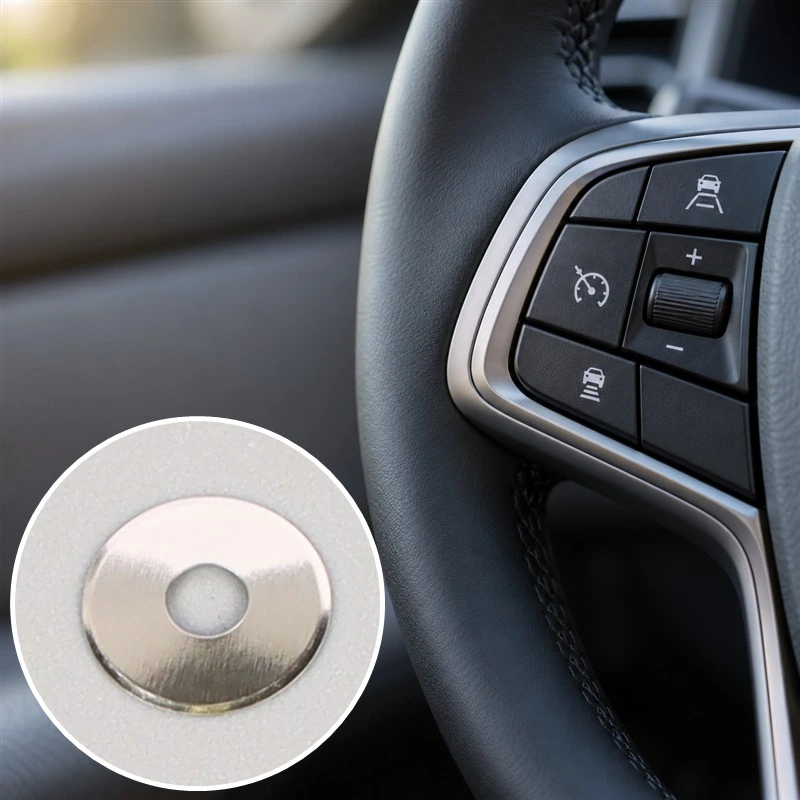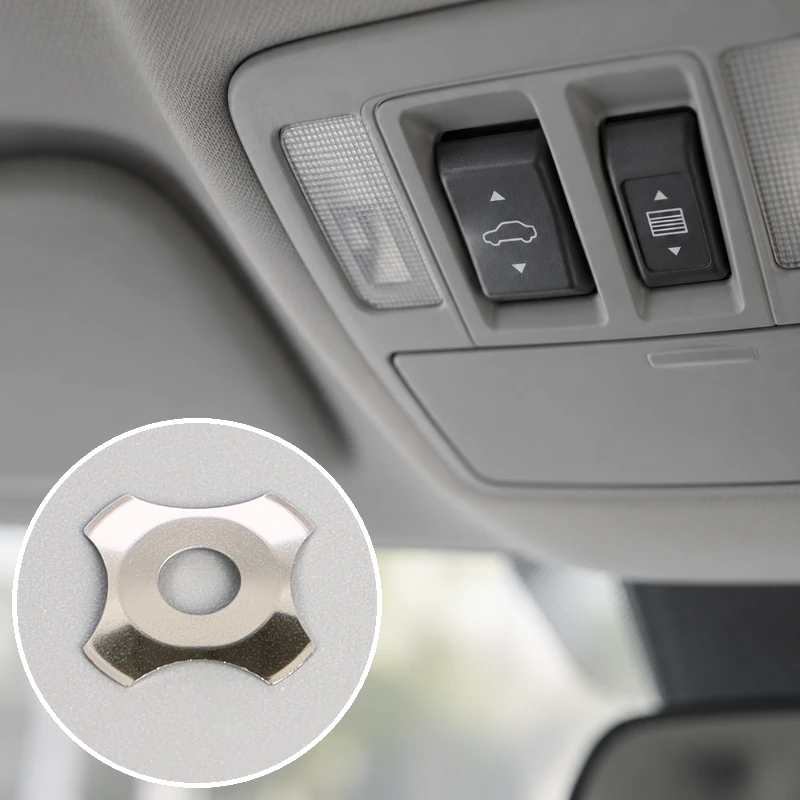
A vehicle cabin is a hostile place for a switch. Dashboard surfaces can climb past 85°C after a day in the sun and then drop below freezing overnight in the winter. Add years of vibration, spilled coffee, and cabin dust, and most switch technologies start to drift, stick, or die early. Yet the small cupola metallica sitting under most automotive buttons keeps clicking, year after year, without complaint.
Automotive-grade metal domes survive extreme temperatures and harsh environments because they are formed from stainless spring steel that holds its snap force from -40°C to +85°C and beyond, mounted in sealed stacks that block moisture and dust, and validated through thermal cycling, humidity, and vibration testing before they ever reach a vehicle.
Here is how that works, broken down by the four stresses every vehicle switch has to beat.
Why automotive environments are so hard on switches
Cars combine four stresses that kill ordinary switches: wide temperature swings, constant vibration, humidity and spills, and airborne dust. Each one attacks a different part of the switch.
Consumer electronics live gentle lives. A TV remote sits on a couch at room temperature. A car button does not. It bakes, freezes, shakes, and gets pressed with wet or gloved hands for fifteen years or more. The table below sums up what each stress does to a switch that was not designed for it.
| Stress | Typical condition | What it does to a weak switch |
|---|---|---|
| Temperature | -40°C overnight to +85°C cabin heat | Softens polymers, shifts actuation force, fatigues springs |
| Vibration | Continuous engine and road input | Loosens contacts, causes false triggers |
| Humidity and spills | Condensation, drinks, wet hands | Corrodes contacts and raises contact resistance |
| Dust and debris | Years of accumulated cabin dust | Jams mechanisms, contaminates contact surfaces |
A switch that passes on the lab bench can still fail two winters later. That is why material choice matters more than anything else.
How do metal domes survive extreme temperatures?
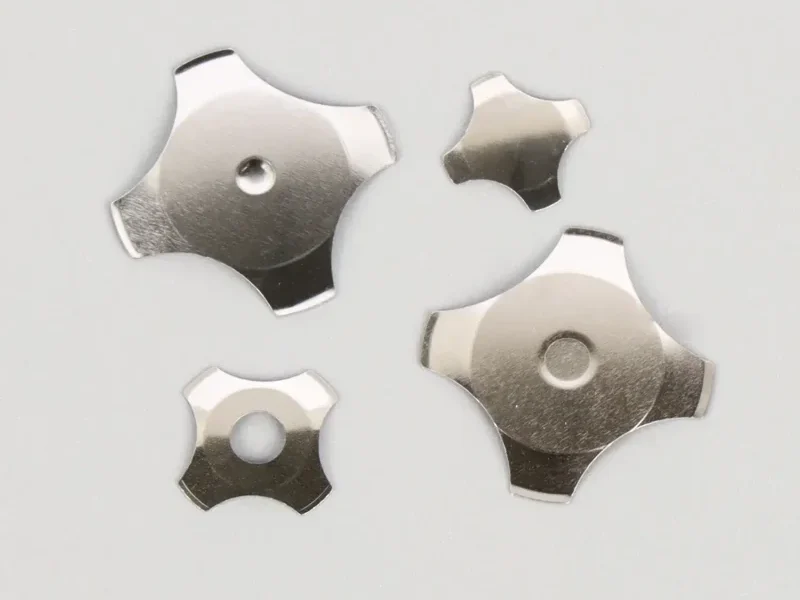
A metal dome switch handles extreme temperatures because stainless steel barely changes its spring behavior between -40°C and +85°C. The dome snaps, inverts, and returns with nearly the same force whether the car is parked in a cold snap or a heat wave.
Rubber and polymer domes tell a different story. Elastomers soften in heat and stiffen in cold, so the button feel drifts with the weather. A stainless dome has no such problem. Its force curve stays flat across the full automotive range, and short excursions beyond +85°C, up to +125°C in some designs, do not permanently deform it. Thermal expansion over this range is tiny relative to the dome geometry, so the snap point stays put.
Stainless steel grades and plating
The standard materials are SUS301 and SUS304 stainless steel, chosen for spring properties and corrosion resistance. Contact surfaces often get nickel or gold plating, which keeps contact resistance low and stable, typically under one ohm, even after long humidity exposure. The combination of a stable spring material and a protected contact surface is what keeps both the feel and the electrical performance consistent over the vehicle’s life.
How do metal domes handle vibration, moisture, and dust?
A metal dome resists vibration because it weighs almost nothing and sits firmly bonded to its circuit. It resists moisture and dust because the switch stack around it is sealed.
A dome is a fraction of a gram. Its inertia is too small for road vibration to trigger it, and adhesive carriers or dome arrays hold it in exact position so vibration cannot walk it out of alignment. For moisture and dust, the dome itself is only part of the answer. The membrane or overlay stack above it does the sealing, and well-built assemblies reach IP65-level ingress protection. This is the kind of performance validated against ISO 16750, the international standard covering temperature, humidity, and vibration testing for electrical equipment in road vehicles.
How long do automotive-grade metal domes last?
Automotive-grade metal domes are typically rated for one million actuations, and premium designs exceed five million. In practice, the dome usually outlives the button around it.
Stainless steel has excellent fatigue resistance, so the snap feel at press number 900,000 is close to press number one. Most failures come from contamination or mechanical overload, not from the dome wearing out. The comparison with rubber domes shows why automotive designers keep choosing metal.
| Proprietà | Cupola in metallo | Rubber dome |
|---|---|---|
| Durata del ciclo | 1M–5M+ actuations | 100K–1M actuations |
| Intervallo di temperatura | -40°C to +85°C, short-term higher | Narrower, softens in heat |
| Tactile feel | Crisp, distinct snap | Soft, muted |
| Travel and profile | 0.2–0.5 mm travel, ultra-thin | Thicker structure |
| Contact stability | Low, stable resistance | Degrades over time |
Where are metal domes used inside a vehicle?
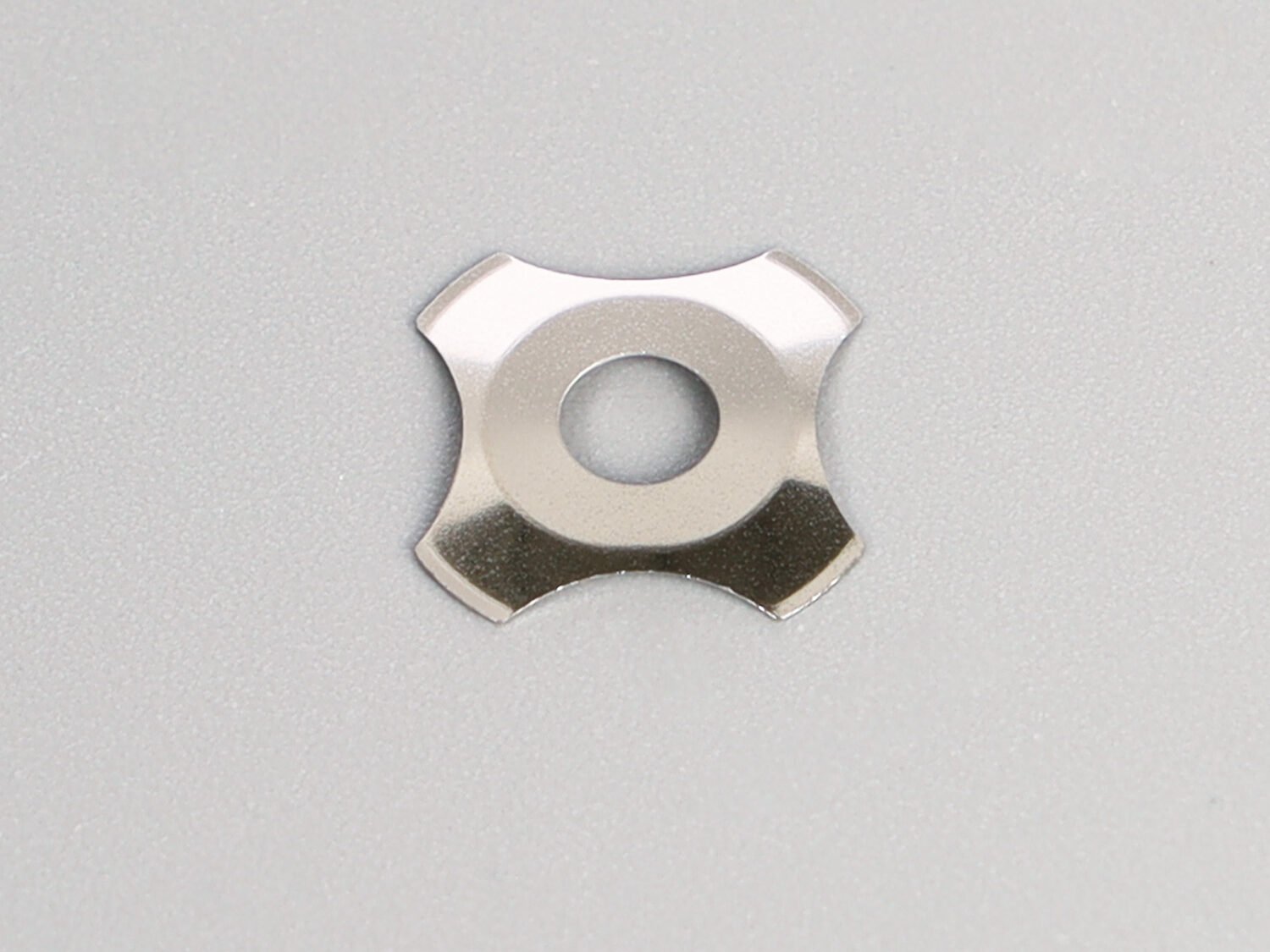
You will find metal dome switches in nearly every physical control in the cabin, anywhere the driver needs a button that feels the same every time.
Common positions include:
- Steering wheel controls for audio, cruise, and driver assistance
- Center console and infotainment buttons
- Climate control panels
- Window, mirror, and seat switches
- Key fobs and keyless entry pads
- Overhead console and lighting controls
These are exactly the kind of automotive applications where a missed or mushy press is more than an annoyance. A cruise control toggle that does not register, or registers twice, is a safety issue. The crisp snap of a metal dome confirms each input without the driver looking away from the road, which is why the technology keeps its place even as touchscreens spread.
FAQ
What actuation force is used for car interior switches?
Most interior controls use 100gf to 300gf. Light-touch infotainment buttons sit around 100–150 gf, climate controls around 160–220 gf, and safety-related switches 230–300 gf, where a firmer press helps prevent accidental activation.
Can metal dome switches work in engine bays or exterior locations?
Yes, with the right build. Designs for under-hood or exterior use pair high-temperature dome variants with gold-plated contacts and fully sealed membrane stacks. The assembly should be validated against the relevant ISO 16750 environmental class for its mounting location.
Do metal domes lose their tactile feel over time?
Not within their rated life. The snap ratio drifts very little across a million or more actuations because stainless spring steel resists fatigue. When feel does change early, the cause is usually contamination under the dome or an impact that deformed it, not normal wear.