Dans n'importe quelle usine, il est difficile de ne pas remarquer les mauvais traitements que subissent les panneaux de commande. Poussière provenant du malaxage du ciment. Éclaboussures de liquide de refroidissement sur les machines à commande numérique. Les tuyaux de lavage éliminent les résidus. Des interrupteurs ordinaires ? Ils tombent en panne assez rapidement dans ces conditions. C'est là que les interrupteurs à membrane avec un indice de protection IP67. Et honnêtement, une fois que l'on sait pourquoi les ingénieurs les choisissent, c'est tout à fait logique.
Il ne s'agit pas d'avoir l'interface la plus tape-à-l'œil. Il s'agit d'assurer le fonctionnement d'une chaîne de production lorsque quelqu'un pulvérise accidentellement de l'eau directement sur le panneau. Qu'est-ce qui motive cette préférence ? Quelques raisons pratiques, dont la plupart se résument à l'étanchéité et à la survie.
Pourquoi l'indice IP67 est-il si important pour les contrôles industriels ?
IP67 n'est pas un simple chiffre aléatoire. Le “6” signifie que l'appareil est totalement étanche à la poussière - aucune particule ne pénètre à l'intérieur. Le “7” signifie que le boîtier peut supporter une immersion dans un mètre d'eau pendant 30 minutes. Pour les systèmes de contrôle industriels, cela couvre un grand nombre d'accidents réels.
Quelques risques typiques auxquels les commutateurs à membrane IP67 sont confrontés quotidiennement :
Lavages à haute pression (fréquents dans l'industrie alimentaire)
Copeaux de métal ou poussière de charbon (qui peuvent court-circuiter les contacts exposés)
Projections inattendues du tuyau d'arrosage ou gouttes de condensation
Immersion temporaire si un panneau est monté bas et qu'un plancher est inondé
Ce que l'on oublie souvent, c'est que de nombreux panneaux “résistants à l'eau” ne gèrent que les éclaboussures. La norme IP67 va plus loin. On peut remarquer que certains fournisseurs d'équipements sur-spécifient l'IP67 même si l'IP65 fonctionnerait techniquement - parce que la différence de coût n'est pas énorme, mais la tranquillité d'esprit, elle, l'est. Les acheteurs industriels ont donc tendance à demander IP67 par défaut.
Comment les interrupteurs à membrane gèrent-ils différemment les environnements difficiles ?
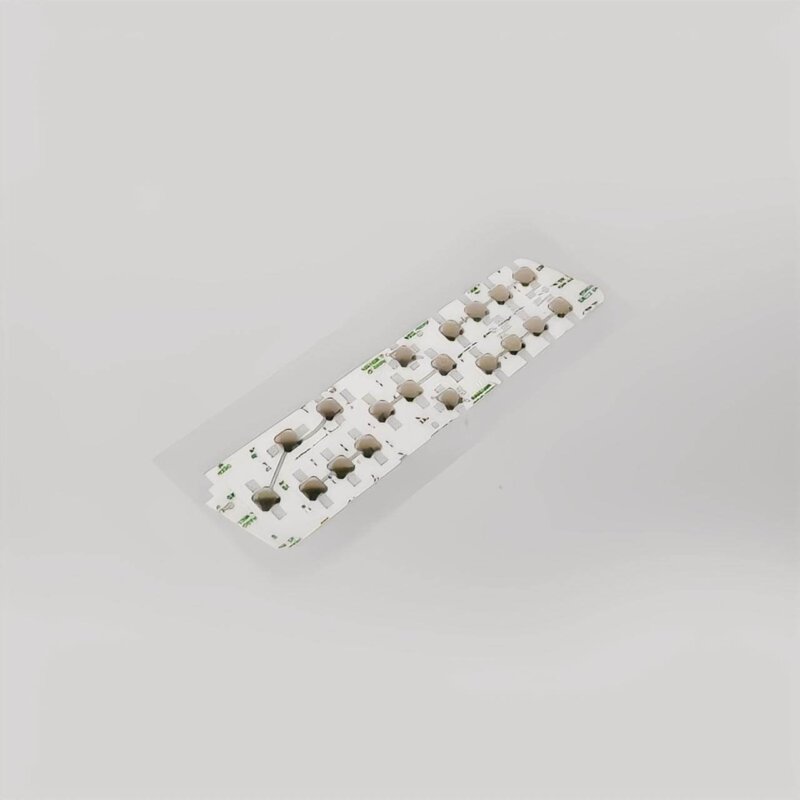
Contrairement aux boutons-poussoirs mécaniques qui présentent des espaces autour de l'actionneur, les commutateurs à membrane sont construits comme des assemblages en couches. La couche graphique supérieure est scellée contre la couche d'espacement, et l'espacement comporte de l'adhésif autour de chaque emplacement du commutateur. Cette construction empêche naturellement les contaminants d'entrer. Mais tous les interrupteurs à membrane ne sont pas identiques : l'indice de protection IP67 exige des choix de conception spécifiques.
Voici une comparaison rapide que l'on retrouve dans de nombreux guides de sélection des ingénieurs :
| Fonctionnalité | Interrupteur à membrane standard | Interrupteur à membrane IP67 |
|---|---|---|
| Protection contre la poussière | Modéré (IP5x typique) | Complet (IP6x) |
| Résistance à l'eau | Éclaboussures seulement | Immersion jusqu'à 1m |
| Méthode de scellement de la queue | Joint d'étanchéité de base | Queue encapsulée ou avec joint d'étanchéité |
| Adhésif dorsal typique | Ruban adhésif fin 3M | Joint épais en mousse ou en silicone |
| Durée de vie dans les zones humides | 6-12 mois | 3-5 ans (ou plus) |
Collage des couches et choix des matériaux
Autre observation : les matériaux ont plus d'importance qu'on ne le pense. Des supports en polyester (PET) avec un adhésif sensible à la pression ? C'est parfait pour les laboratoires secs. Mais pour une utilisation industrielle, un polycarbonate plus épais ou un PET traité chimiquement résiste aux produits de nettoyage. Et l'adhésif du dôme à l'intérieur ? Il doit résister à l'humidité sans perdre son pouvoir adhésif. Certains produits moins chers interrupteurs à membrane dans l'industrie se délaminent après quelques cycles thermiques. Ceux qui sont conformes à la norme IP67 utilisent des adhésifs spéciaux qui durcissent différemment.
Avantages concrets des interrupteurs à membrane IP67
Les systèmes de contrôle industriel ne servent pas seulement à survivre aux abus. Il s'agit aussi de réduire les temps d'arrêt. D'après les registres de maintenance, les avantages s'accumulent :
Moins de remplacements d'urgence - Il n'est pas nécessaire d'arrêter une ligne parce qu'un panneau de commutation a été mouillé.
Nettoyage plus facile - Les opérateurs peuvent vaporiser le panneau avec un désinfectant ou un dégraissant directement.
Réduction des stocks de pièces de rechange - Un panneau IP67 remplace plusieurs panneaux non étanches au fil du temps.
Meilleure résistance aux variations de température - La construction étanche ralentit également la condensation à l'intérieur.
On pourrait faire valoir que les interrupteurs mécaniques munis de capuchons en caoutchouc peuvent également atteindre l'indice IP67. C'est vrai. Mais ces capuchons se déchirent, se fragilisent ou emprisonnent des débris. Les interrupteurs à membrane n'ont pas de pièces mobiles exposées à l'extérieur. Le joint ne s'use donc pas sous l'effet de l'actionnement. C'est un avantage subtil qui devient évident après un an d'utilisation quotidienne.
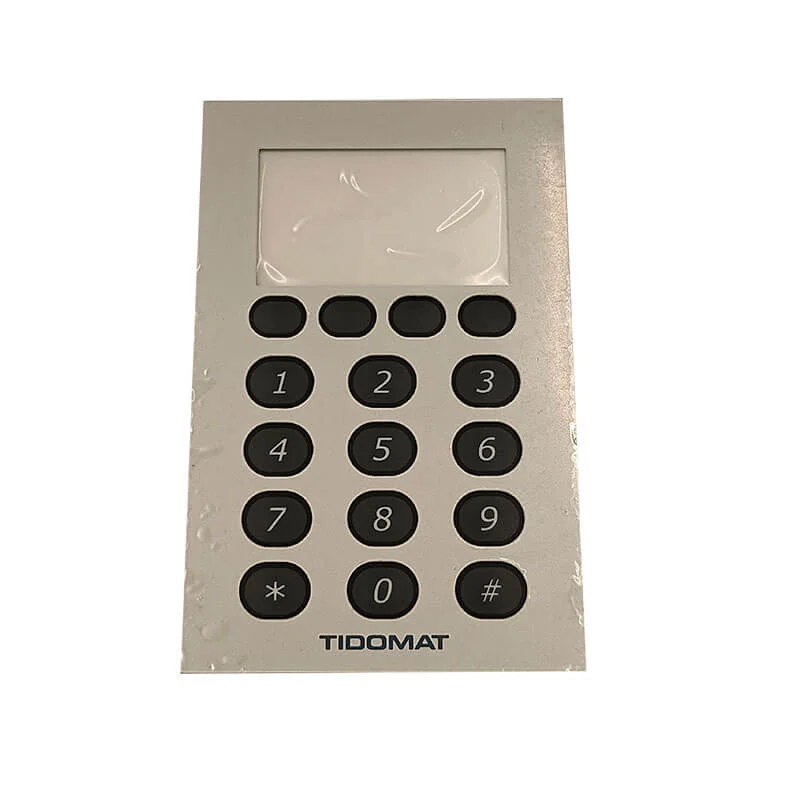
Considérations relatives au nettoyage et à l'entretien
Dans les industries alimentaires ou pharmaceutiques, les lavages quotidiens sont obligatoires. Les commutateurs à membrane IP67 peuvent supporter des nettoyants caustiques doux et le nettoyage à la vapeur (dans les limites de température). Mais une note d'expérience : même l'indice IP67 ne signifie pas que vous pouvez immerger le connecteur arrière. L'indice s'applique à l'ensemble de l'interrupteur lui-même. L'orientation du montage et l'acheminement des câbles restent donc importants. Certains ingénieurs oublient cette partie.
Idées reçues sur les interrupteurs à membrane dans l'industrie
On croit souvent que les commutateurs à membrane sont bon marché ou qu'ils s'usent rapidement. C'est peut-être vrai pour les appareils grand public bas de gamme. Mais les versions industrielles IP67 ? Elles utilisent des dômes métalliques (souvent plaqués nickel) avec un retour tactile évalué à 1-5 millions de cycles. La sensation est nette, pas molle.
Autre idée fausse : IP67 signifie que vous pouvez ignorer totalement l'humidité. Ce n'est pas tout à fait le cas. Si l'intérieur de l'interrupteur reste sec, la surface de recouvrement peut toujours développer des moisissures si elle reste humide pendant des semaines. Un nettoyage régulier est donc nécessaire. Mais il s'agit plus d'une question d'hygiène que de défaillance de l'interrupteur.
FAQ
Les interrupteurs à membrane IP67 peuvent-ils être utilisés à l'extérieur en plein soleil ?
Oui, mais avec une protection supplémentaire contre les UV. Les revêtements standard en polyester se dégradent en cas d'exposition prolongée aux UV. Pour les commandes industrielles extérieures (comme les panneaux des plates-formes pétrolières ou les régulateurs des fermes solaires), les fabricants proposent des interrupteurs à membrane en polycarbonate stabilisé aux UV ou spécialement revêtu. L'indice IP67 reste valable, mais le matériau doit être spécifié correctement.
Comment nettoyer les commutateurs à membrane IP67 sans les endommager ?
Du savon doux et de l'eau avec un chiffon doux conviennent dans la plupart des cas. Pour les graisses lourdes ou les produits chimiques, l'alcool isopropylique (70% ou moins) est généralement sans danger, mais il faut d'abord faire un essai sur une petite surface. Évitez les tampons abrasifs ou la vapeur à haute pression dirigée vers le joint d'étanchéité arrière. L'essentiel est d'essuyer, et non de tremper les bords. Même avec l'indice IP67, une accumulation prolongée d'eau à la sortie du câble n'est pas idéale.
Quelle est la différence de coût typique entre les commutateurs à membrane IP54 et IP67 ?
Sur la base des prix actuels des fournisseurs, les commutateurs à membrane IP67 coûtent environ 20-40% de plus que les versions IP54. Ce surcoût est dû à l'utilisation de meilleurs adhésifs, à l'étanchéité de la queue et aux tests (chaque unité peut être échantillonnée pour l'immersion dans l'eau). Pour un seul panneau de commande, la différence de prix est souvent minime, de l'ordre de $15 à $30. La plupart des acheteurs industriels considèrent qu'il s'agit d'une assurance bon marché par rapport à un arrêt de production.