Understanding the Dome Switch Keypad
A dome switch keypad is a type of input device that uses small, dome-shaped metal or polyester components beneath each key to register a press. When someone pushes down on a key, the dome collapses and makes contact with a circuit board underneath, completing an electrical connection. Release the key, and the dome snaps back to its original shape — that satisfying little click most people associate with a responsive button.
These keypads have been around for decades, honestly, and they remain surprisingly relevant. You’ll find them embedded in everything from microwave ovens to medical devices. The reason is pretty straightforward: they strike a solid balance between cost, tactile feedback, and durability. Not every application needs a mechanical keyboard or a capacitive touchscreen, and that’s exactly where this technology fills the gap.
The dome switch keypad design tends to be thin and compact, which makes it a favorite among product designers working with limited space. There’s something practical about a component that does its job reliably without adding bulk or complexity.
How Does a Dome Switch Keypad Work?
The Basic Mechanism
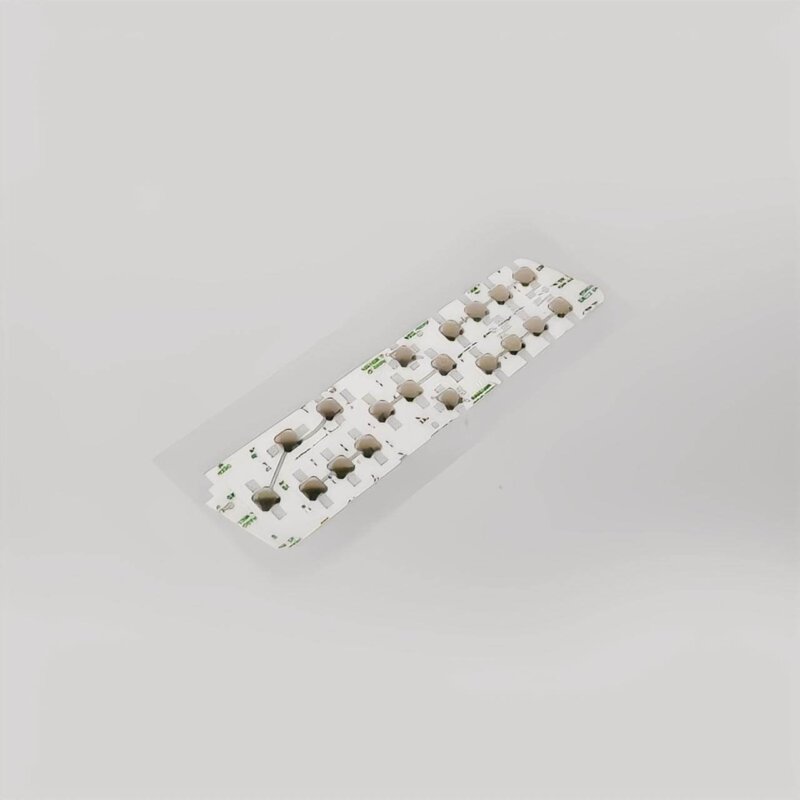
Each key position has a small dome sitting on top of a printed circuit board (PCB) or a flex circuit. The dome acts as both the spring mechanism and the electrical contact. Here’s the general sequence:
The user presses a key on the overlay surface.
Downward force causes the dome to collapse or buckle.
The underside of the dome touches the contact pad on the circuit board.
An electrical circuit is completed, sending a signal to the device’s processor.
The user releases the key, and the dome returns to its resting position.
That snap-back action is what gives these keypads their characteristic tactile response. It’s subtle but noticeable — enough to let the user know the press was registered without needing any visual confirmation.
Types of Domes Used
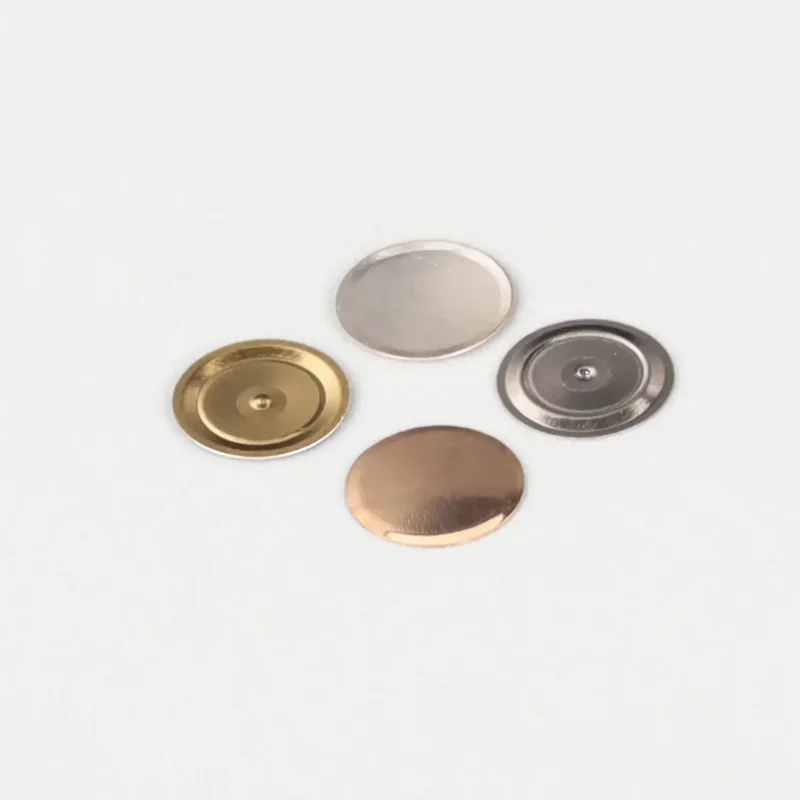
Not all domes are created equal. The two main varieties include:
Dômes métalliques – Usually made from stainless steel, these offer a crisper click and more defined tactile feedback. They tend to last longer and are preferred in applications where precision matters.
Poly domes (rubber domes) – Made from silicone or polyester, these are softer, quieter, and generally cheaper to produce. They work well for consumer electronics where a gentler touch is acceptable.
The choice between the two really depends on the intended application, budget constraints, and how much tactile feedback the end user actually needs.
Key Benefits of a Dome Switch Keypad
| Fonctionnalité |
Dome Switch Keypad
|
Membrane Keypad
|
Interrupteur mécanique
|
|---|---|---|---|
|
Retour d'information tactile
|
Moderate to strong
|
Minime
|
Fort
|
|
Coût
|
Low to moderate
|
Faible
|
Haut
|
|
Profile Thickness
|
Thin
|
Très fin
|
Thick
|
|
Durée de vie (cycles)
|
1–5 million
|
1–2 million
|
10-50 millions d'euros
|
|
Noise Level
|
Low to moderate
|
Très faible
|
Haut
|
Some of the standout advantages:
Reliable tactile feedback without excessive noise
Relatively low manufacturing cost compared to full mechanical solutions
Slim profile that fits into compact device housings
Good resistance to dust, moisture, and contamination when sealed properly
Customizable overlay graphics and layouts
It’s worth mentioning that while a dome switch keypad won’t match a mechanical switch in raw durability, it handles millions of actuations just fine for most commercial and industrial purposes. That’s more than enough for the typical product lifecycle.
Dome Switch Keypad Design Considerations
For anyone involved in specifying or designing these keypads, a few factors deserve attention:
Actuation force – How much pressure is needed to collapse the dome? This affects user comfort and fatigue during extended use.
Dome material selection – Metal for sharper feedback, poly for softer feel. The application context should guide this decision.
Sealing and environmental protection – If the keypad will face moisture, chemicals, or dust, proper IP-rated sealing becomes essential.
Matériau de recouvrement – Polycarbonate and polyester are common choices, each with different durability and aesthetic characteristics.
Circuit design – Whether using a rigid PCB or flexible circuit influences the overall thickness and flexibility of the assembly.
Getting these details right from the start can save a lot of headaches during production and field deployment.
FAQ
What is the difference between a dome switch keypad and a membrane keypad?
A membrane keypad relies on two flexible layers pressing together to complete a circuit, usually offering minimal tactile feedback. A dome switch keypad adds a dome component — metal or poly — between those layers, providing a distinct click sensation when pressed. The dome essentially enhances the user experience with better feedback while keeping the overall design relatively thin.
How long does a dome switch keypad typically last?
Most dome switch keypads are rated for somewhere between one million and five million actuations per key, depending on the dome material and construction quality. Metal domes generally sit at the higher end of that range. For the majority of consumer and industrial applications, this lifespan is more than adequate.
Can a dome switch keypad be used in outdoor or harsh environments?
Yes, with appropriate design choices. When paired with sealed overlays and proper gasket materials, a dome switch keypad can handle exposure to moisture, temperature fluctuations, and dust. Many industrial and military-grade keypads use this approach to ensure reliable operation in demanding conditions.