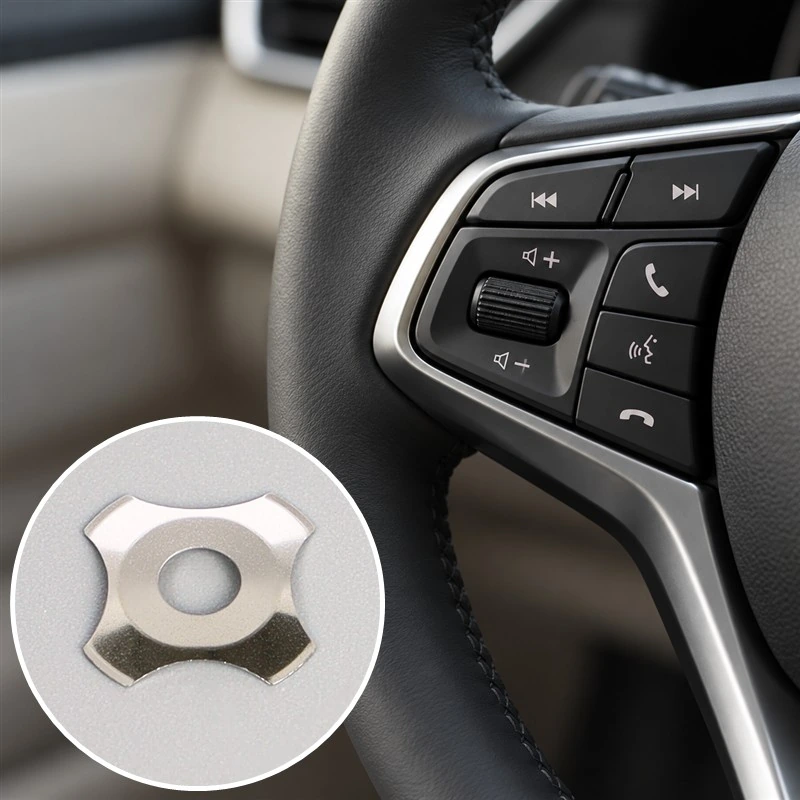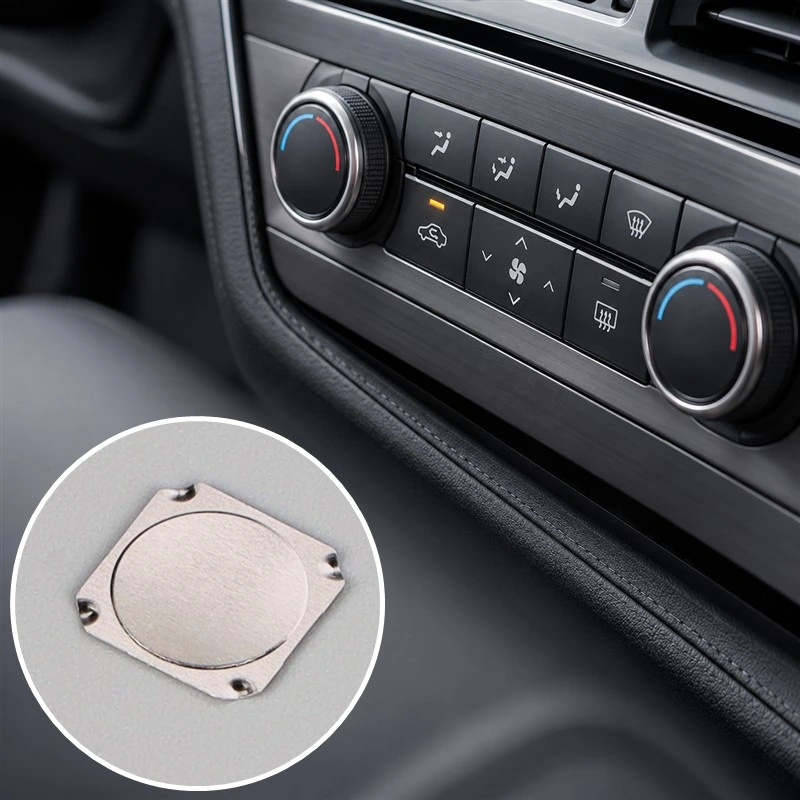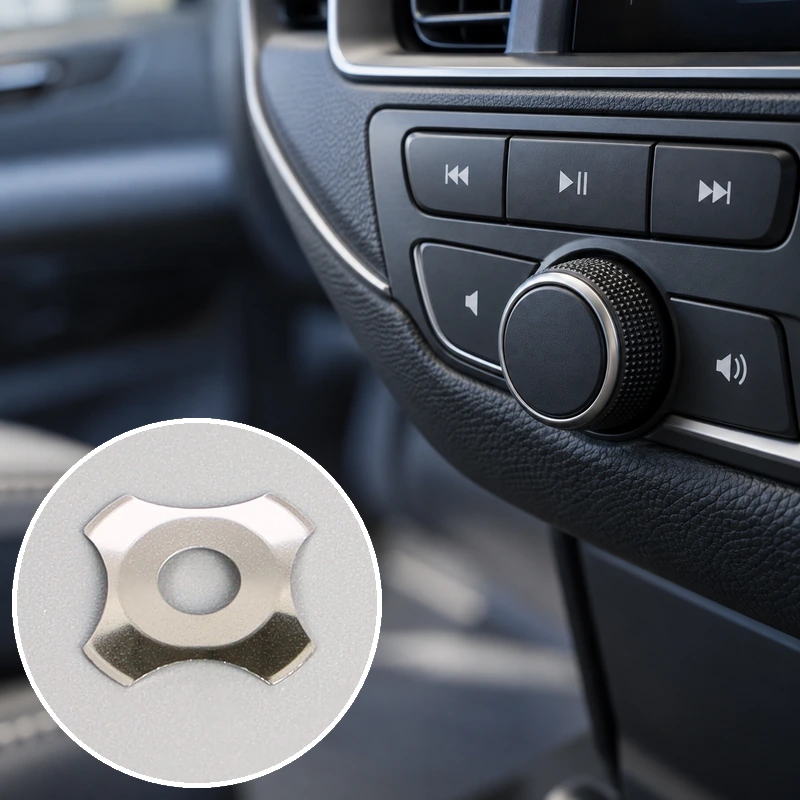
A buyer who searches for a metal dome by shape alone usually ends up reading series names that mean nothing to them. Letters and numbers get swapped around, the same shape appears under three different codes, and the datasheet opens with a table of configurations instead of a part anyone can order. That confusion is expensive on a production run, because picking the wrong leg length or force window means retooling the PCB footprint after the first article.
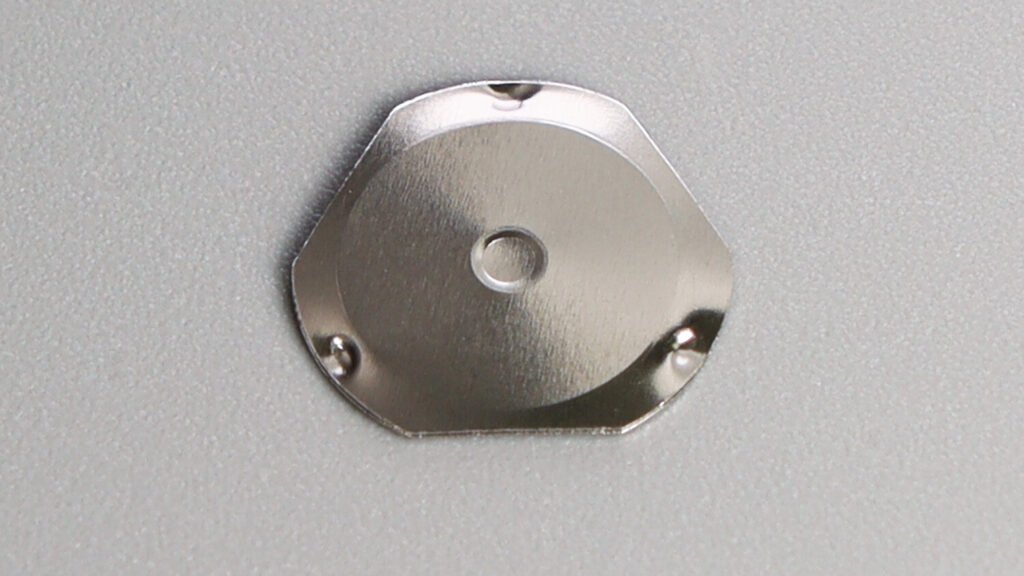
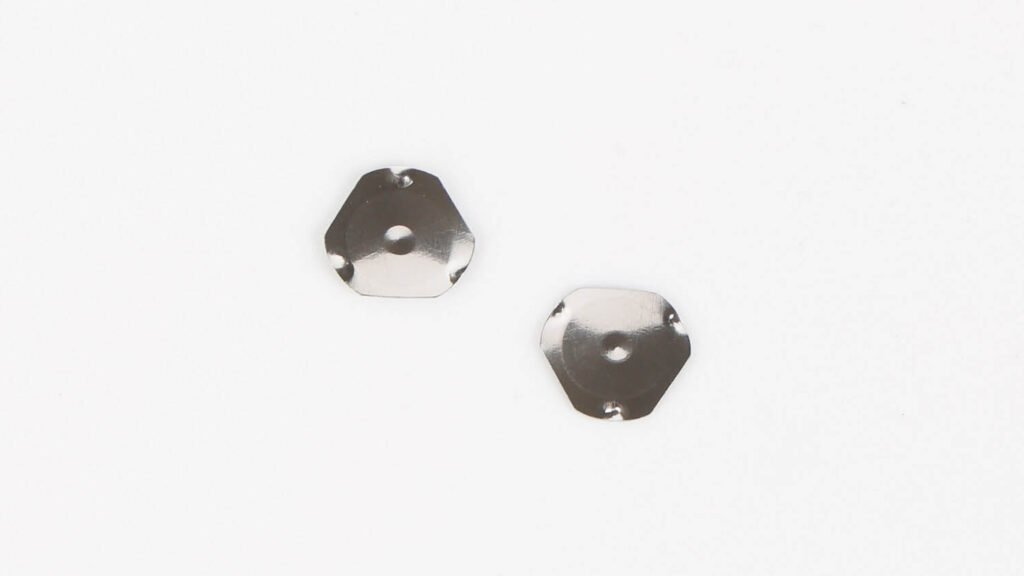
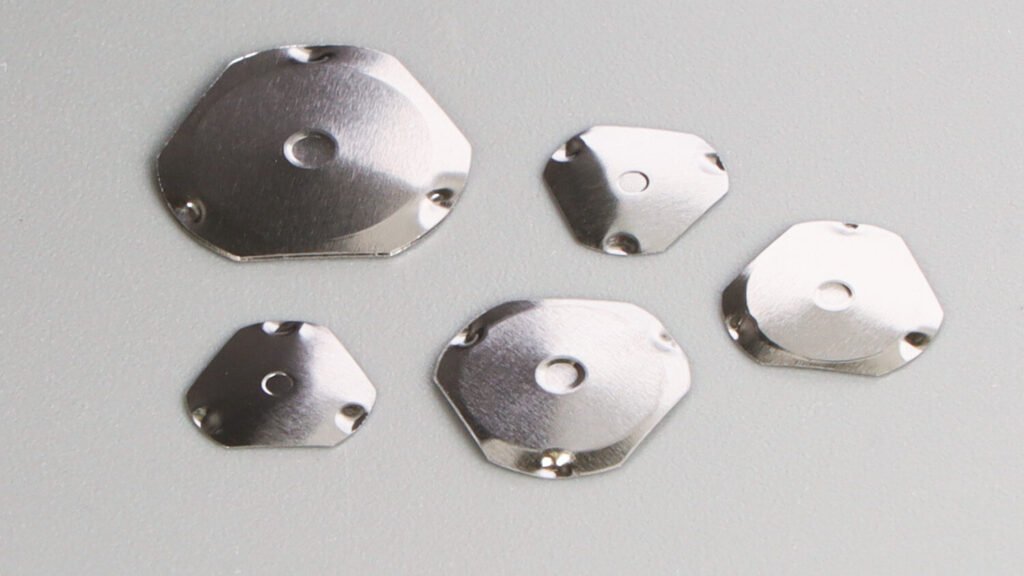
A T-series metal snap dome is a triangular tactile dome switch with four dimples, built in nine standard configurations and available in model-dependent diameters and actuation forces; the configurations below cover 4–15.2 mm, and the approved model drawing determines the available force. Leg options listed here are no legs, 0.8 mm, 1.5 mm, or 3.0 mm.
The T stands for the triangular geometry, which provides three support regions; operating force depends on the formed profile, material thickness, and actuator geometry rather than outline alone, so it fits keypads where the layout is tight but the key must resist accidental presses. It is a bare component: you still need a contact surface, a spacer or overlay, and an actuator above it to turn it into a working key.
The rest of this article breaks down how the naming works, what each leg option does, and what to hand your supplier when you are ready to quote. If you are specifying a panel that uses triangular snap domes, start with the geometry overview at the triangle dome switch manufacturer before you get into force curves.
What the T-series naming actually tells you
The T in the T-series means the dome is triangular and carries four formed dimples, and the letter that follows tells you the leg configuration: NT for no legs, ST for 0.8 mm legs, MT for 1.5 mm legs, and LT for 3.0 mm legs. Once you know that, the rest of a T-series part number is just the diameter range the variant covers. There is no separate performance grade hidden in the code—force is a separate choice you make after the footprint is fixed.
That is unusual in this industry. Most dome catalogs organize by shape first (round, four-leg, oval, triangle) and then bury the mounting option in a footnote. T-series leads with the mounting option instead, which is the parameter that actually constrains your PCB layout.
Why triangle geometry changes the force curve
A round dome has a continuous support rim, while a triangular dome has three support regions. This changes its deformation and force-displacement behavior, but does not by itself establish a higher peak force. Compare measured force curves for the specific models and actuator conditions.
Triangular domes can suit compact keypad layouts, including calculators, phones, monitors, and remote controls, subject to the model drawing and assembly validation. Where resistance to accidental presses matters, specify the required operating force and verify the complete key assembly rather than selecting by shape alone.
What the four dimples do
The four dimples are formed features whose location and dimensions must match the approved part drawing. Their effect on contact behavior and tactile response depends on the specific design; they should not be described as tooling registration features without supporting engineering documentation.
Incoming inspection should check the dimple geometry against the approved drawing, alongside dimensions, force, and contact performance. Appearance alone does not establish a consistent force or service life.
The nine T-series part numbers and how to read them
Nine standard T-series configurations exist, and they differ only in whether the dome has legs, how long those legs are, and which diameter band the part is stamped for. Read any T-series listing left to right: shape, dimple count, leg length, and diameter range. There is no fourth variable hidden in the number.
| Нет. | Форма | Dimple | Length of legs | Range of diameter |
| 1 | Треугольник | Four dimples | No legs | 4–8 mm |
| 2 | Треугольник | Four dimples | No legs | 9–11.5 mm |
| 3 | Треугольник | Four dimples | No legs | 12–15.2 mm |
| 4 | Треугольник | Four dimples | 0.8 mm legs | 4–7 mm |
| 5 | Треугольник | Four dimples | 0.8 mm legs | 8–12 mm |
| 6 | Треугольник | Four dimples | 1.5 mm legs | 4–8 mm |
| 7 | Треугольник | Four dimples | 1.5 mm legs | 9–12 mm |
| 8 | Треугольник | Four dimples | 3.0 mm legs | 4–8 mm |
| 9 | Треугольник | Four dimples | 3.0 mm legs | 9–12 mm |
Two things stand out. The no-leg variants cover the widest diameter spread, up to 15.2 mm, because without legs the whole flat blank is available for the dome itself. Once legs are added, the upper diameter drops to 12 mm because the legs have to fit inside the perimeter without crowding it.
NT, ST, MT, and LT: choosing the leg type
Legs exist so the dome can be pushed into holes in the PCB and held without adhesive, and the four length options exist because PCB thickness and hole diameter vary from design to design. NT is the no-leg version, fixed by tape, conductive adhesive, or a mechanical retainer. ST, MT, and LT use different leg lengths. The listed 0.8 mm dimension is leg width, not a square cross-section; material thickness and hole fit must be checked separately on the drawing.
| Series | Leg length | Leg width | Типичное использование |
| NT | Нет | Нет | Membrane panels, flex circuits, or boards where an adhesive carrier retains the dome |
| ST | 0.8 mm | 0.8 mm | Thin flexible circuits and thin rigid boards |
| MT | 1.5 mm | 0.8 mm | Rigid PCB; verify engagement and underside clearance |
| LT | 3.0 mm | 0.8 mm | Thicker boards, spacers, and stacked assemblies |
Choose leg length together with board thickness, hole geometry, and clearance below the board. The dome must seat on its specified support surface without interference or preload. A short leg may provide insufficient engagement, while a long leg may interfere with components below; neither condition alone establishes that the dome will stand above the board.
One point worth repeating at the quoting stage: do not solder the legs to the board. It is tempting, since it is faster than a mechanical retainer, but soldering changes the dome’s spring characteristics and shortens cycle life. Both the plating and the leg joint are affected. Press fit, tape, or a retainer will give you a more predictable part over the life of the product.
Diameter, force, and travel ranges
Diameter, actuation force, stroke, and dome height must be specified for one approved T-series model. The configuration table above lists diameter bands from 4 mm to 15.2 mm; this is not a guarantee that every diameter, force, and leg option can be combined. Confirm available force steps and dimensional tolerances with SHANYO against the selected part number before designing the stack.
| Параметр | T-series range |
| Диаметр | 4–15.2 mm across the listed configurations; model-dependent |
| Усилие срабатывания | Per approved model drawing and force test method |
| Stroke | Per approved model drawing and test conditions |
| Высота купола | Per approved model drawing |
| Покрытие | Nickel, gold, or silver |
| Life, bare dome test | Per model qualification report and acceptance criteria |
A bare-dome life test still uses a defined actuator to cycle the component. Actuator shape, alignment, travel, test rate, environment, and failure criteria must be stated. Its result does not automatically establish finished-panel life; validate the intended overlay, spacer, actuator, and support stack separately. Custom force variants require their own drawing and verification.
How a T-series dome mounts and closes the circuit
A T-series dome is a normally open, single-pole single-throw contact: the dome rests on the rim of one circuit trace, the finger press collapses the crown so it touches a second trace, and releasing the key lets the steel spring back and breaks the contact again. One part does two jobs—it is the switch, and it is the return spring.
Because legs are the usual mounting method, T-series domes are typically placed on double-sided printed circuit boards where a via runs through the board, on flex circuits, or in membrane switch panels. The leg gives a positive location, so the dome does not slide sideways under repeated presses.
The detail that decides whether a keypad feels right is the relationship between the electrical close point and the tactile event. If the contact closes before the dome snaps through, the interface registers a press the user has not yet felt, and buttons start to feel unresponsive. If it closes after the snap, the user feels a click with no signal. Actuator height, pad position, and assembled preload set that relationship, which is why the feel of a loose dome sample and the feel of the finished keypad are often not the same thing.
Burr direction from the stamping tool also matters at a production scale. On a single-layer structure, where the dome sits directly under a printed film with vent holes, a burr pointing upward can scratch the film and let dust into the gap. A double-layer structure adds a spacer, which holds the film clear of the dome, gives a slightly fuller feel, and closes off that dust path.
Electrical and environmental specification envelope
Electrical and environmental limits must come from the approved specification for the selected T-series model. A normally open SPST function does not imply a common bounce time, contact resistance, current rating, or temperature range across all domes. The table below identifies the parameters to confirm rather than assigning unverified catalogue limits to SHANYO products.
| Параметр | Model-specific requirement |
| Contact configuration | SPST, normally open |
| Contact bounce, on | Confirm in approved model specification and test report |
| Contact bounce, off | Confirm in approved model specification and test report |
| Контактное сопротивление | Confirm in approved model specification and test report |
| Maximum rating | Confirm in approved model specification and test report |
| Breakdown voltage | Confirm in approved model specification and test report |
| Рабочая температура | Confirm in approved model specification and test report |
| Storage temperature | Confirm in approved model specification and test report |
| Влажность | Confirm in approved model specification and test report |
One caution on contact resistance. Published figures for plated domes vary between manufacturers—you will see under 1 ohm and under 0.1 ohm in different spec sheets—because plating thickness and measurement method differ. If your design depends on a specific resistance ceiling, ask for the figure measured on your plating and your pad material rather than carrying over a number from a datasheet.
The same caution applies to sealing. A dome on its own is not sealed to any meaningful level, and no IP rating attaches to a loose component. The rating belongs to the finished assembly, where the overlay, carrier, spacer, and enclosure are stacked and bonded. The IEC sets out how the two numerals of an IP code are assigned in its ingress protection ratings guide, and that is the document to argue from when a customer asks for a sealed panel.
When to choose T-series instead of round or four-leg domes
Choose a T-series dome when the layout is tight, the required force is on the high side, and you want the part to locate mechanically rather than rely on adhesive. Check the available diameters and measured operating force for the selected model, especially for a quiet, low-force keypad.
| Фактор | T-series, triangular | Круглый купол | Купол на четырех ножках |
| Force at a given diameter | Model-dependent; compare measured force curves | Model-dependent; compare measured force curves | Model-dependent; compare measured force curves |
| Available standard diameters | Narrower | Widest | Умеренный |
| Mechanical location | Legs press into board holes. | Usually taped or retained | Often self-supporting on the pad |
| Footprint efficiency | Хорошо | Хорошо | Needs a wider support ring |
| Typical feel | Firm, distinct break | Crisp and short | Model-dependent snap action; verify in the assembled key |
| Best fit | Remotes, calculators, panels needing deliberate force | Remotes, keypads, general tactile use | Keypads where support and venting matter |
Adjacent options are worth knowing about before you settle. A poly dome is a formed polyester element that is thinner than stamped steel and suits a height-constrained stack, though its force stability over life is lower. A custom-shaped dome covers the cases where none of the standard geometries fit the actuator or the pad layout.
Where rubber domes still make sense
A rubber dome switch uses a molded silicone web instead of a stamped steel dome, and it carries a carbon pill or a separate contact to bridge the circuit. The feedback is softer and quieter, with a longer, more progressive travel rather than a sharp break, and the elastomer mat can be molded with many keys in a single piece and contribute to sealing.
That makes rubber a reasonable choice for a budget remote or a calculator keypad, where quiet operation and unit cost matter more than a firm click, or where the feel needs to stay gentle over very high press counts. It is the wrong choice where a user must be certain a press is registered, such as a control panel, and an operator works by feel without looking.
For the wider picture of dome families and how they are built, the custom tactile metal dome range covers the stamped steel options alongside the choices above.
How to specify a T-series dome for your BOM
A quote that specifies only “T-series dome” will come back with samples you cannot use, because the five parameters that decide fit are all missing. Send these before asking for a price:
- Диаметр, chosen to clear your actuator and pad ring, or nearest standard step.
- Усилие срабатывания, measured at the assembled panel, not at the dome alone. If you do not have a target, say what the user is doing with the key—gloved operation and a bare fingertip are different requirements.
- Leg type, matched to board thickness, or NT if the dome is held by a carrier.
- Покрытие, with nickel as the default and gold where corrosion or contact stability matters.
- Life expectation, so the supplier can tell you whether the standard bare-dome figure is adequate or the panel needs verification.
Then ask for a drawing against your specific variant before tooling, and for first-article samples to measure stroke and force on your own stack. Getting those two numbers early is what keeps a keypad’s feel consistent across production lots. If you would rather not work through every variable yourself, send your drawings and target force and let the supplier propose the variant.
ЧАСТО ЗАДАВАЕМЫЕ ВОПРОСЫ
Can a T-series dome be used without legs on a flex circuit?
Yes. The NT, no-leg variants are made for exactly that. They are located by the adhesive carrier or the panel construction rather than by press fit, which suits flex circuits where drilling holes adds cost and stress points.
What does the four-dimple marking on a T-series part tell you?
It identifies the series as the four-dimple triangular pattern and, with the leg callout, tells you which of the nine configurations you are holding. The pattern should be checked against the approved drawing; it does not by itself establish a force or life rating.
How much does a heavier T-series dome cost compared with a standard one?
There is no published price list for this class of component, so treat any figure you find as unverified until a supplier confirms it against your drawing. Heavier force variants are normally custom-stamped to specification, and the cost difference depends on material thickness, tooling, and volume. Ask for a quote with your force window stated in writing.