There is this highly specific, oddly frustrating moment in hardware development when a newly assembled prototype is finally sitting on the test bench. A button is pressed, and it just feels wrong. It doesn’t have that snappy, satisfying click that was agreed upon during the design phase. The engineering drawings might say the switch is perfectly to spec, but the human finger violently disagrees. This disconnect almost always comes down to the microscopic realities of manufacturing tolerances. People tend to think of mechanical parts as absolute, fixed items, but in reality, everything has a margin of error.
При работе с металлический купол на заказ, the actuation force (the exact amount of downward pressure required to make the switch collapse and register a click) is rarely a single, perfect number. It exists within a tolerance range. And strangely enough, a swing of just 15 grams in either direction is completely enough to ruin the tactile illusion of a premium device.
The Sensory Impact on a Custom Metal Dome
Fingertips are ridiculously sensitive. They are packed with nerve endings designed to detect the smallest variations in texture and pressure. To put things into perspective, 15 grams is roughly the weight of three standard US nickels. If someone placed three nickels in the palm of a hand, it would barely register. But concentrate that exact same weight into a tiny, localized point on the tip of an index finger, and suddenly it becomes a very noticeable physical barrier.
The Illusion of Consistency
If a custom metal dome is designed with a target actuation force of 160g, a standard manufacturing tolerance of ±15g means the actual parts coming off the factory line could be anywhere from 145g to 175g.
A switch clicking at 145g feels light, breezy, and incredibly fast to actuate. It is the kind of button that gets pressed almost effortlessly. Conversely, a switch hitting that 175g upper limit feels stiff. It fights back. If those two extremes end up sitting right next to each other on the exact same television remote or industrial control panel, the user will immediately notice the inconsistency. They won’t know why it feels cheap, but their brain will instantly flag the device as being poorly made.
Manufacturing Variables Affecting Custom Metal Dome Tolerance
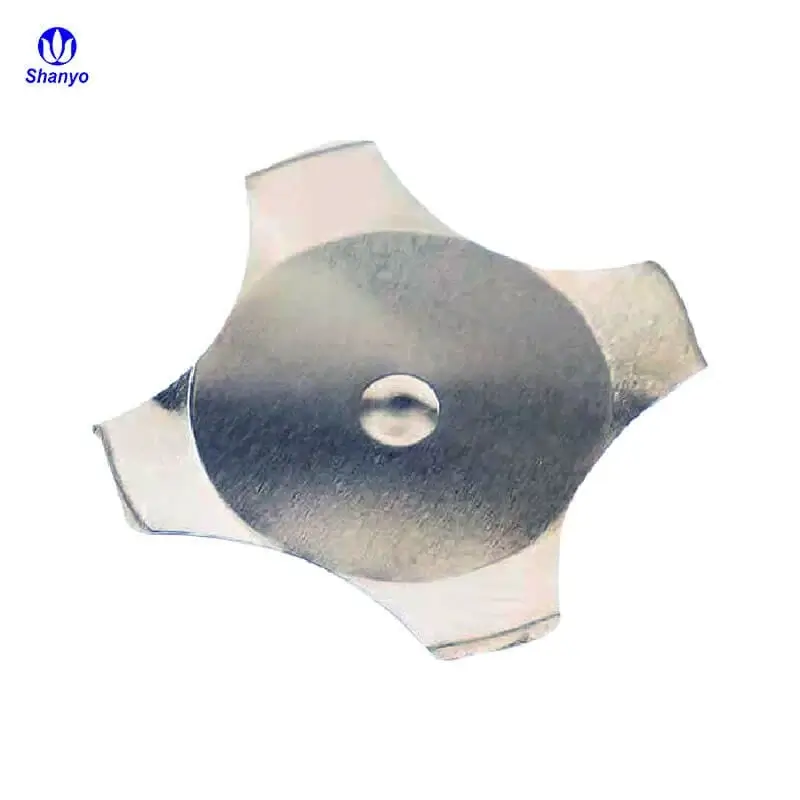
Hitting the exact same gram-force target on a million consecutive tiny steel parts, including four legs metal dome components, is basically a physical impossibility. The stamping process is violent, and the raw materials are never perfectly uniform. There are several subtle variables that make keeping that ±15g window incredibly difficult during mass production:
Microscopic variations in the raw stainless steel thickness (even a fraction of a millimeter changes the stiffness).
Tooling wear inside the stamping machine, where the hardened steel die slowly loses its perfectly sharp edge after hitting metal hundreds of thousands of times.
Slight inconsistencies in the heat treatment or stress-relief baking process that happens after the initial stamping.
Environmental temperature shifts on the factory floor, which can subtly alter how the metal behaves in the press.
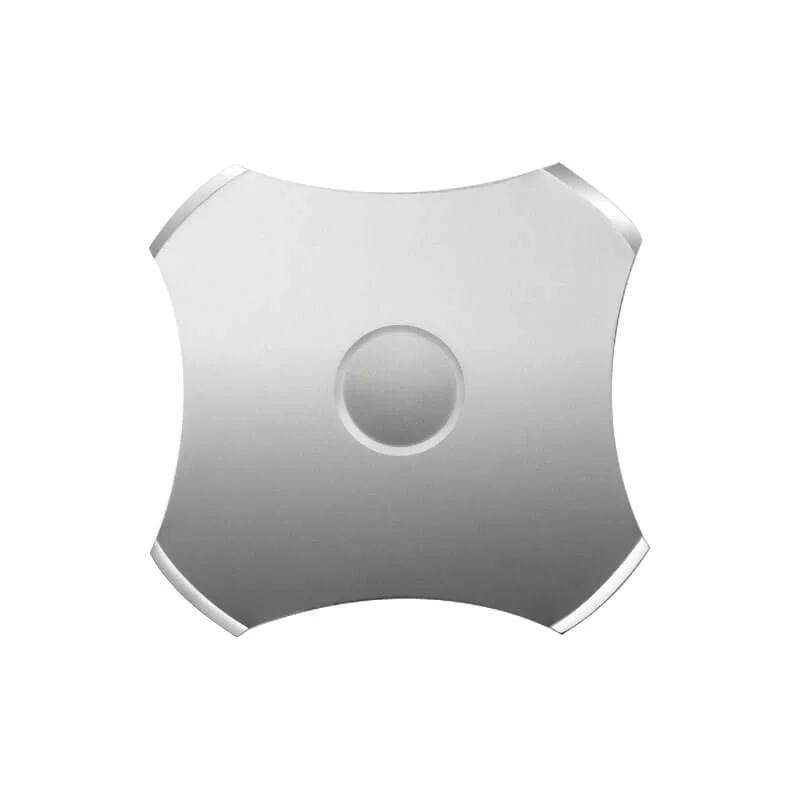
Comparing Custom Metal Dome Feeling Across Tolerances
The actual subjective feeling of that 15-gram swing changes dramatically depending on what the baseline target force actually is. A 15g error on a heavy, clunky military switch is basically invisible. But on a delicate consumer gadget, it is a glaring flaw.
Here is a breakdown of how the same ±15g tolerance behaves across completely different baseline targets:
| Target Actuation Force |
The -15g Lower Limit Feel
|
The +15g Upper Limit Feel
|
Perception of the Variance
|
|---|---|---|---|
|
100g (Light Consumer)
|
85g (Mushy, accidental clicks)
|
115g (Noticeably stiff)
|
Extremely high, ruins the user experience
|
|
160g (Standard Gadget)
|
145g (Snappy, effortless)
|
175g (Slightly fatiguing)
|
Very noticeable when placed side-by-side
|
|
350g (Heavy Industrial)
|
335g (Firm clunk)
|
365g (Firm clunk)
|
Barely noticeable through heavy work gloves
|
Strategies for Controlling Custom Metal Dome Consistency
Because the human finger is such a harsh critic, factories have to employ a lot of clever tricks to hide these natural manufacturing variances. You can’t change the laws of physics, but the production batch can certainly be managed to avoid worst-case scenarios reaching the final consumer.
When absolute tactile perfection is required, hardware teams usually rely on a few specific containment strategies:
Implementing strict batch sorting, where lasers and automated plungers test thousands of domes and group them into incredibly tight 5g sub-tolerances.
Using premium, high-grade tool steel for the stamping dies to drastically delay the inevitable wear and tear that causes force drift.
Designing the plastic keycap assembly above the switch with a tiny bit of pre-load, which helps mask minor inconsistencies in the underlying metal.
ЧАСТО ЗАДАВАЕМЫЕ ВОПРОСЫ
Can actuation force tolerance be tighter than ±15g?
Yes, it is possible, but it gets incredibly expensive. Pushing a custom metal dome factory to guarantee a ±10g or even ±5g tolerance usually requires dumping huge amounts of money into specialized tooling and discarding a large percentage of perfectly fine parts that just barely miss the mark. It is rarely worth the financial cost for standard electronics.
Does the plastic device housing change the final button feel?
Absolutely. A custom metal dome might test perfectly at 160g on a raw circuit board, but once a thick plastic button, a rubber membrane, and a device housing are stacked on top of it, the perceived force changes completely. Friction from the plastic parts often adds phantom weight, making the switch feel much heavier than it actually is.
How is the force actually measured in the manufacturing factory?
Factories use highly sensitive automated force-displacement testing machines. A tiny mechanical plunger slowly presses down on the very center of the custom metal dome while a computer maps the exact gram-force at every microscopic fraction of a millimeter until the metal snaps. It creates a curve on a graph that reveals exactly how the button feels.