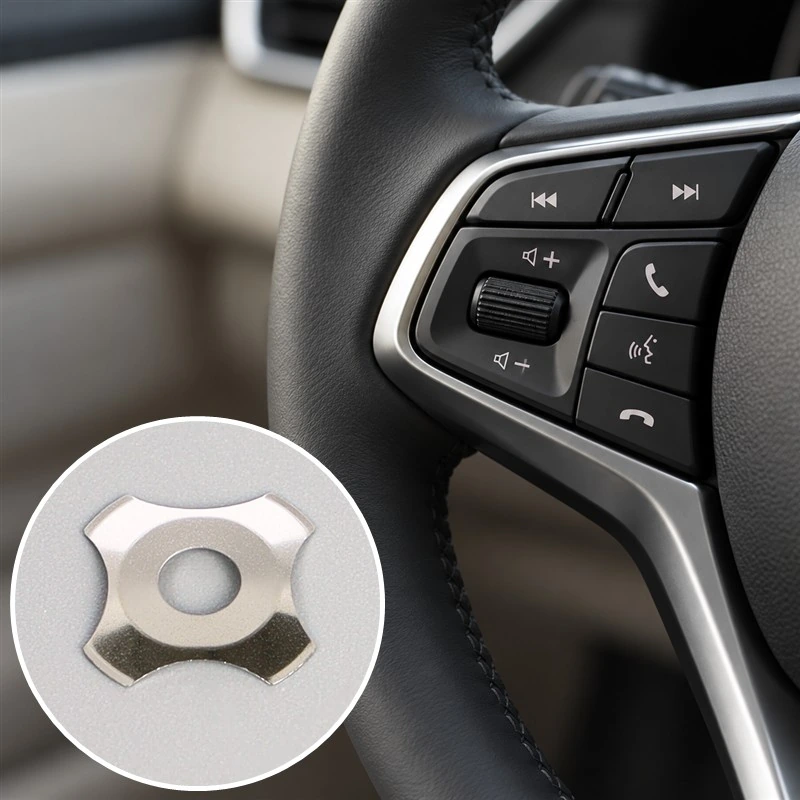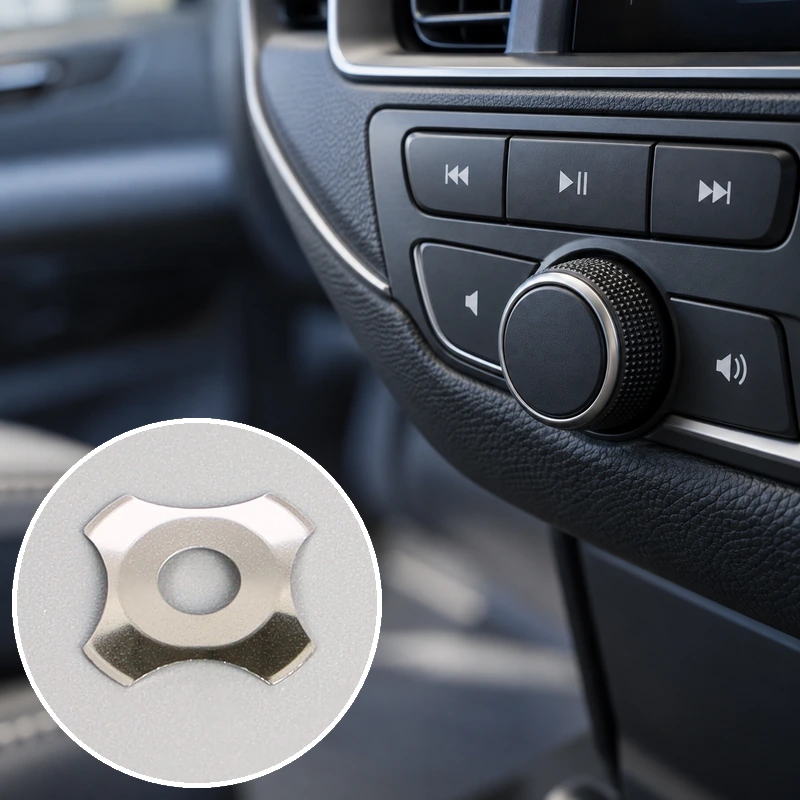
Drivers rarely look at the buttons they press. A steering wheel key, a climate rocker, and a window switch are each expected to answer on the first press, at minus 20°C or after ten years of daily use. Many such controls use a metal dome, while others use different switch technologies. In a dome-based control, the switching element is a formed stainless steel disc that snaps over center and closes a circuit. Because it spreads across so many automotive applications, the same question keeps returning in design reviews.
Selecting a metal dome for automotive controls is a sequence of decisions rather than one part number: turn the feel you want into measurable targets, choose the force band that matches the control’s role, match shape and delivery format to the panel, specify plating and contact geometry, state the environmental loads the finished button must survive, and qualify the assembled key through validation instead of trusting a loose-part datasheet.
The sequence below starts with what the word “dome” actually refers to inside a car.
What does “dome” mean in a car?
In automotive language, “dome” points to two different parts. A dome light is the ceiling lamp that comes on when a door opens. A metal dome is the stainless steel snap disc inside a button, and only the second meaning is a switch component.
The two get mixed up constantly, and a search for “dome automotive” can land on either one. A dome light is a lighting part, switched by the body control module, with nothing to specify.
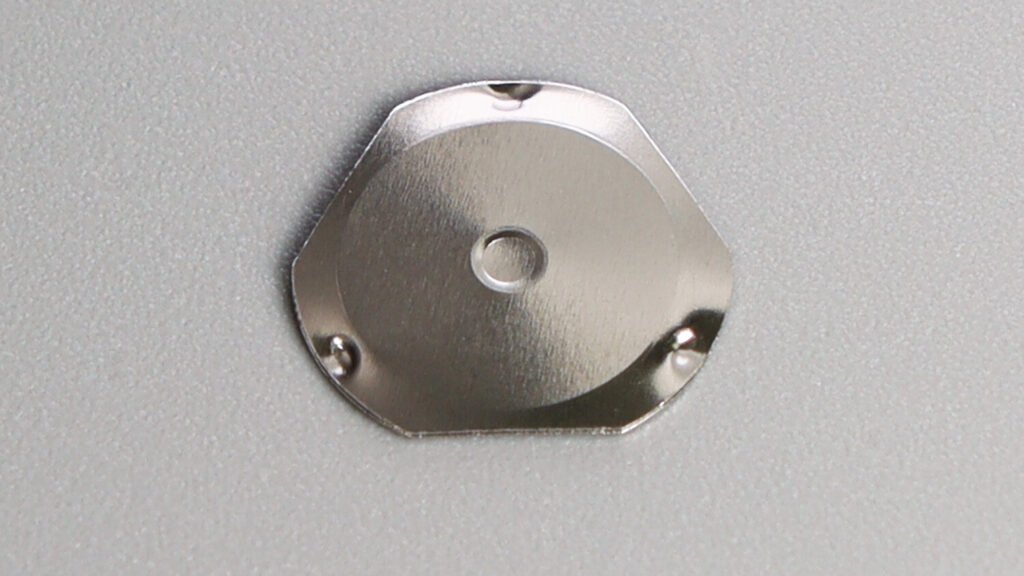
A metal dome is a shallow stainless steel disc resting on the outer contact ring of a PCB or FPC pad. Press the keycap, and the disc inverts; its center touches the inner contact, and the circuit closes. Release it, and the disc springs back. The same part also appears as a metal snap dome or a tactile dome.
A dome light and a dome switch are two different parts.
| Term | What it is | Where it sits |
|---|---|---|
| Dome light, dome lamp | Interior ceiling lamp | Headliner |
| Metal dome, snap dome | Stainless steel snap contact | Under the keycap, on the PCB or FPC |
| Dome array | Several domes held on one carrier | Keypad assembly |
| Dome sheet | Dome layer with carrier and adhesive | Laminated panel |
Why do cabin buttons still keep a snap dome
A metal dome gives the driver a crisp break at the moment of contact, and that break does safety work. US federal guidance on in-vehicle controls recommends that a task be completable with glances away from the road of no more than two seconds each and operable with one hand (Visual-Manual NHTSA Driver Distraction Guidelines).
Metal domes and conductive rubber keypads have different design trade-offs. Compare qualified models and complete assemblies under the same test conditions; the examples below are not universal limits for either technology.
| Property | Металлический купол | Conductive rubber pad |
|---|---|---|
| Срок службы цикла | Model-specific qualified cycle life | Model-specific qualified cycle life |
| Рабочая температура | -40 °C to +85 °C | Compound- and assembly-dependent; verify qualified range |
| Тактильные ощущения | Crisp, distinct snap | Soft and damped |
| Travel and profile | 0.2 mm to 0.5 mm travel, thin stack | Thicker structure |
| Contact stability | Verify initial and post-life resistance | Verify initial and post-life resistance |
Figures reflect published automotive dome data (checked 16 October 2026).
Turn the button feel you want into dome numbers
Trip force, return force, travel and tactile ratio decide whether a button feels right, and all four change once the dome sits under a real keycap. Set targets for the loose dome, then verify them in the assembled button.
Words such as crisp or premium are design goals, not acceptance criteria. Four numbers do the work: trip force, at which the dome closes the contact; return force, how hard the dome pushes back; travel, how far the keycap moves through the snap; and tactile ratio, calculated using explicitly defined force points on the agreed curve. Distinguish post-snap force during pressing from return force during unloading, since terminology varies among suppliers.
The force bands below are illustrative starting points, not automotive standards or prescribed values for each control. Set the target from keycap leverage, ergonomics, accidental-operation risk, and customer requirements, then validate the assembled key.
| Усилие срабатывания | Почувствовать | Typical control |
|---|---|---|
| 100 to 180 gf | Light press | Infotainment keys, small buttons |
| 180 to 280 gf | Сбалансированный | Steering wheel controls, climate panels |
| 280 to 400 gf | Firm press | Window switches, console keys |
| 400 gf and above | Strong press | Seat controls, large keys |
Two cautions matter. The same dome feels different in two vehicles because the keycap shares the load: a long plastic key softens the press through leverage, while a short rigid key passes force straight to the fingertip. Force and life must be evaluated together for the selected geometry and material. Do not infer a required diameter, leg count, or stacked construction from operating force alone; confirm the design using qualified samples. On a multi-key panel, the force spread between neighboring keys is noticed more than the absolute value.
Match the dome shape and delivery format to the button
Shape follows the contact geometry, the space around the key, and the route air takes out of the cavity. The delivery format decides how much assembly work your line absorbs, so choose the two together.
| Форма | Strength | Typical automotive fit | Watch for |
|---|---|---|---|
| Круглый | Continuous rim, easy to seal | Climate panels | Traps air unless vented |
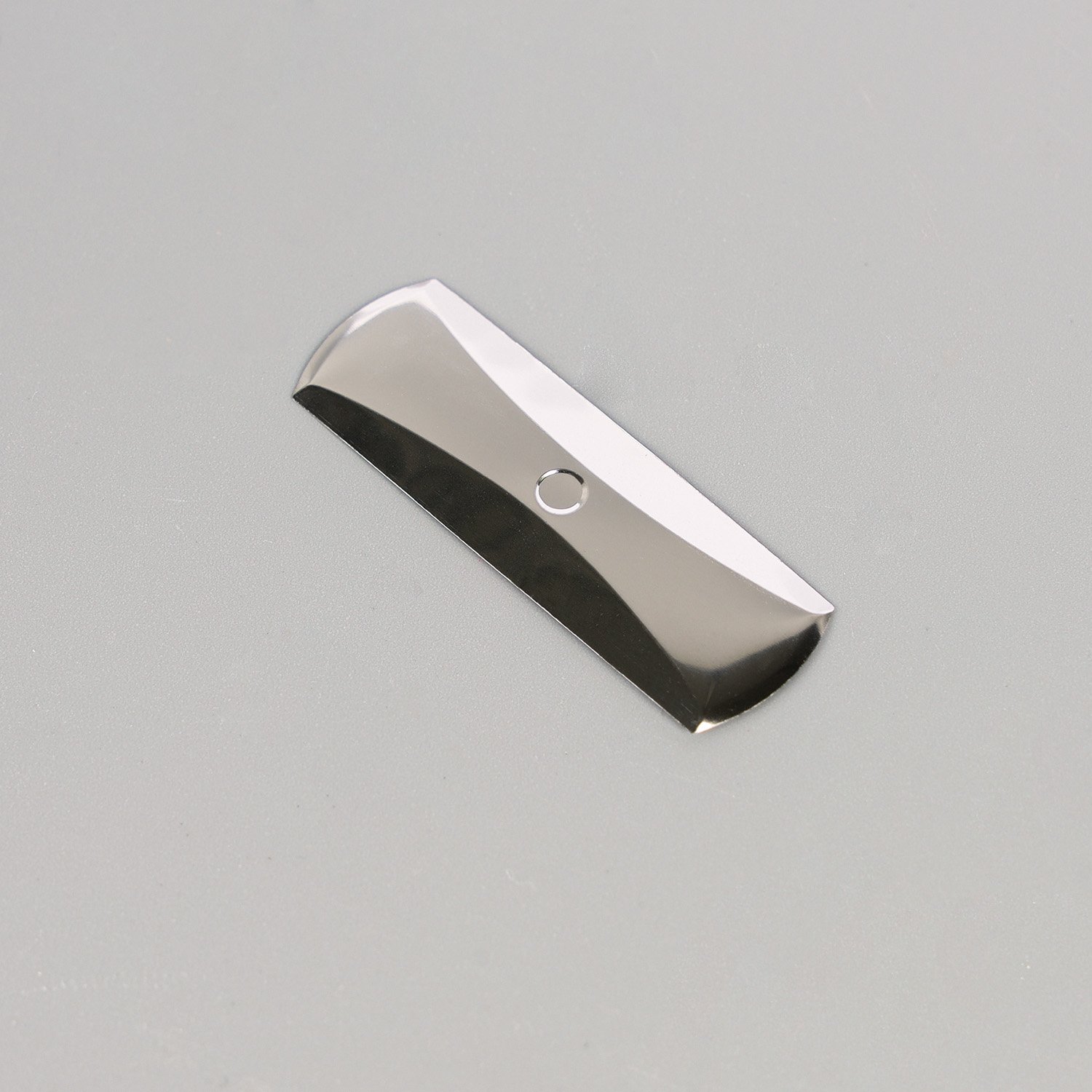
| Oval or oblong | Fits long, narrow keys | Slim bezels, rockers | Force differs along the long axis. |
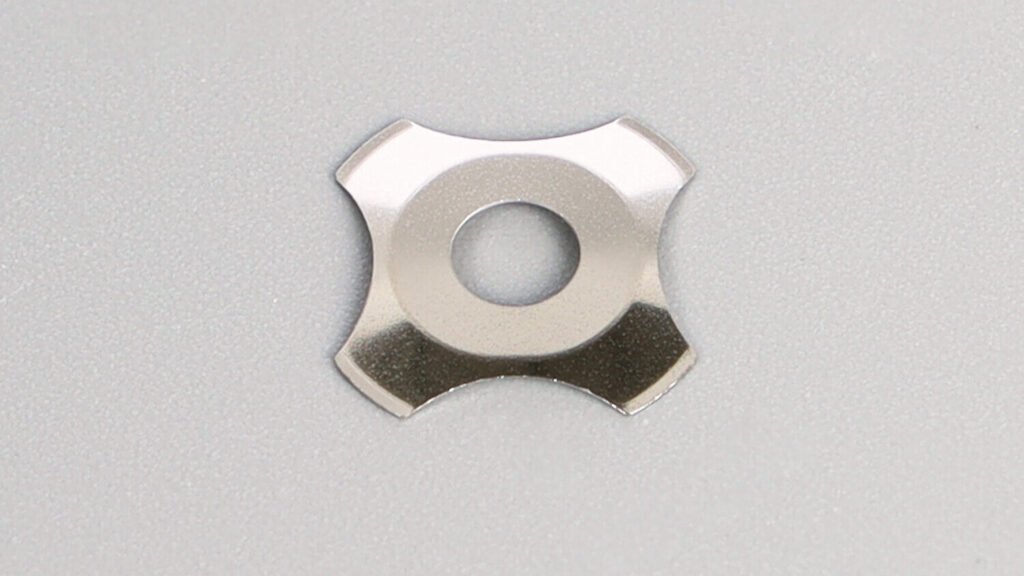
| Четырехногий | High force, strong venting | Consoles, door panels | Needs space for the legs |
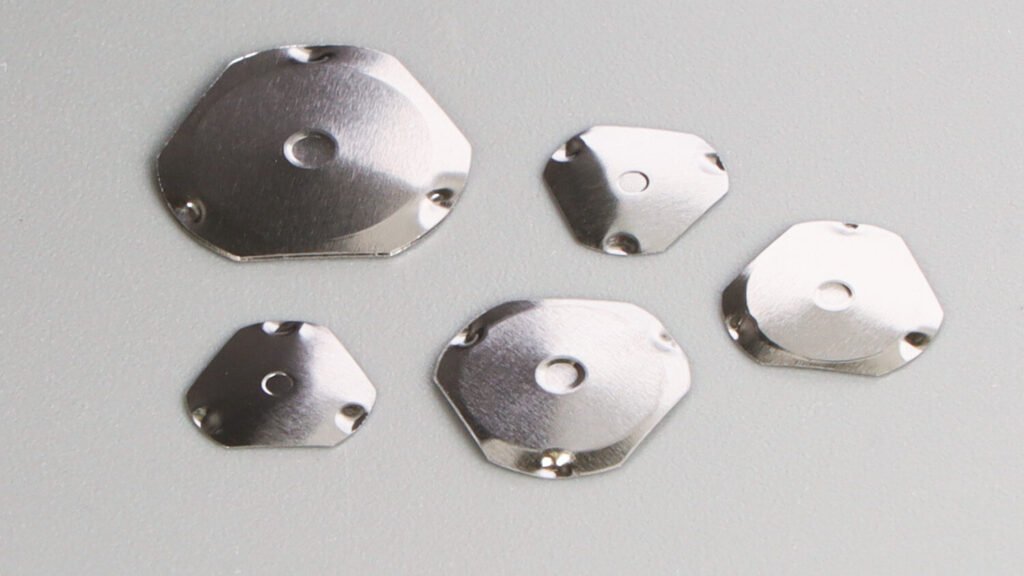
| Треугольник | Crisp snap, high force in a small footprint | Safety-related keys | Fixed orientation at assembly |
| Квадрат | Even force across a wide key | Large single keys | Corner presses differ from center. |
Four-leg domes earn their place in dense layouts: the gaps between the legs can support venting and trace routing where the pad layout permits. Lateral retention comes from the carrier, pocket, or specified locating features, not the gaps themselves. A continuous rim does not establish a sealed interface. Evaluate the complete cavity and provide a vent path where trapped air affects tactile response.
Loose dome, dome array, or dome sheet
A loose dome leaves placement and retention to the assembler, which suits low volumes and single-key designs. A dome array holds several domes at fixed coordinates under a die-cut carrier, so a multi-key panel registers in one operation. A dome sheet adds the adhesive to the dome layer, which suits panels where sealing or backlighting already lives in the stack. On a membrane panel the dome still does the switching; the practical question is who controls registration, adhesive, and venting.
Getting force to the dome through the keycap
The keycap and actuator decide whether the dome sees the force you specified.
- Align the actuator centerline with the dome crown and the pad center.
- Keep the actuator tip wide enough to load the crown predictably and narrow enough to clear the legs.
- Control preload so the dome is not partly collapsed at rest.
- Add a hard stop where the mechanism could over-travel the dome.
- Test off-axis presses at the edges and corners of the visible keycap.
Plating and contact design for a ten-year contact
A dome is only as good as the contact it lands on. Plating and pad geometry decide whether contact resistance stays stable across the vehicle’s life, and both are cheaper to fix at the drawing stage than in the field.
Nickel plating is the economical choice and holds up in dry, benign interiors. Gold on the contact side costs more and earns its place where humidity, sulfur, or low-force actuation puts stable resistance at a premium. Initial resistance is low for either finish; the difference shows up after life testing.
The pad side carries equal weight. The outer ring supports the dome, and the inner pad stays isolated until the snap, so pad dimensions, finish, solder mask clearance, and support flatness all have to match. Exposed vias, trapped debris, and uneven plating interfere with seating.
On a flexible circuit, the backing plate and attachment method are part of the electrical system, because local flexing changes dome support and force response. A vent through the spacer or between four-leg feet allows pressure equalization, but does not by itself exclude moisture. Validate its routing, protective membrane where needed, and complete assembly sealing.
What the cabin environment adds to the spec
Temperature, vibration, humidity, and cleaning chemistry belong in the dome specification rather than a general drawing note. State the mounting location first, then the loads that come with it.
Interior surfaces get hot under sunlight and cold overnight in winter. A common operating window for stainless steel domes is -40 °C to +85 °C (published automotive dome data, checked 16 October 2026), but that temperature range and allowable force drift must be qualified for the selected dome, finish, carrier, adhesive, and assembled stack.
The ISO 16750 series is the usual framework for these loads in road vehicles: electrical, mechanical, climatic, and chemical conditions, each with its own tests. Which class applies depends on where the button is mounted, so the location has to be settled before the test list is written.
Sealing is a property of the whole interface, not a label on the dome. The front surface, the edge laminate, the tail exit, the adhesive, and the housing joint all carry water ingress risk, and missing one of them means a panel that passes on the bench and fails in service. Backlighting adds constraints to the same cavity: a light guide has to spread light without pressing on the dome or blocking its travel.
Prove the button before production
A qualification test on a loose dome does not prove that a button works. Test a production-representative stack, measure every key position, and make the qualification documents describe the specification you actually released.
Evaluate prototypes in order
- Confirm the loose dome: outline, plating, force curve, and surface condition.
- Apply the intended carrier to the real PCB or FPC and press through the production keycap and actuator.
- Record trip force, return force, travel, and tactile ratio at every key position.
- Check center, edge, and corner presses for actuator tilt or incomplete switching.
- Inspect dome position, carrier lift, adhesive intrusion, and vent continuity.
- Run environmental and life tests, then repeat the tactile and electrical measurements.
Automotive qualification
Automotive programs normally expect a current quality certificate naming the producing site and part family, plus a production part approval submission covering process failure mode analysis, control plans and measurement system analysis. Capability targets, characteristic classification, sampling, and PPAP submission level must follow the customer agreement; Cpk 1.33 is not a universal requirement.
Shanyo holds IATF 16949 certification, alongside ISO 14001 for environmental management and ISO 45001 for occupational health and safety (Shanyo certifications, checked 16 October 2026). Buyers on automotive programs often open with questions about the manufacturing system behind the part rather than the part itself, so the certificate, the audit records, and any customer-specific forms are worth keeping ready from the first inquiry.
Consistency and change control
Material, plating, tooling, adhesive, carrier thickness, die cutting, and packaging can each shift fit or feel, so revision control should link the dome drawing, the array artwork, the circuit data, and the key-stack drawing. When a change touches the load path, the assembled button has to be re-evaluated.
What to put in the RFQ packet
A complete RFQ lets a supplier check formability and force feasibility before samples are built, and missing inputs are the main reason first samples come back close but not right.
| Input | Minimum information | Decision it supports |
|---|---|---|
| Купол | Shape, diameter, force target, travel, plating, tolerance | Series and forming feasibility |
| Array or sheet | Coordinates, outline, holes, carrier, adhesive, vent paths | Registration and lamination method |
| Actuator | Tip diameter, height, key travel, hard stop | Load transfer and preload risk |
| Контур | Pad artwork, finish, solder mask, substrate, backing | Contact stability and placement |
| Environment | Temperature, humidity, contamination, vibration, test plan | Material choice and validation scope |
| Production | Supply format, packaging, inspection, traceability | Line integration and acceptance |
A standard dome is not automatically qualified for a vehicle environment, so test items and limits follow the mounting location.
Where a panel needs domes matched key by key, a catalog item runs out of room. The practical route is a custom tactile metal dome built to the panel drawing, with the force spread defined across the layout and the carrier, adhesive, and venting decided alongside it.
One supplier evaluation shows where a complete packet leads. Valeo opened with an RFQ for a solderable metal dome that combined gold plating with selective tin plating, and one of its first questions was whether the supplier held IATF 16949. Shanyo supplied the audit documentation, completed the required CCL forms, and hosted a three-day on-site pre-audit covering cleanliness, tooling, stamping, testing, and electroplating, and the follow-up feedback cited the management system certifications and prior experience stamping thin material. The Valeo metal dome case study records that path from the first RFQ to the pre-audit.
ЧАСТО ЗАДАВАЕМЫЕ ВОПРОСЫ
How many actuation cycles should an automotive dome be rated for?
There is no universal automotive dome cycle rating or guarantee that another button component will fail first. Set the target from the control duty cycle, vehicle service life, customer requirements, and qualification of the complete stack. Ask for force-displacement data from after-life testing.
Can metal domes be used outside the cabin, such as under the hood?
Yes, with a build matched to the location. Under-hood and exterior designs pair high-temperature dome variants with gold-plated contacts and fully sealed stacks, and they are validated against the environmental class for that mounting point rather than an interior one.
Are metal domes still used in cars that rely on touchscreens?
Yes. Touchscreens handle infotainment menus well, but the functions a driver uses while moving, such as steering wheel keys, volume, and climate, tend to keep physical buttons because a dome confirms the press by feel. That confirmation keeps the eyes on the road.