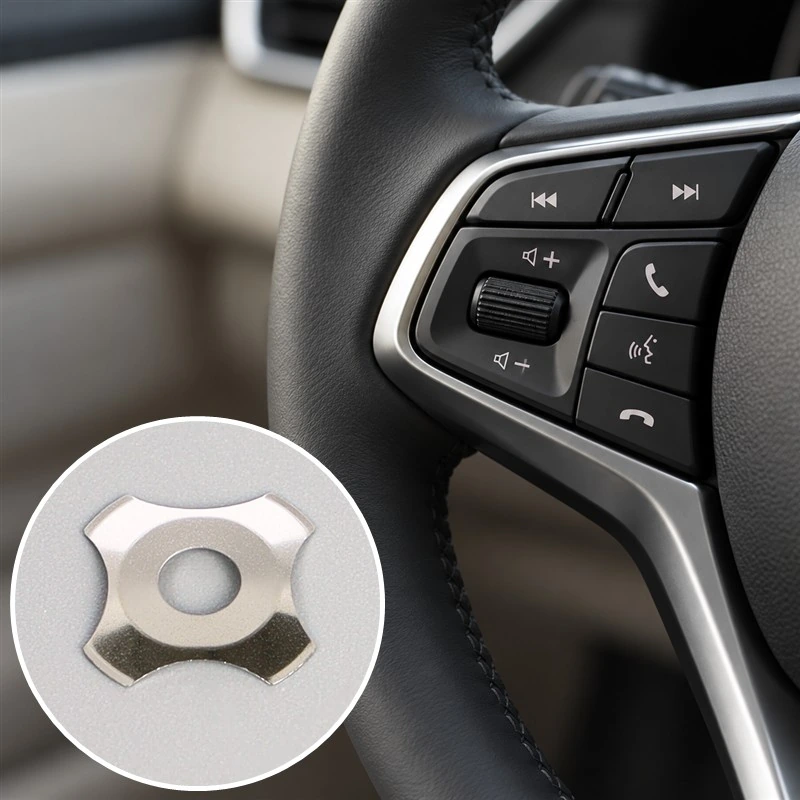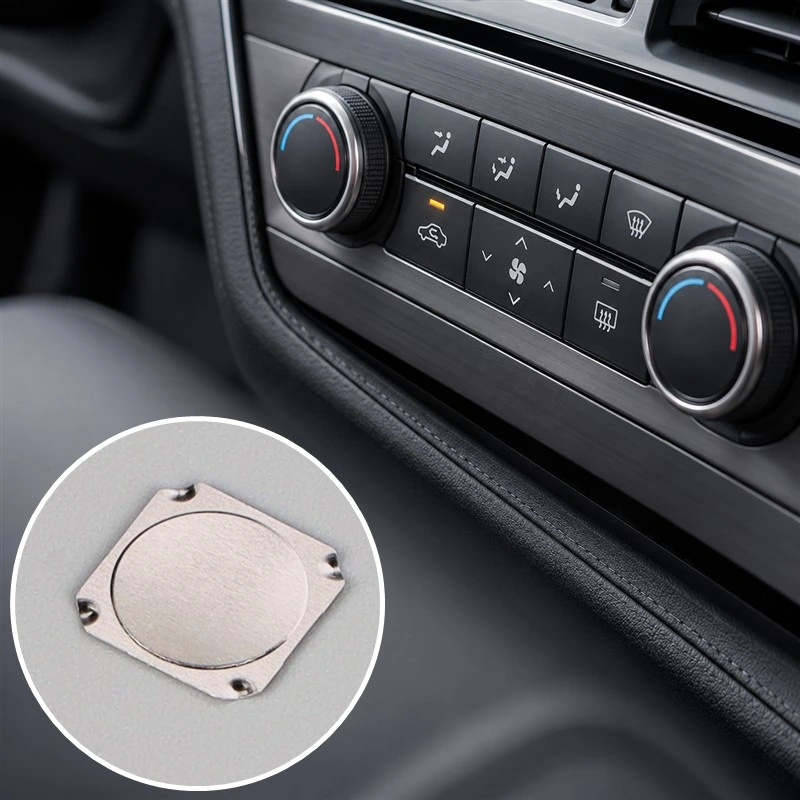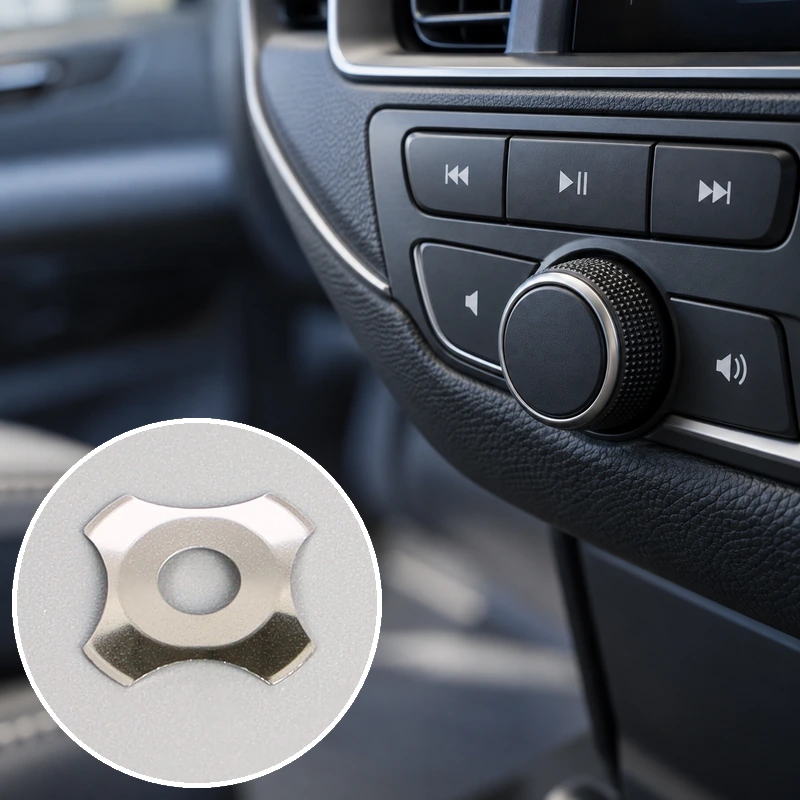
Engineers rarely get to choose what shape a button will be. The board and the housing decide first. That is how an oblong metal dome, also indexed as a rectangle metal dome, turns up where a round contact will not fit: the strip of board beside a battery holder, the slim key below a display. It is the long, narrow member of the custom tactile metal Dome family.
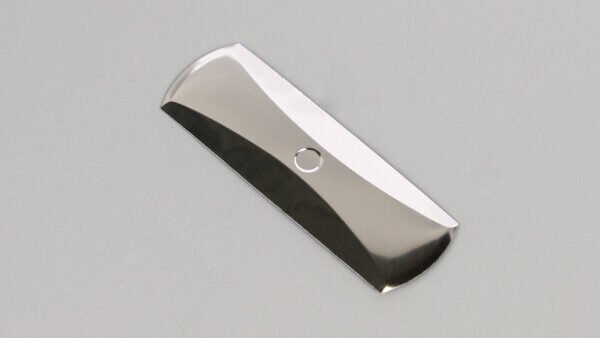
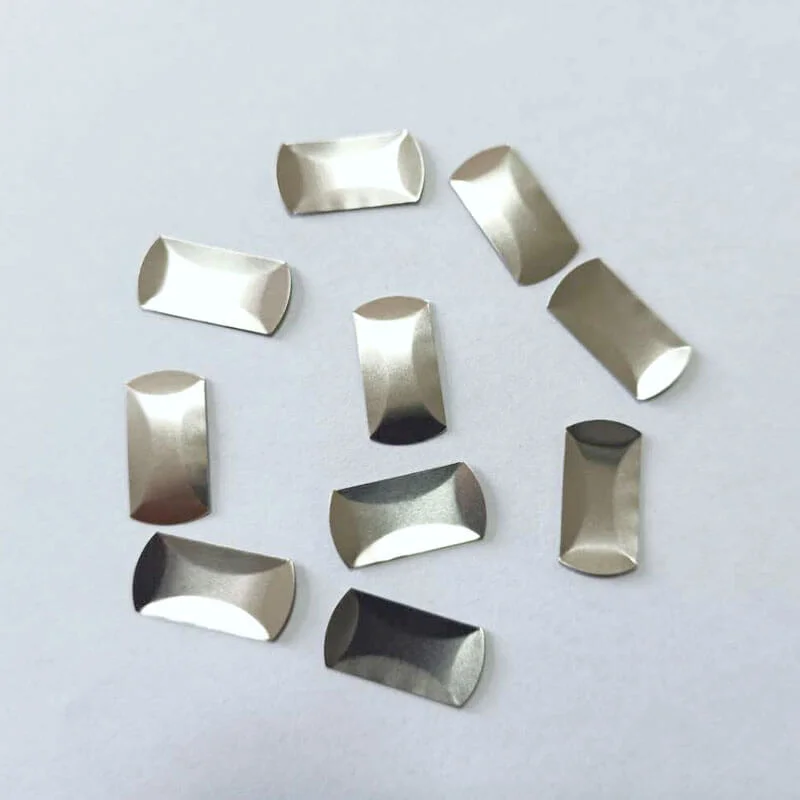
An oblong (rectangle) metal dome is a shallow, elongated piece of spring stainless steel that acts as the spring and the moving contact of a momentary switch. Its footprint is a length and a width rather than a diameter, so it fits the long, narrow parts of a circuit that a round dome cannot. Pressed past its threshold force, the arched steel snaps through to an inverted shape, bridging two pads and closing the circuit.
This guide covers how the part is named, how an elongated arch behaves under load, and how to specify one.
What is an oblong (rectangle) metal dome?
It is a stamped stainless steel snap dome whose silhouette is longer than it is wide, used as the tactile contact beneath a long or wide key. The dome carries no electronics: it turns finger pressure into a signal and gives the finger a click in return.
A metal dome, or snap dome, is a small sprung disc of stainless steel sitting over two conductive pads, usually gold-plated fingers on a circuit board or printed silver traces on a membrane or flex circuit. While the dome is convex, the pads stay apart; when it inverts, its concave underside bridges them, and current flows. Published oblong parts run from roughly 3 x 4 mm up to 51 x 13.7 mm (published dome series data, checked 12 October 2026).
Oblong, rectangle, and oval are not the same shape
Oblong and rectangle name the same footprint: an elongated outline with straight sides and rounded ends. Oval is a different geometry, an ellipse with no straight sides and no corners, made as its own family rather than a version of an oblong one. The two words sit close together in everyday use, so the safest way to match a part to a drawing is to compare the outline, not the name.
Where the dome sits in the switch stack
The layers around the dome decide how the button behaves. The overlay is the surface the user touches, and its thickness sets how much of the click reaches the finger. A spacer gives the dome room to travel. The dome sits either loose inside a silicone keypad or on an adhesive film called a dome array that fixes every position and applies them in one step.
How an oblong metal dome snaps under pressure
The dome snaps because of an elastic instability, not because the steel is soft. Loaded gradually, an arched dome resists along a nonlinear path until it reaches a limit point, where the geometry flips to an inverted, stable shape. The flip closes the contact and makes the click.
The snap-through event, step by step
- At rest the dome is convex and the pads beneath it are open.
- Load rises and the dome deflects, but not in proportion to the force.
- At the trip force the dome inverts.
- The concave underside bridges the two pads and closes the circuit.
- Load releases, and the dome returns to convex at a lower force, the release force.
Published specifications describe this arrangement as single pole, single throw, normally open, with contact bounce under 0.3 ms on closure and under 6 ms on release (published dome specifications, checked 12 October 2026).
Why the long axis changes force and travel
An oblong dome has two axes, and its long axis behaves differently from its short axis. Research on snap-through buckling in thin shallow shells shows the critical ratio at which a shallow shell jumps depends on bending stiffness and on the aspect ratio of the base it covers, meaning the ratio of length to width (snap-through buckling of shallow shells).
So how far a shell rises before it snaps depends on how elongated its base is, not only on how thick the material is. An elongated outline alone does not establish a softer feel or a fixed travel. Compare model-specific force-displacement curves and the assembled key; any quoted 0.1 to 0.2 mm travel applies only to the corresponding parts (supplier part tables, checked 12 October 2026).
Off-center presses on an elongated dome
On a long key, the finger rarely lands in the center. Near the ends, where the dome is supported by its flat foot, the arch is stiffer and takes more force; over the middle the arch is free and snaps more easily. Designers either raise the dome height, place dimples for even pressure, or set the key’s force range around the harder end positions. The published range of roughly 100 to 500 gf describes the shape family, not one point on one key (published dome series data, checked 12 October 2026).
Build options: dimples, legs, plating, and thickness
Once the footprint is fixed, four variables do the remaining work: the dimple pattern, whether the dome has legs, the plating on the contact surface, and the steel thickness. They set contact stability, mounting method, resistance, and how the click feels.
Dimple patterns
A dimple is a small raised bump that concentrates contact pressure at a defined point rather than across the whole concave face. Oblong domes are made with zero to five dimples, and the count is a design choice rather than a quality ranking (published oblong dome series data, checked 12 October 2026). Dimples can concentrate contact pressure, but contact area, tactile feel, and resistance over life must be evaluated for the particular geometry and mating pad. Because oblong dimples run along the long axis, uneven spacing makes a key feel different at one end than at the other.
Legs and legless mounting
Legs provide support or location; they do not by themselves make a dome solderable. Only a model designed with solderable tabs and qualified for the specified soldering process should be soldered to the board. Standard support feet may need to move during actuation and should not be rigidly soldered. Oblong domes are commonly retained by an adhesive carrier or the keypad structure; confirm the mounting method on the selected drawing.
Plating, thickness, and height
Bare stainless steel oxidizes, so its contact resistance drifts over time. Plating controls that drift.
| Contact surface | Published contact resistance | Where it is used |
|---|---|---|
| Bare stainless steel | Under 100 ohms quoted | Low-cost, low-cycle keys |
| Vernickeln | About 1 ohm or below | General purpose; resists oxidation |
| Versilberung | About 1 ohm or below | Lower resistance than nickel |
| Vergoldung | Around 0.1 ohm where specified | Low-voltage and instrument circuits |
Resistance figures compiled from published dome specifications, checked 12 October 2026. Thickness across oblong sheet products is commonly quoted from 0.05 to 0.15 mm, set per part (supplier part data, checked 12 October 2026). Thinner steel gives a lighter trip force and a lower profile; thicker steel raises the force and sharpens the click.
Choosing between oblong and the other dome shapes
The first question is not which shape feels best. It is what shape the empty space on the board has. Round domes need a circle, four-leg and triangle domes need a squarish footprint, and oblong domes need a strip.
What are the two types of domes?
One useful distinction is between domes retained by a carrier or keypad structure and models specifically designed for solder attachment. Four-leg and triangular outlines may have support or locating feet, but those feet are not automatically solderable. Mounting method and height must be checked on the model drawing rather than inferred from shape.
Shape comparison table
| Form | Tactile feel | Typical footprint and force | Space it suits |
|---|---|---|---|
| Rund | Soft, symmetrical | 3 to 20 mm diameter; about 100 to 600 gf | Circular pockets |
| Vierbeiner | Model-dependent snap action | 5 to 20 mm; about 125 to 500 gf | Squarish pocket with headroom |
| Dreieck | Crisp, high force for its size | 5 to 13 mm; high forces available | Small or irregular spaces |
| Quadrat | Validate center and edge response | Large-format keys | Wide square keys |
| Länglich | Model-dependent force curve | 3 x 4 mm to 51 x 13.7 mm; about 100 to 500 gf | Long, narrow strips |
Figures compiled from published dome comparison and dome series data, checked 12 October 2026.
When an oblong dome is the wrong choice
If the footprint, required force, or off-axis response cannot be met by an oblong model, compare suitable round, four-leg, triangular, and square models. Outline alone does not establish the highest force, sharpest click, or most uniform response; verify the selected force curve and key assembly.
Oblong metal dome specifications at a glance
Electrical and environmental ratings are model-specific. The values below are illustrative supplier data, not confirmed SHANYO ratings or guaranteed ranges; obtain an approved part specification and test conditions before using any value for design.
| Parameter | Typical published value |
|---|---|
| Contact configuration | Single pole, single throw, normally open |
| Betätigungskraft | About 100 to 500 gf; light-force strip parts are often 100 to 200 gf. |
| Reisen | About 0.1 to 0.2 mm |
| Durchgangswiderstand | Under 100 ohms bare steel; about 1 ohm or below nickel plated; around 0.1 ohm gold plated |
| Betriebstemperatur | Commonly about -40 to +85 degrees C, with wider ranges to -55 and +125 degrees C |
| Maximum rating | About 12 mA at 24 V DC; breakdown over 200 V |
| Life | Per selected model qualification report and test conditions |
| Steel and thickness | Stainless spring grades such as SUS301 or SUS304, 0.05 to 0.15 mm thick |
Values compiled from published oblong dome specifications and supplier part tables, checked 12 October 2026.
Applications built around long, narrow keys
Oblong domes turn up wherever the key is longer than it is wide, or wherever the board leaves only a strip of clear space. The product list follows from that geometry rather than from any preference for the shape.
Keyboards, spacebars, and function strips
A wide key has to register whether the user presses the left end, the right end, or the middle. One elongated dome under the center of a long keycap covers that span, and its low profile keeps the keyboard thin.
Rocker switches and slider interfaces
A rocker cap is a long, narrow object that tips rather than depresses. An elongated dome underneath gives the rolling collapse that matches the motion.
Remote controls, instruments, and panels
Television remotes, set-top boxes, and compact instruments press their buttons thousands of times on thin, curved boards. A low-force oblong dome suits repeated pressing without fatigue. Appliance panels and vehicle interiors use the same keys near a display edge, where stable contact under vibration matters as much as feel (industry application data, checked 12 October 2026).
Specifying an oblong dome for a new build
Start from the clear board area, not from a catalog. Measure the space, choose a size that fits with tolerance to spare, and only then pick force, dimples, and plating.
The parameters to send with an RFQ
- The dome footprint and the clear board area available for it.
- The target actuation force and whether it was measured at the center or the ends.
- The dimple count and pattern, if already decided.
- The plating, steel thickness, and dome height.
- The expected actuation count over the product’s life.
- The operating temperature range.
- The delivery format, loose or on a carrier.
- The pad layout and pad metallization.
Loose domes or a dome array
Loose domes suit silicone keypad assemblies, where the structure positions them. For direct mounting on a board, a carrier film fixes every dome position and applies them in one step, removing the placement error that hand assembly introduces. If the key uses more than two or three domes, or their positions must line up with a pad layout, a custom metal dome array dome sheet is usually the simpler route.

FAQ
How do I know whether my design needs an oblong dome at all?
If the clear region left on the board is longer than it is wide, and a circular dome of the required force will not fit inside it, the elongated shape uses that space. If the space is roughly square, a round or square dome gives a more even press.
Can oblong metal domes be backlit?
Backlighting requires a defined optical path, such as a specified center hole, a light guide, or illumination around the dome. A plain crown or a contact dimple is still metal and does not create a light-transmitting opening. Check the optical layout, LED clearance, overlay, and actuator geometry for the selected part.
What is the difference between an oblong dome and an SMD solder dome?
They differ in mounting, not in feel. An SMD solder dome is a four-leg design with tabs shaped for reflow soldering, supplied in tape and reel. An oblong dome is normally legless and attached with adhesive.