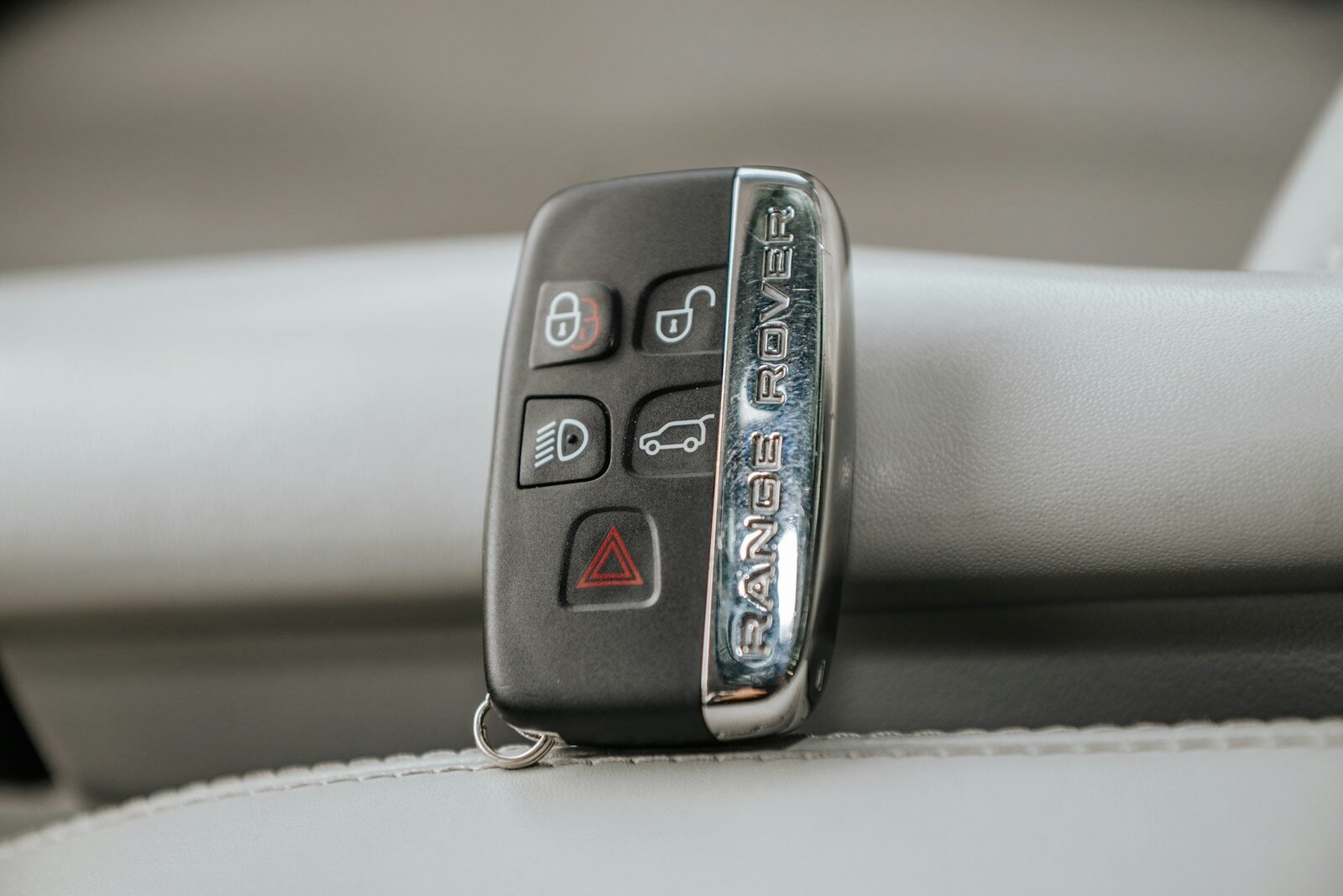
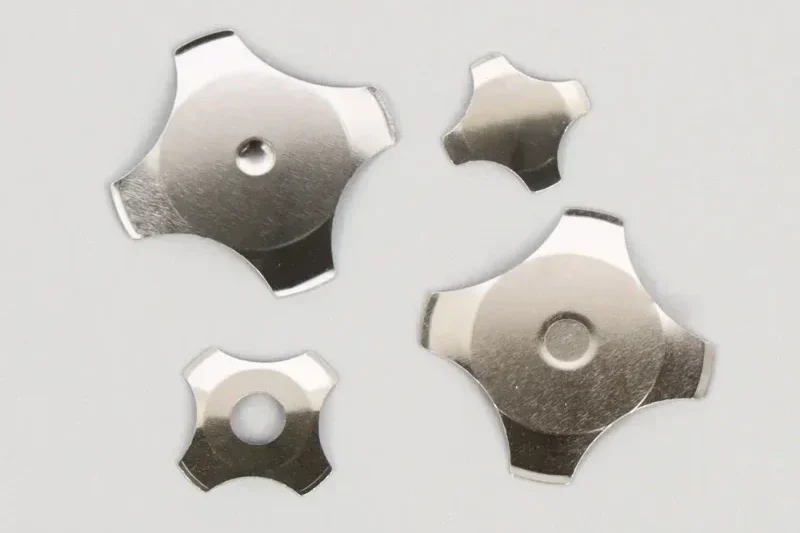
A key fob holds three or four buttons, gets pressed blind through a jacket pocket, dropped on concrete, and left on a dashboard in summer heat. The dome inside is a stamped stainless disc worth a few cents, and it decides whether the owner trusts the lock command. By design freeze the dome choice is settled. What is rarely settled is whether it still behaves the same way under a keycap, an adhesive layer, and a housing.
Validate the dome inside the finished fob, not against its own drawing. Five items carry the decision: the force curve measured through the real keycap, the mechanical stack around the dome, electrical stability under repeated press and firmware debounce, the environmental loads the fob actually sees, and the drift in force and contact resistance after life cycling. Each item needs an acceptance number written before samples arrive, and each needs evidence that names the lot and the assembly that was tested.
The order in which those items get signed off follows the program rather than the datasheet, so a Metall-Kuppelschalter is judged by what the assembled key does under a press head.
Validation begins with the button, not the dome
The first thing to validate is the function of each key, because force, travel, and life targets come from it. A trunk release held down for two seconds and a panic button pressed hard do not share one specification, and treating all four keys as a single item hides that until field complaints appear.
What each fob key has to survive
Four keys on one shell means four duty profiles:
- Lock and unlock: several times a day, often through fabric, sometimes twice in a row when the first press gives no visible confirmation.
- Trunk: less often, but usually held for a second or more.
- Panic: pressed hard, with the thumb, by someone already stressed.
- Any key: pressed with a glove in winter, and pressed by whatever else sits in the same pocket.
That last point drives a number most teams forget to write down: the force that keeps the key from firing in a pocket. Too light and it triggers in a bag. Too heavy and it feels dead through gloves. The threshold belongs in the requirement.
Turning a feel into acceptance numbers
Words like crisp or premium cannot be inspected. Five measurements can, and all five belong on the dome drawing and the assembly drawing.
| Parameter | What it decides | How to record it |
|---|---|---|
| Trip force (F1) | how hard the key feels, and how often it fires in a pocket | peak of the force-displacement curve, taken through the keycap |
| Return force (F2) | whether the dome breaks contact cleanly on release | lowest force after the snap |
| Travel and over-travel | whether the dome reaches its snap point before the hard stop | displacement at snap, and displacement left before bottom-out |
| Tactile ratio | the sharpness of the click | F1 minus F2, divided by F1 |
| Force tolerance | whether four keys and ten thousand fobs feel the same | band around nominal, reported per lot |
Published figures from dome suppliers put fob keys in the 160 gf to 280 gf range, with tolerance bands around 10 gf to 15 gf for automotive programs (supplier specifications, checked 9 November 2026). Treat that as a starting point for discussion, not a standard. The number that matters is measured in the stack.
The stack-up checks that decide whether the click survives
Most fob failures blamed on the dome come from the layers around it. A keycap that bottoms out early, an adhesive that creeps under heat, or a pad that lets the dome sit off centre will change the force curve even when the dome matches its drawing exactly. The stack, not the component, is the thing being validated.
Actuator alignment and hard-stop travel
The keycap boss should press the centre of the dome. Off-centre actuation puts uneven stress into the crown and the legs, and supplier notes list it among the main causes of shortened life, though published figures disagree on how much. Check alignment with the tooled keycap and housing, not a machined prototype boss.
Hard-stop position decides over-travel. If the housing stops the key before the dome snaps through, the key feels dead. If nothing stops it, the thumb pushes past the snap and flattens the crown, which shows up as a force curve that sags after a few thousand cycles.
Pad geometry, vent path, and adhesive creep
Three details under the dome matter more than the dome does:
- Pad sizing. The dome rests on an outer ring and bridges to a centre pad when it collapses. Too small a centre pad raises contact resistance; a ring that is too wide or too narrow shifts the snap force.
- Venting. Trapped air has to go somewhere when the dome collapses. Without a path the return slows and the click turns soft, which is why dome arrays carry vent channels.
- Adhesive creep. Pressure-sensitive adhesive creeps at high temperature, and a dome that shifts half a millimetre sits off its pads. Heat soak the assembly, then re-measure.
| Ebene | What to validate | What fails when it is skipped |
|---|---|---|
| Keycap and overlay | travel from rest to snap, clearance after snap | dead or mushy key |
| Adhesive and carrier | creep after heat soak, peel strength | dome drift, force change |
| Kuppel | force curve at nominal and at tolerance limits | end-of-line reject rate |
| Circuit pads | pad diameter against dome, finish, mask clearance | rising contact resistance |
| Gehäuse | hard-stop height, vent opening | over-travel or slow return |
Electrical checks: contact resistance, bounce, and debounce
Continuity on the first press proves almost nothing. What needs signing off is the resistance band across life, the bounce time of the closing contact, and whether the firmware debounce window matches that bounce. These three are validated together or not at all.
Initial contact resistance for a plated dome usually sits below 100 milliohms. What matters is the upper limit after life testing, not the reading on a new part. Nickel drifts sooner in humid air; gold holds the band flat but costs more. Either way the pad must match the finish.
Bounce is the part teams skip. A dome closes with a few milliseconds of chatter, so the firmware waits before it believes the press. Set the window too short and one press registers twice, which is how a fob ends up locking and immediately unlocking. Set it too long and a quick double press disappears. Read bounce on a scope at the finished assembly, at both temperature extremes, and record the debounce value beside the dome specification, since a change to either can break the other.
There is a battery angle too. Every press wakes the microcontroller and the radio, so on a coin cell a sloppy contact edge arrives as a drain complaint rather than a switch complaint.

Environmental validation for a fob that lives in a pocket and a hot car
The loads to test come from where the part is mounted, not from a checklist copied off another program. A fob rides in a pocket, gets sat on, falls onto pavement, and sits in a cabin that swings from below freezing to well above 40°C. Mechanical loads for vehicle electronics are defined by mounting location, which is what ISO 16750-3 addresses (ISO 16750-3:2023).
Temperature and humidity
Most dome specifications quote -40 °C to +85 °C. The useful test is not whether the key works at the extremes, but whether the numbers stay in band after exposure. Heat soak the assembly, then re-measure trip force and resistance cold and hot.
Condensation matters more than steady humidity. A fob carried from a cold car into a warm room collects water on its coldest surface, which is usually the metal. Watch the non-metal parts too: overlay films stiffen when cold, adhesive softens when hot, and both move the force curve while the dome has not changed.
Drop, shock, and vibration
A fob is dropped far more often than it is deliberately tested. Two failures appear afterwards: the dome lifts off its adhesive and shifts, or the carrier cracks at a leg. Both still click, so a functional check passes and the problem ships. Add a force measurement and a look under magnification after the drop sequence.
Vibration is gentler on a fob than on a dashboard module, but it runs for years. The risk is fretting at the contact interface, where plated surfaces rub and build oxide. A resistance reading before and after catches it.
Sealing and the vent trade-off
A metal dome is not a sealed part. Sealing comes from the overlay, the adhesive, and the housing gasket, and any ingress claim belongs to the assembled fob, tested as a fob. Splash testing a bare dome array proves nothing.
Sealing and venting pull against each other. A fully sealed pocket traps air, which slows the return and softens the click. A vent that lets air out also lets water in unless it runs through a membrane. Decide which side of that trade the design sits on early, because it changes the housing, not just the dome.
Life testing that predicts the field, not the lab
The cycle count is not the result. The result is how far force and contact resistance drift between the first press and the last, measured on the assembly that will ship.
Published life targets for fob keys run from roughly 100,000 cycles on auxiliary functions to over a million on the most-used key. The target should follow vehicle life and press frequency rather than a round number. Three habits make the test worth running:
- Test the finished stack at the force and electrical load the circuit will see. A bare dome on a steel plate gives a cleaner curve and a misleading one.
- Read out at intervals rather than only at the end. Force at 25, 50, 75, and 100 percent of target shows a trend; one end point hides a curve that fell away in week one.
- Write the failure criteria before the test starts. Drift beyond the tolerance band, resistance above the agreed ceiling, and a click that no longer registers all count.
Run more than one lot, and more than one cavity where the tool has several. A dome that passes from cavity one and fails from cavity four is a tooling problem a single-lot report will never show.
Supplier evidence to demand before tooling release
A certificate copy is not validation evidence, and a datasheet of typical values is not a specification. What a reviewer needs is the data behind the part, tied to a lot and a revision, plus a written promise that a change will be reported before it ships.
The file to ask for, in practical terms:
- Force curve data with lot identification, not just a nominal figure.
- Process capability on trip force, reported against the band the drawing states.
- Material and plating declarations that match what production runs, including adhesive chemistry.
- Traceability from finished dome back to coil lot and plating batch.
- A change notification clause, so a new press or adhesive starts a conversation instead of a shipment.
Shanyo holds IATF 16949 certification, with ISO 14001 and ISO 45001 alongside it, so those records come out of an audited system rather than a folder assembled for one customer. A worked example sits in the Valeo metal dome case study, which follows one program from first RFQ through supplier pre-audit.
AEC-Q200 does not apply here, which is worth saying out loud. It covers listed families of passive components such as capacitors and resistors, not electromechanical snap domes. When a customer asks for it, what they want is that program’s own validation plan.
Changes that send the design back through validation
The test is not how large a change looks but whether the evidence on file still describes the part being shipped. If it does not, the affected tests run again at the level the change touches.
| Change | What has to be re-run |
|---|---|
| Dome material, temper, or thickness | force curve, life, environmental sequence |
| Plating type or thickness | contact resistance, humidity, salt exposure |
| Forming tool or press | force curve, end-of-line yield |
| Adhesive, carrier, or die-cut pattern | creep, drop, vent behaviour |
| Pad layout or pad finish | resistance band, bounce, debounce check |
| Keycap geometry or hard-stop height | feel, over-travel, life |
Two rows catch teams out. A new adhesive looks like a purchasing change and behaves like a mechanical one, because creep moves the dome. A keycap revision looks cosmetic until the hard stop moves by a tenth of a millimetre.
FAQ
Can a prototype housing be used for fob validation?
Not for feel and life work. A machined or printed housing has different wall stiffness and hard-stop height from the tooled part, and both change how far the dome travels. Prototypes are fine for layout checks. The force curve, the drop sequence, and the life test belong on tooled parts.
What usually fails first in a key fob dome assembly?
Not the dome. Adhesive creep and contamination on the pad are the common ones, followed by an actuator that presses off centre. A dome that has lost force usually reports a problem that started above or below it.
Does a lighter dome make a fob easier to use?
Up to a point. Below roughly 160 gf the key starts firing in a pocket, and the owner comes back with a battery drain complaint rather than a switch complaint. The usable band depends on keycap size, spring return in the housing, and whether the fob gets used in gloves.